Why Pharmaceutical Wastewater in Cambodia Is a Distinct Engineering Problem
Pharmaceutical manufacturing in Cambodia expanded sharply through 2023–2025 as Chinese, Indian, and Vietnamese API and formulation firms established operations inside Phnom Penh Special Economic Zone and the Sihanoukville SEZ, and that growth directly increased the volume of pharma effluent reaching municipal sewers. Li et al. (2024, Journal of Water Process Engineering) document the same global trend, noting that rising pharmaceutical output has driven a proportional increase in wastewater discharge containing intermediates, residual solvents, and antibiotics. Dawood et al. (2023, Environmental Protection Research) estimate that more than 3,000 bioactive substances — painkillers, antibiotics, contraceptives, and TCM actives — appear in pharma effluent streams, each with distinct treatability profiles.
Three Cambodia-specific factors make a global design brief non-transferable. First, ambient temperature sits at 30–35 °C year-round with 80–90% humidity, which raises biological kinetics roughly 30–40% over temperate designs (Arrhenius correction at 20–35 °C) but also increases cooling-tower and bioreactor cooling duty for any mesophilic stage that drifts above 37 °C. Second, monsoon-driven hydraulic surges (May–October) routinely double daily flow within 6–12 hours, so equalization must be sized for shock loading, not average diurnal flow. Third, the receiving environment is the Tonle Sap / Mekong catchment, where total residual chlorine above 0.5 mg/L and ammonia above 10 mg/L create immediate MOE non-compliance risk.
Conventional biological treatment alone does not close the loop. Hou et al. (2019, Water Research) showed that even a UASB + A/O + AOP train leaves antibiotic resistance genes (ARG) detectable in finished effluent unless advanced oxidation is properly dosed. Cambodian MOE Decree 1397 (pharmaceutical manufacturing effluent) reflects this: COD <80 mg/L, BOD₅ <30 mg/L, TSS <50 mg/L, pH 6–9, total residual chlorine <0.5 mg/L, plus quarterly ARG screening for plants handling antibiotic APIs.
Typical Influent Characteristics from Cambodian Pharmaceutical Plants
Pharma effluent in Cambodia splits into three categories that drive different design decisions: (1) antibiotic/fermentation broth, (2) synthetic chemistry effluent from TCM, analgesic, and sulfa-drug lines, and (3) formulation and packaging rinse water with high TDS but low organics. COD typically ranges 2,000–25,000 mg/L for synthesis streams and 500–3,000 mg/L for formulation lines, per the Li 2024 review of 229 surveyed plants and the Dawood 2023 dataset. BOD₅/COD ratios sit at 0.3–0.5 for fermentation effluent (reasonably biodegradable) and below 0.3 for chemical synthesis effluent (refractory, often requiring Fenton or ozone to crack the molecule). Ammonia nitrogen runs 50–800 mg/L, total nitrogen 100–1,200 mg/L, and sulfate above 2,000 mg/L on sulfa-drug lines — a critical input for anaerobic reactor selection because sulfate-reducing bacteria compete with methanogens at high SO₄²⁻/COD ratios.
Batch discharge drives pH swings from 2 to 11 across a single 24-hour cycle, and stream temperature routinely reaches 25–45 °C from autoclave and CIP discharges. Antibiotic residues appear at μg/L to low mg/L levels; ARG have been confirmed in secondary effluent by Li 2024 even after MBR polishing, which is why AOP is non-optional for any antibiotic-touching stream. Color is strong and refractory on TCM lines because of plant-based polyphenols and tannins.
| Parameter | Antibiotic / Fermentation | Synthesis (TCM, Analgesic) | Formulation / Rinse |
|---|---|---|---|
| COD (mg/L) | 5,000–25,000 | 2,000–15,000 | 500–3,000 |
| BOD₅/COD | 0.3–0.5 | <0.3 (refractory) | 0.4–0.6 |
| NH₃-N (mg/L) | 200–800 | 50–400 | 10–80 |
| TN (mg/L) | 400–1,200 | 100–600 | 20–150 |
| SO₄²⁻ (mg/L) | 500–2,000 | 2,000–5,000 (sulfa) | <200 |
| pH | 4–9 | 2–11 | 6–8 |
| Temperature (°C) | 30–45 | 25–40 | 25–35 |
| Antibiotic residue | mg/L range | μg/L–mg/L | μg/L |
Recommended Treatment Train for Cambodia (2026 Process Design)
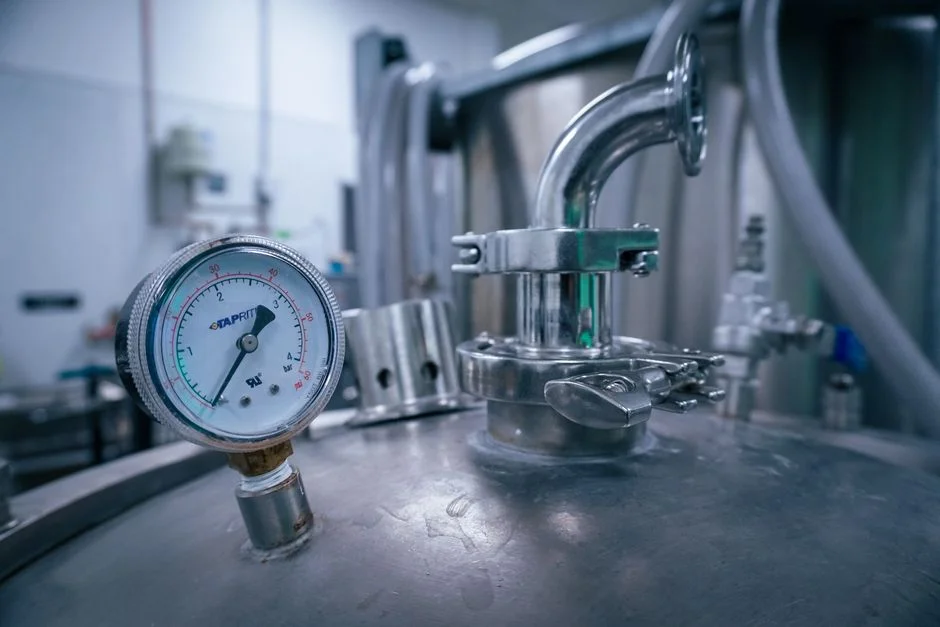
The defensible 2026 train for a Cambodian pharma plant handling antibiotics, TCM actives, or both runs seven blocks: equalization, pretreatment, anaerobic, aerobic biofilm, MBR polish, advanced oxidation, and final disinfection. Each block has a specific role that the MOE auditor and the EPC reviewer will probe independently.
Block 1 — Equalization and Screening. A GX-series rotary bar screen at the headworks with 5–10 mm aperture removes rags and gross solids, and an equalization tank sized at 8–12 hours HRT buffers the pH 2–11 and flow surges that batch discharge creates. Block 2 — Pretreatment. pH correction to 6.5–7.5 with NaOH/H₂SO₄, followed by coagulation/flocculation (PAC 100–300 mg/L, polyacrylamide 1–3 mg/L) and a dissolved air flotation unit for pretreatment to strip suspended solids and colloidal COD. For high-COD refractory streams, a Fenton stage (Fe²⁺/H₂O₂ at pH 3–4, H₂O₂/COD ≈ 1.0–1.5) is substituted for or placed before DAF. Block 3 — Anaerobic. An IC (Internal Circulation) reactor at 10–15 kg COD/m³·day organic loading, HRT 24–48 h, operating at 30–37 °C with a 5–7 °C temperature buffer above ambient — the IC configuration handles the 30–35 °C ambient better than UASB and tolerates the SO₄²⁻ load on sulfa lines. Per the 2026 engineering spec, IC reactors in pharma service consistently achieve >90% COD removal at design loading.
Block 4 — Aerobic Biofilm. An A/O-MBBR with Kaldnes-type carrier media (30–50% fill, protected surface area 500–800 m²/m³), HRT 12–24 h, MLSS 3,000–5,000 mg/L. The anoxic zone handles denitrification of the 100–1,200 mg/L TN load; SBR or CASS is a defensible substitute for plants under 50 m³/day. Block 5 — MBR Polish. A submerged containerized MBR system for pharmaceutical effluent polishing with PVDF flat-sheet MBR modules at 0.1 μm pore size, HRT 4–6 h, delivering TSS <1 mg/L and turbidity <0.5 NTU. Block 6 — Advanced Oxidation. O₃ or O₃/H₂O₂ at 5–20 mg/L O₃ dose to destroy residual antibiotics and ARG; UV/H₂O₂ is the alternative where ozone generation capacity is constrained. Block 7 — Disinfection. An on-site chlorine dioxide generator for final disinfection sized to keep TRC <0.5 mg/L at the discharge sampling point.
| Block | Unit Process | Key Design Parameter | Target Removal |
|---|---|---|---|
| 1 | Bar screen + equalization | 5–10 mm; HRT 8–12 h | Gross solids; flow smoothing |
| 2 | pH adjust + DAF / Fenton | PAC 100–300 mg/L; H₂O₂/COD 1.0–1.5 | 30–60% colloidal COD |
| 3 | IC anaerobic reactor | 10–15 kg COD/m³·d; HRT 24–48 h | 80–95% soluble COD |
| 4 | A/O-MBBR | HRT 12–24 h; MLSS 3,000–5,000 mg/L | NH₃-N <5 mg/L; COD <200 mg/L |
| 5 | Submerged MBR (PVDF) | 0.1 μm; HRT 4–6 h | TSS <1 mg/L; turbidity <0.5 NTU |
| 6 | O₃ or O₃/H₂O₂ AOP | O₃ 5–20 mg/L; contact 30–60 min | >90% residual antibiotic; ARG reduction |
| 7 | ClO₂ disinfection | Dose to TRC <0.5 mg/L | Fecal coliform compliance |
Equipment Sizing, Footprint & CapEx for a 50–200 m³/day Cambodian Plant
Translating the train into equipment for a greenfield or expansion project in Phnom Penh SEZ, the table below covers the three capacity points most Cambodian EPCs encounter: 50, 100, and 200 m³/day. Sizing assumes a blended influent at 5,000 mg/L COD, 200 mg/L NH₃-N, and 35 °C. IC reactor volume follows the 10–15 kg COD/m³·day loading window; MBBR volume follows HRT 18 h at average flow; MBR membrane area assumes 0.15 m³/h per m² flux at 30 °C; ozone capacity assumes 15 mg/L dose on MBR permeate. Footprint includes only process skids, tanks, and pipe racks — no admin buildings, lab space, or civil foundations.
| Parameter | 50 m³/day | 100 m³/day | 200 m³/day |
|---|---|---|---|
| IC reactor volume (m³) | 20–35 | 40–70 | 80–140 |
| A/O-MBBR volume (m³) | 40–60 | 80–120 | 160–240 |
| MBR membrane area (m²) | 15–25 | 30–50 | 60–100 |
| Ozone generator (kg O₃/h) | 0.05–0.1 | 0.1–0.2 | 0.2–0.4 |
| Total footprint (m²) | 60–90 | 110–160 | 200–300 |
| CAPEX envelope (USD, 2026) | $180K–$450K | $400K–$900K | $800K–$1.8M |
Per the 2026 IC engineering specification, IC reactor CAPEX alone spans $50,000 to $5,000,000 across the pharma capacity range, with zero-fouling design reducing annual cleaning downtime by 40–60% compared to UASB at the same load. A skid- or container-mounted containerized MBR system for pharmaceutical effluent polishing paired with an integrated ozone skid delivers a 60% footprint reduction over a conventional activated-sludge + sand-filter layout of equivalent capacity — a meaningful number inside a Phnom Penh SEZ plot where land runs $80–$150/m². Shipping from Shanghai or Ningbo to Sihanoukville takes 7–10 days by sea, with overland road transport to Phnom Penh adding another 4–6 hours; containerized packaging is therefore the lowest-risk delivery format. The $180K–$1.8M CapEx envelopes above exclude civil works, shipping, and import duty, which typically add 18–25% on landed cost.
Compliance, Monitoring & Commissioning Checklist
A Cambodian pharma plant's routine monitoring program should cover COD, BOD₅, TSS, NH₃-N, TN, TP, pH, temperature, and total residual chlorine on a daily or weekly basis depending on plant size, with quarterly ARG screening on any line handling antibiotic APIs. The 2026 Li et al. review distills three takeaways that frame the compliance posture: (1) clean production at source reduces load to the treatment train by 20–40% and is the single highest-leverage investment, (2) long process chains (pretreatment + anaerobic + aerobic + AOP) are unavoidable for refractory pharma effluent, and (3) water reuse is now standard practice for cooling-tower make-up in any plant above 100 m³/day.
Commissioning runs in three gated phases. Phase 1 is the clean-water test (清水试验) on the IC reactor and MBR skid using tap water to verify hydraulic integrity, pump curves, and instrument calibration before any biological activity starts. Phase 2 is sludge seeding and 30-day biomass acclimation, where influent is ramped from 20% to 100% design COD over four weeks to avoid shock to the methanogenic and nitrifying populations. Phase 3 is the 60-day performance test, during which all MOE parameters must meet Decree 1397 limits continuously before the discharge permit is signed off. RO polish is optional on a strictly discharge-compliance basis, but is increasingly specified by multinational pharma buyers in Cambodia who require reuse-grade water for cooling-tower make-up; an industrial RO polish for water-reuse applications is typically added downstream of MBR when reuse exceeds 30% of the treated flow. For cross-reference, the adjacent ASEAN pharmaceutical wastewater treatment in Thailand process guide documents very similar unit-process selection, and the IC anaerobic reactor engineering specs and CAPEX benchmarks piece provides the zero-fouling design detail behind the figures used here.
Frequently Asked Questions
What is the most common treatment train for pharmaceutical wastewater in Cambodia?
The standard 2026 train is equalization → coagulation/DAF or Fenton → IC anaerobic reactor → A/O-MBBR → submerged PVDF MBR → ozone or O₃/H₂O₂ AOP → chlorine dioxide disinfection. This combination reliably meets MOE Decree 1397 limits of COD <80 mg/L and BOD <30 mg/L on influent up to 25,000 mg/L COD, as documented in Li 2024 and Dawood 2023.
How much does a 100 m³/day pharmaceutical wastewater plant cost in Cambodia?
A 100 m³/day packaged plant with IC reactor, A/O-MBBR, MBR, and ozone skid lands in the $400K–$900K CapEx range in 2026, excluding civil works and shipping. Containerized delivery from a Chinese port to Phnom Penh SEZ typically adds 18–25% to landed cost. See the IC anaerobic reactor engineering specs and CAPEX benchmarks reference for component-level pricing.
Which MBR configuration is best for antibiotic wastewater polishing?
Submerged PVDF flat-sheet MBR at 0.1 μm pore size is the 2026 default for antibiotic streams in Cambodia because the flat-sheet geometry tolerates the high MLSS (8,000–12,000 mg/L) common in pharma MBBR effluent and backwashes with standard CIP chemicals. The PVDF flat-sheet MBR modules at 0.1 μm pore size deliver TSS <1 mg/L and turbidity <0.5 NTU before the AOP stage.
Is ozone mandatory for pharmaceutical wastewater in Cambodia?
Ozone or an equivalent AOP step is effectively mandatory for any plant handling antibiotic APIs because conventional biological treatment plus MBR leaves antibiotic resistance genes (ARG) intact. Hou et al. (2019) demonstrated that O₃/H₂O₂ at 5–20 mg/L O₃ dose achieves simultaneous residual antibiotic and ARG reduction, which is why MOE's quarterly ARG screening is the binding requirement.