Why Hospital Wastewater in Riyadh Needs Specialized Treatment
Hospital wastewater contains a complex mixture of pathogens, pharmaceuticals, and chemical disinfectants, resulting in a microbial load up to 10 times higher than standard municipal sewage. In Riyadh, the management of this effluent is no longer a matter of simple disposal but a critical component of public health infrastructure and urban water conservation. Because clinical facilities discharge high concentrations of antibiotics, heavy metals, and multi-drug resistant bacteria, conventional sewage treatment plants often struggle to neutralize the specific biological hazards present in medical streams.
The presence of viral markers has become a primary driver for advanced treatment adoption in the Kingdom. Research indicates that SARS-CoV-2 RNA has been detected in Saudi wastewater (Alahdal et al., 2021), highlighting the potential for sewage systems to act as environmental reservoirs for respiratory and enteric viruses if not properly disinfected. For hospitals in densely populated districts like Al Olaya or An Namudhajiyah, ensuring that effluent is completely sterile before it enters the municipal grid is essential to prevent community-level viral transmission.
Riyadh’s extreme arid climate and the objectives of the Saudi Green Initiative have shifted the focus toward aggressive water reuse. The city’s urban density and chronic water scarcity necessitate that large-scale facilities, including tertiary care hospitals, contribute to the circular water economy. To meet the requirements for non-potable reuse, such as irrigation for hospital grounds or cooling tower makeup water, the effluent must undergo rigorous purification. Implementing a hospital wastewater treatment in urban environments requires a transition from basic biological processing to advanced membrane and oxidation technologies that can handle the high-variability loads typical of 24-hour healthcare operations.
Saudi Arabia’s Hospital Wastewater Discharge Standards
The Saudi Ministry of Environment, Water and Agriculture (MEWA) enforces strict discharge limits for healthcare facilities, requiring BOD levels to remain below 20 mg/L and COD below 100 mg/L. These regulations are designed to protect the Kingdom’s limited groundwater resources and the integrity of municipal treatment infrastructure. Compliance is not optional; hospitals are required to implement continuous or periodic monitoring protocols and submit regular reports to the National Center for Environmental Compliance (NCEC) to verify that their discharge does not exceed legal thresholds for pollutants.
For facilities pursuing wastewater reuse, the standards are even more stringent. According to Saudi Standard SASO 1042, treated effluent intended for unrestricted irrigation must achieve a turbidity of less than 5 NTU and an E. coli count of less than 2.2 MPN/100mL. This "Class A" standard ensures that reclaimed water is safe for use in public-facing areas. Achieving these metrics typically requires a multi-barrier approach, combining biological treatment with ultrafiltration and high-level disinfection. Engineers must also account for hospital wastewater compliance in Gulf cities, where high ambient temperatures can accelerate biological activity and affect the solubility of oxygen in aeration tanks.
In addition to organic loads, MEWA standards for hospital effluent focus heavily on Total Suspended Solids (TSS < 30 mg/L) and specific chemical markers. Because hospitals use significant volumes of quaternary ammonium compounds and phenolic disinfectants, the treatment system must be capable of breaking down these inhibitory substances before they reach the final discharge point. Failure to meet these standards can result in significant fines and mandates for immediate system overhauls, making it imperative for procurement managers to select equipment with a proven track record of meeting Saudi environmental benchmarks.
Key Treatment Stages for Hospital Wastewater
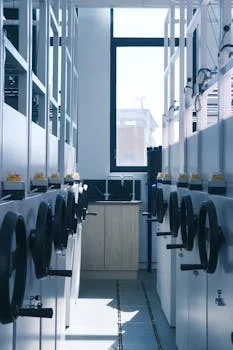
Effective medical wastewater treatment begins with mechanical pretreatment, where a GX Series rotary bar screen removes rags, plastics, and large solids with a precise 1–3 mm gap to protect downstream mechanical components. Without this initial stage, the high volume of fibrous materials and medical disposables found in hospital streams can cause frequent pump failures and clog fine-bubble diffusers in the biological tanks. This mechanical separation is the first line of defense in maintaining a high uptime for the entire treatment train.
Following screening, the primary treatment often utilizes a DAF system to remove up to 90% of fats, oils, and grease (FOG) along with suspended solids. In a hospital setting, where kitchen facilities and laboratory waste contribute to high lipid concentrations, DAF technology provides a stable effluent for the subsequent biological stages. The DAF line, with capacities ranging from 20 to 300 m³/h, uses micro-bubble flotation to lift light particles to the surface for mechanical skimming, significantly reducing the organic load on the bioreactor.
The core biological process typically employs a WSZ Series A/O (Anaerobic/Oxic) system, which is engineered to achieve 95% BOD removal and 85% nitrogen removal for flow rates between 1 and 80 m³/h. This stage is critical for the nitrification and denitrification processes required to meet MEWA nitrogen limits. To reach the highest quality effluent for reuse, a space-saving MBR system with PVDF membranes is integrated. The DF Series flat-sheet membranes provide a physical barrier to bacteria and suspended solids, producing a permeate with a nominal pore size of less than 1 μm, which is effectively free of most pathogens.
The final and most critical stage for healthcare facilities is advanced disinfection. A compact ozone disinfection system provides 99.9% pathogen inactivation, including the destruction of antibiotic-resistant bacteria and viral RNA. Unlike traditional chlorination, ozone treatment leaves no chemical residue and does not produce harmful trihalomethanes (THMs). For larger facilities, a GX series mechanical screen coupled with high-capacity disinfection ensures that the final effluent meets all SASO Class A requirements for safety and environmental protection.
Comparing Treatment Technologies for Riyadh Hospitals
Membrane Bioreactor (MBR) systems offer a 60% reduction in physical footprint compared to conventional activated sludge plants, making them the preferred choice for urban hospitals in Riyadh where land value is high. While traditional WSZ Series A/O systems are highly cost-effective for smaller clinics producing less than 50 m³/day, they require larger settling tanks and tertiary filtration to match the water quality produced by an MBR. In the context of Riyadh's strict reuse policies, the MBR's ability to produce "reuse-ready" water in a single integrated step provides a significant operational advantage.
Disinfection technology selection is equally critical for compliance. While chlorine has been the historical standard, MEWA’s movement toward zero-residual chlorine policies in certain reuse applications has increased the adoption of Ozone and Chlorine Dioxide. Ozone is highly effective at oxidizing complex pharmaceutical compounds that biological processes cannot degrade. For facilities with extremely large flow rates, Chlorine Dioxide generators provide a precise dosing solution that remains stable over longer distances in the distribution piping, ensuring consistent microbial control across the entire facility.
| Parameter | Conventional A/O (WSZ) | MBR System (Integrated) | Ozone Disinfection |
|---|---|---|---|
| Effluent BOD | < 20 mg/L | < 5 mg/L | N/A (Tertiary) |
| TSS Removal | 90-95% | > 99.9% | N/A |
| Footprint | Large (Requires Clarifier) | Ultra-Compact | Minimal |
| Pathogen Kill | Moderate | High (Physical Barrier) | Excellent (99.99%) |
| MEWA Compliance | Discharge Only | Class A Reuse | Enhanced Safety |
Decision-makers must weigh the initial capital expenditure against long-term operational ease. An MBR vs conventional activated sludge systems analysis shows that while MBR has a higher initial cost, the elimination of secondary clarifiers and the reduction in sludge volume often lead to lower lifecycle costs. For Riyadh hospitals, the ability to bypass the need for extensive tertiary sand filtration by using MBR membranes simplifies the treatment train and reduces the number of failure points in the system.
Cost and ROI for Hospital Systems in Riyadh
Capital investment for compact systems typically ranges from $18,000 to $45,000 for facilities with capacities between 5 and 20 m³/day. While this represents a significant upfront cost, the Return on Investment (ROI) is generally realized within 36 months through two primary channels: the reduction in sludge hauling fees and the savings generated by onsite water reuse. In Riyadh, where the cost of industrial water and sewage disposal is rising, the ability to offset 70-80% of landscaping water needs with treated effluent provides a direct budgetary benefit.
For larger hospital complexes, MBR systems involve a higher CAPEX, generally ranging from $120 to $180 per m³/day of treatment capacity. However, these systems drastically reduce the requirement for expensive land and civil works. When considering the clinic wastewater treatment cost and ROI, it is essential to factor in the 40% lower chemical OPEX associated with ozone systems compared to traditional liquid chlorine. Although ozone equipment requires a 15% higher initial investment, the elimination of hazardous chemical transport and storage costs—coupled with lower labor requirements—makes it the more economical choice over a 10-year horizon.
Operational costs are also influenced by the efficiency of the biological process. Modern WSZ and MBR systems utilize high-efficiency blowers and automated sludge wasting, which minimize electricity consumption. By integrating smart sensors for real-time monitoring of dissolved oxygen and transmembrane pressure, facilities can further optimize energy use. In the Riyadh market, where environmental compliance audits are becoming more frequent, the "insurance" value of a high-performance system—preventing costly fines and reputational damage—adds a non-tangible but vital layer to the ROI calculation.
Frequently Asked Questions
What is the required retention time for hospital wastewater in Riyadh?
Per MEWA guidelines and standard engineering practices for medical effluent, a hydraulic retention time (HRT) of 6–8 hours is required for the biological treatment stage to ensure adequate breakdown of organic pollutants and pharmaceuticals.
Can hospital wastewater be reused for irrigation in Riyadh?
Yes, hospital wastewater can be reused for landscaping and cooling towers if it is treated to Class A standards as defined by SASO 1042. This requires advanced filtration (typically MBR) and high-level disinfection to ensure zero detectable pathogens.
Which disinfectant is best for hospital effluent in the Kingdom?
Ozone and Chlorine Dioxide are the preferred disinfectants. Ozone is superior for pharmaceutical oxidation and viral inactivation, while Chlorine Dioxide is effective for large-scale facilities requiring stable residual protection without forming harmful byproducts.
How often should hospital wastewater systems be maintained?
Systems require monthly inspections of mechanical components, quarterly cleaning of MBR membranes (CIP), and annual audits of sludge production. Following an industrial chlorine dioxide generator maintenance schedule is essential for ensuring 99%+ uptime. For buried components, refer to the underground sewage treatment maintenance guide to prevent structural issues and soil contamination.