Why Leon Hospitals Need On-Site Treatment in 2026
Hospital wastewater treatment in Leon in 2026 must meet NOM-001-SEMARNAT-2024 fecal coliform caps of 240–1,000 MPN/100 mL, BOD ≤30–90 mg/L and TSS ≤40–90 mg/L depending on daily flow band, with antibiotic-resistant gene removal now treated as a compliance trigger. Typical Leon hospital effluent runs COD 120–500 mg/L, TSS 150–160 mg/L and ~250 L/patient/day, so a compact MBR + chlorine dioxide skid (10–200 m³/day) is the most defensible packaged solution, with ozone units reserved for clinics under 10 m³/day.
Leon and the surrounding Bajío medical corridor concentrate 65–290 m³/day of hospital effluent per facility (per the PMC 2020 review average benchmarks), and that stream is no longer acceptable as raw discharge to the municipal POTW. NOM-001-SEMARNAT-2024 Table 2 sets the floor at BOD ≤30/60/90 mg/L, TSS ≤40/60/90 mg/L, and fecal coliforms ≤240/480/1,000 MPN/100 mL across the average-daily-flow bands. For facilities not operating their own outfall, NOM-073-SEMARNAT-1994 governs discharges to municipal sewer and requires a pretreatment certificate before the Leon water commission (SAPAL) will accept the connection.
The antimicrobial-resistance driver is now quantitative. A 2025 J Glob Antimicrob Resist study from Mbarara, Uganda recorded only 1.9–2.4 log reduction of ESBL-producing E. coli through a waste stabilization pond — well below the 4-log benchmark typically targeted for hospital effluent. Sending raw Leon hospital effluent to the municipal POTW inherits the same exposure: antibiotics, anti-inflammatories, hormones, disinfectants and pathogens pass through conventional activated sludge largely intact (per the MDPI 2025 review on hospital wastewater as a reservoir of contaminants of emerging concern). For comparable regulatory logic in a different climate, see this Incheon hospital wastewater 2026 guide.
Hospital Wastewater Characteristics You Must Design For
Hospital influent envelopes are wider than domestic sewage, and a Leon design must be sized against the upper end of the range to absorb diurnal peaks from ORs, laundry and laboratory drains. The PMC 2020 review sets the baseline at COD 120–500 mg/L, TSS 150–160 mg/L, and BOD ~200 mg/L in European and Asian effluents; expect 180–250 mg/L BOD in Leon tertiary care and 100–180 mg/L in clinics. Flow is conventionally indexed at 250 L/patient/day (developing-country average) and 65 m³/hospital/day (a 19,712-hospital Chinese network, 2008 baseline), with diurnal peaks of 1.5–2× over the daily mean — equalization must absorb that swing.
| Parameter | Leon tertiary hospital (design) | Leon clinic (design) | Source |
|---|---|---|---|
| COD | 120–500 mg/L | 120–300 mg/L | PMC 2020 review |
| BOD | 180–250 mg/L | 100–180 mg/L | PMC 2020 review |
| TSS | 150–160 mg/L | 100–150 mg/L | PMC 2020 review |
| Flow per patient | 250 L/patient/day | 200–250 L/patient/day | PMC 2020 review |
| Flow per facility | 65–290 m³/day | 1–10 m³/day | PMC 2020 review |
| Temperature | 18–28 °C | 18–28 °C | Leon Bajío climate |
| Diurnal peak factor | 1.5–2.0× | 1.5–2.0× | Standard hospital design |
Beyond bulk organics, the MDPI 2025 review documents pharmaceuticals, hormones, antibiotics, anti-inflammatories, disinfectants, pathogens and occasional radioactive isotopes as recurring contaminants — these come from laboratories, operating rooms, laundry, and restrooms and dictate whether a downstream disinfection stage can be sized on BOD alone. The Bajío's 18–28 °C ambient range supports conventional mesophilic biology without enclosure, which simplifies both the MBR and MBBR cases.
2026 Process Train: From Screening to Polished Effluent
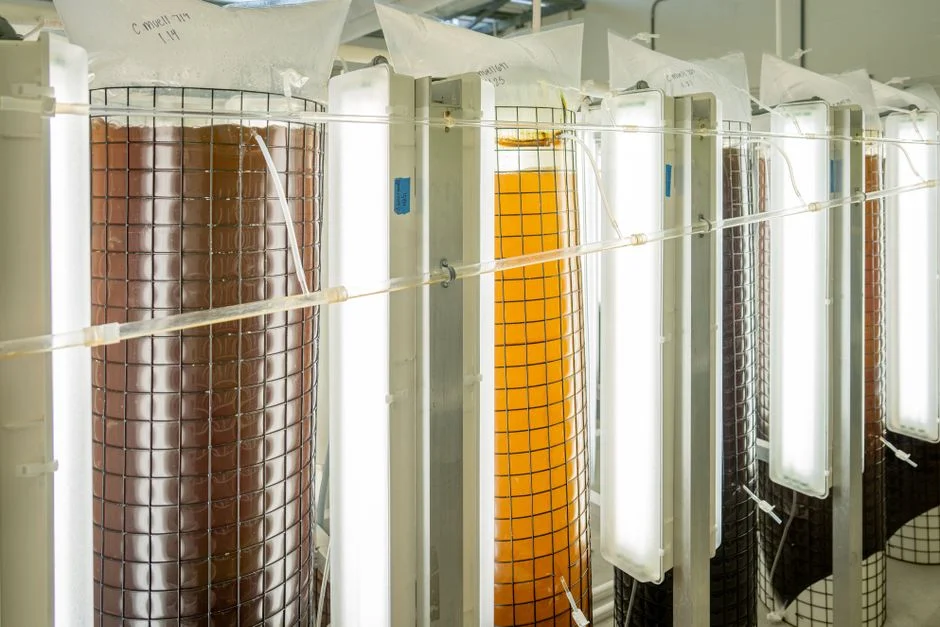
A defensible 2026 Leon hospital train runs in six unit operations. Each step has a measurable purpose and an effluent target so that compliance with NOM-001-SEMARNAT-2024 Table 2 is engineered into the chain rather than tested for after the fact.
- Mechanical screening. A rotary mechanical bar screen at 1–3 mm aperture captures gauze, plastics, and laundry fiber before they blind downstream membranes.
- Equalization and pH adjustment. An FRP or concrete tank sized for 8–12 h hydraulic retention damps diurnal peaks and absorbs disinfectant shock from OR and laboratory drains.
- Primary clarification or DAF. A dissolved air flotation unit handles high-TSS or FOG surge events (kitchen, laundry rebound).
- Biological stage. An MBR membrane bioreactor with submerged 0.1 μm PVDF modules, or an MBBR carrier system. MBR is preferred for Leon retrofits below 200 m³/day because it cuts the biological-stage footprint by roughly 60% versus conventional activated sludge.
- Disinfection polishing. A chlorine dioxide generator (or ozone skid for non-residual reuse) sized for a 30 min CT to meet the 240 MPN/100 mL fecal coliform cap.
- Sludge dewatering. A plate-and-frame filter press to 60–65% dryness before off-site licensed transport.
Expected removals are quantifiable: MBR delivers COD ≤50 mg/L and TSS ≤5 mg/L (sub-1 μm filtration); a ClO₂ dose of 5–10 mg/L with 30 min contact reliably hits the 240 MPN/100 mL fecal coliform limit on MBR effluent. For a worked example at this scale, the 60-bed dialysis centre 30 m³/day MBR case study walks through the same six steps at identical hydraulic loading. A parallel reference point is the hospital wastewater treatment in Dakar 2026 guide, which applies the same process logic to a different climate and regulatory floor.
MBR vs MBBR vs Ozone Skid: Selection Matrix for Leon Hospitals
The three packaged architectures that fit a Leon 2026 retrofit resolve cleanly by flow band and discharge destination. MBR runs 10–2,000 m³/day with TSS ≤5 mg/L and sub-micron filtration — the right pick when effluent is reused or the SAPAL contract is strict. MBBR runs 5–500 m³/day at lower CapEx with no membrane replacement and tolerance to hydraulic shock, which suits plants that do not need reuse-grade quality. The compact ozone medical wastewater system handles ≤10 m³/day at 99%+ microbial kill on a 0.5 m² footprint, no chemical dosing, and is sized for Leon clinics and dental suites.
| Architecture | Flow band (m³/day) | Effluent TSS | CapEx 2026 (US$/m³/day, factory-direct) | Best fit |
|---|---|---|---|---|
| MBR + ClO₂ | 10–200 | ≤5 mg/L | 15,000–28,000 | Tertiary hospitals, POTW with reuse contract |
| MBBR + ClO₂ | 5–500 | ≤30 mg/L | 10,000–18,000 | Discharge-only, no reuse |
| MBR + MBBR hybrid | 200–2,000 | ≤10 mg/L | 12,000–22,000 | Large private hospital clusters |
| Compact ozone skid | ≤10 | ≤10 mg/L | 8,000–15,000 | Clinics, dental suites, dialysis satellites |
Decision rule: <10 m³/day → ozone skid; 10–200 m³/day → MBR + ClO₂; 200–2,000 m³/day → MBR + MBBR hybrid; >2,000 m³/day → conventional activated sludge with tertiary MBR polishing. Civil works, freight, and commissioning add 30–50% on top of the equipment CapEx — a line item that frequently catches Leon buyers off guard.
Disinfection Choices: Chlorine Dioxide vs Ozone vs UV

Disinfection is the unit operation that decides whether the train meets the NOM-001 fecal coliform cap and whether the residual protects the 2–6 km Leon sewer reach into the municipal POTW. A ClO₂ generator delivers a measurable residual, scales from 50 g/h to 20,000 g/h, and operates under EPA, EU Drinking Water Directive 98/83/EC, and WHO drinking-water guidance. Ozone, including the compact skid, achieves 99%+ kill on a 0.5 m² footprint with no chemical dosing but leaves no residual — the right choice for direct reuse (cooling-tower make-up, irrigation) but a poor choice for long outfalls. UV is energy-intensive in turbid hospital effluent and only effective downstream of MBR polishing.
| Technology | Residual | Footprint | 2026 trend in LatAm | Recommended use |
|---|---|---|---|---|
| Chlorine dioxide (ClO₂) | Yes, measurable | Small | Replacing Cl₂ gas across LatAm hospitals | Default polishing for discharges to Leon POTW |
| Ozone | No | 0.5 m² | Growing for reuse | Cooling-tower make-up, irrigation reuse |
| UV | No | Medium | Niche, polishing only | Downstream of MBR when no chemical is preferred |
Default the 2026 Leon design to ClO₂ for any discharge to the municipal sewer; reserve ozone for reuse loops where a non-chemical polishing step is preferred. The wider LatAm shift away from gaseous chlorine is driven by worker-safety regulation and storage-permit cost, not just by performance.
Sludge and Residuals Management in the Bajío Climate
The solids train is where Leon designs most often come undone. Hospital sludge is class B biohazardous and must be hauled by a licensed operator; on-site dewatering cuts transport mass and cost materially. A plate-and-frame filter press at 60–65% dryness is the standard packaged solution, with 1–500 m² filtration area available from manual to fully automatic PLC. Expected dry-solids yield for an MBR system is 0.05–0.10 kg DS per kg COD removed (typical 2026 industrial MBR mass balance). Using ClO₂ rather than NaOCl upstream avoids chlorinated residual accumulation in the dewatered cake — a real benefit when the manifest is reviewed by SEMARNAT inspectors. Leon's arid Bajío climate drives 3–5 mm/day of evaporation loss in the dry season, which must be reflected in the equalization tank mass balance so the biological stage is not inadvertently underflowed in May.
CapEx, OPEX and Compliance Checklist for a Leon 2026 Project
CapEx for a turnkey 30 m³/day MBR + ClO₂ system in 2026 runs US$120,000–180,000 factory-direct, with civil works at 30–50% of equipment cost and freight plus commissioning on top. A turnkey 60 m³/day MBR + ClO₂ plant scales to roughly US$240,000–340,000; a 150 m³/day MBR + MBBR hybrid lands in the US$1.8–3.3 million envelope. OPEX benchmarks: 0.08–0.20 USD/m³ for an MBR with chemical and power, 0.04–0.10 USD/m³ for an ozone skid, based on typical 2026 industrial MBR operating-cost envelopes.
| Item | Frequency | Trigger document | Reference |
|---|---|---|---|
| Preventive Impact Report (IPF) | Once, pre-construction | LGEEPA | Federal |
| Effluent compliance report | Quarterly | NOM-001-SEMARNAT-2024 | SEMARNAT |
| Sewer-pretreatment certificate | Once, pre-discharge | NOM-073-SEMARNAT-1994 | SEMARNAT / SAPAL |
| Self-monitoring (BOD, TSS, fecal coliforms, pH, hydrocarbons) | Quarterly | NOM-001 Table 2 | Accredited lab |
| PhAC / AMR screening | Annual | AMR-conscious facility | Internal |
| Sludge manifest | Per load | Class B biohazardous | Licensed hauler |
For below-grade packaged options at small flows, a factory-integrated underground integrated sewage treatment skid reduces site civil work. Document chain: operating log, maintenance records, calibration certificates for flow and ClO₂ meters, and sludge manifests. That file is the single piece of evidence a SEMARNAT inspector will request first.
Frequently Asked Questions
What is the 2026 NOM-001-SEMARNAT limit for hospital wastewater in Leon?
NOM-001-SEMARNAT-2024 Table 2 caps BOD at 30/60/90 mg/L, TSS at 40/60/90 mg/L, and fecal coliforms at 240/480/1,000 MPN/100 mL across the average-daily-flow bands, with pH 6–9 and hydrocarbons ≤15 mg/L for non-municipal users under NOM-073-SEMARNAT-1994.
Is an MBR or ozone skid better for a small Leon clinic under 10 m³/day?
A compact ozone skid is the better fit at ≤10 m³/day: 99%+ microbial kill on a 0.5 m² footprint, no chemical dosing, and no membrane to maintain — sized specifically for clinics, dental suites, and dialysis satellites.
How much does a 30 m³/day hospital wastewater treatment system cost in 2026?
Turnkey MBR + ClO₂ pricing for a 30 m³/day Leon hospital runs US$120,000–180,000 in 2026 factory-direct equipment cost, with civil works at 30–50% on top and freight plus commissioning additional.
Do Leon hospitals need to monitor antimicrobial resistance in their effluent?
AMR is not yet a named parameter in NOM-001, but the 1.9–2.4 log reduction of ESBL-producing E. coli recorded through a Ugandan waste stabilization pond in 2025 is the design benchmark — any Leon plant that does not beat that curve is exposing the municipal POTW to antibiotic-resistant gene breakthrough.
Can hospital wastewater be reused in Leon?
Yes. An MBR polishing stage followed by an ozone skid produces cooling-tower make-up and irrigation-quality reuse water, and avoids the chemical residual that ClO₂ would otherwise leave in the recycled stream.