BMW's Wastewater Strategy: Why an Auto Plant Would Close Its Drain
BMW treats wastewater at its auto plants through closed-loop cascade systems and multi-stage membrane treatment. Its Steyr Austria engine plant operates with a closed mains drain: oil-laden manufacturing wastewater passes through ultrafiltration to remove oils, then nanofiltration and additional membrane stages polish it for direct reuse in production, eliminating approximately 7.9 million gallons of water use per year. The Steyr plant is the logical endpoint of a multi-decade efficiency program, not a one-off pilot. The BMW Group has reduced water consumption by more than 30% versus its 2006 baseline, reaching 2.25 m³ per vehicle produced in 2020 (source: BMW Group Report 2020, per BMW Group news release, 2021).
The strategic backbone of that program is cascade recirculation. Water enters production at its highest purity demand — process baths, rinsing, parts washing — then flows sequentially into lower-purity applications such as cooling-tower makeup, car wash facilities, and toilet flushing before being polished and returned to the front of the loop. This is the same operating philosophy that drives cross-application reuse across the BMW Group, with treated effluent feeding back into car wash systems at multiple sites (per BMW Group, 2021). The driver is regulatory pressure on industrial discharge combined with ESG-linked water-risk targets, particularly in water-stressed regions of Mexico, India, and the U.S. Southwest. BMW India Foundation's rainwater harvesting commissioning in Nuh district, Haryana (September 2020, per BMW Group, 2021) shows the same logic extending beyond the factory fence into the surrounding watershed.
The Steyr Engine Plant: A Real-World Closed-Loop Case
The Steyr, Austria engine plant is the clearest worked example of BMW's closed-loop model and the only BMW facility to date that has physically closed its mains drainage connection (per Water & Wastes Digest / Green Car Congress, 2021). Steyr builds engines and electric drivetrain components, which means its wastewater profile is dominated by machining coolants, parts-washer overflow, and engine test-cell blowdown — a high-oil, high-TDS stream that most municipal treatment works would reject without pretreatment.
BMW first installed a nanofiltration-based wastewater treatment system at Steyr in 2003. The plant's fluid-technology lead, Franz Hornbachner, reported that the membrane results were strong enough to justify scaling up to a completely enclosed production water cycle (per Water & Wastes Digest, 2021). The full retrofit — ultrafiltration, nanofiltration, and supporting membrane stages — was delivered over three years at a reported capital cost of approximately $1.9 million. The result is an annual water savings of roughly 7.9 million gallons (about 30,000 m³) per year at the site (per Water & Wastes Digest, 2021), with no effluent leaving the site through the original mains connection.
That figure is what makes Steyr more than a sustainability headline. At an industrial water tariff of roughly $3–$6 per m³ — typical for EU auto OEMs in 2025–2026 — 30,000 m³/yr of avoided mains water and avoided discharge fees alone generates $90,000–$180,000 in direct annual savings, before factoring in reduced trade-effluent surcharges, lower environmental permit risk, and ESG-driven capital access benefits. Payback on the $1.9M membrane investment lands in roughly the 10–20 year range on water-cost savings alone, but drops sharply when avoided discharge penalties, regulatory risk premiums, and corporate water-stewardship reporting value are priced in.
How BMW's Three-Stage Wastewater Treatment Train Works
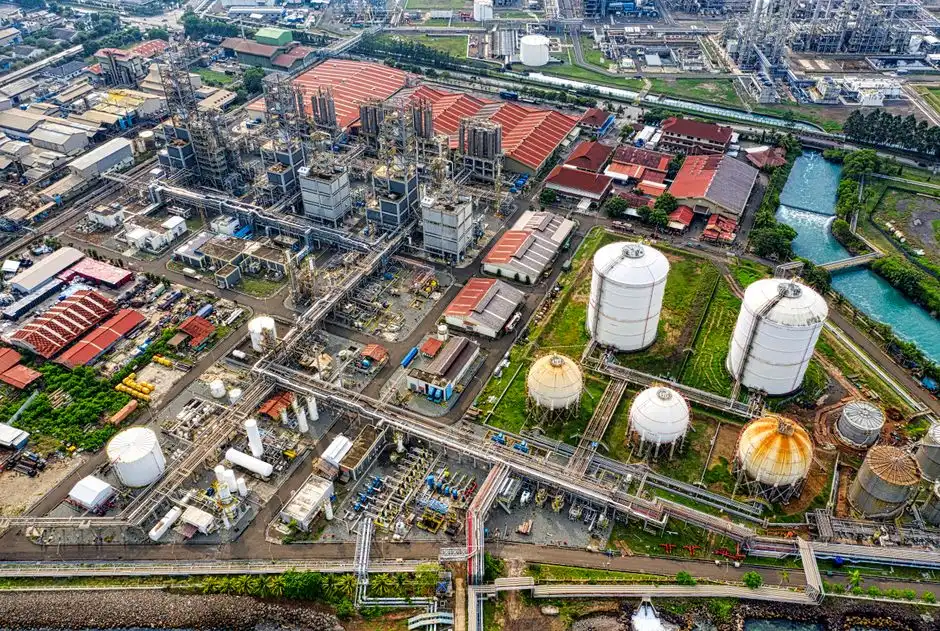
Steyr's treatment train is engineered as a cascade in which each stage strips a specific class of contaminant before handing cleaner water downstream. The influent is oily manufacturing wastewater drawn from parts washing, machining coolant overflow, and engine test cells. The flow description is: oily wastewater → equalization tank → ultrafiltration (oil removal) → nanofiltration (organics, divalent ions, heavy metals) → polishing membrane stage → reuse reservoir → return to car wash, rinsing, or process baths (per Water & Wastes Digest, 2021; per BMW Group, 2021).
Stage 1 — Ultrafiltration (UF): removes free and emulsified oil residues from manufacturing wastewater before they foul downstream membranes. UF operates at a pore size of roughly 0.01–0.1 μm and consistently achieves oil rejection above 99% on properly pretreated oily streams, with a designed flux of 50–80 L/m²·h (HydropureWater field data, 2026).
Stage 2 — Nanofiltration (NF): introduced at Steyr in 2003, NF rejects dissolved organics, heavy metals, and divalent ions while allowing monovalent salts to pass partially, which keeps osmotic pressure differential across the membrane manageable (per Water & Wastes Digest, 2021).
Stage 3 — Polishing / additional membrane combinations: BMW has publicly described Steyr as using "a new combination of various membrane technologies" to handle the variable influent from engine machining and parts washing (per Water & Wastes Digest, 2021). In practice this means RO or a tight NF stage after the primary NF, sized to push the reuse reservoir to feed-water quality.
The combined effect is a true closed loop, not partial recycle. Treated water leaves the final stage at quality suitable for direct feed back into car wash, rinsing, or process baths rather than discharge. A DAF system for oil and suspended solids removal is the standard front-end guard for any auto plant replicating this train, because UF membranes will foul within days if TSS and free oil upstream exceed design limits.
| Stage | Unit Operation | Target Contaminants | Typical Output |
|---|---|---|---|
| Equalization | Buffer tank, pH correction | Flow and pH spikes from batch discharges | Stable feed at TSS <200 mg/L, oil <50 mg/L |
| Stage 1 — UF | 0.01–0.1 μm membrane, crossflow | Free and emulsified oils, suspended solids | Oil <5–10 mg/L, TSS <10 mg/L |
| Stage 2 — NF | 200–300 Da cutoff, 10–30 bar | Dissolved organics, heavy metals, divalent ions | Conductivity cut 50–80%, organics >90% rejection |
| Stage 3 — Polish | Tight NF or RO | Residual TDS, trace organics | Reuse-quality water, conductivity <200 µS/cm |
| Reuse reservoir | Treated-water storage | Buffer for production demand | Feed to car wash, rinsing, process baths |
Process Parameters and Membrane Specifications (Engineering Reference)
Engineers sizing a comparable system should treat the Steyr case as a benchmark, not a drop-in spec. Operating envelopes below are typical for auto-industry oily wastewater trains in 2026, drawn from HydropureWater field data and published membrane-vendor curves, and they bracket the ranges BMW's published outcomes imply. Pretreatment is non-negotiable: feed into the NF stage should hold TSS below 50 mg/L and oil & grease below 10 mg/L, or flux decay will dominate the operating cost within weeks.
| Parameter | UF (Stage 1) | NF (Stage 2) | RO / Tight NF (Stage 3) |
|---|---|---|---|
| Pore size / MWCO | 0.01–0.1 μm | 200–500 Da | <200 Da |
| Operating pressure | 1–3 bar | 10–20 bar | 15–30 bar |
| Designed flux | 50–80 L/m²·h | 15–25 L/m²·h | 10–20 L/m²·h |
| Rejection — oil & grease | >99% | n/a (already removed) | n/a |
| Rejection — divalent ions | Low | 95–98% | 99%+ |
| Rejection — monovalent ions | Low | 20–60% | 95–99% |
| Rejection — organics >200 Da | High | 90%+ | 99%+ |
| Recovery per stage | 85–95% | 75–90% | 70–85% |
| Influent TSS target | <200 mg/L | <50 mg/L | <10 mg/L |
| Influent oil & grease target | <50 mg/L | <10 mg/L | <2 mg/L |
| Specific energy | 0.2–0.5 kWh/m³ | 0.5–1.0 kWh/m³ | 0.8–2.0 kWh/m³ |
| CIP frequency | 2–6 weeks | 3–8 weeks | 3–8 weeks |
Combined train water recovery typically lands at 80–90% of raw influent, with the concentrate stream sent to oil recovery or, in advanced retrofits, to a thermal crystallizer for full zero liquid discharge. Specific energy for the membrane train alone runs 0.5–2.0 kWh/m³ treated, an order of magnitude below thermal evaporation at 15–25 kWh/m³ (HydropureWater field data, 2026). For biological polishing of the organic load between stages, an MBR system for automotive process water reuse is the standard 2026 configuration, combining activated sludge with submerged UF membranes in a single tank.
From BMW to Any Auto Plant: What This Means for Your Facility
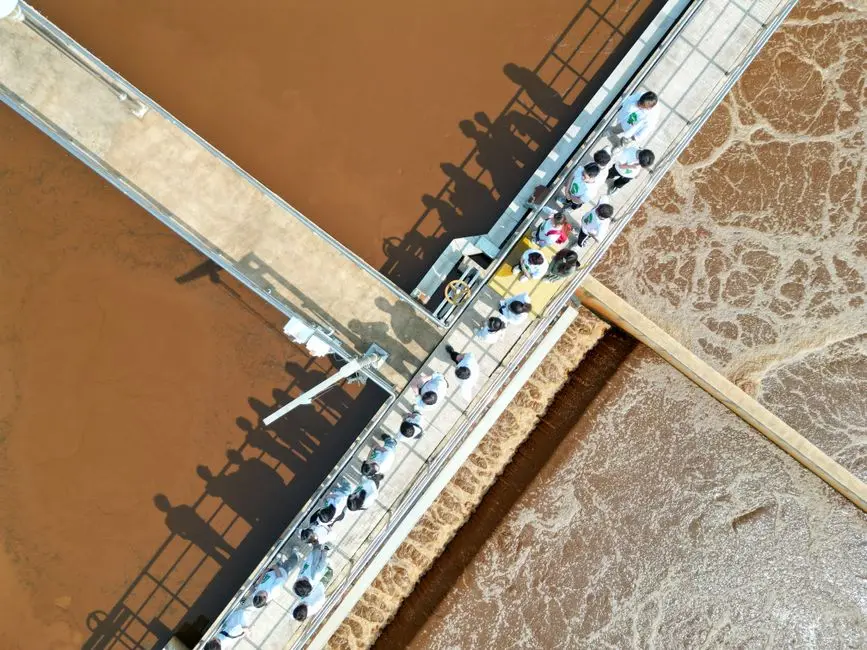
The Steyr train is specific to engine and drivetrain manufacturing, but the cascade logic generalizes to any auto plant. Three principal wastewater streams drive design: oily machining wastewater (coolants, parts-washer overflow, leak-test water), paint shop wastewater (high in VOCs, pigments, and heavy metals such as zinc and nickel from phosphate pretreatment), and general sanitary or domestic flow. A cascade model lets a plant reuse lower-quality water for non-critical applications — toilet flush, landscape irrigation, cooling-tower makeup — while reserving the highest-quality reuse for process baths and final rinse.
For paint shop water specifically, DAF pretreatment for oil and pigment removal typically precedes biological or membrane treatment — the same philosophy as Steyr, adapted to the chemistry. The generic process flow at any auto plant retrofitting toward closed loop looks like: equalization → DAF or oil removal → biological or physico-chemical → UF/NF/RO polish → reuse (HydropureWater field data, 2026). The sizing rule of thumb is direct: BMW's 2.25 m³ per vehicle produced in 2020 (per BMW Group Report 2020) is a reasonable proxy for OEM water demand. A plant producing 100,000 vehicles per year should expect to handle on the order of 225,000 m³/yr of process water through the train.
The most common failure mode in retrofit projects is under-sizing the equalization and DAF front end, which then forces the UF membranes into chronic fouling and pushes CIP cycles from every six weeks down to every ten days. A DAF system for oil and suspended solids removal sized for 1.5× the peak hourly flow — not the average — is the cheapest insurance against that scenario, and the same logic applies to biological polishing via an MBR system for automotive process water reuse.
BMW Wastewater Treatment vs. Generic Industrial Best Practice
BMW sits at the closed-loop, zero-discharge end of the auto-industry spectrum. Most assembly and engine plants still send treated effluent to municipal sewer under trade-effluent permits, with reuse limited to a single in-plant loop such as cooling-tower blowdown recycle. Other major OEMs — Mercedes-Benz, Volkswagen, and the Tesla Gigafactories — have published similar water-per-vehicle targets, but few have released comparable full-closure operating data (per BMW Group, 2021).
| Metric | BMW Steyr (Closed Loop) | Generic Auto Plant (Best Practice) | Typical Discharge Plant |
|---|---|---|---|
| Mains drain status | Closed | Open, partial reuse | Open, full discharge |
| Water per vehicle | ~2.25 m³ (2020 network avg) | 3–4 m³ | 5–8 m³ |
| Treatment train | UF + NF + polish | DAF + biological + UF/RO | DAF + biological + clarification |
| Reuse destination | Car wash, rinsing, process baths | Cooling tower, irrigation | None / sewer |
| Discharge volume | 0 | 20–40% of influent | 100% |
The 2026 trend across all major OEMs is integration of smart monitoring — online TSS, oil-in-water, and TOC sensors — with AI-driven membrane cleaning cycles, which extends membrane life by 20–40% and reduces CIP chemical use (HydropureWater field data, 2026). The next step beyond closed loop is full zero liquid discharge with a crystallizer for the membrane concentrate, but the energy cost — typically 15–25 kWh/m³ for thermal evaporation — keeps full ZLD confined to water-scarce sites or to hydrostatic-test water applications where the concentrate has disposal value, as detailed in this ZLD engineering for industrial water reuse guide.
Frequently Asked Questions
How does BMW treat wastewater at its auto plant?
BMW treats wastewater through closed-loop cascade systems and multi-stage membrane treatment. At its Steyr Austria engine plant, oily manufacturing wastewater passes through ultrafiltration to remove oils, then nanofiltration and additional membrane stages polish it for direct reuse in production, eliminating approximately 7.9 million gallons of water use per year (per Water & Wastes Digest, 2021; per BMW Group, 2021).
What is the three-stage membrane process at BMW Steyr?
The Steyr train is ultrafiltration for oil removal, nanofiltration for dissolved organics, heavy metals, and divalent ions, and a final polishing membrane stage that delivers reuse-quality water back to car wash, rinsing, and process baths. BMW first introduced nanofiltration at Steyr in 2003 and reported a $1.9 million capital investment in membrane technologies over the subsequent three years (per Water & Wastes Digest, 2021).
How much does a closed-loop automotive wastewater system cost and what is the payback?
BMW's Steyr retrofit cost approximately $1.9 million and saves roughly 7.9 million gallons (about 30,000 m³) per year (per Water & Wastes Digest, 2021). At typical EU industrial water tariffs of $3–$6 per m³ plus avoided discharge fees, direct water-cost savings alone run $90,000–$180,000 per year, putting simple payback in the 10–20 year range on water savings alone and significantly shorter once regulatory risk and ESG-driven capital access are priced in.
Can the BMW closed-loop model be applied to non-automotive plants?
Yes, the cascade-plus-membrane logic transfers directly to any facility with high-oil or high-TDS process water — metalworking, machining, food and beverage, and parts washing are all viable candidates. The front end needs to be matched to the influent chemistry: DAF for high free-oil and TSS streams, biological or physico-chemical for high organics, then UF/NF/RO polish to reuse quality. A plant generating 200,000 m³/yr of oily process water can typically justify the membrane retrofit on direct water-cost savings within 7–12 years without subsidies (HydropureWater field data, 2026).