What Counts as a Package Sewage Treatment Plant in 2026
A package sewage treatment plant in 2026 is a pre-engineered, factory-fabricated biological treatment unit — skid- or container-mounted — that integrates intake screening, biological reactor, clarifier, disinfection, and a control panel into a single factory-tested assembly, distinct from a stick-built concrete STP that is poured and wired on site over 6–18 months. Nigerian buyers most often request 20–100 m³/day units serving 200–1,000 residents in gated estates, schools, hospitals, and small industrial parks; the residential estate sweet spot sits at 10–50 m³/day (HydropureWater field data, 2026).
Three process trains dominate the 2026 export catalogue. MBR (membrane bioreactor) is a containerised unit with submerged flat-sheet or hollow-fibre modules delivering BOD₅ ≤ 10 mg/L and TSS ≤ 5 mg/L. WSZ is a buried anoxic/oxic contact-oxidation plant housed in an FRP or carbon-steel tank, with no visible above-grade footprint and BOD₅ ≤ 20 mg/L effluent. SBR is a skid-mounted sequencing batch reactor, flexible to hydraulic and organic shock loads but operator-dependent. Buyers who cannot tell these apart often get quoted an "MBR" that is actually a septic tank with an aeration diffuser — a common complaint in Lagos procurement files (Nigerian consulting engineer survey, 2025-09). The defensible specification is to write the process train, the effluent numbers, and the footprint into the enquiry RFQ before any price talk.
For buried installations, the WSZ buried A/O package plant is the standard reference; for above-grade containerised deployments, the containerised MBR package plant is the equivalent. If a supplier cannot show both configurations in their catalogue, they are almost certainly a trading company, not an OEM.
Nigeria's 2026 Compliance Map: FMEnv, SONCAP, and NAFDAC
Most Nigeria-bound package STP orders fail at the port or at commissioning because the buyer never checked three documents: FMEnv effluent compliance, SONCAP product certification, and (where relevant) NAFDAC registration. FMEnv's National Environmental (Surface and Groundwater Quality) Regulations set the floor for any package plant quote: BOD₅ ≤ 50 mg/L, TSS ≤ 50 mg/L, COD ≤ 200 mg/L, faecal coliform ≤ 400 CFU/100 mL for surface-water discharge (FMEnv, 2024 revision, still in force 2026). Any supplier whose "typical performance" numbers do not clear these limits on the data sheet should be removed from the shortlist before the second email.
SONCAP (SON Conformity Assessment Programme) is mandatory for imported electromechanical equipment entering Nigeria. The supplier must obtain a Product Certificate (P-CC) from a SONACAS-accredited lab — CCIC, SGS, or TUV are the only ones Chinese OEMs routinely work with — typically 2–3 weeks pre-shipment, at a cost of $400–$900 per equipment line. The M-CC (per-shipment) is then issued at the port of loading and presented to Nigerian Customs for release. A proforma invoice that does not line-item SONCAP fees is a red flag: the supplier either does not know the process or plans to push the cost onto the buyer mid-shipment.
NAFDAC registration only applies if the plant treats hospital, pharmaceutical, or food-processing effluent — not standard domestic sewage. The 2026 import duty stack on Chinese-origin treatment equipment is 5% customs duty + 7.5% VAT + 1% NHIL + 1% GETFund + 0.5% NAFDAC charge (where applicable), producing the typical 20–28% landed-cost uplift over FOB (Nigerian Customs Service 2026 tariff schedule, ECOWAS Common External Tariff band). Buyers in Lagos and Port Harcourt should budget demurrage at $80–$150/day beyond 7 free days at Apapa and Onne respectively.
Top 2026 Package STP Supplier Channels Serving Nigeria
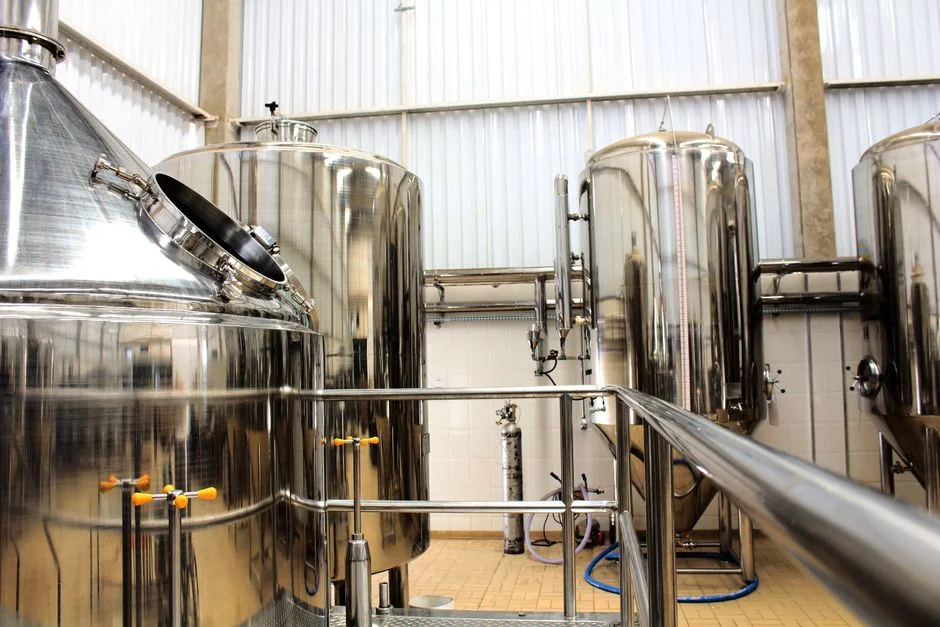
Three viable sourcing channels serve Nigeria in 2026, and the right one depends on whether the buyer's priority is lowest FOB price, fastest delivery, or single-contract accountability. The table below summarises the trade-offs; the narrative explains what each channel actually delivers.
| Channel | Typical Origin | 2026 FOB (1–10 m³/h) | Transit to Lagos | Best For |
|---|---|---|---|---|
| Chinese OEM direct (Qingdao/Shandong cluster) | Shandong, China | $3,500–$8,000 | 25–35 days | Lowest FOB; large estates, schools |
| Indian fabricator (Vikas Pump, Nicoles) | Delhi NCR, India | $4,200–$9,400 (+10–18%) | 15–20 days | Faster shipping; consultant-favoured after-sales |
| Local Nigerian system integrator | Lagos / Port Harcourt | FOB + 30–50% premium | Local stock or 25 days | Single-contract SONCAP + civil + commissioning |
Alibaba's Top 1 result for this query returns 16+ verified Chinese manufacturers offering MBR and WSZ plants in the $3,500–$8,000 FOB range with MOQ 1 set — the Qingdao cluster (Qingdao Yimei, Linzhen, Dongmao, Chuangdong) is the densest source. Indian fabricators like Vikas Pump and Nicoles (2004-founded, Delhi) are preferred by some Lagos consultants for a 10–15 day transit advantage and perceived proximity, but their ex-works prices run 10–18% above Chinese equivalents (cross-channel comparison, 2025-12). Local Nigerian integrators in Lagos and Port Harcourt assemble Chinese skid modules, add civil works and SCADA, and offer on-site commissioning and SONCAP handling as a single contract — worth the 30–50% premium when the buyer has no in-house SONCAP experience.
Disqualifying red flags across all three channels: no ISO 9001 certificate, no factory acceptance test (FAT) video, no signed proforma invoice on company letterhead, and refusal to commit to SONCAP pre-shipment sample testing. Any one of these is sufficient to drop the supplier from a defensible shortlist.
WSZ vs MBR vs SBR: Which Package Plant Fits Your Site
Technology choice in Nigeria is driven by three site-specific constraints — water table, available footprint, and whether the effluent is reused — not by what the cheapest supplier happens to push. The matrix below matches each process train to the use case it actually serves.
| Parameter | WSZ (buried A/O) | MBR (containerised) | SBR (skid) |
|---|---|---|---|
| Capacity range | 1–80 m³/h | 10–2,000 m³/day | 5–500 m³/day |
| Footprint | Buried, no visible footprint | 20ft / 40ft container above-grade | Skid + reactor basin |
| Effluent BOD₅ | ≤ 20 mg/L | ≤ 10 mg/L | ≤ 20 mg/L |
| Effluent TSS | ≤ 30 mg/L | ≤ 5 mg/L | ≤ 30 mg/L |
| Operator required | No (PLC auto) | No (PLC auto) | Yes (batch sequencing) |
| Best-fit site | Abuja, Kano, gated estates, hotels | Lagos/Ikoyi high water table, hospitals, reuse | Industrial parks, abattoirs, variable loads |
WSZ wins on dry-zone sites (Abuja, Kano, northern estates) where burial is feasible, landscaping above the tank is desired, and the buyer wants zero visible infrastructure. The buried FRP tank sits below grade, the control panel is the only above-grade element, and the effluent clears FMEnv surface-water limits for BOD₅ and TSS with margin. For an equivalent buried A/O specification, the WSZ buried A/O package plant is the reference build.
MBR is the right answer for Lagos, Ikoyi, and the Lekki corridor where the water table sits within 1–2 m of grade and burial is impractical or uneconomical. The containerised 20ft/40ft skid is delivered factory-tested, lifted onto a concrete pad, and commissioned in 3–5 days. Effluent quality (BOD₅ ≤ 10 mg/L, TSS ≤ 5 mg/L) is reuse-grade for irrigation and toilet flushing, which matters for sites under Lagos State irrigation-reuse rules. The standard containerised MBR package plant paired with an MBR flat sheet membrane module delivers this performance.
SBR is the right call for industrial parks, abattoirs, and food-processing facilities where influent strength and flow vary across the shift. The trade-off is operator dependency — batch sequencing, decant, and sludge wasting need a trained hand, which most Nigerian estates do not have on payroll.
Real 2026 Landed Cost in Nigeria: FOB vs Your Gate
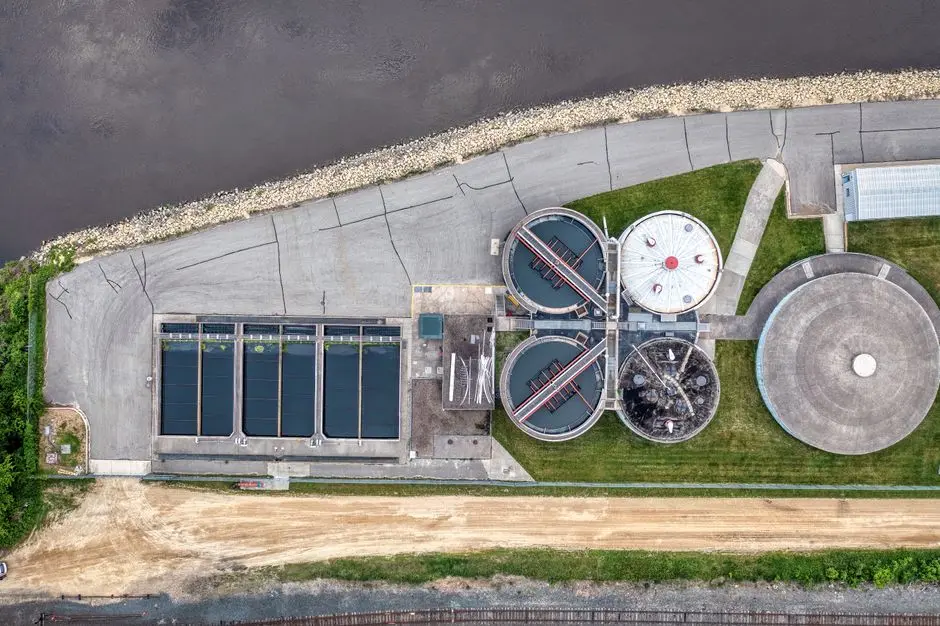
The number the CFO signs off on is the landed cost, not the FOB sticker. The worked example below uses a 30 m³/day plant (the typical 200–300-resident estate size) and traces every line item from Qingdao ex-works to the Lagos site gate.
| Cost Line | MBR 30 m³/day (containerised) | WSZ 30 m³/day (buried) | SBR 30 m³/day (skid) |
|---|---|---|---|
| FOB Qingdao | $18,000 | $14,000 | $11,000 |
| Ocean freight (LCL 40ft) | $2,800 | $2,200 | $1,800 |
| Insurance (0.3% of CIF) | $400 | $320 | $260 |
| SONCAP + CCIC fees | $600 | $600 | $600 |
| Duty + VAT + levies (≈ 14.5%) | $1,900 | $1,500 | $1,200 |
| Clearing + inland haulage (Apapa) | $1,500 | $1,500 | $1,500 |
| Civil works (reactor basin, pipework) | Included | Included | +$3,500 (basin) |
| Total landed, install-ready | ≈ $25,200 | ≈ $20,500 | ≈ $20,300 + civil |
The FOB-to-landed uplift is 20–28% across all three configurations, consistent with the duty stack in the compliance section. The MBR carries a $4,700 premium over WSZ at the same capacity because of the containerised membrane modules — money that buys you reuse-grade effluent and zero burial risk in Lagos. SBR looks cheapest on FOB until the civil works for the reactor basin are added, at which point it converges on WSZ. The price-anchor discriminator between a serious OEM and a catalogue reseller is the factory acceptance test video: vetting Chinese OEMs before you sign a PO is the single highest-ROI step in the procurement cycle.
7-Step Buyer Checklist Before You Sign the PO
- Lock the design basis. Write the influent/effluent target (FMEnv surface-water or Lagos State irrigation-reuse) into the RFQ before any price talk. No target, no defensible quote.
- Request FAT video, ISO 9001, and a SONCAP P-CC sample from each shortlisted supplier. A supplier who refuses any of these is automatically out.
- Verify the OEM ships under FOB or CFR — never CIF Lagos. CIF embeds the freight and insurance margin in a number the buyer cannot audit.
- Confirm 304 or 316 stainless contact surfaces for Lagos coastal humidity. Mild steel with paint fails inside 24 months in Lekki salt air.
- Get a 24-month warranty and a written response-within-72-hours clause for remote troubleshooting. PLC faults at 02:00 cannot wait a week for a time zone-aligned reply.
- Pre-pay 30% deposit, 60% against B/L copy, 10% after commissioning. Never 100% upfront, never 50/50 — the 10% retention is the only leverage that gets punch-list items closed.
- Engage a Nigerian clearing agent with SONCAP experience at Apapa or Onne. Demurrage at $80–$150/day beyond 7 free days burns the savings from the cheapest FOB quote.
For estates weighing a package STP against a septic tank or constructed wetland, the compact STP vs septic tank vs constructed wetland comparison gives the lifecycle numbers. Sites that want remote visibility should spec SCADA and remote monitoring add-ons in the same PO to avoid a retrofit markup later.
Frequently Asked Questions
What FMEnv effluent limits must a package STP meet in Nigeria in 2026? BOD₅ ≤ 50 mg/L, TSS ≤ 50 mg/L, COD ≤ 200 mg/L, and faecal coliform ≤ 400 CFU/100 mL for surface-water discharge, per the FMEnv National Environmental (Surface and Groundwater Quality) Regulations 2024 revision. Reuse-targeted plants in Lagos State must additionally meet irrigation-reuse parameters set by the Lagos State Environmental Protection Agency.
How much does a package sewage treatment plant cost landed in Nigeria? A 30 m³/day MBR containerised plant lands at approximately $25,200 in Lagos (FOB Qingdao $18,000 + 20–28% landed uplift); the equivalent WSZ buried plant lands at approximately $20,500; an SBR skid lands at approximately $20,300 before civil works for the reactor basin.
What is SONCAP and is it required for imported treatment plants? SONCAP (SON Conformity Assessment Programme) is mandatory for all imported electromechanical equipment entering Nigeria. The supplier must obtain a Product Certificate (P-CC) from a SONACAS-accredited lab (CCIC, SGS, or TUV) 2–3 weeks pre-shipment, then an M-CC at the port of loading for customs release.
Which is better for Lagos — WSZ buried or MBR containerised? MBR containerised is the standard answer for Lagos and the Lekki corridor because the water table sits within 1–2 m of grade and burial is uneconomical; WSZ buried is the better fit for Abuja, Kano, and northern estates where burial is feasible and a zero-visible-footprint installation is desired.
Do I need NAFDAC registration for a domestic sewage treatment plant? No. NAFDAC registration only applies if the plant treats hospital, pharmaceutical, or food-processing effluent. Standard domestic sewage for residential estates, schools, and offices is outside NAFDAC's scope.