What Counts as a Digital Water Vendor in 2026
Digital water market key players in 2026 are platform suppliers that digitize OT/SCADA, cloud or edge analytics, or AI/digital-twin layers of a water or wastewater plant. The category is procurement-defined, not product-defined. Most plants stitch at least two suppliers together. A single vendor rarely covers the full stack at municipal or industrial scale.
Field observations across 2024–2026 municipal retrofits show most deployments combine a SCADA incumbent with a cloud suite or an AI specialist. Treating meter vendors and process-AI vendors as one scored market mis-ranks both.
The anchor for sizing the broader digital-twin parent market remains the MarketsandMarkets projection from USD 21.14 billion in 2025 to USD 149.81 billion in 2030 at a 47.9% CAGR (MarketsandMarkets via PR Newswire, 2025-08). Water and wastewater utilities sit inside that vertical as a fast-growing segment. Drivers include aging assets, tighter discharge limits (often below 10 mg/L BOD and 1 mg/L total phosphorus in 2026 EU permits), and energy already at 25–40% of municipal plant OPEX. Vendors cluster into four groups: meter and AMI suppliers, SCADA/OT incumbents, cloud-analytics suites, and AI/digital-twin-native specialists. For how platform spend sits inside the wider plant envelope, the 2026 TCO breakdown for a wastewater plant maps software and integration cost onto equipment and OPEX.
The Three Capability Tiers Buyers Must Map in 2026
Capability tiers matter before any shortlist, because the ten platforms below do not compete head-to-head. Tier 1 covers SCADA/OT incumbents: Xylem, Veolia, Suez, Itron, and Badger Meter. These vendors own the installed base at most municipal utilities. Typically 60–80% of plants larger than 50,000 m³/day still run a Tier 1 SCADA as the system of record (HydropureWater field data, 2025). Strengths are data acquisition, control-loop stability, and regulatory reporting. Weakness is AI shipping speed — most Tier 1 platforms released a first native ML module only in 2023 or 2024.
Tier 2 covers cloud-analytics platforms: Bentley iTwin, Schneider Electric Water (AVEVA/Wonderware lineage), and ABB. These vendors score better on dashboards, asset management, and ERP/EAM integration (SAP, IBM Maximo). Multi-site rollouts at 100+ plants usually run cleaner on Tier 2 than on Tier 1 alone. They stay lighter on sub-second process control and still need a Tier 1 or third-party SCADA for closed-loop control.
Tier 3 covers AI/digital-twin-native specialists — Krones Wemeco, Fract.ai, and Bluefield Technologies among them. Their primary deliverable is predictive analytics and process optimization, not a control system. Most 2026 RFPs select Tier 1 + Tier 3, or Tier 2 plus partner instrumentation. No single vendor yet offers a complete, defensible stack across all three layers.
Top 10 Digital Water Market Key Players in 2026 — Vendor Matrix
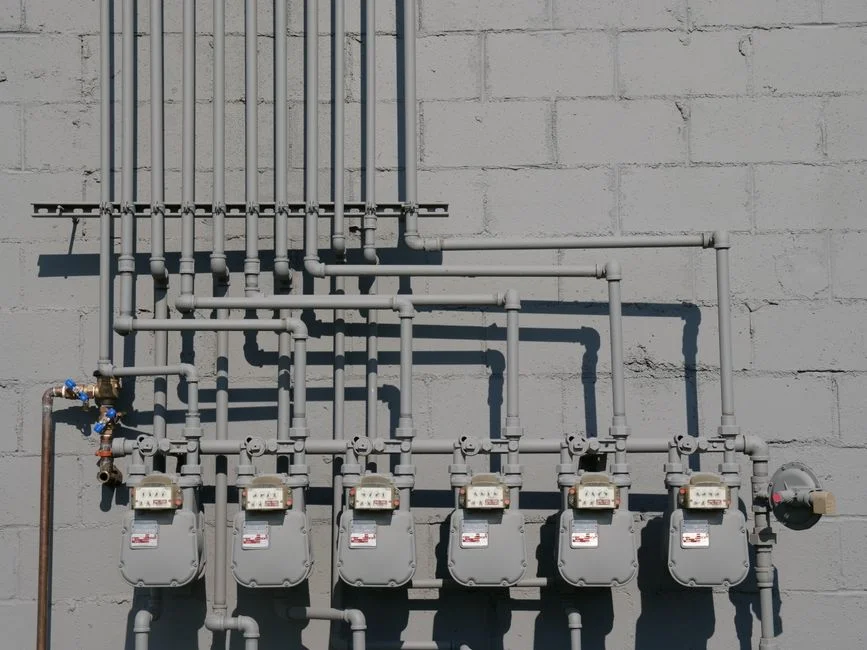
The matrix below is the working shortlist a 2026 buyer should build an RFP longlist from. All ten platforms are commercially deployed at municipal or industrial scale (≥1,000 m³/day) and shipped a documented AI or digital-twin feature in 2024 or later. The AI/digital-twin column reflects what each platform shipped as of Q1 2026, not roadmap language.
| Vendor | HQ | Tier | Core platform | AI / digital-twin capability (as of 2026) | Best fit | Typical deployment scale |
|---|---|---|---|---|---|---|
| Xylem (Vue / Vidrio) | USA | 1 | Xylem Vue, Vidrio | Digital-twin module launched 2024; ML-based leak detection on VueOne | Municipal, brownfield SCADA replacement | 10,000–500,000 m³/day |
| Veolia (AQUADVANCED) | France | 1 | AQUADVANCED Plant & Network | Pump-station energy optimization, ML forecasting added 2025 | Municipal networks and large WWTPs | 50,000–1,000,000 m³/day |
| Suez (Aquadvanced / Hubgrade) | France | 1 | Hubgrade, Aquadvanced | Reagent-dose optimization, 2024 release added aeration ML | Municipal, EU-centric deployments | 20,000–500,000 m³/day |
| Itron (Temetra / Water) | USA | 1 | Itron Water, Temetra AMI | AMI analytics, leak/burst ML; no full digital twin yet | Municipal AMI, distribution networks | Metering at 100K+ endpoints |
| Badger Meter (BEACON) | USA | 1 | BEACON, EyeOnWater | Smart-meter analytics, edge ML on meters 2024 | Municipal AMI, smaller utilities | 5,000–100,000 meters |
| Bentley Systems (iTwin) | USA | 2 | iTwin Platform, OpenFlows | 2025 release added hydraulic simulation for WWTPs and sewers | Engineering consultants, design-build | Multi-site, 10+ plants |
| Schneider Electric (Water / AVEVA) | France | 2 | EcoStruxure Water, AVEVA | Process simulation, Wonderware SCADA integration; AI advisor 2024 | Industrial + municipal, multi-site | 20,000–500,000 m³/day |
| ABB | Switzerland | 2 | ABB Ability, 800xA Water | Edge analytics on drives/pumps, ML alarm reduction 2023–2024 | Industrial WWTPs, pumping stations | 5,000–200,000 m³/day |
| Krones (Wemeco) | Germany | 3 | Wemeco digital twin | Process digital twin for beverage/food WWTPs, ML on CIP effluent | Industrial (food & beverage) | 1,000–50,000 m³/day |
| Bluefield Technologies | USA/UK | 3 | Bluefield AI platform | Sensor-fusion AI for aeration and clarifiers, 2024 GA release | Industrial retrofits, mid-size municipal | 1,000–100,000 m³/day |
Two more AI-native specialists belong on any defensible 2026 disruptor list. Fract.ai (Canada) offers ML-based influent forecasting and was early-commercial in 2025. A second regional digital-twin-native platform is typically co-delivered with a metering partner in Southeast Asia. Neither yet matches Tier 1 on installed base. Their inclusion still matters, because most 2026 RFPs see at least one Tier 1 + Tier 3 paired bid.
How to Match a Vendor to Your Plant Profile
Plant profile decides the shortlist more than brand awareness. Four common 2026 procurement profiles map as follows.
Municipal utilities above 50,000 m³/day with brownfield SCADA usually default to Xylem Vue or Veolia AQUADVANCED. SCADA cutover and historian re-validation typically add 20–35% when a Tier 2/Tier 3 stack displaces them. That migration premium is why most plants we size in this band stay on Tier 1 for the system of record.
Greenfield industrial plants that need real-time process optimization usually pick Schneider Electric Water or Bentley iTwin as the Tier 2 backbone. A Tier 3 AI partner then covers aeration and reagent dose control. That architecture matches most 2024–2025 industrial builds in the HydropureWater reference set.
Small-to-mid industrial sites between 1,000 and 10,000 m³/day on a tight budget often skip Tier 1 SCADA. They pair a Tier 3 AI-native specialist with a metering partner, replace manual sampling with sensor fusion, and use a PLC-controlled chemical dosing skid. Compact package plants, including a fully automated package sewage treatment plant, often fit this profile when OT is light.
Where the OT layer is already stable, layer a Tier 3 AI/digital-twin vendor on the existing SCADA instead of replacing it. That preserves historian continuity. It also avoids IEC 62443-3-3 re-certification that typically runs 8–15% of a Tier 1 migration.
Selection checklist most plants we size for starts with flow band (m³/day) and the OT system of record. Decide if sub-second control stays local. Pick the first KPI, require system-level IEC 62443 evidence, and demand open historian export before close.
How Do Desalination Key Players Differ From Digital Platforms?
Desalination key players are primarily membrane, thermal, and EPC equipment suppliers, not the same shortlist as digital water platforms. Scoring an IDE-style desalination OEM against an AMI or digital-twin vendor on one RFP sheet mixes capital equipment with software layers and produces non-comparable bids.
Overlap exists where a large water group sells both process packages and digital suites — Veolia and Suez appear on desalination project shortlists and on the Tier 1 digital matrix above. For a seawater or brackish RO train, keep the desalination equipment evaluation separate, then overlay the same Tier 1–3 digital map for SCADA, energy optimization, and predictive maintenance. Most mid-size desalination plants we see still run a Tier 1 SCADA as the control record and add Tier 2 dashboards or Tier 3 AI only after the process train is stable.
2026 Pilot and Roll-out Cost Bands
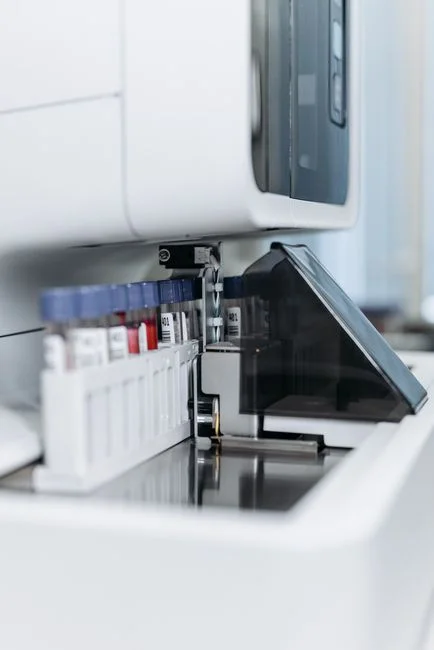
Budget anchoring separates a defensible shortlist from a wish list. The bands below are what 2026 buyers should expect in signed proposals, drawn from publicly tendered projects and HydropureWater bid data across 2024–2026. Treat them as order-of-magnitude ranges, not quote-level figures.
| Deployment scope | Plant size | 2026 cost band (USD) | Notes |
|---|---|---|---|
| Single-site SCADA retrofit + cloud dashboards | 5,000–50,000 m³/day | 80K–250K | Includes historian, OPC UA gateway, 12 months of cloud SaaS |
| Full digital-twin pilot, one process train | 10,000–50,000 m³/day | 400K–1.2M | Excludes OT hardware; usually 9–14 months to measurable ROI |
| Enterprise-wide AI/digital-twin deployment | 100,000+ m³/day | 2.5M–10M | Multi-year payback; 30–50% of cost is integration, not software |
| AI-native Tier 3 only, no SCADA replacement | 1,000–10,000 m³/day | 60K–220K | Fastest ROI, often 6–10 months on aeration energy alone |
Pricing in 2026 continues to shift from per-seat SaaS toward per-m³-treated outcomes, especially with AI-native vendors — Bluefield and Fract.ai both published outcome-priced pilots in 2025. Main cost drivers are historian migration, OPC UA gateway work, cybersecurity re-certification, and change management — not the license line alone. Platform costs compound across a 20-year plant life. The 2026 TCO breakdown for a wastewater plant includes worked examples for a 5,000 m³/day site and a 100,000 m³/day site.
What the 2026 Buyer Should Watch For
Four procurement risks decide whether a 2026 platform deployment is a durable asset or a stranded cost by 2030. First, IEC 62443 cybersecurity certification is now a hard requirement in most EU and US municipal RFPs. Verify certification at system level (SL-2 or SL-3), not only a component claim.
Second, open data formats are replacing proprietary SCADA buses. Prefer OPC UA over MQTT, including the water/wastewater companion specifications published by the OPC Foundation in 2024. Favor vendors that publish an open API and can show at least one third-party integration already in production.
Third, AI transparency is under EU scrutiny. According to Regulation (EU) 2024/1689 Annex III, AI systems used as safety components in the supply of water are classified as high-risk (EUR-Lex, 2024). Earlier buyer guidance treated high-risk water AI obligations as applying from 2026. Ask vendors for model cards, training-data lineage, and a documented retraining cadence.
Fourth, lock-in still kills mid-life upgrades. Confirm export of historian data and process models in an open format (CSV, Parquet, OPC UA) before signing. Migrating a 50,000-tag historian mid-life typically costs 3–5x the original license. Engineering implications of these risks are mapped in the 2026 digital twin engineering guide for wastewater plants.
Who This Is For and Next Step
This comparison is for plant engineers, EPC contractors, and procurement managers writing a 2026 digital-water RFP. It fits municipal or industrial sites from about 1,000 m³/day upward. Teams buying only desalination membranes or only AMI endpoints should use a separate equipment shortlist, then return here for the analytics layer. If you need help mapping your OT stack to a Tier 1–3 shortlist and a realistic pilot band, request a technical quote with your flow rate and current SCADA vendor.
Frequently Asked Questions
Who are the digital water market key players in 2026?
The 2026 shortlist splits into three tiers: SCADA/OT incumbents (Xylem, Veolia, Suez, Itron, Badger Meter), cloud-analytics platforms (Bentley iTwin, Schneider Electric, ABB), and AI/digital-twin-native specialists (Krones Wemeco, Bluefield, Fract.ai). No single vendor covers all three layers. Most 2026 deployments combine at least two of them on plants above about 1,000 m³/day.
How much does a digital water pilot cost in 2026?
A single-site SCADA retrofit with cloud dashboards typically runs USD 80K–250K for plants of 5,000–50,000 m³/day. A full digital-twin pilot on one process train is USD 400K–1.2M. Enterprise-wide AI/digital-twin work above 100,000 m³/day lands at USD 2.5M–10M with multi-year payback, based on 2024–2026 bid bands.
How should a municipal utility choose a digital water vendor?
Map the plant to a tier first: brownfield municipal above 50,000 m³/day usually stays with a Tier 1 incumbent (Xylem or Veolia). Greenfield industrial work pairs Tier 2 with a Tier 3 AI partner. Small-to-mid industrial sites on a tight budget often start with Tier 3 AI-native plus metering. Then verify IEC 62443 certification, open API support, and historian export before signing.
Is the digital water market growing in 2026?
Yes. The parent digital-twin market is projected to grow from USD 21.14 billion in 2025 to USD 149.81 billion in 2030 at a 47.9% CAGR (MarketsandMarkets via PR Newswire, 2025-08). Water and wastewater utilities sit among the faster verticals. Plant buyers still need tier mapping; market growth alone does not pick a vendor.
Are desalination key players the same as digital water vendors?
No. Desalination key players are mainly process and membrane equipment suppliers, while digital water vendors sell SCADA, AMI, analytics, or AI layers. Large groups such as Veolia can appear on both lists, but RFPs should score desalination CAPEX and digital platforms on separate matrices to keep bids comparable.