Which QCVN Standard Applies to Your Discharge in 2026
Two MONRE technical regulations cover roughly 80% of the confusion at the gate: QCVN 14:2015/BTNMT governs domestic and similar-strength wastewater, while QCVN 40:2011/BTNMT governs industrial wastewater. The cap you must hit depends entirely on which QCVN applies to your discharge point — and the answer changes the design by a factor of two or more.
Under QCVN 14:2015/BTNMT, total NH4+ is capped at 5 mg/L when effluent enters a receiving water used for domestic supply (Type A) and 10 mg/L when it enters other surface waters (Type B). Under QCVN 40:2011/BTNMT, NH3-N is capped at 4 mg/L (Column A) for discharges to sources used for domestic supply and 8 mg/L (Column B) for other receivers, and this applies to most food, textile, chemical, and metal-finishing plants.
Sector-specific overlays override the general industrial cap. QCVN 28:2010/BTNMT sets aquaculture pond-water at 0.5–2 mg/L NH3-N. QCVN 13-MT:2015/BTNMT sets thermal power at 10 mg/L (A) / 20 mg/L (B). QCVN 12-MT:2015/BTNMT covers steel and metallurgy. Pig farming falls under QCVN 62-MT:2016/BTNMT.
The decision logic before an inspector arrives: (1) identify the discharge point on your permit; (2) classify the receiving water under MONRE Decision 1612/QĐ-BTNMT (2024); (3) pick Column A or B; (4) check whether a sector QCVN overrides the general industrial limit.
| Standard | Scope | Column A (drinking-water source) | Column B (other receivers) |
|---|---|---|---|
| QCVN 14:2015/BTNMT | Domestic & similar-strength | NH4+ 5 mg/L | NH4+ 10 mg/L |
| QCVN 40:2011/BTNMT | Industrial (default) | NH3-N 4 mg/L | NH3-N 8 mg/L |
| QCVN 13-MT:2015/BTNMT | Thermal power | NH3-N 10 mg/L | NH3-N 20 mg/L |
| QCVN 28:2010/BTNMT | Aquaculture pond water | 0.5–2 mg/L NH3-N | — |
| QCVN 12-MT:2015/BTNMT | Steel & metallurgy | Per Annex | Per Annex |
| QCVN 62-MT:2016/BTNMT | Livestock effluent | Total N 40 mg/L | Per Annex |
2026 Ammonia Limits by Industry Sector (QCVN Comparison Table)
Most food, dairy, textile, and chemical plants sit on the QCVN 40 default of 4/8 mg/L, but four sectors face tighter or differently structured caps that change the process train entirely.
Textile & dyeing: 4/8 mg/L under QCVN 40, but Higg Index 3.0 buyer requirements often demand <2 mg/L at the outlet — a gap that pushes designs toward MBR polishing rather than conventional A/O alone. Food processing & dairy: 4/8 mg/L; high-strength dairies routinely run influent NH3-N at 200–600 mg/L and need two-stage nitrification (per HydropureWater field data, 2026). Pig farming & slaughter: 4/8 mg/L QCVN 40 plus QCVN 62-MT:2016/BTNMT, which sets total N <40 mg/L in Column A. Aquaculture: 0.1–0.5 mg/L free NH3, 2 mg/L TAN under QCVN 28:2010 — a fish-kill threshold, not a compliance line. Landfill leachate: influent typically 500–2,000 mg/L NH3-N; must still meet 4/8 mg/L at the outlet, which is why MBR + RO polishing dominates this segment. Fertilizer / NPK: 4/8 mg/L plus a 30 mg/L total-N cap; in 2026 MONRE inspections QCVN 40 total-N is being enforced as strictly as NH3-N.
| Sector | Typical influent NH3-N (mg/L) | Legal cap (A / B) | Override standard |
|---|---|---|---|
| Textile & dyeing | 20–80 | 4 / 8 mg/L | Buyer Higg 3.0 <2 mg/L |
| Food & dairy | 200–600 | 4 / 8 mg/L | — |
| Pig farming & slaughter | 400–1,200 | 4 / 8 mg/L | QCVN 62-MT TN <40 mg/L |
| Aquaculture (pond water) | 0.5–3 | 0.1–0.5 mg/L free NH3 | QCVN 28:2010 |
| Landfill leachate | 500–2,000 | 4 / 8 mg/L at outlet | — |
| Fertilizer / NPK | 300–800 | 4 / 8 mg/L + TN 30 mg/L | — |
| Thermal power | 5–30 | 10 / 20 mg/L | QCVN 13-MT:2015 |
Free Ammonia vs Total Ammonia Nitrogen: Why the Vietnam Climate Changes the Math
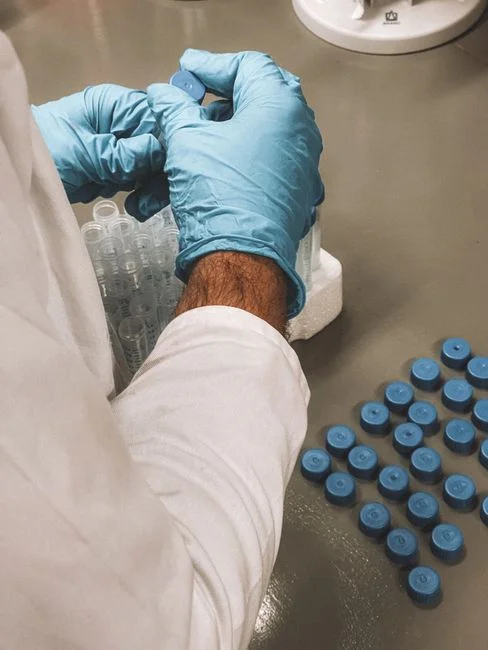
Total Ammonia Nitrogen (TAN) is the sum of ionized ammonium (NH4+) and un-ionized free ammonia (NH3). Free NH3 is the toxic form — it crosses fish gills and disrupts nitrifier biofilms at concentrations an order of magnitude lower than TAN. The ratio between the two is governed by pH and temperature: at 30 °C and pH 8.0, free NH3 is approximately 6.4% of TAN; at pH 8.5 it rises to 12.5% (per Emerson et al. equilibrium equations, as cited in the Vietnam total nitrogen QCVN guide).
Vietnam's 28–32 °C ambient temperature and the high-pH effluents typical of textile and dye-house discharge push this ratio into the danger band from May through September. A plant reporting TAN at 8 mg/L into a Type B receiver may still be releasing roughly 1 mg/L free NH3 downstream — well above the 0.1–0.5 mg/L aquaculture cap in QCVN 28:2010. The practical rule: design and report against TAN to satisfy the permit, but measure free NH3 in the receiving-water column during warm-season audits, especially if a shrimp or fish farm is downstream.
Process Trains That Hit <4 mg/L NH3-N: A/O, A/O-MBBR, and MBR
The right biological train depends on influent NH3-N strength, available footprint, and the buffer a plant wants against TAN excursions modeled in US municipal data (per the Springer 2019 risk model on 106 WWTPs).
Conventional A/O (anoxic + aerobic) handles influent NH3-N of 50–200 mg/L down to <5 mg/L with HRT 18–24 h and MLSS 3,000–4,000 mg/L. A/O + MBBR lifts the ceiling to 200–600 mg/L influent; biofilm media raises the effective nitrification rate, cuts footprint 30–40%, and routinely delivers <3 mg/L effluent. A submerged MBR membrane bioreactor handles up to 1,000 mg/L influent, achieves <1 mg/L NH3-N and <0.1 mg/L free NH3, and acts as a polishing safety net that lets the upstream A/O run at higher MLSS without sludge washout — the same resilience property that the Springer 2019 model identified as the main mitigator of TAN permit-violation probability.
| Process | Influent NH3-N (mg/L) | Effluent NH3-N (mg/L) | HRT (h) | Footprint (m²/m³/d) | OPEX (USD/m³) |
|---|---|---|---|---|---|
| Conventional A/O | 50–200 | <5 | 18–24 | 0.4–0.6 | 0.10–0.18 |
| A/O + MBBR | 200–600 | <3 | 12–18 | 0.25–0.4 | 0.18–0.28 |
| MBR (full) | up to 1,000 | <1 | 10–16 | 0.15–0.25 | 0.22–0.35 |
For sites below 50 m³/d or tight urban footprints, a compact A/O package plant is often the lowest-risk entry point; for high-strength influent requiring <1 mg/L polishing, an integrated MBR system with PVDF module cassettes is the standard reference design.
2026 Cost & Footprint Reality Check for Vietnam Sites
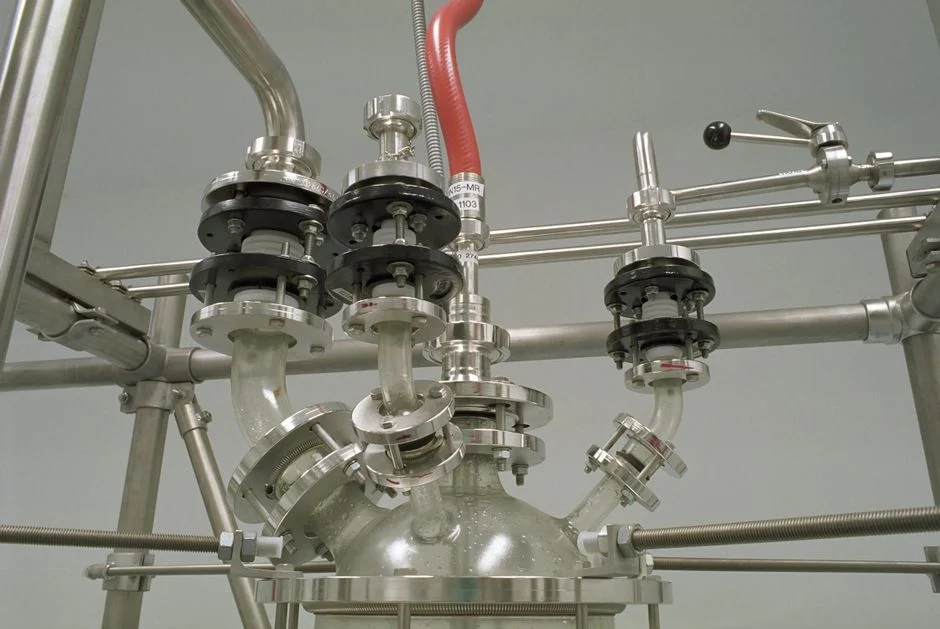
Budget conversations in Vietnam turn on three numbers: CAPEX per m³/d, OPEX per m³ treated, and footprint per m³/d. The ranges below reflect 2026 industrial WW market reports and HydropureWater project data from textile, dairy, and leachate sites in Bình Dương, Đồng Nai, and Bắc Ninh.
| Process | CAPEX (USD/m³/d) | OPEX (USD/m³) | Footprint (m²/m³/d) |
|---|---|---|---|
| A/O only | 110–180 | 0.10–0.18 | 0.4–0.6 |
| A/O + MBBR | 160–260 | 0.18–0.28 | 0.25–0.4 |
| MBR (full) | 280–420 | 0.22–0.35 | 0.15–0.25 |
The A/O + MBBR + DAF pre-treatment configuration has become the de-facto standard for the 4/8 mg/L cap across BSCI-audited textile parks and food plants in southern Vietnam, with a PLC-controlled chemical dosing skid for coagulant and pH trim. MBR is reserved for sites with <1 mg/L buyer requirements, leachate, or aquaculture-adjacent discharges.
90-Day Vietnam Ammonia Compliance Roadmap (2026 MONRE Inspection Cycle)
- Weeks 1–2: Pull the discharge permit, classify the receiving water against the MONRE Decision 1612/QĐ-BTNMT (2024) receiver list, and lock in the Column.
- Weeks 3–6: Run a bench-scale nitrification test at 28–32 °C to confirm achievable effluent TAN at the design MLSS and SRT.
- Weeks 7–10: Pilot an A/O-MBBR or MBR trailer unit; a containerized WSZ unit is the fastest path to a representative data set.
- Weeks 11–12: Install an online NH3-N probe and SCADA uplink, and submit the compliance report to the provincial DONRE before the inspection window opens.
Frequently Asked Questions
What is the ammonia-nitrogen discharge limit for industrial wastewater in Vietnam in 2026? 4 mg/L (Column A) or 8 mg/L (Column B) under QCVN 40:2011/BTNMT, depending on whether the receiving water is used for domestic supply.
Is QCVN 14:2015 the same as QCVN 40:2011? No. QCVN 14:2015/BTNMT covers domestic wastewater at 5/10 mg/L NH4+; QCVN 40:2011/BTNMT covers industrial wastewater at 4/8 mg/L NH3-N.
What limit applies to thermal power plants? 10 mg/L (Column A) and 20 mg/L (Column B) NH3-N under QCVN 13-MT:2015/BTNMT.
Why does a "passing" TAN value still trigger a fish kill? At 30 °C and pH 8.0, free NH3 is about 6.4% of TAN, rising to 12.5% at pH 8.5 — Vietnam's warm climate shifts toxicity above the QCVN 28:2010 aquaculture threshold even when TAN is compliant.
Which biological process is most robust against TAN excursion in Vietnam? MBR (submerged PVDF) delivers <1 mg/L NH3-N and <0.1 mg/L free NH3, and protects against the sludge-washout failures that drive the highest probability of TAN violations in permit-risk models.