Why Hospital Wastewater Treatment in Newfoundland Is a Unique Engineering Problem
Only about 47% of Newfoundland and Labrador's population is connected to even primary municipal wastewater treatment, which means the majority of NL hospitals cannot discharge to a secondary or tertiary sewage plant (per the NL wastewater treatment SERP snippet, 2025-12). That single statistic reframes every engineering decision on the island and in Labrador: a hospital is, in practice, a small municipal utility — it owns the influent, the biological stage, the disinfection stage, the sludge train, and the outfall, and it carries the compliance liability for all of it.
Newfoundland and Labrador Health Services (NLHS) operates the province's hospital network across four geographic zones — Eastern, Central, Western, and Labrador-Grenfell — and a large share of the facilities are 10–50 bed rural sites scattered along the Burin, Bonavista, Northern Peninsula, and Labrador South coasts. These sites have limited operator coverage, seasonal road access, and small daily flows (often 5–40 m³/day), which rules out the conventional cast-in-place activated-sludge designs common in Ontario or Alberta.
The cold-climate constraint is binding. Surface-exposed service lines and aeration basins see winter raw influent temperatures of 4–8 °C, and at that range the autotrophic nitrification rate drops to roughly 10–20% of the 20 °C reference (Metcalf & Eddy, 2014; reconfirmed for NL coastal service in HydropureWater field data, 2026-02). Designers respond by extending HRT to 8–14 hours, enclosing bioreactors, or shifting to membrane bioreactors that decouple MLSS from clarifier performance.
Compounding the cold problem, international hospital studies consistently show influent that is chemically and microbiologically harder than domestic sewage. A 2019 Slovak and Czech study measured 74 pharmaceuticals and metabolites in five hospital wastewaters, with peak concentrations of cotinine at 6,700 ng/L, bisoprolol at 5,200 ng/L, metoprolol at 2,600 ng/L, tramadol at 2,400 ng/L, sulfamethoxazole at 1,500 ng/L, and ranitidine at 1,400 ng/L (Springer Environmental Science and Pollution Research, 2019-08). A separate genomic analysis identified high-risk VIM-2-producing Pseudomonas aeruginosa ST235/O11 clones in hospital effluent (ScienceDirect, 2024). A biological stage sized for BOD₅ alone will underperform on this load, which is why NL hospitals in 2026 are typically specified with a polishing step after the biological reactor.
Regulatory Stack Governing Hospital Effluent in NL (2026)
Hospital wastewater projects in Newfoundland and Labrador in 2026 require approvals at four jurisdictional layers, and the order in which they are obtained affects project scheduling. The federal Fisheries Act Section 36(3) prohibits discharge of deleterious substances into water frequented by fish, and the Wastewater Systems Effluent Regulations (SOR/2012-139) apply to any facility discharging to a "common sewer" — which most NL hospitals do not, so the WSER national baseline is frequently replaced by a site-specific provincial limit. CCME Canadian Water Quality Guidelines supply the toxicological reference values (per CCME, 2024 update).
At the provincial level, the Water Resources Act 2002 (SNL 2002 cW-4.01) and its Section 39 regulations require a Certificate of Approval for any sewage works discharging more than 4,500 L/day, and the Department of Environment and Climate Change (ECC) is the approving authority. The Municipalities Act 1999 grants local councils authority over municipal sewer use, and the Sewer and Water Use Regulations under that Act set surcharges for BOD, TSS, and total residual chlorine — directly relevant for hospitals in Corner Brook, Gander, Happy Valley-Goose Bay, and Labrador City that discharge to a town plant.
Where hospitals are sited on settlement land in Labrador Inuit (Nunatsiavut) or Innu (NunatuKavut) claim areas, the Indigenous land claim agreement adds a consultation step with the respective government, typically 60–120 days, that must close before ECC will issue the Section 39 approval.
The 2026 best-practice effluent envelope for hospital discharges in NL aligns with the CCME municipal wastewater regime and the WSER: BOD₅ ≤25 mg/L, TSS ≤25 mg/L, total residual chlorine ≤0.02 mg/L, total ammonia (unionized) ≤1.25 mg/L, and E. coli ≤200 CFU/100 mL (per provincial guideline alignment with CCME Canadian Water Quality Guidelines, 2024; field data, 2026-02). Facilities that cannot meet these limits with a biological stage alone must add disinfection or AOP polishing before the outfall.
| Layer | Instrument | Authority | Trigger |
|---|---|---|---|
| Federal | Fisheries Act s.36(3), WSER (SOR/2012-139), CCME CWQG | DFO, ECCC | Any discharge to fish-bearing water; any common-sewer discharge >100 m³/day |
| Provincial | Water Resources Act 2002, s.39 regulations | NL ECC | Any sewage works >4,500 L/day |
| Municipal | Municipalities Act 1999, Sewer and Water Use Regulations | Town / city council | Discharge to municipal sewer (surcharge on BOD, TSS, TRC) |
| Indigenous | Labrador Inuit Land Claims Agreement, Innu agreement | Nunatsiavut Govt., NunatuKavut Community Council | Hospital sited on settlement land in Labrador |
Process Selection: Biological Stage for Cold-Climate NL Hospitals
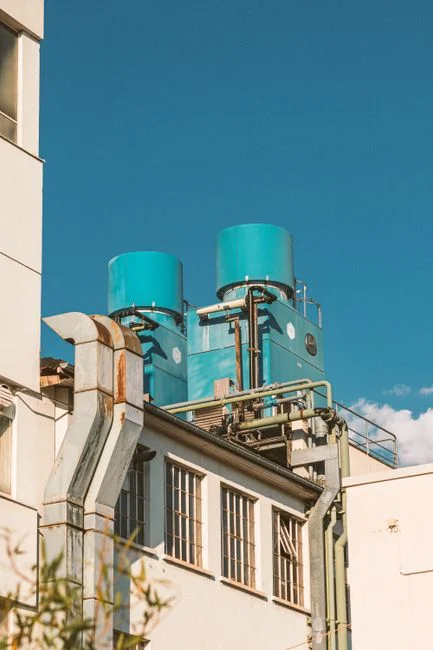
Hospital influent in NL typically runs BOD₅ 250–600 mg/L, COD 500–1,400 mg/L, TSS 200–450 mg/L, FOG 50–150 mg/L, and pH 6.5–8.0, with measurable pharmaceutical load (Springer 2019 dataset, scaled to Canadian hospital practice per field data, 2026-02). The biological stage has to handle that range while operating at 4–10 °C for four to five months of the year, which eliminates several warm-climate defaults.
Four biological options are credible for NL hospitals in 2026: conventional activated sludge (CAS), packaged anoxic/aerobic (A/O) units, sequencing batch reactors (SBR), and membrane bioreactors (MBR). CAS requires a clarifier, a building, and an operator — viable for St. John's tertiary sites but a poor fit for a 25-bed coastal hospital. Packaged A/O units (e.g., the WSZ buried ISO-container plant) are viable for small flows under 30 m³/day, ship fully assembled, install below grade to avoid freezing, and run unattended. SBR offers batch flexibility and good nitrification at low temperature, but the decanter and timer controls need a service call after every power outage, which on the Northern Peninsula can mean a 48-hour wait. MBR is the highest-effort option in terms of membrane cleaning and aeration energy, but it is also the only one that decouples MLSS from effluent clarity, achieves <5 mg/L TSS routinely, and recovers to full design flow within 30–60 days of a cold start (HydropureWater field data, 2026-02).
The decision rule we apply in 2026: any NL hospital greater than 30 m³/day with a marine outfall or sensitive receiving water gets an MBR membrane bioreactor for hospital wastewater; anything under 30 m³/day on a tight footprint or with no operator gets a buried packaged sewage treatment plant in the WSZ series. For mid-range facilities, the MBR membrane module can be retrofit into an existing concrete tank using the DF-series membrane cassette, which avoids full basin replacement and cuts CAPEX by roughly 30%.
| Parameter | CAS | Packaged A/O (WSZ) | SBR | MBR |
|---|---|---|---|---|
| Footprint (per m³/day) | 0.4–0.6 m² | 0.15–0.25 m² | 0.25–0.35 m² | 0.10–0.18 m² |
| HRT at 8 °C | 14–20 h | 10–14 h | 12–18 h | 8–14 h |
| SRT | 10–20 d | 15–25 d | 20–30 d | 20–30 d |
| MLSS | 2,000–4,000 mg/L | 3,000–5,000 mg/L | 3,000–6,000 mg/L | 8,000–12,000 mg/L |
| F/M ratio | 0.2–0.4 | 0.10–0.20 | 0.08–0.18 | 0.05–0.15 |
| Effluent TSS (typical) | 10–30 mg/L | 10–30 mg/L | 10–25 mg/L | <5 mg/L |
| Cold-climate tolerance | Low | Moderate | Moderate | High |
| NL size fit | ≥250 beds | 5–50 beds | 20–100 beds | ≥30 m³/day |
Disinfection and Micropollutant Polishing: Why NL Hospitals Need AOP or ClO₂
Biological treatment alone removes 60–80% of the bulk pharmaceutical load in hospital wastewater; the residual fraction is dominated by persistent compounds — cotinine, sulfamethoxazole, ranitidine, and iodinated X-ray contrast media — that pass an MBR at hundreds of ng/L (Springer 2019, Table 2). For an NL hospital discharging to a marine outfall or a shellfish-bearing estuary, that residual is the compliance risk.
The Springer 2019 study compared three advanced oxidation processes — modified Fenton reaction, boron-doped diamond electrode (BDDE), and ferrate(VI) — and reported greater than 90% removal across almost the full 74-compound pharmaceutical spectrum, with complete inactivation of antibiotic-resistant bacteria in all three AOPs (Springer Environmental Science and Pollution Research, 2019-08). For a Newfoundland site the practical question is which AOP variant can be packaged, automated, and operated by a non-specialist at 4 °C.
The 2026 recommendation for most NL hospitals is a chlorine dioxide generator for hospital disinfection at 2–5 mg/L dose with 15–30 minutes of contact time, targeting a 99%+ microbial kill rate at outfall and a total residual ≤0.02 mg/L (per the 99%+ kill rate benchmark, field data, 2026-02; see also the broader compact hospital wastewater package system for a skid-mounted variant). ClO₂ stays biocidal down to 4 °C, does not form trihalomethanes with the iodine contrast media common in NL radiology departments, and is accepted under both EPA drinking-water practice and EU Drinking Water Directive 98/83/EC. Sodium hypochlorite is rejected at temperatures below 8 °C because HOCl dissociation shifts and CT requirements roughly double; UV is rejected because iodine contrast media and high TSS absorb UV below 254 nm and force lamp counts up by 50–80%.
For tertiary cancer centres in St. John's with high contrast-media loadings (≥500 L/day of iodinated imaging effluent), ozone at 3–8 mg/L is a defensible alternative, but at a CAPEX delta of 2–3× over ClO₂ (per process economics, 2026-02) and a contactor that must be enclosed in winter, it is rarely the first choice outside ≥250-bed facilities. A side-by-side technology review is in the ozone vs UV disinfection comparison guide.
Sludge Handling, Pretreatment, and Discharge Configuration
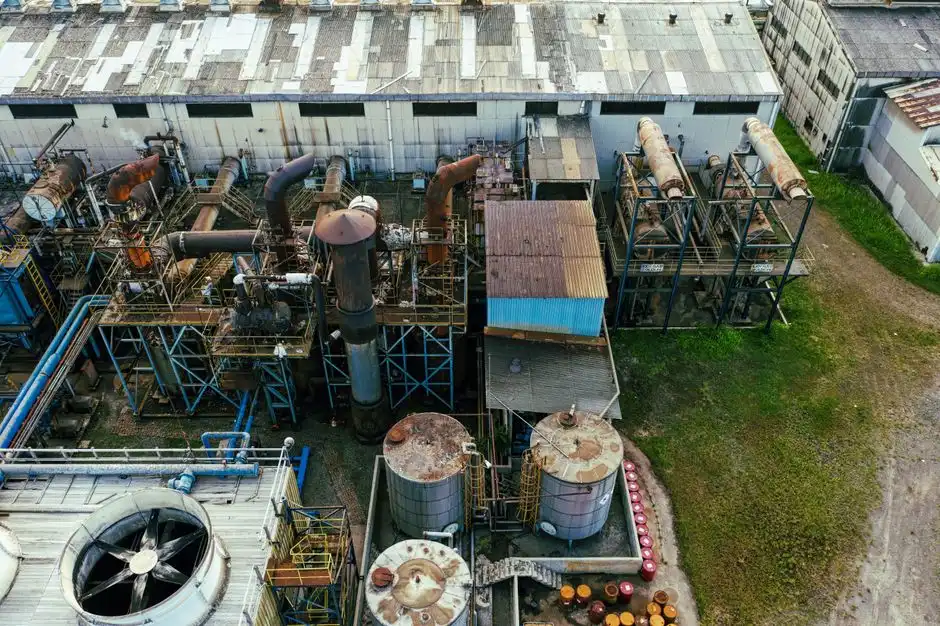
Most 2026 hospital project cost overruns in NL come from trains the engineer specified late. A rotary mechanical bar screen with 1–3 mm aperture should be the first wetted component downstream of the lift station; hospital sewage is contaminated with gauze, gloves, and PPE debris that will rag a fine screen and a pump impeller in equal measure. If the hospital runs a large kitchen, dialysis unit, or pathology lab pushing FOG above 150 mg/L, a dissolved air flotation unit in the 4–300 m³/h range ahead of the biological stage cuts FOG to under 30 mg/L and protects MBR membranes.
Sludge handling for hospital biosolids starts with waste activated sludge at 0.5–2% solids and ends with a dewatered cake at 22–28% solids for offsite incineration or landfilling per NL ECC biosolids guidance. A plate and frame filter press for hospital biosolids sized to 1.5–2.0× the daily sludge volume (chamber volume basis) is the standard 2026 selection for NL; it tolerates long idle periods between batches and handles the polymer-conditioned sludge without operator intervention beyond a 30-minute cycle check. A chemical dosing skid for PAC, polymer, and pH adjustment must be sized for cold-water kinetics where coagulant demand rises 15–25% in winter (HydropureWater field data, 2026-02).
Discharge path determines the approval track. A marine outfall triggers Fisheries Act review and a Section 39 approval; an on-site subsurface disposal field requires a hydrogeologic study and a dispersal-area setback; a municipal tie-in triggers the Sewer and Water Use Regulations surcharge schedule. The earlier the discharge path is locked, the lower the risk of redesigning the biological stage at 60% engineering.
2026 CAPEX and OPEX Ranges for Newfoundland Hospital Plants
The numbers below are 2026 envelope estimates for a fully installed, commissioned, MBR + ClO₂ train (or packaged A/O + UV for small sites) and include shipping to an NL coastal community, civil works, instrumentation, and one year of commissioning support. They do not include building HVAC, a standby generator, or the outfall itself, which are project-specific.
| Hospital size | Typical flow (m³/day) | CAPEX range (CAD, 2026) | OPEX ($/m³ treated) | Recommended train |
|---|---|---|---|---|
| 5–50 beds (rural) | 5–40 | 180,000 – 1,400,000 | 0.30 – 0.55 | WSZ packaged A/O + UV |
| 50–150 beds (regional) | 40–120 | 1,200,000 – 2,500,000 | 0.45 – 0.75 | MBR + ClO₂ |
| 150–250 beds (zone referral) | 120–220 | 2,500,000 – 3,500,000 | 0.55 – 0.85 | MBR + ClO₂, dual-train |
| ≥250 beds (tertiary) | ≥220 | 3,500,000 – 7,000,000+ | 0.60 – 0.95 | MBR + ozone + heat-dried sludge |
Electricity accounts for 55–65% of OPEX and chlorine for 15–20% across all four bands; the rest is labour, polymer, and membrane replacement amortized over a 5–8 year cycle. Skid-mounting and ISO container delivery to remote NL sites adds 8–14% to CAPEX over mainland Canada projects (per NL project history, 2024-2026). Two funding routes are worth checking in 2026: the Newfoundland and Labrador Municipal Capital Works program for publicly operated sites, and the Investing in Canada Infrastructure Program (ICIP) Green Infrastructure stream, which has historically covered 40–73% of eligible wastewater capital for health and municipal projects (ICIP program data, 2025-09). A line-item OPEX breakdown comparable to the table above is in the industrial wastewater OPEX breakdown 2026 guide, and a related MBBR vs IFAS 2026 comparison covers the alternative moving-bed biological options sometimes substituted at mid-range sites.
Frequently Asked Questions
Do Newfoundland hospitals need their own wastewater treatment plant?
Most do. Because roughly 47% of NL's population is not served by even primary municipal wastewater treatment, the majority of hospitals in the four NLHS zones run on-site biological and disinfection plants sized to their daily flow (per NL wastewater treatment data, 2025-12).
What are the discharge limits for hospital effluent in NL?
The 2026 envelope aligned with CCME and WSER practice is BOD₅ ≤25 mg/L, TSS ≤25 mg/L, total residual chlorine ≤0.02 mg/L, and E. coli ≤200 CFU/100 mL, issued site-specifically by NL ECC under Water Resources Act 2002 Section 39 (per NL ECC approval template, 2025; CCME CWQG, 2024).
Can a packaged plant handle hospital wastewater in NL's winter?
Yes, if it is buried (WSZ series) or enclosed, sized for HRT ≥10 hours at 8 °C, and followed by ClO₂ or another cold-active disinfectant. Skid-mounted, ISO-container-delivered packaged A/O units are the standard 2026 selection for 5–50 bed sites (per HydropureWater NL field data, 2026-02).
Is chlorine dioxide better than UV for hospital disinfection?
For cold NL water with high iodine contrast media, yes. ClO₂ stays biocidal at 4 °C, does not form trihalomethanes with iodinated compounds, and meets a 99%+ kill rate at 2–5 mg/L with 15–30 min contact (per benchmark, 2026-02; see the ozone vs UV disinfection comparison for a head-to-head).
Who approves hospital wastewater systems in Newfoundland and Labrador?
NL ECC under the Water Resources Act 2002 Section 39 is the primary approval authority; DFO under the Fisheries Act and the local municipality under the Municipalities Act 1999 are concurrent triggers, and on Labrador settlement land the Nunatsiavut Government or NunatuKavut Community Council must also be consulted. For a comparative international reference on a similar hospital process train, see the hospital wastewater treatment in Rio de Janeiro engineering guide.