What Each System Actually Does in a Treatment Train
Ozone oxidation is a chemical advanced oxidation process that drives both molecular O3 (oxidation-reduction potential ≈ 2.07 V) and secondary hydroxyl radicals (•OH, ORP ≈ 2.85 V) into solution to break refractory COD, color, cyanide, and many micropollutants; it also leaves a residual oxidant that disinfects. UV disinfection is a physical photolytic process: low-pressure lamps emit monochromatic 254 nm light, medium-pressure lamps emit 200–400 nm polychromatic light, and that photons damage microbial DNA/RNA without adding any chemistry to the water (Xylem, 2025; EPA UV Disinfection Guidance Manual, 2024).
The practical split is straightforward. Ozone = oxidation plus residual disinfection. UV = disinfection, period — unless it is upgraded to a UV-AOP by adding hydrogen peroxide (typically 5–20 mg/L H2O2), which photolyzes under 254 nm light to form •OH and gives UV true oxidant capability for trace organics like 1,4-dioxane, NDMA, and short-chain PFAS precursors. In a 2026 industrial train, Xylem's framing still holds — ozone upstream, UV or UV-AOP downstream — but the reasoning is now driven by EU bromate limits, UCMR 5 PFAS, and ZLD reuse, not just by crypto inactivation.
Side-by-Side Engineering Parameters: Ozone vs UV
The table below is the engineering parameter matrix a process engineer can paste directly into a 2026 design basis memo. All numbers are typical operating ranges from municipal and industrial practice; matrix-specific values must be re-validated on jar tests and bench-scale trials before procurement.
| Parameter | Ozone Oxidation System | UV Disinfection System |
|---|---|---|
| Primary function | Chemical oxidation + residual disinfection | Physical disinfection (UV-AOP adds oxidation) |
| Oxidation power (ORP) | 2.07 V (O3); 2.85 V (•OH from O3/H2O2) | ≈ 0 V photolysis only; 2.85 V when H2O2 dosed (UV-AOP) |
| Typical dose | 1–15 mg/L O3 (water matrix dependent) | 30–40 mJ/cm² (4-log virus), 40–60 mJ/cm² (protozoa) |
| Contact time (CT) | 5–20 min in baffled contactor | < 1 s hydraulic residence in chamber |
| Footprint at 50 m³/h | 3–6 m contactor column + off-gas train | 0.5–3 m chamber, skid-mounted |
| Core consumable life | Generator cells 5–10 years; O2 feed system 10+ years | LP amalgam lamps 12,000–16,000 h; MP lamps 4,000–8,000 h; quartz sleeves 5+ years |
| Power intensity | 7–14 kWh/kg O3 (air-fed); 3–6 kWh/kg O3 (LOX) | 0.05–0.2 kWh/m³ treated (matrix dependent) |
| Byproducts of concern | Bromate (EU 10 µg/L per DWD 2020/2184), aldehydes, brominated organics | No chemical DBPs; no TOC reduction; nitrite possible at high MP dose |
| Required upstream step | None mandatory; sidestream venturi or fine-bubble diffuser | Filtration ≤ 50 µm and UVT ≥ 70% for economic dose |
| Safety-critical auxiliaries | Off-gas thermal/catalytic destructor to < 0.1 ppm; ambient O3 monitor | UV shielding on chamber; interlocked access doors |
Reading the matrix once tells the whole story: ozone is a slow, chemical, footprint-heavy unit with a regulated DBP; UV is a fast, physical, footprint-light unit with no DBP but no COD credit. That structural difference is what the rest of this article exploits.
2026 Regulatory and Market Drivers Reshaping the Choice
Three rule changes made between 2022 and 2026 — not the technologies themselves — are why procurement managers are being asked to choose today. First, EU Drinking Water Directive 2020/2184 set bromate at 10 µg/L and is in force across member-state transposition, which puts a hard ceiling on any ozone dose that touches a bromide-bearing source water (≥ 0.05 mg/L Br−); pushing past that ceiling forces a downstream GAC or RO polish stage. Second, EPA UCMR 5 (published 2022, monitoring cycles running through 2026) placed 29 PFAS compounds and lithium on the nationwide watch list, and that has shifted the industrial default from UV disinfection alone to UV-AOP with H2O2 or ozone-peroxide trains for destruction of long-chain PFAS, 1,4-dioxane, and NDMA precursors (EPA UCMR 5 fact sheet, 2022; reaffirmed in EPA PFAS Strategic Roadmap 2024 update). Third, China's draft GB 3544 revision tightens textile dye effluent COD and color limits, pushing mills to evaluate ozone for color removal rather than relying on Fenton plus coagulation.
Industrial water reuse, driven by the 2026 ZLD push in India (MoEFCC 2025 ZLD guidelines for textile, dye, and distillery sectors) and Gulf states, plus updates to the ISO 30500-series on non-sewered sanitation, has made UV polishing standard after any ozone or biological stage. The two 2026 names an engineer has to put on the capex slide are bromate and PFAS — get those wrong and the rest of the design becomes a rework.
When Ozone Wins, When UV Wins, and When You Need Both
Ozone wins on streams that biology cannot touch: high-COD refractory wastewater from landfill leachate (typically 800–2,500 mg/L COD after biological treatment), pharmaceutical API mother liquors, petrochemical spent caustic, textile dye baths (where color and aromaticity defeat activated sludge), and pulp & paper condensates. It also wins for color stripping, Fe/Mn oxidation, cyanide destruction (2 mg/L free CN− reduced below detection with 5–10 mg/L O3), and any case that wants residual disinfection from a single device. UV wins on clear, low-TDS streams where chemistry is forbidden or unaffordable: RO permeate polishing in semiconductor and power plants, food & beverage CIP rinse water where a ClO2 or ozone residual could taint product, pharma Water-for-Injection loops where an oxidant residual would damage product, and any reuse loop where the upstream biology has already done the COD work and the final barrier is microbial.
The hybrid O3 → UV or UV/H2O2 AOP train is the 2026 default whenever the target list includes PFAS, 1,4-dioxane, NDMA precursors, or any case where both color and microbial control are required on a recycle loop. The Springer ozone-UV-catalysis literature (Bloh, Dillert & Bahnemann, 2012, replicated and extended through 2024) and the 2025 Xylem engineering note on hybrid AOP both confirm that combined AOP is industrially mainstream, not experimental. A quick segment mapping for a 2026 capex review: chemical and pharma → ozone-dominated; food & beverage → UV-dominated, often with a integrated coagulation–filtration package for pre-UV polishing; landfill leachate and textile → ozone + UV polish; electronics and semiconductor → UV + RO; landfill leachate and textile also belong in the same column as the broader COD removal technology comparison for industrial wastewater we published earlier this year.
Process Flow: Ozone, UV, and Combined AOP Trains
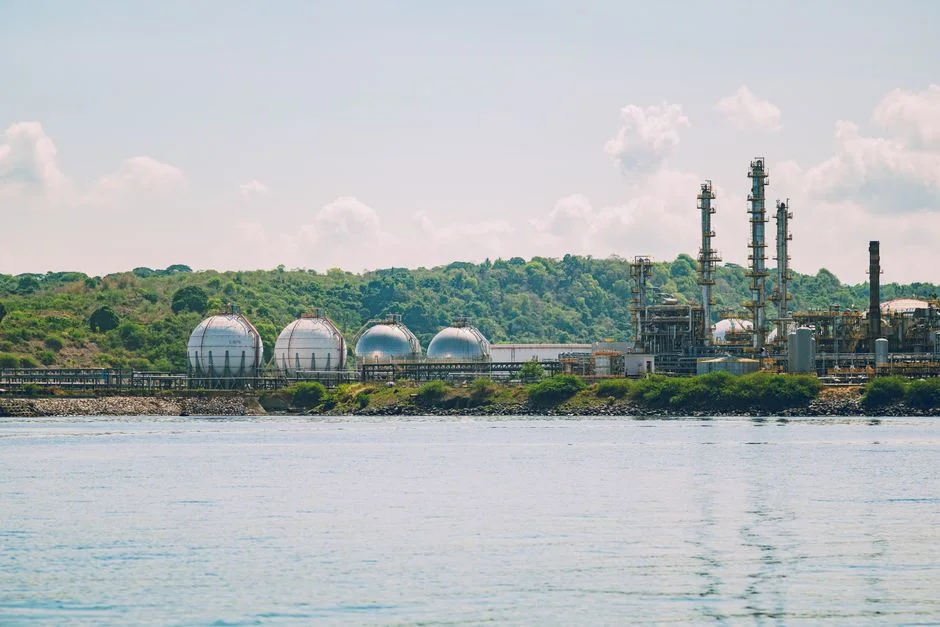
An ozone-only train runs equalization → pH trim (typically 7.0–8.5 for radical yield) → ozone contactor with fine-bubble diffusers or sidestream venturi injection → off-gas thermal or catalytic destructor (mandatory to < 0.1 ppm by volume at the stack) → optional GAC polish for bromate and aldehyde removal → discharge or reuse. A UV-only train is shorter: pre-filtration to ≤ 50 µm and UVT ≥ 70% → LP amalgam or MP chamber → optional dechlorination or carbon → discharge or RO system for downstream reuse after UV or UV-AOP polishing. The combined O3/UV-AOP train is the most specified 2026 layout: equalization → ozone contactor (bulk COD, color, bromate-prone organics) → H2O2 dose point (5–20 mg/L) → UV-AOP reactor (trace organics, PFAS, 1,4-dioxane) → residual H2O2 quench with catalase or GAC → discharge or RO.
Two engineering rules decide the layout. First, UVT must exceed ~70% to deliver 30 mJ/cm² at reasonable lamp power; high-turbidity or colored water belongs behind a DAF or sand filter first, which is why many plants pair UV with a dissolved air flotation unit for pre-UV TSS cut rather than feeding raw effluent to the chamber. Second, the ozone contactor is sized on transfer efficiency — 80–95% for fine-bubble diffusion versus 60–80% for sidestream venturi — and the off-gas destructor is sized on the contactor exhaust flow, typically 8–15% of the feed gas for a properly operated system. Off-gas destruction to < 0.1 ppm by volume is non-negotiable, because the OSHA permissible exposure limit and ACGIH TLV for ozone both sit at 0.05 ppm (8 h TWA).
2026 CAPEX and OPEX: What the Money Looks Like
The 2026 dollar ranges below cover turnkey skids at 10–100 m³/h for industrial use, air-fed unless noted, and exclude civil works, installation, and country-specific taxes. Use them as a defended capex envelope — vendor quotes typically land within ±15% of these bands.
| Cost item (2026 USD) | Ozone skid (10–100 m³/h, air-fed) | UV channel (10–100 m³/h, LP amalgam) |
|---|---|---|
| CAPEX — equipment | $80K–$280K | $40K–$220K (incl. reactor, ballasts, automatic wiper) |
| CAPEX — feed gas / oxygen | + $20K–$60K if LOX-fed cryogenic O2 supply | N/A |
| Power | 7–14 kWh/kg O3 (air); 3–6 kWh/kg O3 (LOX) | 0.05–0.2 kWh/m³ treated |
| O2 feed | 1.05–1.2 kg O2 per kg O3 generated | N/A |
| Lamp / cell replacement | Generator cells every 5–10 years | LP lamps every 12,000–16,000 h; sleeve cleaning 1–2× per quarter |
| Operating cost (treatment) | $0.05–$0.25 per m³ | $0.01–$0.05 per m³ |
| Combined O3 + UV/H2O2 OPEX adder | + $0.08–$0.35 per m³ vs UV-only; unlocks 1,4-dioxane and PFAS compliance | |
The rule of thumb for the 2026 capex review: if the design basis chases 30% refractory COD removal plus color, ozone pays back inside 18–36 months on sludge-hauling savings alone. If the design basis only needs 4-log disinfection on a clear RO permeate or WFI loop, UV pays back and ozone is over-spec. The hybrid train sits in the middle — a known Fenton oxidation OPEX benchmark for comparison against ozone runs $0.10–$0.40 per m³, so UV-AOP is usually the cheaper AOP choice on energy and reagent cost alone.
Common Design Mistakes and How to Avoid Them
Five mistakes recur in 2024–2026 RFQ reviews. Mistake 1: specifying UV on high-turbidity or colored water. Once UVT drops below 65%, delivering 30 mJ/cm² requires a 2–3× increase in lamp power and sleeve cleaning frequency; pre-filter with DAF or move UV downstream of biological polishing. Mistake 2: oversizing ozone dose without checking raw-water bromide. Every 1 mg/L of bromide in the source water raises bromate formation, so the O3 dose must be capped or a GAC polish must follow. Mistake 3: ignoring off-gas destruction. The OSHA PEL and ACGIH TLV for ozone is 0.05 ppm (8 h TWA), and a catalytic or thermal destructor is mandatory; a destruction efficiency of 99.9% on a 100 m³/h skid is the minimum. Mistake 4: undersizing the ozone contactor. Contact times below 5 minutes drop CT below the credit needed for 2-log virus inactivation and waste generator capacity on every kg of O3 that does not transfer. Mistake 5: forgetting H2O2 residual quenching downstream of UV-AOP. Residual peroxide at 5–10 mg/L will damage polyamide RO membranes if the train ends at RO; either dose catalase or route through a carbon polisher, which the 2026 industrial water reuse market drivers that push plants toward UV polishing document flags as a routine reuse-loop requirement.
Frequently Asked Questions
Can ozone replace UV? No. Ozone is a chemical oxidizer that reduces COD, color, and micropollutants and leaves a residual; UV is a physical photolytic unit that inactivates microbes without adding chemistry. In 2026, most industrial plants run them as a combined O3 → UV/H2O2 AOP train rather than choosing one, especially when PFAS or 1,4-dioxane are on the target list.
Which is cheaper to operate? UV typically runs $0.01–$0.05 per m³ versus ozone at $0.05–$0.25 per m³, but ozone also reduces COD and color, so the total treatment cost — including sludge hauling and downstream polishing — often favors ozone on high-strength streams. On clear polishing duties, UV wins on OPEX alone.
Is ozone safe in industrial settings? Yes, with sealed contactors, off-gas destruction to < 0.1 ppm by volume, and continuous ambient O3 monitoring at the 0.05 ppm TLV. Most 2024–2026 ozone skid packages ship with catalytic destructors and LEL-style ambient sensors as standard.
Does UV remove COD? No. UV photolysis alone does not reduce COD; only UV-AOP with H2O2 (or with TiO2 catalysts) generates •OH radicals that oxidize dissolved organics and produce a measurable COD reduction.
Can I retrofit UV downstream of an existing ozone system? Yes, and this is the most common 2026 upgrade path. UVT after ozone polishing is typically 85–95%, which is ideal for a 30–40 mJ/cm² UV dose, and the only added items are the UV chamber, ballasts, and — if 1,4-dioxane is a target — an H2O2 dose skid ahead of the UV.
Related Equipment
- ClO2 generator for residual disinfection downstream of ozone — specifications, capacity range, and technical data