Why Battery Material Wastewater Needs a Dedicated Treatment Strategy
A battery material solution for 2026 Li-ion plants combines pH adjustment and chemical precipitation for Ni/Co/Mn/Li, MBR for COD and ammonia, two-stage RO for reuse, and selective resin or evaporation for brine. Design targets exceed 99% metal recovery when the brine loop is built for it, NH3-N below 15 mg/L after biology, and 70–85% RO recovery for rinse and CIP.
Lithium-ion cathode and anode precursor plants (NMC, NCA, LFP), electrolyte plants, cell assembly lines, and black-mass recycling facilities each produce chemically distinct wastewater. Generic industrial guidance built for electroplating or PCB shops does not cover that mix. Global Li-ion cell output is projected to exceed 4 TWh annually by 2026 in IEA-style forecasts cited in academic literature. A single mid-sized precursor plant can discharge 200–500 m³/day of NH3-N-laden mother liquor. A black-mass line can push 1,000–10,000 mg/L of mixed heavy metals per litre.
The regulated contaminant slate is wide: Ni, Co, Mn, Li, Cu, Al, F⁻, NH3-N, COD, and sulfate. China's applicable battery-industry standard is GB 30484-2013. Earlier drafts of this guide cited GB 30485-2020 with COD ≤150 mg/L and NH3-N ≤30 mg/L. For Li-ion plants, GB 30484-2013 sets COD at 100 mg/L for existing facilities and 50 mg/L for new facilities at the plant outfall, with NH3-N at 15 mg/L (existing) and 10 mg/L (new). EU IED 2010/75/EU BAT-AELs treat these streams as priority pollutants. US EPA metal-finishing limits under 40 CFR Part 433 remain the closest North American analogue often applied to battery-related metal-bearing wastewater.
Five Wastewater Streams Inside a Battery Material Plant
Battery plants do not have one wastewater; they have five, and each demands a different pretreatment hand-off. The table below maps typical 2026 influent loads by stream so the reader can self-locate.
| Stream | Key pollutants | Typical influent range | pH |
|---|---|---|---|
| Precursor synthesis (NMC/NCA co-precipitation) | NH3-N, SO4²⁻, Na⁺, residual Ni/Co/Mn | NH3-N 200–3,000 mg/L; Na⁺ 5,000–15,000 mg/L; SO4²⁻ 3,000–10,000 mg/L | 10–12 |
| Cathode coating (slurry + NMP) | COD, NMP, PVDF binder, SS | COD 3,000–10,000 mg/L; SS 1,000–5,000 mg/L | 6–9 |
| Electrolyte (LiPF6 synthesis / wash) | F⁻, HF (on acidification), Li, organics | F⁻ 500–5,000 mg/L; Li 200–2,000 mg/L | 1–4 |
| Cell assembly | Mild organics, separator fines, trace electrolyte | COD 300–1,500 mg/L; F⁻ <50 mg/L | 6–8 |
| Black-mass recycling leach (H2SO4 + H2O2) | Strong acid, Li/Ni/Co/Mn, SO4²⁻, residual organics | Each metal 1,000–10,000 mg/L; SO4²⁻ 20,000–60,000 mg/L | 0.5–2 |
Precursor synthesis is the volume driver and the most NH3-N-heavy stream. Caustic mother liquor from co-precipitation will overwhelm any downstream biological stage if discharged without stripping or adequate equalization. Cathode coating is the COD problem child. N-methyl-2-pyrrolidone (NMP) is the solvent of choice for PVDF binder slurries. Most 2026 plants now run NMP recovery (vacuum distillation or membrane separation) upstream of biological treatment. That keeps influent COD in the 3,000–10,000 mg/L band rather than the 30,000+ mg/L band seen in older lines.
Electrolyte wastewater is the most hazardous per litre. F⁻ at 500–5,000 mg/L generates HF on any acid shock, so dosing CaCl₂ to precipitate CaF₂ (Ksp ~3.9×10⁻¹¹) is standard practice. Cell assembly is mild and is usually merged with cathode coating after solvent recovery. Black-mass recycling wastewater is the highest-loading stream by an order of magnitude. It is also the stream with the strongest resource-recovery case, which is why recent 2025–2026 anti-fouling RO work focuses here.
Battery Material Solution Flowsheet: Pretreatment to Recovery
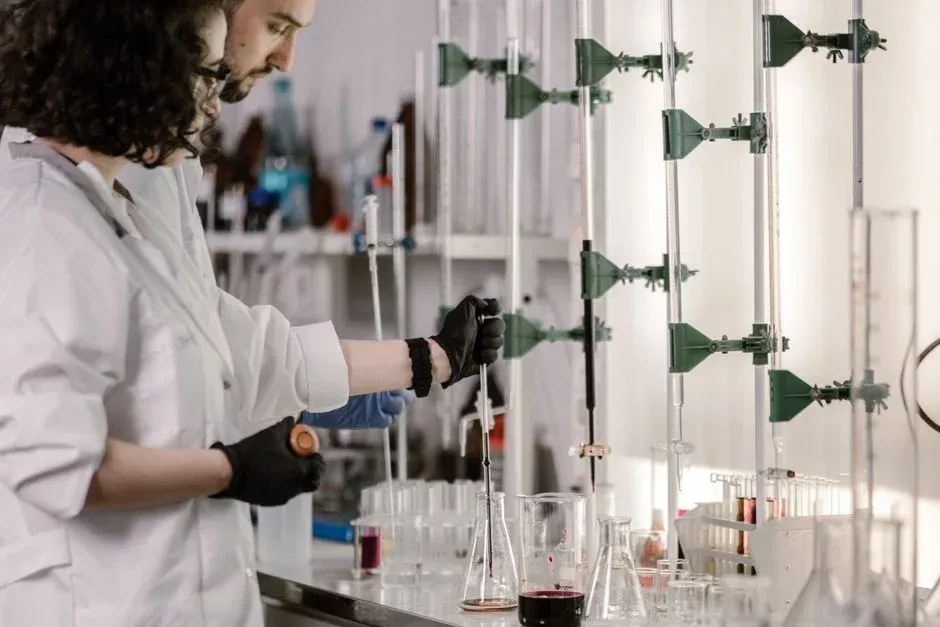
A defensible 2026 process train for a combined cathode/recycling plant runs six stages: equalization, precipitation/clarification, advanced oxidation, MBR, two-stage RO, and selective brine recovery. Each stage has a specific operating envelope and a specific equipment choice.
| Stage | Unit operation | Design parameter / 2026 norm | Effluent target |
|---|---|---|---|
| 1. Equalization & pH adjustment | Lined equalization basin, pH probe + dosing | HRT 8–24 h; pH set to 9.5–10.5 before precipitation | Stable feed, ±0.5 pH swing |
| 2. Precipitation + lamella clarification | NaOH / Ca(OH)2 dosing + high-efficiency lamella clarifier | Dose 1.0–1.5× stoichiometric; sludge recirculation 5–10% | Ni/Co/Mn <2 mg/L each |
| 3. Advanced oxidation | Fenton (Fe²⁺/H₂O₂) or O₃ for NMP residue | Fe²⁺ 50–200 mg/L; H₂O₂/Fe²⁺ molar ratio 5–10:1 | COD cut 40–70% |
| 4. MBR (submerged PVDF, 0.1 μm) | Submerged PVDF MBR system | MLSS 8,000–12,000 mg/L; HRT 6–10 h | COD <50 mg/L; NH3-N <15 mg/L; SS <5 mg/L |
| 5. Two-stage RO (BWRO + SWRO) | Two-stage industrial RO system | Recovery 70–85% combined; Li rejection >99.3% | Permeate conductivity <50 μS/cm, reusable |
| 6. Brine recovery | Selective ion exchange or evaporative crystallization | Li-selective resin or MVC/MEH; Na₂SO₄·10H₂O by-product | Recovered Li₂CO₃ equivalent or Ni/Co concentrate |
Stage 1 is not glamorous, but a 24-hour equalization basin with online pH and ORP control is the single cheapest reliability upgrade on the train. Most plants we size for precursor mother liquor run equalization toward the upper end of the 8–24 h HRT range. NH3-N and sulfate swing hour to hour on those lines. Stage 2 is where most of the metal loading drops out. Dosing NaOH to pH 9.5–10.5 precipitates Ni(OH)₂, Co(OH)₂, and Mn(OH)₂. Minimum solubilities sit near pH 9.5–10.5 for nickel, 9.0–10.5 for cobalt, and 9.5–11 for manganese. A high-efficiency lamella clarifier with sludge recirculation reaches 95–99% metal removal at about one-third the footprint of a conventional clarifier.
Stage 3 — Fenton or ozone — handles the 30–70% of COD that survives equalization and would otherwise blind the MBR. For the 3,000–10,000 mg/L NMP stream, Fenton at Fe²⁺ 50–200 mg/L and H₂O₂/Fe²⁺ molar ratio 5–10:1 typically cuts COD by 40–70% before biological polishing. Stage 4 is a submerged PVDF MBR at MLSS 8,000–12,000 mg/L. That is about 60% of the footprint of an equivalent CAS train and stays stable across NH3-N shocks when precipitation is online.
Stage 5 is where 2026 anti-fouling RO research starts to pay off. BWRO + SWRO in series reaches 70–85% recovery with Li rejection >99.3%. Permeate is clean enough for rinsing and CIP loops. Stage 6 closes the resource loop. A Li-selective resin (Mn-oxide or Ti-oxide based) on the RO brine recovers a Li concentrate that feeds back into the precursor line. Residual Na₂SO₄ can be sold as a by-product or crystallized out.
Choosing Between MBR, RO, and Chemical Precipitation: A 2026 Decision Matrix
The three separation technologies overlap, but they solve different problems. The table below makes the trade-offs explicit so the equipment shortlist is defensible to procurement.
| Technology | Target pollutants | CAPEX (relative) | OPEX driver | Best fit |
|---|---|---|---|---|
| Chemical precipitation + lamella | Dissolved Ni, Co, Mn, Cu (and partial Li at pH >11) | Low (1×) | Sludge handling — 0.5–2 kg dry sludge per kg metal removed | High metal, low organics; precursor synthesis, recycling |
| MBR (submerged PVDF) | COD, NH3-N, SS | Medium (1.5×) | Aeration electricity, membrane cleaning | High organics, moderate metal — always paired with precipitation or RO upstream |
| Two-stage RO (BWRO + SWRO) | Dissolved salts, residual metals, Li rejection >99.3% | High (2.5–3×) | Energy 30–40% of OPEX, membrane replacement | Final polishing + water reuse; never first on high-F⁻ or high-COD streams |
| Selective ion exchange / evaporation | Li in brine, Ni/Co from crystallizer purge | High (3–4×) | Resin regeneration chemicals, steam (MVC) | Brine polishing after RO; resource-recovery business case |
Three operating rules follow from the matrix. First, single-stage RO on raw battery wastewater caps out at 40–50% recovery because osmotic pressure on the brine climbs above 60 bar. Two-stage RO or BWRO + SWRO is the 2026 norm for hitting 70–85% recovery. Second, MBR cannot remove dissolved metals. It is a COD and ammonia workhorse, not a metal polisher, so any MBR on a battery train must be protected by precipitation or RO upstream.
Third, chemical precipitation is the lowest CAPEX option but generates 0.5–2 kg of dry sludge per kg of metal removed. On a 500 m³/day plant the sludge line often becomes the dominant OPEX line. That sludge is handled separately by a plate-and-frame filter press. The decision rule is simple. High metal with low organics favors precipitation plus RO. High organics with moderate metal favors precipitation, Fenton, MBR, then RO. Recycling leachate favors neutralization, selective resin, then RO.
2026 Compliance Targets and Water Reuse Benchmarks
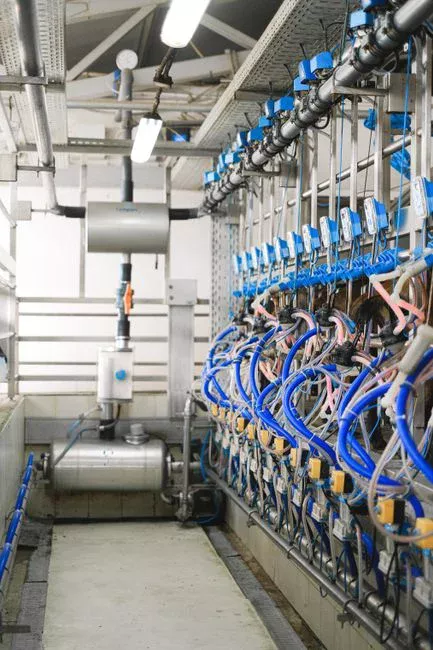
Equipment selection only matters if the effluent meets the regulator. The three jurisdictions that govern most 2026 battery plants are China GB 30484-2013, the EU IED 2010/75/EU BAT-AELs, and US EPA 40 CFR Part 433. Part 433 is the metal-finishing analogue most often applied to battery plants in North America. A detailed cross-jurisdiction comparison is available in our 2026 global heavy-metal discharge limits comparison.
Earlier guidance used a combined Ni + Co + Mn ≤1.0 mg/L and COD ≤150 mg/L framing under a mis-cited GB 30485-2020 label. According to GB 30484-2013 as summarized in current battery-industry emission tables, Li-ion plants design to COD 100 mg/L (existing) or 50 mg/L (new), and NH3-N 15 mg/L (existing) or 10 mg/L (new). Total cobalt is monitored at 0.1 mg/L for LCO-type lithium-ion lines. EU IED 2010/75/EU BAT-AELs remain stricter on individual metals in some BREF-derived local limits, with Ni ≤0.2 mg/L and Co ≤0.05 mg/L cited in prior plant permits. Plants exporting into the EU in 2026 should design to these tighter numbers rather than Chinese totals alone.
According to US EPA 40 CFR 433.15 PSES (eCFR), nickel is limited to 3.98 mg/L daily maximum and 2.38 mg/L monthly average, with lead at 0.69 mg/L daily maximum. Earlier guidance used Ni 1.04 mg/L daily maximum; that figure does not match the current Part 433 PSES table and should not be used for design. On the reuse side, 2026 plants that close rinse and CIP loops typically target 70–85% RO recovery with permeate conductivity <50 μS/cm. The residual 15–30% goes to brine recovery or controlled evaporation. Plants in water-stressed regions (Inner Mongolia, Arizona, northern Mexico) routinely push reuse above 80% because freshwater cost is now a bigger line item than chemical cost.
CAPEX and OPEX Anchors for a 2026 Battery Wastewater Project
Order-of-magnitude CAPEX for a 500 m³/day combined cathode/recycling wastewater system in 2026 lands in the USD 1.5M–3.5M band. That band covers a full train of precipitation + Fenton + MBR + two-stage RO. The wide range is driven by influent variability and whether the black-mass leach line is included. A more granular breakdown sits in our industrial wastewater OPEX breakdown and the high-salinity brine treatment options guide.
OPEX for the same system typically runs 35–45% of CAPEX per year. The cost mix is consistent across plants: chemicals (NaOH, H₂O₂, antiscalant, CaCl₂) at 25–35% of OPEX, electricity for RO high-pressure pumps and MBR blowers at 30–40%, and sludge dewatering/disposal at 15–25%. Chemical cost is the line item a plant can actually move. A PLC-controlled chemical dosing skid with online pH and ORP trim typically cuts NaOH consumption by 10–20% versus manual dosing. That is enough to pay back the skid in 12–18 months.
On the disposal side, a plate-and-frame filter press that drops sludge moisture from 95–98% (clarifier underflow) to 65–70% (filter cake) reduces disposal tonnage by a factor of 5–8. That converts a growing cost into a manageable one. The 2026 offset is the resource-recovery line. At current Ni/Co/Li prices, recovered metal concentrate from the brine line can cover 15–30% of total OPEX. Several Chinese precursor plants are now reporting net-positive water-treatment OPEX when Li recovery is credited.
Selection Checklist and Next Step
Who this is for: process engineers and EPC teams sizing cathode precursor, electrolyte, or black-mass recycling trains that must hit metal, NH3-N, fluoride, and reuse targets in one flowsheet. Who should look elsewhere: plants with only sanitary or low-metal utility wastewater, where a simpler biological package is enough. Before freezing the P&ID, confirm stream segregation, NMP recovery status, fluoride precipitation capacity, MBR protection from residual metals, and whether brine recovery pays for itself at local metal prices. For a duty-specific battery material solution review of precipitation, MBR, and two-stage RO sizing, submit the influent table through our request-quote form.
Frequently Asked Questions
What is the most common treatment for battery cathode wastewater?
The 2026 standard train is chemical precipitation at pH 9.5–10.5 for Ni/Co/Mn, Fenton oxidation for residual NMP COD, submerged PVDF MBR for COD and NH3-N, and two-stage RO for water reuse. The exact hand-off depends on whether the stream is precursor mother liquor, coating wastewater, or black-mass leachate. Most cathode lines we size keep precipitation upstream of the MBR so dissolved metals never load the biology.
How is lithium recovered from battery wastewater?
Lithium is recovered from the RO brine via selective ion exchange (Mn-oxide or Ti-oxide resins) or evaporative crystallization. The product is typically a Li concentrate or Li₂CO₃ equivalent that feeds back into the precursor line. Recovery economics improve when RO recovery already sits in the 70–85% band and brine volume is minimized before the resin or crystallizer.
What discharge limits apply to nickel and cobalt?
China GB 30484-2013 governs battery-industry discharges; LCO-type Li-ion lines monitor total cobalt at 0.1 mg/L under that standard. EU IED 2010/75/EU BAT-AELs can be stricter at Ni ≤0.2 mg/L and Co ≤0.05 mg/L in some local limits. According to US EPA 40 CFR 433.15, nickel PSES is 3.98 mg/L daily maximum and 2.38 mg/L monthly average.
Can battery wastewater be reused?
Yes. Two-stage RO at 70–85% recovery with permeate conductivity <50 μS/cm is the 2026 norm for cathode and cell-assembly plants. That permeate is suitable for rinsing, cleaning-in-process, and boiler-feed makeup when antiscalant and CIP chemistry are controlled. The reject fraction still needs brine recovery or controlled disposal.
How much does a battery wastewater treatment plant cost in 2026?
For a 500 m³/day combined cathode/recycling system, CAPEX is typically in the USD 1.5M–3.5M band for precipitation + Fenton + MBR + two-stage RO. OPEX is typically 35–45% of CAPEX per year, with chemicals, electricity, and sludge handling as the main levers. Metal recovery from brine can offset 15–30% of OPEX when Ni/Co/Li prices support it.