Coking Effluent Treatment Plant Design: The 2026 Reference
A coking effluent treatment plant in 2026 typically combines phenol/cyanide pre-treatment (solvent extraction or alkaline chlorination), an A2O biological stage (COD removal 85–95%, ammonia 90–97%, CN to <0.5 mg/L), advanced oxidation (Fenton or ozone-BAF) for recalcitrant organics, and MBR or sand-filter polishing to hit COD ≤80 mg/L, phenol ≤0.3 mg/L, and CN ≤0.2 mg/L under China GB 16171-2012 or equivalent EU IED BAT-AEL. Typical 2026 CAPEX is USD 2M–15M for 10–200 m³/h capacity.
Coking wastewater — sometimes called ammonia liquor or coal-coking wastewater — is generated when coke-oven gas is quenched and when condensates are separated from tar and light oil. The stream carries phenolics (500–1,500 mg/L), free and fixed ammonia (200–600 mg/L NH3-N), thiocyanate (200–600 mg/L), total cyanide (20–200 mg/L), tar oils, and refractory polyaromatic hydrocarbons. Per Baidu Wenku's conventional coking wastewater design brief, no single unit operation can hit the 2026 discharge envelope; the modern train is always four-stage: pre-treatment (phenol/ammonia/CN recovery and destruction), biological (A2O or SBR), advanced oxidation (Fenton, ozone, or electrocatalytic), and polishing (MBR, sand filter, or BAF). Three regulatory frameworks dominate procurement in 2026: China GB 16171-2012 (the tightest envelope, COD ≤80, NH3 ≤10, phenol ≤0.3, CN ≤0.2 mg/L), EU IED 2010/75/EU BAT-AEL for coke plants (COD 80–220, SS 20–60 mg/L), and India CPCB/MoEFCC coking discharge norms (phenol ≤0.35, CN ≤0.2 mg/L). The rest of this article gives you the influent numbers, the unit-operation parameters, and 2026 cost ranges to defend a process choice to procurement and EHS.
Coking Wastewater Influent Characteristics and 2026 Discharge Limits
Phenol and total cyanide are the binding parameters for any 2026 coking wastewater design — they carry the tightest discharge limits and they drive the pre-treatment CAPEX that determines every downstream tank size. Before you pick a process train, lock the influent envelope to the ranges below (industry benchmark data per Baidu Wenku coking wastewater design brief) and the discharge envelope to the regulatory row that applies to your plant.
| Parameter | Raw coking influent (mg/L unless stated) | China GB 16171-2012 | EU IED BAT-AEL | India CPCB coking |
|---|---|---|---|---|
| COD | 3,500–8,000 | ≤80 | 80–220 | ≤250 |
| BOD5 | 1,500–3,000 | ≤20 | — | ≤30 |
| Phenol | 500–1,500 | ≤0.3 | ≤0.5 | ≤0.35 |
| Total CN | 20–200 | ≤0.2 | ≤0.2 | ≤0.2 |
| SCN⁻ | 200–600 | — | — | — |
| NH3-N | 200–600 | ≤10 | ≤10–15 | ≤50 |
| TSS | 100–500 | ≤50 | 20–60 | ≤100 |
| Oil & grease | 50–200 | ≤5 | — | ≤10 |
| pH | 8–11 | 6–9 | — | 6.5–8.5 |
| Temperature | 35–45 °C | — | — | <45 °C |
Two engineering consequences follow directly. First, the biological stage must be designed for an inlet not warmer than 38 °C — nitrifier activity drops sharply above 38 °C and the NH3-N ≤10 mg/L envelope becomes unreachable — so equalization/cooling belongs in pre-treatment, not biological. Second, the COD:NH3-N ratio of roughly 10–15:1 is well below the 100:1 minimum most municipal plants assume, which is why standalone A/O or conventional activated sludge fails on coking liquor and why A2O with internal recycle is the 2026 default. These numbers and the regulatory rows above are also the basis for the process comparison table later in this article.
Stage 1: Pre-Treatment for Phenol, Cyanide, and Ammonia Recovery
Pre-treatment for coking wastewater is the only stage where the OPEX ledger goes negative — recovered phenol and ammonium sulfate typically offset 25–40% of total operating cost (HydropureWater field data, 2025-Q4), which is why any 2026 coking plant CAPEX submission should frame Stage 1 as a revenue line, not a cost line. The four unit operations you will size, in order, are:
- Phenol recovery via solvent extraction. When inlet phenol exceeds 500 mg/L, a two-stage mixer-settler with diisopropyl ether or methyl isobutyl ketone removes 90–97% of phenolics and drops residual below 100 mg/L into the biological stage. Recovered phenol is a diazotization precursor for caprolactam and sells at $200–400/tonne on the 2026 spot market.
- Cyanide destruction by alkaline chlorination or alkaline pyrolysis. At pH ≥11 with 30–60 minutes contact, NaOCl or ClO2 oxidizes free CN to cyanate and then to CO2/N2, taking total CN from 100–200 mg/L down to <1 mg/L. Pyrolysis at 150–200 °C is the variant of choice when residual COD from chlorination is a concern downstream.
- Ammonia recovery by steam or air stripping. Free ammonia at pH 10.5–11 is stripped into a sulfuric acid scrubber, producing ammonium sulfate at $300–500/tonne. Recovery is economic above 300 mg/L NH3-N in the inlet.
- Oil, tar, and suspended solids removal. An API separator or tilted-plate interceptor followed by a rotary bar screen brings oil & grease from 50–200 mg/L to <20 mg/L, protecting downstream aeration diffusers from fouling.
Equalization (24–48 h HRT) damps the ±30% flow variation from coke-oven gas condensate batches and brings temperature into the 30–38 °C window the biological stage requires. Without equalization, no amount of tank volume in Stage 2 will save a design that violates the nitrifier temperature limit.
Stage 2: Biological Treatment — A2O Is the 2026 Default
A single anoxic/aerobic (A/O) train cannot reliably hit GB 16171-2012 or EU IED BAT-AEL on coking wastewater because it cannot drive NH3-N to ≤10 mg/L while also oxidizing SCN and the refractory COD fraction. The 2026 baseline for any new coking plant is anaerobic + anoxic + aerobic (A2O), with the anaerobic zone handling SCN hydrolysis and the anoxic zone handling denitrification against the recycled nitrate. Design parameters that recur across working plants:
| Parameter | Typical 2026 design value | Removal achieved (A2O) |
|---|---|---|
| Total HRT | 36–48 h | — |
| SRT | 25–40 days | — |
| MLSS (aerobic) | 4,000–6,000 mg/L | — |
| Internal recycle (aerobic → anoxic) | 200–400% of Q | — |
| COD | 3,500–8,000 → 200–500 mg/L | 85–95% |
| NH3-N | 200–600 → <15 mg/L | 90–97% |
| Total CN | 20–200 → <0.5 mg/L | 99%+ |
| SCN⁻ | 200–600 → <30 mg/L | 95%+ |
Biological success depends on seeding the aeration basin with a thiocyanate- and high-ammonia-adapted consortium — raw municipal sludge will not acclimate within an operable window. Expect 4–8 weeks of dead-band operation while biomass adapts; this is normal and should be in the project schedule. Aeration is dominated by micro-bubble fine-bubble diffusers with oxygen transfer efficiency 25–35%, which beats surface mechanical aeration on this high-TDS, high-temperature liquor (see the diffused vs surface aeration analysis for the duty-cost trade-off). After A2O, recalcitrant COD from polyaromatic hydrocarbons and humic acids remains in the 100–200 mg/L range — that fraction is what Stage 3 must polish.
Stage 3: Advanced Oxidation and Polishing to Hit 2026 Discharge
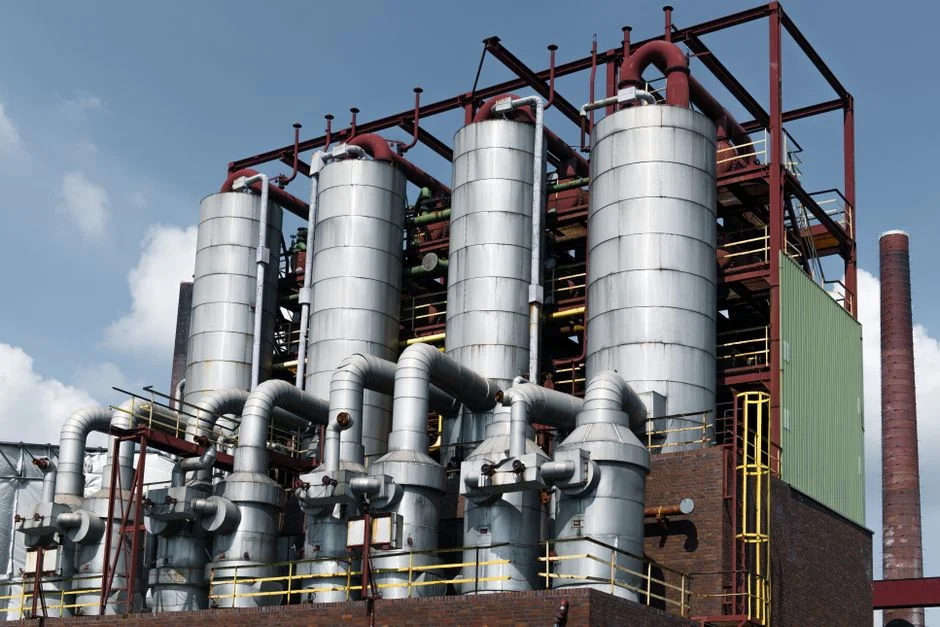
Advanced oxidation is where most coking projects over-spend in 2026, because procurement specs Fenton, ozone, and MBR into the same skid without checking which polishing duty is actually binding. The decision is driven by what A2O leaves behind and what the discharge envelope requires:
- Fenton oxidation (Fe2+/H2O2, pH 3–4). Polishes COD from ~200 mg/L to 60–80 mg/L at 0.5–1.0 g H2O2 per g COD removed. Low CAPEX, high reagent OPEX. Best when inlet COD to Stage 3 is below 300 mg/L and discharge target is ≤80 mg/L.
- Ozone + biological aerated filter (O3/BAF). Combines COD and color removal at 1.5–3.0 g O3 per g COD. Higher CAPEX, lower reagent OPEX than Fenton. Best when recalcitrant organics (color, UV254) dominate, and the cheapest path when the plant is also feeding a DAF pre-treatment unit upstream of biology.
- MBR polishing. Submerged PVDF at 0.1 µm brings TSS to <5 mg/L and adds 10–30% additional COD removal via biomembrane synergy. Mandatory when downstream is RO or when the plant targets water reuse. A submerged MBR polishing system is the 2026 default for any coking plant with a reuse or zero-liquid-discharge roadmap.
Process selection rule of thumb: if post-A2O COD is <300 mg/L and the reuse target is <30 mg/L, MBR alone is enough. If recalcitrant organics dominate, Fenton + BAF. If the plant only discharges to a municipal sewer with no reuse, BAF alone is sufficient. Emerging 2026 options worth piloting are ozone-catalytic oxidation on Cu/Mn-activated carbon and electrochemical oxidation for high-COD polishing above 500 mg/L post-A2O.
Process Comparison: A/O vs A2O vs A2O+MBR for Coking Effluent
Use the table below as the design-basis defense for whichever process train you are specifying. The CAPEX index is normalized to A2O = 100 and is drawn from HydropureWater engineering benchmarks for working 50 m³/h coking plants in 2025-Q4 to 2026-Q1.
| Criterion | A/O | A2O | A2O+MBR |
|---|---|---|---|
| COD removal | 70–85% | 85–95% | 92–97% |
| Effluent COD | 200–500 mg/L | 100–200 mg/L | <50 mg/L |
| NH3-N effluent | 20–40 mg/L | <10 mg/L | <5 mg/L |
| CN effluent | <1 mg/L | <0.5 mg/L | <0.2 mg/L |
| CAPEX index | 75 | 100 | 130–145 |
| OPEX index | 80 | 100 | 115 |
| Footprint | Smallest | Medium | Largest |
| Reuse-ready | No | Marginal | Yes |
Decision logic that maps to the table: discharge to a municipal sewer with a relaxed NH3 limit (≥15 mg/L) and no reuse → A2O, the 2026 baseline for any new steel-mill wastewater train. Discharge to surface water or a reuse target → A2O+MBR. Brownfield retrofits with tight budget and an existing polishing step → A/O plus polishing. The A2O+MBR variant also wins on the MBR vs MBBR comparison when the influent has the high TSS and emulsified oils typical of poorly equalized coking streams.
2026 CAPEX and OPEX Ranges for Coking Effluent Plants
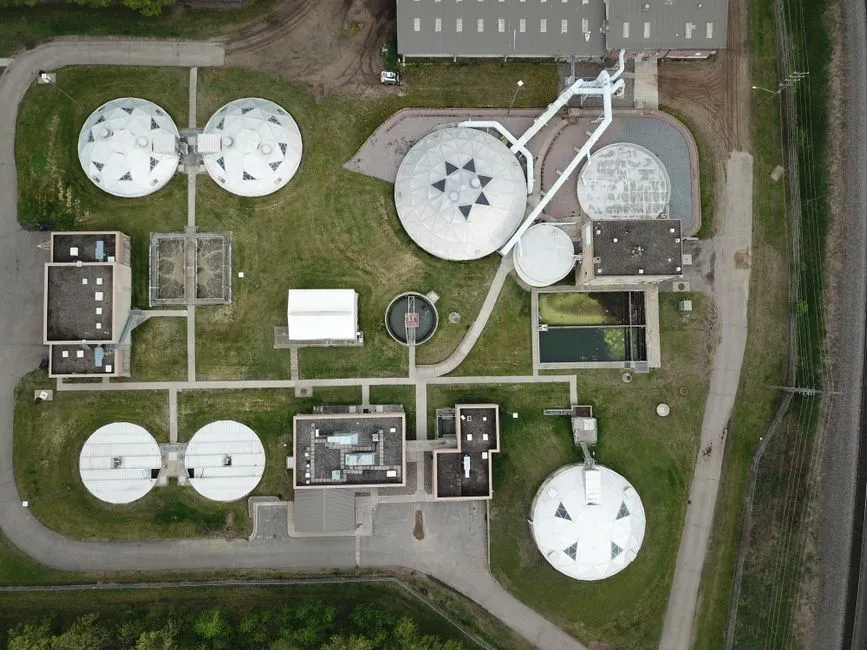
Use the ranges below to anchor a 2026 budget conversation with finance. Costs assume a full four-stage train (pre-treatment, A2O, advanced oxidation, MBR polish) on a greenfield site with civil works included; brownfield retrofits typically add 15–25% for demolition and tie-ins.
| Plant size | CAPEX (USD, 2026) | OPEX (USD/m³ treated) | Typical client |
|---|---|---|---|
| 1–10 m³/h (small) | $200,000–$900,000 | $0.30–$0.55 | Sponge iron, mini-coke |
| 10–50 m³/h (mid) | $1.5M–$5M | $0.22–$0.40 | Integrated steel + coke |
| 50–200 m³/h (large) | $5M–$15M | $0.18–$0.30 | EU retrofit, Chinese flagship |
OPEX breaks down roughly as 40–50% electrical, 20–30% chemicals, 15–20% labor, and 10–15% sludge disposal (HydropureWater field data, 2026). When phenol and ammonia recovery are included, by-product sales offset 25–40% of OPEX at 2026 spot prices (phenol $200–400/tonne, ammonium sulfate $300–500/tonne). Cost drivers that push a project to the upper end: NH3-N discharge below 5 mg/L, TDS-restricted reuse targets, and tight brownfield footprints. OPEX can be cut another 20–30% by recovering waste heat from coke-oven gas for influent pre-heating — the wastewater heat recovery 2026 trends brief is a useful benchmark. For project sizing across the steel-mill envelope, also see the steel mill wastewater treatment plant 2026 cost guide.
Sludge and By-Product Handling for Coking Effluent Plants
Sludge is the OPEX line that quietly breaks coking plant budgets — coking wastewater generates 0.3–0.8 kg dry solids per m³ treated, and the biosolids are heavy-metal- and PAH-bearing, classified as hazardous waste in China, the EU, and most Indian SPCBs. Dewatering to 35–45% DS is the 2026 baseline before disposal; the workhorse is a plate-and-frame filter press sized from 1 to 500 m², which delivers 38–42% DS on coking sludge with low polymer demand. Pre-treatment tar sludge, when segregated, can be re-introduced into the coke-oven coal blend at 1–2% addition for energy recovery — this is a small but real revenue line on most 2026 designs. Clarifier overflow solids are controlled upstream by the lamella clarifier, which is preferred over conventional clarifiers on coking duty because of the high solids loading and the limited footprint inside the battery limits.
Frequently Asked Questions
What does coking effluent contain? Coking wastewater (ammonia liquor) contains phenolics 500–1,500 mg/L, total cyanide 20–200 mg/L, thiocyanate 200–600 mg/L, free and fixed ammonia 200–600 mg/L as N, COD 3,500–8,000 mg/L, tar oils, and refractory polyaromatic hydrocarbons at 35–45 °C and pH 8–11 (industry benchmark data).
Can a single A/O biological stage hit 2026 discharge limits? No. A/O alone delivers NH3-N of 20–40 mg/L and CN of <1 mg/L, which misses GB 16171-2012 (NH3 ≤10, CN ≤0.2 mg/L) and EU IED BAT-AEL. A2O with 200–400% internal recycle is the minimum to hit the 2026 envelope.
What is the ROI of phenol recovery in 2026? At inlet phenol >500 mg/L, solvent extraction recovers 90–97% as sellable product at $200–400/tonne, typically offsetting 25–40% of total plant OPEX and returning CAPEX in 18–36 months at 2026 prices (HydropureWater field data).
Which sludge dewatering equipment fits coking duty? A plate-and-frame filter press (1–500 m²) is the 2026 default, delivering 35–45% DS on coking sludge at low polymer demand; belt presses are too open for the heavy-metal-bearing biosolids.
How do you retrofit an old phenol-removal plant to meet 2026 standards? Add an A2O train downstream of the existing extractor (HRT 36–48 h, SRT 25–40 days), internal recycle 200–400%, followed by Fenton or ozone-BAF polishing and an MBR skid if reuse is targeted — typical retrofit CAPEX is 60–70% of a greenfield build.