Which Philippine Regulation Sets the Suspended Solids Limit?
Under the Philippines' DENR DAO 2016-08 Water Quality Guidelines and General Effluent Standards, the suspended solids (TSS) discharge limit is 50 mg/L for most industrial effluents discharged to inland Class A, B, or C receiving waters. Tighter limits of 30 mg/L apply to waters designated as public water supply sources, while marine Class SC/SD outfalls may allow up to 100 mg/L. Compliance is enforced by the DENR-EMB through quarterly self-monitoring reports under DAO 2003-30.
DAO 2016-08 is the primary, current instrument that defines effluent TSS values by receiving-water classification and is what regional DENR-EMB offices apply when reviewing a Discharge Permit application. For facilities operating under permits issued before 2016, DAO 1990-35 (Revised Effluent Regulations) remains the legal baseline: those permits typically embed 50 mg/L as a maximum, and any "no deterioration" clause on an existing permit is interpreted against the older schedule. Engineers should always check the original permit's "terms and conditions" annex because grandfathered clauses occasionally impose tighter site-specific ceilings than the current DAO default.
Compliance is operationalized by DAO 2003-30, which mandates the Quarterly Self-Monitoring Report (QMSR) and a self-monitoring plan filed within the first 30 days of permit issuance. A second layer of sector-specific DAOs overrides the default for certain industries: DAO 2004-23 for semiconductor and electronics, DAO 1997-39 for acid mine drainage, and the Bangko Sentral / BSP-supervised wastewater rules for financial-sector data centers with on-site treatment. For discharges entering the Laguna de Bay basin, the Laguna Lake Development Authority (LLDA) adds a parallel permit requirement, while reclaimed-land projects fall under the Philippine Reclamation Authority — both layers can revise the effective TSS target below the DAO 2016-08 number.
TSS Limits by Receiving Water Classification
The Philippine TSS limit is set by the receiving water body classification assigned by the DENR-EMB, not by the discharger. Three numbers cover roughly 90% of industrial outfalls in the country: 30 mg/L for waters feeding public water supply sources (Class AA/SA), 50 mg/L for most inland Class A/B/C waters, and 100 mg/L for offshore marine outfalls in Class SC/SD waters. The 50 mg/L value is the operational baseline that virtually every greenfield plant in the Luzon industrial corridor must design to.
Analytically, Total Suspended Solids is defined as the residue retained on a 1.5 µm glass-fiber filter after drying at 103–105 °C, per Standard Methods 2540D — the protocol DENR auditors use during Compliance Sampling Visits. Volatile Suspended Solids (VSS, the same residue after ignition at 550 °C) is reported alongside TSS at biological treatment plants because it indicates the active biomass fraction, but VSS is not itself a discharge limit. Engineers designing an MBR or activated-sludge system should expect to see both numbers on every QMSR, with TSS as the compliance parameter and VSS as an operational diagnostic.
| Receiving Water Classification | TSS Limit (mg/L) | Typical Discharge Scenario |
|---|---|---|
| Class AA / SA (inland water supply source) | 30 | Discharges to headwaters of designated water supply reservoirs |
| Class A / B / C (inland) | 50 | Most industrial effluents to rivers, streams, lakes (excluding Laguna de Bay critical zones) |
| Class SC / SD (marine, offshore outfall) | 100 | Coastal industrial estates with multi-port diffusers beyond the mixing zone |
| Class SB (marine, near-shore) | 50 | Tourism, recreational, and fishery zones |
| Sewer connection to LGU sewer system | 70 (typical LGU ceiling, verify with local utility) | Commercial buildings, property developments tied to a centralized treatment plant |
| Laguna de Bay (LLDA jurisdiction) | 50 (with stricter BOD/nutrient caps) | Factories in CALABARZON discharging directly to the lake or its tributaries |
| Manila Bay interim (MBCO overlay) | 30–50 (case-by-case, often tightened) | Outfalls within the Manila Bay Coordinating Office watchlist area |
Special zones override the default. Discharges inside the Manila Bay Coordinating Office (MBCO) watch area have historically been driven below the 50 mg/L baseline as part of the Supreme Court Mandamus cleanup; the LLDA applies its own effluent schedule, typically with stricter biochemical oxygen demand caps alongside the 50 mg/L TSS ceiling. Always confirm the receiving-water class in the DENR-EMB regional office's online geodatabase before locking in a design number — assumptions based on the "default" 50 mg/L are the most common cause of failed Compliance Sampling Visits (HydropureWater field data, 2026).
How TSS Is Removed to Meet the Limit
Each unit operation in a treatment train targets a specific TSS fraction, and the 50 mg/L inland limit is almost always reached with conventional secondary treatment for domestic-strength industrial wastewater, while the 30 mg/L Class AA ceiling requires a tertiary polishing step. The 100 mg/L marine outfall limit is the easiest to meet — proper primary settling plus a designed diffuser typically delivers 60–150 mg/L with no biological stage — but the discharger must still demonstrate no visible floating solids within 100 m of the discharge point (DAO 2016-08, Sec. 4).
Coagulant chemistry is the single biggest lever for boosting TSS removal on the cheap. Polyaluminum chloride (PAC) at 50–150 mg/L dose, or polyacrylamide (PAM) at 1–5 mg/L as a flocculation aid, will lift DAF and sedimentation TSS removal by 10–20 percentage points over an un-dosed baseline. A automatic chemical dosing for coagulation skid tied to a streaming TSS signal typically pays back in 12–18 months on chemical savings alone.
| Unit Process | Typical TSS Removal | Effluent TSS Achievable (mg/L) | Notes |
|---|---|---|---|
| Bar screen (mechanical, 6 mm) | Gross solids only | No quantitative change | Protects downstream equipment; a rotary bar screen for headworks is standard |
| Grit chamber | Settleable inorganics | Insignificant overall | Removes sand, cinders, eggshell — not a TSS-reduction credit step |
| Primary clarifier | 50–70% | ~150–250 from 500–800 mg/L raw | Best at 1.5–2 h HRT; poor for colloidal TSS |
| DAF (dissolved air flotation) | 80–95% | 20–100 | Excellent for FOG and fibrous TSS; a DAF system for high-efficiency TSS removal is the workhorse for food and textile plants |
| Conventional activated sludge + secondary clarifier | 85–95% | 10–30 | Standard secondary; meets 50 mg/L with margin on domestic-strength waste |
| Multimedia filter (sand/anthracite/garnet) | 90–98% | 2–10 (polishing) | Best as a tertiary polish; a multi-media filter for tertiary TSS polishing closes the 30 mg/L gap |
| MBR (membrane bioreactor) | 99%+ | < 5 | Replaces the secondary clarifier with UF membranes; a MBR membrane bioreactor for tertiary polishing in one tank |
| Disk filter / cloth media | 80–90% | 5–15 | Cheaper than MMF for low solids; backwash water is 2–5% of throughput |
The decision rule is simple: for the 50 mg/L inland limit on a typical 200–800 mg/L raw TSS industrial stream, secondary biological treatment alone clears the bar with a 20–40% safety margin. For the 30 mg/L Class AA ceiling, a tertiary step is mandatory — and a multimedia filter on a well-settled secondary effluent is the lowest-capex route, while an MBR retrofit is the lowest-footprint route when the plant has no civil-works budget for a filter building. For more detail on MBR trade-offs against conventional activated sludge, see the MBR vs conventional activated sludge comparison.
Treatment Train Design for Common Philippine Industries
Influent TSS varies by two orders of magnitude across the industrial sectors that drive Philippine manufacturing, and the unit process you select at the head of the train determines whether the rest of the plant can meet its target. The five design examples below are sized against the 50 mg/L inland default; for facilities inside the LLDA jurisdiction or discharging to Class AA waters, a tertiary step is added without changing the upstream train.
Food processing and slaughterhouse: raw TSS runs 1,500–4,000 mg/L with high fat, blood, and paunch content. The proven train is a rotary bar screen at 6 mm, followed by a DAF for FOG and protein stripping, then anaerobic (UASB or covered lagoon) for COD, finishing with MBR or SBR polishing. The DAF alone gets the stream to 100–200 mg/L; the MBR closes to under 20 mg/L, comfortably inside the 50 mg/L limit. The WSZ-type underground package sewage treatment plant is suitable for the smaller slaughterhouses and meat-cutting operations feeding the wet-market supply chain.
Textile and dyeing: raw TSS is 500–2,000 mg/L with reactive dyes, high color, and variable pH. Equalization is non-negotiable, followed by chemical coagulation-sedimentation (lamella clarifier is the workhorse), then biological treatment (typically a sequencing batch reactor or moving-bed biofilm reactor), with a sand filter polish to meet 50 mg/L. For discharges to Class AA/SA waters or to the LLDA zone, activated carbon plus an MBR polish brings TSS below 30 mg/L. The high-efficiency lamella sedimentation tank is the standard primary step for the textile estates in Cavite and Bulacan.
Semiconductor and electronics: raw TSS is low (50–200 mg/L) but metals, fluoride, and ammonia drive the design. DAF is used for FOG and fluoride sludge, followed by a multimedia filter, then RO polishing for the rinse-water reuse loop. An MBR is added for high-strength rinse waste streams before the final RO. The multi-media filter for tertiary TSS polishing protects the downstream RO from fouling.
Property development and commercial buildings: mixed sewage produces raw TSS of 200–500 mg/L, and the standard train is an underground A/O packaged plant with disinfection, which routinely meets 50 mg/L for sewer connection. A packaged underground package sewage treatment plant is the typical selection for condominium and BPO campus developments tied to an LGU sewer line.
Mining and quarrying: TSS is the dominant parameter at 5,000–50,000 mg/L influent, with high clay fractions that resist settling. The required train is thickener → clarifier → DAF → multimedia filter, almost always paired with an automatic chemical dosing for coagulation of flocculant and a plate-frame filter press for sludge dewatering to below 20% moisture. A single missed dose cycle at a quarry operation can send 30,000 mg/L of suspended clay into the receiving river — the chemical dosing skid is the most instrumented piece of equipment in the plant.
Discharge Permit Application, Monitoring and Penalties
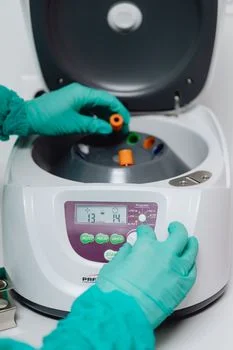
Application is filed at the DENR-EMB regional office that has jurisdiction over the discharge point, not the corporate head office — a frequent rejection cause for Manila-headquartered companies whose plants are in Region IV-A or Region III. The standard package includes the accomplished Discharge Permit application form, process flow diagrams with mass balance, design effluent quality (with the target mg/L for every parameter including TSS), a self-monitoring plan, and proof of compliance with existing environmental rules. A typical first-time review takes 30–60 days; renewals are faster when the QMSR history is clean.
Monitoring cadence is quarterly: a composite 24-hour sample collected by a DENR-EMB-accredited third-party laboratory, with TSS analysis per Standard Methods 2540D, submitted as the QMSR within 15 days of the end of each monitoring quarter. The QMSR must be signed by a duly designated Pollution Control Officer (PCO) and the company's chief executive. Random Compliance Sampling Visits by the EMB are additional to the quarterly schedule and can be triggered by a single community complaint.
Enforcement teeth are real. Administrative fines under DAO 2003-30 reach PHP 200,000 per violation per parameter per quarter, a Cease-and-Desist Order under DAO 2005-10 can shut a plant within 24 hours, and criminal liability under Section 9 of the Clean Water Act (RA 9275) carries personal penalties for the responsible officer. Best practice is to design to 70–80% of the regulatory limit — aim for 35–40 mg/L actual effluent when the limit is 50 mg/L — to absorb influent variability, treatment upsets, and lab uncertainty (HydropureWater field data, 2026). For more on global analogue limits that inform the design buffer, see the COD and BOD discharge limit standards global guide.
Frequently Asked Questions
What is the suspended solids discharge limit in the Philippines for industrial wastewater?
Under DENR DAO 2016-08, the default limit is 50 mg/L for inland Class A, B, or C receiving waters, 30 mg/L for Class AA/SA water supply source zones, and 100 mg/L for offshore Class SC/SD marine outfalls.
Which DAO governs the 50 mg/L TSS limit?
DENR DAO 2016-08 (Water Quality Guidelines and General Effluent Standards) sets the 50 mg/L inland baseline. Older permits issued under DAO 1990-35 may have 50 mg/L embedded as a permit condition and remain enforceable.
How is TSS measured for DENR compliance sampling?
By Standard Methods 2540D: gravimetric determination of the residue retained on a 1.5 µm glass-fiber filter after drying at 103–105 °C, performed by a DENR-EMB-accredited third-party laboratory.
What is the QMSR reporting frequency?
Quarterly, under DAO 2003-30. The QMSR is due within 15 days of the end of each monitoring quarter, signed by the Pollution Control Officer and the chief executive.
Do I need a tertiary treatment step to meet 50 mg/L?
Not usually — conventional activated sludge with a secondary clarifier delivers 85–95% TSS removal, which clears 50 mg/L with margin on domestic-strength industrial wastewater. Tertiary treatment (multimedia filter, MBR, or DAF polish) becomes mandatory when the receiving water is Class AA/SA (30 mg/L) or when the plant's influent TSS is highly variable.
What are the penalties for exceeding the TSS limit?
Administrative fines up to PHP 200,000 per violation under DAO 2003-30, a possible Cease-and-Desist Order under DAO 2005-10, and criminal liability under Section 9 of the Clean Water Act (RA 9275).
Is the 50 mg/L limit the same for discharges to the Laguna de Bay?
The TSS ceiling is the same 50 mg/L, but the LLDA overlay imposes stricter BOD and nutrient caps and a parallel LLDA Discharge Permit is required for any facility in the Laguna de Bay watershed.