Chromium Discharge Limit Mexico: 2026 Thresholds
The chromium discharge limit Mexico enforces for Type A and Type B surface waters is 0.5 mg/L total chromium, with Cr(VI) capped at 0.1 mg/L. Reservoir (embalse) discharges tighten to 0.1 mg/L total Cr and 0.05 mg/L Cr(VI). Direct aquifer injection is limited to 0.05 mg/L for both species. Daily maxima and monthly averages both apply to every compliance sample.
The 2021 national discharge rule was published in the Diario Oficial de la Federación on 3 April 2021. It has been enforceable since 4 May 2022 and past the 4 May 2024 legacy-permit window. Every Concesión de Descarga Title 4 condition must cite the 2021 text. Older 1996 and 2010 tables no longer govern. By 2026 that transition is complete nationwide. Plants still designing to outdated tables risk a 10× CAPEX miss on polishing stages.
Two parameters trip most plants: cromo total and cromo hexavalente are monitored separately. A sample can pass total Cr while failing Cr(VI). Mexico's 500 µg/L surface-water total-Cr ceiling is roughly 7–10× several U.S. state groundwater limits now in force. New Mexico Environment Department plume samples at 53–72.9 µg/L against a 50 µg/L state limit were reported in November 2025 (KOAT, 2025-11-14). A Mexican plant at 250 µg/L total Cr can still be legal under the national NOM. The same reading already exceeds California's 10 µg/L public-health goal. A plant at 480 µg/L sits one bad batch from a PROFEPA sanción.
SEMARNAT enforces through PROFEPA inspections and the Concesión de Descarga mechanism. Fines under LGEEPA Articles 171–178 can reach into the millions of pesos. Repeat offenders face partial or total permit revocation. For how the same standard frames suspended solids and BOD alongside metals, see this NOM-001-SEMARNAT-2021 suspended solids limit guide. Broader context on nom-001-semarnat-2021 wastewater discharge practice sits on the companion standards page.
What does NOM-001-SEMARNAT-2021 require for chromium discharges?
Mexico requires separate compliance for total chromium and hexavalent chromium against the receiving-body class written on the Concesión de Descarga. Type A agricultural rivers and Type B aquatic-life rivers share 0.5 mg/L total Cr and 0.1 mg/L Cr(VI). Embalse and aquifer classes cut those ceilings by 5–10×. Engineers size reduction stoichiometry, clarifier area, and polishing resin volume to the class on the permit, not to a single national default.
The numeric limits every Mexican compliance engineer needs are in Table 1. Values come from the 3 April 2021 DOF publication and remain the operative values in 2026. Two compliance tests apply to every parameter. A daily instantaneous maximum (valor instantáneo) uses a flow-proportional or composite sample. A monthly average (promedio mensual) uses all valid daily samples that month. The stricter of the two controls reporting.
| Receiving body (cuerpo receptor) | Cromo total (mg/L) | Cromo hexavalente Cr(VI) (mg/L) | SST (mg/L) | DBO₅ (mg/L) | pH range |
|---|---|---|---|---|---|
| Río Tipo A (uso agrícola) | 0.5 | 0.1 | 75 | 100 | 5.0–9.0 |
| Río Tipo B (protección vida acuática) | 0.5 | 0.1 | 40 | 60 | 5.0–9.0 |
| Lago / Laguna (eutrofización controlada) | 0.5 | 0.1 | 40 | 60 | 5.0–9.0 |
| Embalse (reservoir) | 0.1 | 0.05 | 30 | 40 | 5.0–9.0 |
| Aguas Costeras (coastal) | 0.5 | 0.1 | 100 | 200 | 5.5–9.0 |
| Suelo (irrigation reuse) | 0.5 | 0.1 | 100 | 200 | 5.5–9.0 |
| Manto Acuífero (aquifer, direct injection) | 0.05 | 0.05 | — | — | 5.0–9.0 |
Three points from the table catch engineers off-guard. First, Type A and Type B share the same 0.5 mg/L total chromium ceiling. BOD and TSS still tighten from 100/75 mg/L to 60/40 mg/L. A chrome stream that meets Cr often fails BOD/SST, so the polishing chain must be designed in that order. Second, embalse discharges drop to 0.1 mg/L total Cr and 0.05 mg/L Cr(VI). A tannery or plating shop sending effluent to a reservoir via CONAGUA's Título de Concesión is regulated five times tighter than the surface-water default. Third, direct discharge to a manto acuífero carries a 0.05 mg/L total Cr ceiling. That is effectively a drinking-water standard. Most plants that assumed well injection used the surface-water number are now out of compliance.
SEMARNAT retains the right under Title 4 of the Concesión de Descarga to impose site-specific limits stricter than the NOM floor. CONAGUA routinely does this for facilities downstream of a potable water intake or a designated Ramsar site. Related nitrogen and nutrient framing under nom-001-semarnat-2021 (wastewater discharge limits) follows the same receiving-body logic.
Total Chromium vs Hexavalent Chromium: Why Two Parameters
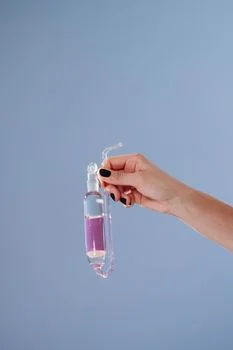
Total chromium (cromo total) is the sum of all oxidation states in solution. It is measured by ICP-OES after acid digestion (NMX-AA-051 equivalent, SW-846 3050B/6010D). Hexavalent chromium (cromo hexavalente, Cr(VI)) uses the 1,5-diphenylcarbazide colorimetric method at 540 nm. The method is EPA SW-846 7196A, with Mexican equivalent NMX-AA-044-SCFI-2014. Cr(VI) is a known human carcinogen via ingestion (IARC Group 1). It drove the 2021 tightening. Cr(III) is far less mobile in soil and roughly 100× less toxic orally.
The compliance trap is that conventional hydroxide precipitation removes both species as mixed Cr(OH)₃ sludge. The total Cr report then looks solved. A separate Cr(VI) analysis can still exceed 0.1 mg/L. Residual oxidants upstream of the precipitation tank re-oxidize Cr(III) back to Cr(VI) after the clarifier. Chlorine from a CIP step, hydrogen peroxide from cyanide destruction, and ozone from polishing are common causes. The 1,5-diphenylcarbazide reaction is also sensitive to interferences. If holding time exceeds 24 hours or sample pH drifts above 9, Cr(VI) can be under-reported by 30–60%.
CONAGUA inspectors in 2025 increasingly request the raw Cr(VI) chromatogram plus the field-preservation log. They no longer accept only the headline number from a lab certificate. Most plants we size for hard-chrome and tannery lines run Cr(VI) sampling at the lower end of the holding-time window for that reason. The audit failure mode is documentation as often as chemistry.
How do Mexican plants prove chromium compliance?
Mexican plants prove chromium compliance by reporting both cromo total and cromo hexavalente against the daily maximum and monthly average on the Concesión de Descarga, with EMA-accredited methods and retained chromatograms. PROFEPA typically runs 1–2 unannounced site inspections per year on top of the annual COA review. Facilities with a documented exceedance history, or those flagged in the SEMARNAT self-reporting portal, can move to quarterly sampling cycles.
Labs must retain the 1,5-DPC colorimetric chromatogram and the field-preservation log with each compliance package. A total-only certificate that masks a Cr(VI) exceedance was the most common 2025 sanction path we still see on plating and tannery files. Keep chain-of-custody for 5 years per LGPGIR. Plants that treat the chromium discharge limit Mexico publishes as a single total-Cr number still fail Cr(VI) audits.
Treatment Trains That Hit Mexico's 2026 Chromium Limits
Chrome-bearing wastewater from tanneries, hard-chrome plating, decorative plating, and stainless-steel pickling needs a four-stage train. That train reaches <0.5 mg/L total Cr and <0.1 mg/L Cr(VI) at the same time. Two optional polishers cover reservoir or aquifer discharges. Table 2 summarizes typical influent/effluent at each step. The equipment references are 2026 industry-standard units, not vendor brands.
| Unit operation | Influent Cr (mg/L) | Effluent total Cr (mg/L) | Effluent Cr(VI) (mg/L) | Key parameters |
|---|---|---|---|---|
| Equalization / pH 2.0–2.5 acidification | 50–200 (as Cr(VI)) | 50–200 | 50–200 | H₂SO₄ dosing, 20–30 min RT, ORP +300 mV |
| Reduction tank (FeSO₄ or NaHSO₃) | 50–200 | 2–8 | <0.5 | FeSO₄ at 1.5–2.0× stoichiometric OR NaHSO₃ at 2.5–3.0×, 30 min RT, ORP <+200 mV |
| pH adjust to 8.5–9.0 + lamella clarifier | 2–8 | 0.5–1.0 | <0.1 | NaOH or Ca(OH)₂, flocculant 1–3 mg/L, 60-min settling |
| DAF polishing (industrial DAF system for Cr(OH)₃ colloid removal) | 0.5–1.0 | 0.2–0.5 | <0.1 | 4–300 m³/h, recycle ratio 20–30%, TSS <30 mg/L effluent |
| Strong-base anion IX (optional, reservoir/aquifer) | 0.2–0.5 | <0.05 | <0.02 | Purolite A-600 or equivalent, 6–8% regeneration, HCl/NaOH |
| RO final barrier (industrial RO polishing for residual Cr(VI)) | 0.2–0.5 | <0.005 | <0.005 | 95% recovery, >99% rejection on thin-film composite |
Stoichiometry is the first engineering number to lock. The reduction of Cr(VI) to Cr(III) by FeSO₄·7H₂O consumes six moles of Fe(II) per mole of Cr(VI). The practical dose is 1.5–2.0× stoichiometric to cover matrix oxidant demand and to drive ORP below +200 mV. With NaHSO₃, stoichiometric demand is 1.5 moles per mole of Cr(VI). The practical dose is 2.5–3.0×. Bisulfite is cheaper per kg but adds sulfate to the clarifier recycle. High-recovery plants prefer FeSO₄ to limit TDS creep.
After 30 minutes retention the solution is raised to pH 8.5–9.0 with NaOH (cleaner) or Ca(OH)₂ (cheaper, adds calcium to sludge). Cr(OH)₃ precipitates with Ksp around 6.7 × 10⁻³¹. That solubility is theoretically tight. In practice colloidal fines still leave 0.5–1.0 mg/L total Cr carryover. DAF fits these fines because Cr(OH)₃ flocs are buoyant and slow-settling. An industrial DAF system for Cr(OH)₃ colloid removal running at 4–300 m³/h with a 20–30% recycle ratio routinely produces <30 mg/L TSS. It drops total Cr to 0.2–0.5 mg/L. Adding a lamella clarifier for Cr(OH)₃ settling ahead of the DAF, or as a side-stream polisher, tightens the average. It also covers storm-flow events that DAF alone occasionally slips on.
For plants discharging to embalse or manto acuífero, neither precipitation nor DAF reaches 0.1 or 0.05 mg/L reliably, so polishing is mandatory. Strong-base anion exchange resin (Purolite A-600, Lewatit MP 500, or equivalent) loads Cr(VI) as HCrO₄⁻. It routinely drops total Cr to <0.05 mg/L and Cr(VI) to <0.02 mg/L. The tradeoff is 6–8% NaOH/HCl regeneration chemistry. Sulfate-fouling cycles after NaHSO₃ reduction can cut capacity by 15–20%. RO is the final barrier. Thin-film composite membranes reject >99% of Cr(VI) at 95% recovery when the receiving body is a manto acuífero at 0.05 mg/L, or when the plant recycles rinse water.
PLC-controlled chemical dosing for the reduction-precipitation train is non-negotiable on the ORP/pH loop. A 0.2-unit pH excursion or a 50 mV ORP drift is the difference between compliance and a Cr(VI) exceedance. A typical 50 m³/d skid — reduction tank, pH adjust, lamella, DAF, and a 2 m³/h RO polish — is the configuration most Mexican plating shops and tanneries are quoting in 2026. Sizing logic is identical across states once the receiving-body class is fixed.
Sludge Handling and the Recovery Question

Cr(OH)₃ sludge from precipitation is hazardous under NOM-052-SEMARNAT-2005 when TCLP (NMX-AA-098 equivalent) shows Cr(VI) above 5 mg/L in the leachate. Poorly washed hex-chrome sludge typically runs 20–80 mg/L Cr(VI) on TCLP. The waste must go to a licensed centro de acopio autorizado under a manifiesto de entrega-recepción. Manifest retention is 5 years per LGPGIR. A filter press for hazardous Cr(OH)₃ sludge dewatering producing a 25–35% dry-solids cake is the standard step. Presses from 1–500 m² cover 20 m³/d plating lines through 2,000 m³/d tanneries.
Chromium recovery — ion-exchange elution followed by electrolysis to plate out metallic chromium — is technically proven. It adds $1.2–$3.5M of CAPEX on a 50 m³/d line (HydropureWater field data, 2026). Economics only work at tanneries and large hard-chrome plating operations with Cr(VI) input above 500 kg/d and a downstream market for recovered chromic acid. For a decorative plating shop or metal-finishing line below 200 kg/d, manifest-transported hazardous-waste disposal usually costs less than recovery CAPEX amortization. The full trade-off is mapped in this 2026 chromium removal technology comparison.
2026 Compliance Checklist Before the Next CONAGUA Inspection
- Confirm the body-of-water classification on your Concesión de Descarga — Tipo A, Tipo B, Embalse, or Manto Acuífero. This single class determines whether you are regulated at 0.5, 0.1, or 0.05 mg/L total Cr. Misclassification was the most common 2025 PROFEPA finding.
- Verify that your laboratory reports both cromo total (ICP-OES) and cromo hexavalente (NMX-AA-044 / SW-846 7196A) on every compliance sample. Retain the 1,5-DPC chromatogram and field-preservation log. Most 2025 SEMARNAT sanctions traced to a total-only report that masked a Cr(VI) exceedance.
- Budget the 2026 CAPEX band: a 50 m³/d reduction + lamella + DAF skid runs $180,000–$420,000 USD turnkey. Adding anion-exchange polishing pushes the same skid to $620,000–$1,100,000 USD. A full train with RO for manto acuífero compliance lands in the $1.0–$1.8M USD range (HydropureWater 2026 quoting data).
- Schedule quarterly internal sampling at the discharge point plus an annual third-party NMX-AA-044 / 7196A Cr(VI) audit by an EMA-accredited lab. Keep chromatograms and chain-of-custody for 5 years per LGPGIR.
- File the COA (Cédula de Operación Anual) on or before the date in your Título de Concesión. Align monitoring data with the media ponderada and flujo proporcional calculations required for the monthly average.
- Lock ORP and pH setpoints on the reduction-precipitation loop with recorded alarm bands. A 50 mV ORP drift or 0.2 pH unit swing is a common exceedance root cause on plating lines.
- If discharge class is embalse or manto acuífero, confirm anion-exchange or RO polishing capacity before the next Title 4 renewal. Precipitation alone will not hold 0.1 or 0.05 mg/L.
For Mexican plants sourcing UF, RO, and pre-treatment skids in 2026, this Mexico UF and RO equipment sourcing guide covers supplier qualification. For site-specific engineering capacity in the Bajío region see the Querétaro wastewater treatment supplier 2026 guide.
Who this is for / Next step
This guide is for plant engineers, EPC contractors, and procurement managers sizing chrome treatment for Mexican Concesión de Descarga renewals in 2026. Look elsewhere if you need only potable-water Cr guidance or a non-Mexican jurisdiction. To match a reduction–clarifier–DAF–RO train to your receiving-body class and flow, request a chromium treatment quote with influent Cr(VI), daily flow in m³/d, and the cuerpo receptor listed on your permit.
Frequently Asked Questions

What is the Mexican NOM limit for total chromium in 2026?
The limit is 0.5 mg/L for Type A and Type B surface waters. Embalses (reservoirs) tighten to 0.1 mg/L, and manto acuífero (aquifer) discharges to 0.05 mg/L, per the 2021 SEMARNAT table. Compliance uses both a daily instantaneous maximum and a monthly average. Confirm the receiving-body class on the Concesión de Descarga before sizing polishing stages.
Is hexavalent chromium regulated separately from total chromium in Mexico?
Yes. Cr(VI) is a separate parameter with a 0.1 mg/L limit in most surface-water categories and 0.05 mg/L in embalse and manto acuífero discharges under the same national standard. Plants monitoring only total Cr and not Cr(VI) are the most common compliance failure mode documented in PROFEPA inspections. Retain the 1,5-DPC chromatogram with each sample package.
What treatment train meets Mexico's chromium discharge limit?
A reduction + pH adjust + lamella clarifier + DAF train hits <0.5 mg/L total Cr and <0.1 mg/L Cr(VI) for surface-water discharges. To reach the 0.1 or 0.05 mg/L embalse/aquifer thresholds, add strong-base anion exchange polishing or an RO final barrier. The full train comparison is in the 2026 chromium removal technology comparison.
How often does CONAGUA inspect chromium discharges?
PROFEPA typically conducts 1–2 unannounced site inspections per year on top of the annual COA filing review. Facilities with a documented exceedance history, or those flagged in the SEMARNAT automated self-reporting portal, can be moved to quarterly sampling and inspection cycles. Keep five years of manifests and chromatograms ready for audit.
Is Cr(OH)₃ sludge a hazardous waste in Mexico?
Yes under NOM-052-SEMARNAT-2005 when the TCLP leachate exceeds 5 mg/L Cr(VI). Poorly washed hex-chrome sludge often runs 20–80 mg/L Cr(VI) on TCLP. The dewatered cake from a filter press must be shipped under a manifiesto to a centro de acopio autorizado, with records retained for 5 years per LGPGIR.