Mexico wastewater regulations for discharges to national waters are set by NOM-001-SEMARNAT-2021. The standard was published on March 11, 2022 and became fully effective on March 11, 2023. Stricter limits for selected pollutants applied from April 2023. It covers 27 pollutants, with BOD5 limits of 30–100 mg/L, TSS of 30–120 mg/L, and lead of 0.1–0.5 mg/L by receiving-water class.
Mexico Wastewater Regulations Under NOM-001-SEMARNAT-2021
NOM-001-SEMARNAT-2021 is Mexico’s primary wastewater discharge standard for federal waters. It replaced NOM-001-SEMARNAT-1996, set class-based limits for 27 pollutants, and took full effect on March 11, 2023, with tighter parameter enforcement from April 2023. SEMARNAT and CONAGUA enforce it for industrial, commercial, and municipal discharges to federal waterways or sewers that reach those waters.
The regulation applies to every facility that discharges directly to federal waters or indirectly through public sewers that empty to federal waters. Receiving waters fall into Classes I–IV, and each class has its own numeric limits. Plant engineers reading Mexico wastewater regulations must confirm class before sizing treatment or setting compliance targets.
Non-compliance risks are material for operating budgets and permits. Fines can reach MXN $2.3 million (about USD $130,000), and authorities may suspend operations after repeated failures. Severe or damaging violations can also trigger criminal liability for facility management. Most plants we size for Mexican food and chemical sites treat Class II or III limits as the working design case unless CONAGUA maps show Class I.
Key Effluent Parameters and Discharge Limits Under NOM-001
NOM-001-SEMARNAT-2021 sets effluent limits by receiving-water class. Class I waters have the tightest values; Classes III and IV allow higher concentrations for many organics and solids. Facilities must match lab results to the correct class column, not to a single national number.
The standard regulates twenty-seven pollutants across organic, inorganic, and microbiological groups. Parameters that most often drive industrial treatment upgrades include:
- Biochemical Oxygen Demand (BOD5): Limits range from 30 mg/L for Class I waters to 100 mg/L for Class III and IV.
- Total Suspended Solids (TSS): Limits range from 30 mg/L (Class I) to 120 mg/L (Class III and IV).
- pH: Must remain within a narrow range of 5.5–8.5 for all receiving water classifications.
- Oil & Grease: Limits vary from 10 mg/L for Class I to 50 mg/L for Class III and IV.
- Phenols and Cyanides: Limits range between 0.5–5 mg/L for phenols and 0.1–0.5 mg/L for cyanides, depending on the water body class.
- Heavy Metals: Limits are particularly stringent for Class I waters, for example, 0.1 mg/L for lead, 0.001 mg/L for mercury, and 0.01 mg/L for cadmium.
- Fecal Coliforms: A limit of ≤1,000 NMP/100 mL applies specifically for wastewater intended for agricultural reuse.
Discharges to municipal sewers must also meet the sewer operator’s local rules. Those rules often track NOM-001 but can add stricter local caps. Key class limits are summarized below.
| Parameter | Unit | Class I (High Priority) | Class II (Medium Priority) | Class III (Low Priority) | Class IV (Specific Use) | Notes |
|---|---|---|---|---|---|---|
| BOD5 (Biochemical Oxygen Demand) | mg/L | 30 | 50 | 100 | 100 | |
| TSS (Total Suspended Solids) | mg/L | 30 | 70 | 120 | 120 | |
| pH | - | 5.5 – 8.5 | 5.5 – 8.5 | 5.5 – 8.5 | 5.5 – 8.5 | Range |
| Oil & Grease | mg/L | 10 | 20 | 50 | 50 | |
| Phenols | mg/L | 0.5 | 1 | 5 | 5 | |
| Cyanides | mg/L | 0.1 | 0.2 | 0.5 | 0.5 | |
| Lead (Pb) | mg/L | 0.1 | 0.2 | 0.5 | 0.5 | Heavy Metal |
| Mercury (Hg) | mg/L | 0.001 | 0.005 | 0.01 | 0.01 | Heavy Metal |
| Cadmium (Cd) | mg/L | 0.01 | 0.05 | 0.1 | 0.1 | Heavy Metal |
| Fecal Coliforms | NMP/100 mL | N/A | N/A | N/A | ≤1000 | For agricultural reuse |
| Total Nitrogen | mg/L | 5 | 15 | 30 | 30 | For specific water bodies |
| Total Phosphorus | mg/L | 1 | 3 | 5 | 5 | For specific water bodies |
These class-based effluent limits determine whether primary clarification alone is enough or whether secondary and tertiary stages are required.
How Do Regulations Affect Food Plants in Mexico?
Large food plants in Mexico often face NOM-001 pressure on oil & grease, BOD5, TSS, and nutrients from washdown and process water. Class I oil & grease at 10 mg/L and BOD5 at 30 mg/L leave little margin for dairy, meat, beverage, or snack plants with high FOG loads.
Most food sites we audit discharge to municipal sewers first. They must meet the sewer operator’s limits and still stay aligned with NOM-001 where the sewer reaches federal waters. Annual SEMARNAT-accredited lab tests remain the compliance baseline, even when the plant also monitors pH and temperature on site every shift.
Treatment trains that remove FOG early reduce load on biological stages. Plants that skip flotation or equalization often fail oil & grease or TSS after weekend clean-in-place spikes. Matching hydraulic peaks to retention time is as important as picking the right unit process.
How Industrial Facilities Must Comply with Testing and Reporting

Industrial facilities in Mexico must run annual wastewater sampling through SEMARNAT-accredited laboratories to show NOM-001-SEMARNAT-2021 compliance. The laboratory must hold current SEMARNAT recognition for the methods used.
Annual testing is the compliance baseline for most industrial dischargers. High-risk industries or sites with prior violations may face more frequent sampling orders. Operators must keep sampling logs, chain-of-custody forms, and full laboratory reports for inspection.
Analysis results go to SEMARNAT through the Registro de Emisiones y Transferencia de Contaminantes (RECA) platform. Late or incomplete filings can be treated as non-compliance even when the numbers themselves pass.
Facilities also monitor pH and temperature on site during production shifts. Those readings catch process upsets before a scheduled lab sample documents a violation.
How Do Treatment Systems Support Discharge Compliance?
Wastewater treatment systems support discharge compliance when each stage targets the parameters that fail NOM-001 for the plant’s water class. Technology choice follows wastewater strength, peak flow, and the class limits in the table above, not a generic “advanced treatment” label.
For high oil, grease, and solids, Dissolved Air Flotation (DAF) is a common first upgrade. A high-efficiency DAF system can remove 85–95% of oil & grease and 70–90% of TSS under design loading.
When Class I or tight Class II BOD and TSS targets apply, Membrane Bioreactor (MBR) systems deliver low residual organics. A compact MBR system with DF series modules can produce effluent below 10 mg/L BOD and below 5 mg/L TSS when operated at design flux and sludge age.
Chemical dosing controls pH within 5.5–8.5 and supports heavy-metal precipitation where lead, mercury, or cadmium drive risk. Rotary mechanical bar screens (GX series) protect downstream units from rags and debris. Chlorine dioxide generators address disinfection needs without the same byproduct profile as free chlorine in many industrial waters.
Step-by-Step Compliance Audit for Industrial Plants
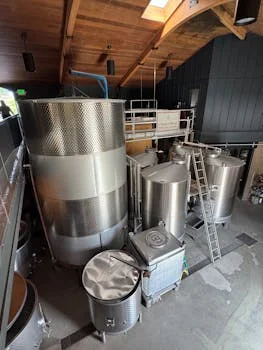
A structured compliance audit reduces the chance of missing a NOM-001-SEMARNAT-2021 limit before the next RECA filing.
- Step 1: Identify Your Receiving Water Body Class. Use CONAGUA maps and discharge permits to confirm Class I–IV for the federal waterway or sewer outfall.
- Step 2: Review Latest Lab Reports. Compare the latest analyses to all 27 regulated parameters for that class, not only BOD5 and TSS.
- Step 3: Verify Laboratory Accreditation. Confirm the lab’s SEMARNAT accreditation covers the methods on the report.
- Step 4: Audit Treatment Train. Walk the existing train for hydraulic bottlenecks, FOG breakthrough, and underloaded or overloaded units.
- Step 5: Schedule Next Annual Test. Book the annual test early and lock the RECA submission workflow. For the sibling discharge-standards deep dive, see the full 2025 compliance guide for NOM-001 discharge standards.
Selection checklist before you buy or retrofit equipment:
- Confirm receiving-water class and any sewer-operator add-ons.
- Measure peak hourly flow, not only average m3/d.
- Decide whether FOG, BOD/TSS, metals, or nutrients is the primary driver.
- Verify sludge handling capacity for the selected process.
- Assign owners for sampling, chain-of-custody, and RECA filing.
- Budget for accredited lab costs and possible more-frequent testing.
Readers comparing French-language industrial framing of the same Mexican discharge topic can use cadre reglementaire pour les industriels sur le waster water management mexico as the companion page.
Who This Is For / Next Step
This guide is for plant engineers, EHS managers, and EPC teams sizing or auditing industrial and municipal discharges under NOM-001-SEMARNAT-2021 in Mexico. Teams working only on Saudi discharge codes should use country-specific rules instead. If you need help matching DAF, MBR, or dosing equipment to your class limits, send your latest lab sheet through our request-quote form.
Frequently Asked Questions
What is the new wastewater regulation in Mexico?
NOM-001-SEMARNAT-2021 is Mexico’s current wastewater discharge regulation for national waters. It replaced the 1996 standard, was published on March 11, 2022, and became fully effective on March 11, 2023. Stricter enforcement for selected parameters began in April 2023. It sets class-based limits for 27 pollutants enforced by SEMARNAT and CONAGUA.
Does Mexico have wastewater treatment?
Yes. Mexico operates municipal and industrial wastewater treatment plants, but coverage is uneven. About 80% of urban areas have collection systems, while only about 50% of collected wastewater receives secondary treatment. Industrial sites often install dedicated pretreatment to meet NOM-001 or sewer-operator limits before discharge.
Why is wastewater treatment not a priority for some Mexican municipalities?
Many municipalities face funding gaps, aging collection and plant assets, and fragmented governance across more than 2,500 local governments. Those constraints slow secondary-treatment expansion even where collection already exists. Industrial dischargers still remain fully responsible for their own NOM-001 compliance at the plant fence line.
How often must wastewater be tested in Mexico?
Industrial wastewater must be tested at least annually by a SEMARNAT-accredited laboratory. High-risk facilities or sites with prior non-compliance may be required to sample more often. Plants should also log on-site pH and temperature and keep chain-of-custody records for every formal sample.
What happens if a company violates NOM-001?
Violations can bring fines up to MXN $2.3 million (about USD $130,000), operational suspensions, and, for severe or repeated environmental damage, criminal liability for management. Late or incomplete RECA reporting can also be treated as non-compliance. Corrective action usually includes treatment upgrades plus a documented resampling plan.