Why Frankfurt Hospitals Need Specialized Wastewater Treatment in 2026
A significant compliance failure in early 2025 at a Frankfurt hospital, stemming from undetected pharmaceutical residues in its wastewater effluent, resulted in a €250,000 fine and a mandated 12-month retrofit of its treatment system. This incident highlights escalating regulatory scrutiny and the urgent need for advanced wastewater treatment solutions tailored to healthcare facilities in Germany. The EU Urban Waste Water Directive 91/271/EEC sets baseline requirements, mandating Chemical Oxygen Demand (COD) limits at ≤75 mg/L and Total Nitrogen (TN) at ≤10 mg/L. By 2026, these limits will be augmented by EU Watch List (2024/1882) recommendations and Hessian state regulations targeting micropollutants such as pharmaceutical residues and antibiotic-resistant bacteria (ARB).
Frankfurt's operational environment introduces further complications: industrial land costs range from €300–€800/m², permitting timelines average 6–18 months, and skilled labor costs reach €60–€90/hour. These factors directly affect project viability and total cost of ownership, making equipment selection and process design decisions critical for procurement teams operating under tight capital and operational budgets.
Effluent Quality
Hospital effluent in Frankfurt must meet stringent discharge parameters before entering municipal sewer systems. Typical compliance targets for 2026 are summarized below.
| Parameter | EU Directive 91/271/EEC Limit | 2026 Frankfurt / Hessian Target | Analytical Method |
|---|---|---|---|
| Chemical Oxygen Demand (COD) | ≤ 75 mg/L | ≤ 50 mg/L | ISO 6060 |
| Biochemical Oxygen Demand (BOD₅) | ≤ 25 mg/L | ≤ 20 mg/L | EN 1899-1 |
| Total Nitrogen (TN) | ≤ 10 mg/L | ≤ 8 mg/L | EN 12260 |
| Total Phosphorus (TP) | ≤ 1–2 mg/L | ≤ 1 mg/L | EN 1189 |
| Total Suspended Solids (TSS) | ≤ 35 mg/L | ≤ 20 mg/L | EN 872 |
| Pharmaceutical Residues (sum) | Watch List | ≥ 80% removal | LC-MS/MS |
| Antibiotic-Resistant Bacteria (ARB) | Not specified | ≥ 3 log reduction | Culture / qPCR |
| Fecal Coliforms | Not specified | ≤ 200 CFU/100 mL | EN 9308-1 |
Meeting these values consistently requires either a membrane bioreactor (MBR) train with polishing disinfection, or an ozonation-based advanced oxidation process (AOP) downstream of biological treatment. Process selection depends on influent variability, peak flow factors (commonly 2.0–2.5× daily average in hospital applications), and the hospital's reuse ambitions.
MBR vs Ozonation: Capital and Operating Cost Comparison
For Frankfurt hospital projects in the 50–500 m³/day range, total installed CAPEX typically falls between €1.2M and €8M, depending on effluent targets and redundancy requirements. The table below outlines indicative cost bands for the two dominant process trains.
| Cost Item | MBR Train (per 100 m³/day) | Ozonation AOP Train (per 100 m³/day) |
|---|---|---|
| Equipment CAPEX | €280,000 – €420,000 | €320,000 – €480,000 |
| Civil Works & Installation | €180,000 – €260,000 | €150,000 – €220,000 |
| Membrane Replacement (annualized) | €35,000 – €55,000 | Not applicable |
| Power Consumption (annual) | €28,000 – €42,000 | €45,000 – €68,000 |
| Chemical Use (annual) | €4,000 – €7,000 | €8,000 – €14,000 |
| 5-Year TCO (indicative) | €1.4M – €2.1M | €1.5M – €2.3M |
MBR systems deliver near-reuse-quality effluent with consistent TSS and turbidity, making them well suited to hospitals planning water reuse for laundry, cooling, or toilet flushing. Ozonation achieves higher micropollutant removal (typically 70–90% for pharmaceutical residues) but requires careful bromate control and adequate biological pre-treatment. In Frankfurt, where the local utility's tariff structure penalizes high peak flows, MBR's smaller hydraulic footprint often offsets the higher membrane replacement cost.
Recommended Equipment for This Application
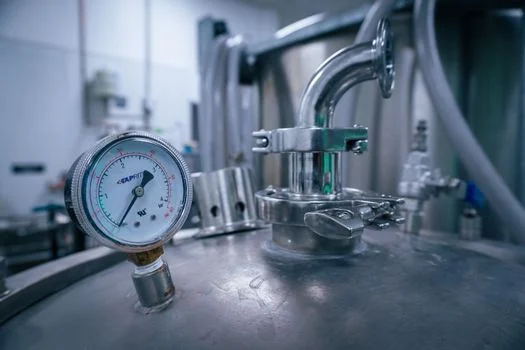
The following HydropureWater products are engineered for the wastewater challenges discussed above:
- compact ozone-based hospital wastewater treatment system — view specifications, capacity range, and technical data
- MBR system for near-reuse-quality effluent — view specifications, capacity range, and technical data
- sludge dewatering for hospital wastewater — view specifications, capacity range, and technical data
- safe disinfection for hospital effluent — view specifications, capacity range, and technical data
Need a customized solution? Request a free quote with your specific flow rate and pollutant parameters.
Zero-Risk Equipment Selection for Hospital Effluent
Procurement teams in Frankfurt should apply a four-criterion checklist before finalizing any hospital wastewater train. First, verify CE marking under the EU Machinery Regulation 2023/1230 and PED 2014/68/EU for pressure-bearing components. Second, confirm that membranes and ozone generators carry documented mean time between failure (MTBF) ratings, with local service coverage within 4 hours of any Frankfurt, Offenbach, or Darmstadt site. Third, require FAT (Factory Acceptance Test) reports demonstrating compliance with the agreed effluent parameters under simulated hospital influent. Fourth, ensure remote monitoring via SCADA or Modbus TCP is included, with data retention aligned to Hessian regulatory reporting cycles.
Equipment built for pharmaceutical-laden streams typically uses 316L stainless steel wetted parts, CIP (clean-in-place) capability, and redundant blowers or pumps. These features reduce the risk of biological fouling on MBR membranes and ozone contactor scaling, both of which are common failure modes in hospital duty.
Related Equipment
For projects that require sludge volume reduction before disposal, the plate-frame filter press delivers cake dryness of 60–70%, reducing hauling cost and landfill surcharges applicable under Hessian waste ordinances. For terminal disinfection where chlorination is restricted due to trihalomethane formation risk, chlorine dioxide generation provides stable residual disinfection without regulated disinfection byproducts at typical hospital dose ranges.
Frequently Asked Questions
What CAPEX range should a Frankfurt hospital expect for a compliant wastewater treatment plant in 2026?
Most projects in the 50–500 m³/day range fall between €1.2M and €8M installed, with MBR trains clustering at the lower end for mid-sized hospitals and ozonation AOP trains at the upper end for larger academic medical centers.
Which is more cost-effective for pharmaceutical removal, MBR or ozonation?
MBR delivers reliable TSS and BOD removal at lower power cost, but ozonation provides higher removal of recalcitrant pharmaceutical compounds. For a hybrid approach, MBR followed by polishing ozone is often the most cost-effective configuration for Frankfurt hospitals.
How long does permitting take in Frankfurt?
Hessian water permits typically require 6–18 months depending on discharge point, proximity to water protection zones, and the presence of pharmaceutical pretreatment. Early engagement with the Regierungspräsidium Darmstadt is recommended.
What is the typical membrane replacement interval for hospital MBR systems?
Under properly maintained conditions, hollow-fiber MBR membranes last 5–8 years before replacement. Operating outside CIP frequency or sustaining fouling from pharmaceutical spikes shortens this interval significantly.
Do hospital wastewater systems in Frankfurt need to address antibiotic-resistant bacteria specifically?
While 91/271/EEC does not set numeric ARB limits, the Hessian state implementation and 2024/1882 Watch List expect demonstrated log reduction, typically ≥ 3 log, through the combined biological and disinfection train.
Further Reading
The following guides provide in-depth information on related wastewater treatment topics: