In Utah, wastewater treatment plant costs vary widely based on capacity, technology, and compliance needs. A 2026 case study in Southern Utah shows a $50M water reclamation facility serving 50,000+ residents, but smaller municipal plants (100K–1M GPD) range from $1M–$5M. CAPEX depends on technology—MBR systems cost 30–50% more upfront than conventional activated sludge but reduce OPEX by 20–30% due to lower sludge disposal needs. Utah’s energy rates ($0.08–$0.12/kWh) and brine disposal costs ($0.15–$0.30/gal) further impact long-term budgets. This guide breaks down costs, tech trade-offs, and compliance strategies for Utah buyers.
Why Utah’s Wastewater Treatment Costs Are Unique: Case Studies and Key Drivers
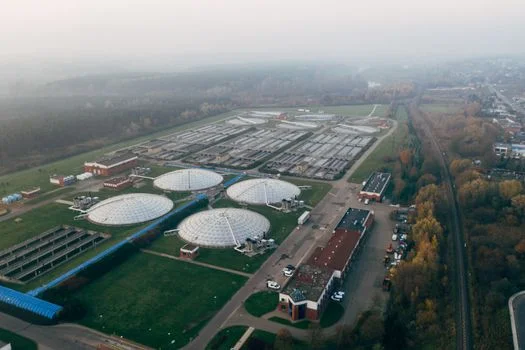
Wastewater infrastructure investments in Utah are increasingly dictated by the state's rapid population growth and stringent nutrient removal requirements. A primary example is the $50 million water reclamation facility in Southern Utah, designed to serve over 50,000 residents. This project highlights a significant trend: costs in the region have increased by approximately 25% due to supply chain shifts and the technical complexity required to turn wastewater into a "reliable resource" for non-potable reuse. While large-scale facilities command high price tags, smaller-scale upgrades, such as the Price River Water Improvement District’s $3.2 million expansion for its 500,000 GPD capacity, demonstrate that strategic retrofitting can manage costs for rural districts.
Utah-specific cost drivers differ significantly from national averages. Energy rates, primarily served by Rocky Mountain Power and various municipal cooperatives, range between $0.08 and $0.12 per kWh. While lower than the national average, the high-altitude geography of the Wasatch Front requires 15-20% more aeration energy to achieve the same dissolved oxygen levels as sea-level plants. brine disposal costs—a critical factor for industrial facilities in the Great Salt Lake basin—range from $0.15 to $0.30 per gallon, making high-recovery treatment systems a financial necessity rather than a luxury. Labor costs for certified Grade IV operators in Utah currently sit between $25 and $40 per hour, depending on the municipality's proximity to urban centers like Salt Lake City or Provo.
The regulatory landscape managed by the Utah Division of Water Quality (UDWQ) adds another layer of CAPEX pressure. Utah’s Technology-Based Phosphorus Effluent Limits (TBPEL) require many facilities to achieve total phosphorus levels below 1.0 mg/L. Meeting these standards often necessitates tertiary treatment or advanced biological nutrient removal (BNR), which can add 15-20% to the initial construction budget compared to standard EPA secondary treatment requirements. These local factors make it vital to compare how Colorado’s costs compare to Utah’s, as both states face similar semi-arid climate challenges.
CAPEX Breakdown: How Technology and Capacity Impact Upfront Costs in Utah
Capital expenditure (CAPEX) for Utah wastewater projects is primarily a function of the treatment technology selected to meet effluent quality goals. Conventional Activated Sludge (CAS) remains the baseline for cost, but it often fails to meet the small footprint requirements of growing urban areas or the strict nutrient limits of the UDWQ without expensive add-ons. In contrast, Membrane Bioreactor (MBR) systems integrate filtration and biological treatment, offering a 60% reduction in physical footprint, which is critical for sites along the constrained Wasatch Front.
| Capacity (GPD) | Conventional Activated Sludge (CAS) | Membrane Bioreactor (MBR) | Dissolved Air Flotation (DAF) - Pretreatment | Hybrid/Advanced BNR Systems |
|---|---|---|---|---|
| 100,000 | $1.2M – $1.8M | $1.8M – $2.6M | $250K – $450K | $1.5M – $2.2M |
| 1,000,000 | $7.5M – $11M | $10M – $15M | $800K – $1.2M | $9M – $13M |
| 5,000,000 | $30M – $45M | $42M – $58M | $2.5M – $4M | $35M – $50M |
| 10,000,000 | $55M – $80M | $75M – $110M | $4.5M – $7M | $65M – $95M |
Cost multipliers in Utah include seismic reinforcement and high-altitude design. For Southern Utah projects near the Hurricane Fault zone, seismic structural requirements can increase concrete and steel costs by 5-8%. For industrial applications, DAF systems for industrial pretreatment in Utah are often used to lower surcharges from municipal sewers by removing fats, oils, and grease (FOG) before discharge. While MBR systems for Utah’s nutrient removal needs carry a 30-50% higher upfront cost, they eliminate the need for secondary clarifiers and sand filters, providing a higher ROI in regions where land prices exceed $200,000 per acre.
Modular vs. custom-built decisions also impact CAPEX. Modular plants, often utilized by housing developments in Wasatch County or remote mining sites, can reduce CAPEX by 20-40% due to factory-controlled manufacturing and reduced onsite labor. However, custom-built concrete facilities offer better long-term scalability for large municipalities. Decisions should be weighed against global cost benchmarks for industrial buyers to ensure regional quotes remain competitive.
OPEX in Utah: Energy, Chemicals, Labor, and Sludge Disposal Costs
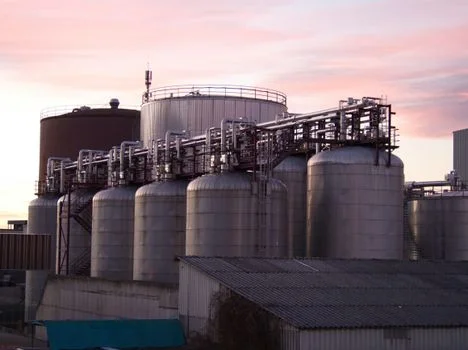
Operating expenditure (OPEX) in Utah is heavily influenced by the state's unique utility structure and environmental conditions. While energy is relatively affordable, the chemical demand for treating Utah's naturally hard water (often exceeding 300 mg/L as CaCO3) can inflate budgets. Chemical dosing is required not only for nutrient removal but also for scale inhibition and pH adjustment in industrial cooling or reuse loops.
| Cost Category | Estimated Cost Range (Utah) | Impact Factor for Utah Operations |
|---|---|---|
| Energy (Electricity) | $0.08 – $0.12 per kWh | High-altitude aeration requires 15%+ more power. |
| Chemicals (Polymer/Alum) | $0.05 – $0.22 per 1,000 gal | Hard water increases dosing requirements by 10-15%. |
| Labor (Certified Ops) | $25 – $40 per hour | Competitive market in Salt Lake/Utah Counties. |
| Sludge Disposal (Landfill) | $50 – $100 per ton | Dewatering efficiency is critical to minimize mass. |
| Brine/Liquid Disposal | $0.15 – $0.30 per gallon | High cost for industrial RO reject or saline waste. |
Aeration typically accounts for 50-60% of a plant's energy use. To combat high-altitude efficiency losses, Utah engineers are increasingly specifying fine-bubble diffusers and turbo blowers with VFDs. Chemical costs are another variable; optimizing chemical costs for Utah’s hard water involves precise automatic chemical dosing systems to prevent over-application of coagulants.
Sludge management is the final major OPEX driver. With landfill tipping fees in Utah rising to $100 per ton in some jurisdictions, reducing sludge volume is paramount. Utilizing a sludge dewatering to cut Utah disposal costs can increase cake solids from 2% to over 30%, effectively cutting disposal frequency and transportation costs by 80%. For industrial facilities, brine disposal remains the most expensive OPEX line item, often forcing a move toward Zero Liquid Discharge (ZLD) or high-recovery RO systems.
Utah Compliance Costs: Meeting UDWQ and EPA Standards Without Overspending
Compliance in Utah is governed by the UDWQ under the Utah Water Quality Act. The primary challenge for 2026 is the stringent limit on nutrients. Most new permits include Total Phosphorus (TP) limits of less than 1.0 mg/L and Total Nitrogen (TN) limits of less than 10 mg/L. Failure to meet these results in significant fines and increased "discharge fees," which typically range from $0.10 to $0.25 per 1,000 gallons of non-compliant effluent.
Selecting the right technology upfront is the most effective way to control compliance costs. For example, while a CAS system might require an additional $1.5M tertiary filtration stage to meet TP limits, an MBR system inherently meets these standards, potentially saving $500K–$2M in total project CAPEX by eliminating redundant equipment. Permitting in Utah is a rigorous 6 to 18-month process, with fees ranging from $5,000 for small industrial permits to $50,000 for major municipal reclamation facilities. Modular plants can often expedite this process because they use standardized, pre-vetted engineering designs that UDWQ reviewers are already familiar with.
Utah also offers financial "carrots" to offset compliance costs. The Utah Water Reuse Program provides grants and low-interest loans for projects that meet "Type 1" or "Type 2" reuse standards (Title 22 equivalent). These projects, which involve treating water to a level safe for irrigation or industrial cooling, can access state funding that reduces the effective CAPEX by up to 30%, provided the project demonstrably reduces the demand on potable water supplies.
Modular vs. Custom-Built Plants: Which is Right for Your Utah Project?
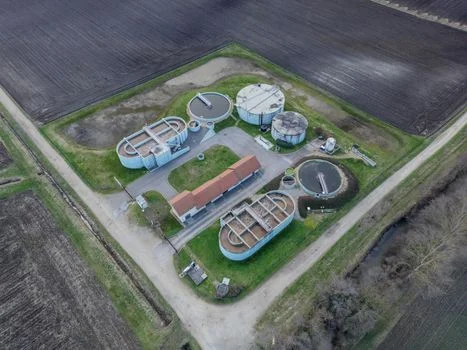
The choice between modular and custom-built plants in Utah often depends on the urgency of the timeline and the specific geography of the site. Rural communities like Helper City or Wellington often favor modular solutions due to the lack of local specialized construction labor and the need for rapid deployment.
| Feature | Modular/Integrated Plants | Custom-Built Concrete Plants |
|---|---|---|
| CAPEX | 20–40% Lower | Higher (Concrete/Field Labor) |
| Lead Time | 6 – 12 Months | 18 – 36 Months |
| Scalability | Add additional units | Designed for 20-year growth |
| Compliance | Pre-engineered standards | Tailored to specific local limits |
| Ideal Use Case | Rural towns, Industrial sites | Major Wasatch Front Cities |
A modular integrated treatment system offers a "plug-and-play" advantage, arriving on-site with internal piping and wiring completed. This is particularly valuable in Utah’s high-growth areas where a custom facility cannot be built fast enough to keep up with new housing starts. Conversely, for large-scale operations like Salt Lake City’s major treatment hubs, custom-built plants are necessary to handle the massive hydraulic peaks and provide the 50-year structural lifespan required by municipal bonds. The Price River Water Improvement District’s $3.2M upgrade is a classic example of a hybrid approach—using custom infrastructure but integrating modern modular components to improve efficiency without a total rebuild.
Water Reuse in Utah: ROI and Payback Periods for Industrial and Municipal Projects
With 2026 projections showing a 10-15% water supply deficit along the Wasatch Front, water reuse has shifted from an environmental goal to a financial necessity. Industrial facilities in Utah are the largest adopters of reuse technology, as the cost of "new" water from municipal sources continues to climb, often exceeding $5.00 per 1,000 gallons for high-volume users.
The ROI for a water reuse project is calculated by comparing the CAPEX of advanced treatment against the avoided costs of potable water purchases and discharge surcharges. For example, a 1M GPD reuse system utilizing RO systems for Utah water reuse projects might cost $3M to install. If it saves the facility $4.00 per 1,000 gallons in combined water/sewer costs, the annual savings total approximately $1.46M. This results in a simple payback period of roughly 2.1 years—far below the industry standard of 5-7 years. Even for municipal projects with longer payback windows, the ability to sell reclaimed water for secondary irrigation creates a steady revenue stream that CAS plants cannot provide.
To ensure safety in reuse, disinfection systems are mandatory to meet UDWQ Type 1 standards. Utah’s "fast-track" permitting for reuse projects can shave 6 months off the development timeline, allowing industrial buyers to hedge against future water price hikes sooner. When factoring in state grants and reduced discharge fees, the financial case for reuse in Utah is among the strongest in the Western United States.
Frequently Asked Questions