Why Your Industrial RO System Is Underperforming
Low permeate flow is the primary symptom in 85% of industrial RO system failures, with membrane fouling and scaling accounting for over 60% of these cases (HydropureWater field data, 2025). Unlike residential units, industrial RO systems processing 10–200 m³/day face aggressive feed waters with high turbidity, organic loads, and scaling ions like calcium sulfate or silica, drastically accelerating performance decline. A healthy industrial RO system operates with a recovery rate of 75–95%, a feed pressure between 40–80 psi (scaling with TDS), and a silt density index (SDI) consistently below 5. Deviations from these baselines are your first data point for diagnosis.
Beyond these core metrics, water temperature plays a critical and often overlooked role. Permeate flow decreases by approximately 2–3% for every 1°C drop in feed water temperature below the system's design specification, typically 25°C. For example, a system experiencing a seasonal drop to 10°C could see a 30–45% reduction in output, which can be misdiagnosed as a fouling issue. Always normalize your flow and pressure data to account for temperature variations before concluding a membrane problem exists. This ensures maintenance efforts are directed at the true root cause.
Step-by-Step Diagnostic Flow for RO Troubleshooting
Low permeate flow can stem from multiple sources; use this diagnostic sequence to identify the root cause efficiently. Begin by verifying all flow and pressure readings with recently calibrated instruments.
Step 1: Measure System Flows and Pressure. Record the feed pressure, permeate flow, and concentrate flow. Calculate the current recovery rate: (Permeate Flow / Feed Flow) x 100. A recovery rate drop of 15–30% from the system’s baseline confirms a fouling or scaling issue. It is critical to use normalized data that accounts for feed water temperature and pressure fluctuations to avoid false positives.
Step 2: Check Prefilter Differential Pressure (ΔP). Measure the pressure drop across the 5-micron cartridge prefilter housings. A ΔP exceeding 15 psi indicates severe clogging and requires immediate cartridge replacement. Proactively, consider installing a duplex filter housing setup, which allows for cartridge changes without shutting down the entire RO system, thus maximizing uptime.
Step 3: Monitor Transmembrane Pressure (TMP). Calculate TMP: [(Feed Pressure + Concentrate Pressure) / 2] - Permeate Pressure. A TMP value greater than 10 psi above the clean membrane baseline confirms active membrane fouling. A rapid TMP increase often points to particulate or biological fouling, while a gradual increase is more indicative of scaling.
Step 4: Test Feed Water Silt Density Index (SDI). Conduct a 15-minute SDI test on the feed water after pretreatment. An SDI value greater than 5 signifies inadequate pretreatment, putting membranes at immediate risk of particulate fouling. For optimal membrane protection, strive for an SDI of less than 3. A high SDI reading should prompt an immediate inspection of upstream multimedia filters and softeners.
Step 5: Inspect Chemical Dosing and CIP Systems. Verify antiscalant is being dosed correctly at 2–5 ppm and that the Clean-In-Place (CIP) system’s recirculation pump can achieve a flow rate greater than 1.5 m³/h per 40” membrane vessel. Manually check the chemical tank levels and inspect dosing lines for signs of crystallization or blockages, which are common failure points.
| Parameter | Normal Range | Action Threshold |
|---|---|---|
| Prefilter ΔP | < 10 psi | > 15 psi (Replace) |
| Feed Pressure | 40-80 psi | < 40 psi (Investigate) |
| TMP | 5-10 psi (baseline) | > 10 psi above baseline (Clean) |
| SDI | < 3 | > 5 (Pretreatment Failure) |
| Recovery Rate | 75-95% | < 15% drop from baseline |
Top 5 Causes of RO System Failure and How to Fix Them
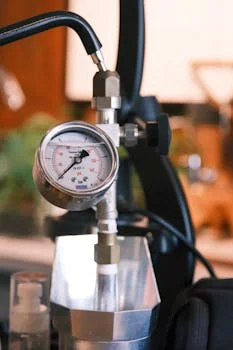
1. Membrane Fouling by Organics or Biofilm. This appears as a steady rise in TMP and a drop in permeate flow. Fix it by initiating a CIP cycle with a heated (30°C) solution of 1% sodium hydroxide (NaOH) and 0.1% sodium metabisulfite (SMBS) at a flux greater than 20 LMH for 1–2 hours. For severe biofouling, a second CIP with a specialized non-oxidizing biocide may be necessary to penetrate the biofilm matrix and achieve a thorough cleaning.
2. Scaling from CaSO₄ or Silica. This is indicated by a high pressure drop between feed and concentrate and reduced recovery. Acid clean with a 2% citric acid solution, maintaining a pH of 2.5–3.0, for a 2-hour recirculation cycle to dissolve mineral deposits. In cases of stubborn silica scaling, a specialized alkaline cleaner with a pH of 11–12 may be more effective at breaking down the deposits.
3. Clogged 5-Micron Cartridge Filters. This is the simplest fix. Replace cartridges immediately when the inter-stage ΔP exceeds 15 psi or proactively every 3 months to prevent particulate breakthrough. Always keep a full set of spare cartridges on-site to avoid extended downtime waiting for parts.
4. Low Feed Pressure. This results in insufficient driving force for permeation. Verify booster pump output against its performance curve and check for partially closed valves or clogged suction strainers. Also, inspect the pump impeller for wear and the motor for proper amperage draw, as a worn pump may spin but fail to generate adequate pressure.
5. Faulty CIP System. This prevents effective membrane cleaning. Ensure the CIP pump provides adequate cross-flow velocity and that chemical concentration and temperature are maintained throughout the cleaning cycle. For persistent failures, review our guide on root cause analysis for broader treatment system failures. A common oversight is a clogged CIP tank filter or a malfunctioning heater, which undermines the entire cleaning process.
Critical Pretreatment Failures That Break RO Membranes
Pretreatment protects RO membranes from damage, and failure in this stage directly impacts membrane performance. A multi-media filter for RO pretreatment must reduce turbidity to <1 NTU and SDI to <5 to provide adequate membrane protection. The most common failure is automatic backwash malfunction, which leads to media channeling and particulate breakthrough; inspect the air scour cycle and drain valve operation weekly. Chemical dosing errors are equally critical; insufficient antiscalant injection (e.g., <2 ppm) will guarantee scaling at recovery rates above 85%. This is why precise control via an automatic chemical dosing system is non-negotiable for industrial operations, ensuring dose rates are maintained regardless of flow fluctuations.
Other frequent pretreatment failures include exhausted water softener resin, which allows hardness ions like calcium and magnesium to pass through and form scale on the membrane surface. Regularly test the softener's effluent for hardness to ensure it is near zero. Additionally, activated carbon filters that are past their service life can fail to remove chlorine, leading to irreversible oxidative damage to thin-film composite RO membranes. Always ensure there is a working chlorine residual analyzer or test port after the carbon filters to guard against this costly failure.
Preventive Maintenance Schedule for Industrial RO Systems
Regular maintenance extends membrane life and minimizes unexpected shutdowns. This protocol is based on industry best practices and designed to catch issues before they impact production.
Beyond the scheduled tasks, maintaining a detailed logbook is paramount. Record all readings, maintenance actions, cleaning cycles, and any system upsets. This historical data is invaluable for trending performance degradation and for conducting thorough root cause analysis when a problem does occur. For instance, a gradual increase in TMP over six months indicates a slowly developing fouling issue, while a sudden spike might point to a pretreatment upset or chemical overdose.
| Component | Frequency | Action |
|---|---|---|
| 5-Micron Prefilters | Quarterly or on ΔP | Replace if ΔP > 15 psi |
| Membrane Cleaning | Quarterly or on TMP | Clean if TMP increases 15% |
| Flow Meters & Pressure Sensors | Monthly | Calibrate |
| SDI Test | Weekly | Test feed water SDI |
| Chemical Dose Verification | Daily | Check antiscalant pump stroke & tank level |
| Softener Hardness Test | Daily/Weekly | Verify effluent hardness < 1 ppm |
Frequently Asked Questions
What is a major problem with reverse osmosis?
Membrane fouling due to poor pretreatment is the top issue, reducing flux by 10–15% and increasing energy consumption by up to 20% as TMP rises. This not only impacts water production but also significantly increases operational costs due to higher energy bills and more frequent chemical cleanings.
How to restart a reverse osmosis system?
After maintenance, close all valves, slowly open the feed valve to prime the high-pressure pump, open the concentrate valve to establish cross-flow, then finally open the permeate valve—ramping to full pressure over 5 minutes. This gradual pressurization is critical to prevent mechanical damage to the membrane elements from hydraulic shock, which can delaminate the membrane layers.
Why is my RO system not producing enough water?
The three most likely causes are clogged prefilters (ΔP >15 psi), low feed pressure (<40 psi), or membrane fouling/scaling (TMP >10 psi above baseline). A fourth, often missed, cause is low feed water temperature, which reduces membrane permeability and must be accounted for with normalized data.
How often should RO membranes be cleaned?
In industrial settings, membranes should be cleaned every 3–6 months as a preventative measure, or immediately when normalized permeate flow drops 10–15% from baseline. Waiting until the drop reaches 20–25% can make the fouling or scaling irreversible, necessitating costly membrane replacement instead of a simple cleaning.
Can low pressure damage RO membranes?
Not directly, but low feed pressure reduces permeate flow and increases concentration polarization at the membrane surface, which accelerates scaling and fouling rates. Chronically low pressure often leads to more frequent chemical cleanings and a shorter overall membrane lifespan due to the accelerated accumulation of contaminants.
Related Equipment
The following HydropureWater products are engineered for the wastewater challenges discussed above:
- industrial RO water purification system with 95% recovery — view specifications, capacity range, and technical data
Need a customized solution? Request a free quote with your specific flow rate and pollutant parameters.