TMAH Wastewater Treatment by Advanced Oxidation: 2026 Engineering Specs, 99% Degradation & Zero-Toxicity Blueprint
TMAH (tetramethylammonium hydroxide) wastewater treatment via advanced oxidation processes (AOPs) achieves 95–99% TOC removal and meets EPA neurotoxicity limits (<1 ppm TMAH discharge) using UV/persulfate, ozone, or underwater plasma systems. UV/S₂O₈²⁻ AOPs, for example, degrade TMAH at 500–5,000 mg/L influent with 0.5–2 kWh/m³ energy consumption, while hybrid recovery + AOP systems (e.g., RO + UV/persulfate) reduce CapEx by 30% and enable 99.9% TMAH reuse in semiconductor fabs.
Why TMAH Wastewater Treatment Fails with Biological Processes (And When AOPs Are Mandatory)
Biological wastewater treatment systems often falter when confronted with TMAH due to the inherent recalcitrance of the tetramethylammonium ion. Microbial degradation rates for TMAH typically remain below 5%, a stark contrast to readily biodegradable organic compounds. This resistance stems from the tetramethylammonium ion's stability and its limited susceptibility to enzymatic attack, a common observation in numerous studies. The neurotoxic risks associated with TMAH further underscore the limitations of biological methods. TMAH acts as a cholinergic agonist, binding to nicotinic receptors and potentially causing respiratory arrest and cardiac failure upon significant skin absorption, with EPA discharge limits set strictly below 1 ppm TMAH to mitigate these dangers. Observable symptoms of failed biological treatment in semiconductor fabs frequently include the pungent odor of trimethylamine, persistent TOC levels exceeding 500 ppm, and erratic pH spikes reaching 12+. AOPs become mandatory when TMAH concentrations exceed 100 mg/L, when wastewater exhibits high salinity (greater than 5,000 mg/L Cl⁻), or when compliance failures persist with existing biological systems.
Advanced Oxidation Processes for TMAH: Mechanisms, Reactor Designs, and TOC Removal Benchmarks
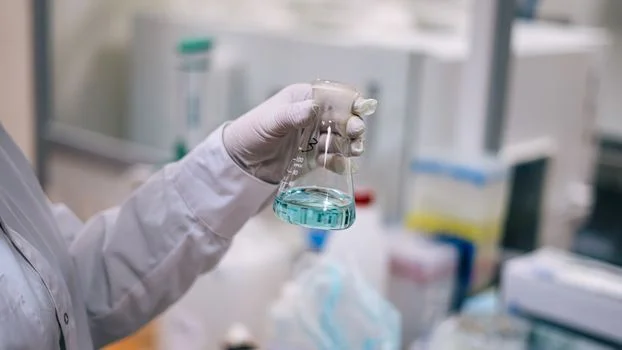
Advanced oxidation processes offer robust solutions for TMAH degradation by generating highly reactive radicals, primarily hydroxyl radicals (•OH) and sulfate radicals (SO₄•⁻), which non-selectively oxidize organic contaminants. The UV/persulfate (S₂O₈²⁻) AOP utilizes UV irradiation at 254 nm to activate persulfate, producing SO₄•⁻ radicals capable of degrading TMAH. This process typically requires a UV dose of 10–30 mJ/cm² and can achieve 80–95% TOC removal for influent TMAH concentrations ranging from 500 to 5,000 mg/L. Ozone AOPs leverage the reaction of ozone with water and, often, hydrogen peroxide to generate •OH radicals, with optimal performance typically observed at pH 3–4. While ozone can achieve 70–85% TOC removal, its efficiency can stall at TMAH concentrations exceeding 100 ppm due to radical scavenging by other species in the wastewater; mitigation strategies often involve pH control and pre-treatment. Underwater plasma AOPs employ pulsed electrical discharges directly in the wastewater, generating a cocktail of •OH, O• radicals, and UV light in situ. These systems can achieve near-complete (99%) TMAH degradation within 30 minutes but are generally more energy-intensive, consuming 3–5 kWh/m³. For reactor sizing, UV systems typically require a hydraulic retention time (HRT) of 1–5 m³/m³·h, translating to a footprint of approximately 20-100 m² for a 10 m³/h system. Plasma systems, with their higher reaction rates, may require a smaller HRT of 0.5–1 m³/m³·h, potentially reducing the footprint to 10-20 m² for the same flow rate. Precise sizing depends on influent characteristics and desired effluent quality.
| AOP Technology | UV Dose (mJ/cm²) | Oxidant Dose (mg/L) | Optimal pH Range | Typical TOC Removal (%) | Energy Consumption (kWh/m³) | Footprint (for 10 m³/h) |
|---|---|---|---|---|---|---|
| UV/Persulfate | 10-30 | 500-5000 (S₂O₈²⁻) | 4-7 | 80-95 | 0.5-2 | 20-100 m² |
| Ozone (+ H₂O₂) | N/A (O₃ concentration) | 50-200 (O₃) | 3-4 | 70-85 | 1-3 | 15-30 m² |
| Underwater Plasma | In-situ UV generation | N/A | N/A | 99 | 3-5 | 10-20 m² |
Effective implementation of these AOPs often necessitates precise control of chemical dosing. For instance, PLC-controlled chemical dosing for pH adjustment and oxidant injection in TMAH AOPs is crucial for maintaining optimal reaction conditions. For high-salinity TMAH wastewater, a DAF pre-treatment for high-salinity TMAH wastewater to remove Cl⁻ and organics can significantly improve AOP efficiency by removing interfering substances.
Hybrid Recovery + AOP Systems: Engineering Specs for 99.9% TMAH Reuse and Zero Discharge
Hybrid systems that combine recovery technologies with AOPs represent a strategic approach to minimize TMAH discharge and maximize resource recovery, offering significant cost and environmental benefits. A prime example is the Reverse Osmosis (RO) followed by UV/persulfate AOP configuration. In this setup, RO systems for 95% TMAH recovery in hybrid AOP + recovery designs can concentrate TMAH in the reject stream for further treatment or recovery. The RO permeate, now significantly cleaner, can be discharged or reused, while the RO concentrate is treated by the AOP to achieve residual TOC removal. This approach typically leads to a 95% TMAH recovery rate, with the AOP polishing any remaining contaminants. The capital expenditure (CapEx) for such hybrid systems for 10 m³/h flow rates typically ranges from $250,000 to $500,000, representing a potential CapEx reduction of up to 30% compared to standalone AOPs designed for the entire wastewater volume. Electrodialysis (ED) combined with ozone AOP offers another recovery pathway, achieving up to 90% TMAH recovery. However, ED systems can be prone to membrane fouling, particularly in high-salinity wastewater, which can increase operational expenditures (OPEX) by up to 20%. Effective membrane cleaning protocols are essential for maintaining ED performance. A notable case study involved a SiC/GaN fab in Taiwan that successfully reduced TMAH discharge from 500 ppm to below 1 ppm by implementing an RO + UV/S₂O₈²⁻ system, reportedly cutting their initial CapEx by $1.2 million. The decision to implement a hybrid system depends on several factors, including the desired recovery rate, TMAH concentration, and the presence of other challenging contaminants.
| Hybrid System Configuration | Recovery Rate (%) | AOP Role | Typical CapEx (10 m³/h) | Potential OPEX Impact | Primary Benefit |
|---|---|---|---|---|---|
| RO + UV/Persulfate | 95% (TMAH) | Polishing of RO concentrate/permeate | $250K–$500K | Moderate (energy, chemicals) | High recovery, cost-effective |
| Electrodialysis + Ozone | 90% (TMAH) | Polishing of ED concentrate/permeate | $300K–$600K | Higher (membrane cleaning, energy) | Effective for high salinity |
| Evaporation + Crystallization | >99% (TMAH salts) | N/A (focus on solids recovery) | $500K–$1M+ | Very High (energy intensive) | Zero liquid discharge, solid recovery |
For semiconductor wastewater treatment, hybrid ZLD systems for semiconductor wastewater (including TMAH) offer a comprehensive solution. The integration of RO systems for 95% TMAH recovery in hybrid AOP + recovery designs is a critical component of these advanced treatment strategies.
CapEx, OPEX, and ROI: Cost Breakdown for UV, Ozone, and Plasma AOPs
Evaluating the financial viability of TMAH wastewater treatment by advanced oxidation requires a detailed understanding of both capital and operational expenditures. For a typical 10 m³/h system, the capital expenditure (CapEx) for UV/persulfate AOPs generally ranges from $150,000 to $300,000. Ozone-based AOPs, which may involve more complex gas generation and dissolution equipment, typically fall within the $200,000 to $400,000 range. Underwater plasma systems, due to their advanced reactor design and higher energy requirements, can have a higher CapEx, ranging from $300,000 to $600,000. Operational expenditures (OPEX) are primarily driven by energy consumption, which can vary significantly from 0.5–2 kWh/m³ for UV/persulfate to 3–5 kWh/m³ for underwater plasma. Chemical costs for oxidants, such as persulfate or hydrogen peroxide, can range from $0.10 to $0.50 per cubic meter of treated wastewater. Maintenance costs, including lamp replacement for UV systems, membrane cleaning for ozone systems, and general upkeep for plasma reactors, also contribute to OPEX. Hybrid RO + UV/persulfate systems offer a compelling return on investment (ROI), with payback periods often realized within 2–3 years, primarily through the value of recovered TMAH and the avoidance of potential neurotoxicity fines. For a 50 m³/h fab, a well-designed hybrid system can generate significant savings. It is crucial to account for hidden costs such as pH adjustment chemicals (e.g., sulfuric acid or sodium hydroxide), potential costs associated with mitigating radical scavenging, and the disposal of any generated sludge or brine concentrate.
| AOP Technology | Estimated CapEx (10 m³/h) | Estimated OPEX (kWh/m³) | Estimated Oxidant Cost ($/m³) | Key OPEX Factors |
|---|---|---|---|---|
| UV/Persulfate | $150K–$300K | 0.5–2 | $0.10–$0.30 | Energy, UV lamp replacement, persulfate |
| Ozone | $200K–$400K | 1–3 | $0.15–$0.40 | Energy, ozone generation, H₂O₂, maintenance |
| Underwater Plasma | $300K–$600K | 3–5 | N/A (electricity is primary input) | High energy consumption, electrode/reactor maintenance |
| Hybrid RO + UV/Persulfate | $250K–$500K | 1.5–3 (combined) | $0.05–$0.20 (for polishing) | RO energy, membrane replacement, polishing chemicals, TMAH recovery value |
The precise implementation of chemical dosing, such as using PLC-controlled chemical dosing for pH adjustment and oxidant injection in TMAH AOPs, is essential for optimizing OPEX and ensuring consistent performance.
Compliance and Discharge Standards: Meeting EPA, EU, and Semiconductor Industry Limits
Achieving regulatory compliance for TMAH wastewater is paramount, particularly given its neurotoxic properties. The U.S. Environmental Protection Agency (EPA) has established a critical neurotoxicity limit of less than 1 ppm TMAH in discharged wastewater. While specific limits for TOC vary by state and municipality, the EU Urban Waste Water Directive generally sets a benchmark of less than 50 ppm TOC for industrial effluents. The semiconductor industry itself has established stringent standards to facilitate water reuse. SEMI S23-0718, for instance, requires TMAH concentrations to be below 10 ppm for reuse within fabs. To ensure adherence to these diverse regulations, robust monitoring protocols are essential. This includes the deployment of online TOC analyzers for continuous effluent monitoring and Gas Chromatography-Mass Spectrometry (GC-MS) for precise TMAH quantification. Regular calibration of these instruments, with specified frequencies and detection limits, is critical for reliable data. A notable compliance success was achieved by a GaN fab in Germany, which consistently maintained TMAH discharge levels below 1 ppm by integrating an ozone AOP with a subsequent biological polishing step. This dual-stage approach effectively addressed both the high concentrations of TMAH and the residual organic load, demonstrating a comprehensive strategy for zero-toxicity discharge.
Troubleshooting AOP Failures: Why Your TOC Isn’t Dropping Below 50 ppm (And How to Fix It)
Operational issues can arise in AOP systems, leading to stalled TOC reduction and non-compliance. One of the most common culprits is radical scavenging. High concentrations of chloride ions (Cl⁻) exceeding 1,000 mg/L, or the presence of other organic compounds like isopropyl alcohol (IPA), can consume the highly reactive SO₄•⁻ and •OH radicals before they can degrade TMAH. Mitigation strategies include pre-treatment steps like DAF to remove interfering organics and careful pH adjustment. A pH mismatch is another frequent cause of AOP inefficiency; UV/persulfate systems typically perform poorly at pH values above 7, while ozone-based systems can stall at pH above 9. Automatic dosing of sulfuric acid or sodium hydroxide is essential to maintain the optimal pH range for each specific AOP. Overdosing of oxidants can also be detrimental. For instance, an excess of persulfate beyond a 1:1 molar ratio with TMAH can lead to the formation of less reactive sulfate ions (SO₄²⁻), reducing overall efficiency. Real-time Oxidation-Reduction Potential (ORP) monitoring can help manage oxidant dosage and maintain target ORP ranges. Finally, physical fouling of UV lamps by silica or organic deposits can reduce UV transmittance by 30–50%, significantly impacting the system's performance. Implementing weekly cleaning protocols with a mild acid, such as 5% citric acid, is crucial for maintaining optimal UV intensity. For systems utilizing DAF pre-treatment for high-salinity TMAH wastewater to remove Cl⁻ and organics, regular maintenance of the flotation unit is vital. Similarly, maintaining precise chemical addition through PLC-controlled chemical dosing for pH adjustment and oxidant injection in TMAH AOPs is key to preventing issues related to reagent management.
Frequently Asked Questions
Q: What’s the most cost-effective AOP for TMAH wastewater?
A: For TMAH concentrations ranging from 500–5,000 mg/L, UV/persulfate typically offers the most cost-effective solution with a CapEx of approximately $200K for a 10 m³/h system. Ozone is generally more suitable for lower concentrations (<1,000 mg/L) with a CapEx around $300K, while plasma AOPs are best reserved for very high concentrations (>10,000 mg/L) with a CapEx of $500K. Factors like energy costs and chemical availability also influence the overall cost-effectiveness.
Q: Can TMAH be recovered for reuse in semiconductor fabs?
A: Yes, TMAH can be effectively recovered for reuse. Hybrid systems, such as RO coupled with UV/persulfate AOPs, can achieve up to 99.9% TMAH recovery and meet stringent semiconductor industry reuse standards like SEMI S23-0718. The recovered TMAH can significantly reduce raw material costs.
Q: What’s the energy consumption of UV/persulfate AOPs?
A: The energy consumption for UV/persulfate AOPs treating TMAH wastewater at concentrations of 500–5,000 mg/L typically ranges from 0.5–2 kWh/m³. This value can vary based on the required UV dose, hydraulic retention time (HRT), and the efficiency of the UV lamps. For a 50 m³/h system, this translates to an energy demand of 25-100 kW.
Q: How do I mitigate radical scavenging in high-salinity TMAH wastewater?
A: To mitigate radical scavenging in high-salinity TMAH wastewater, a common approach is to implement pre-treatment steps. Dissolved Air Flotation (DAF) can effectively remove dissolved organic matter and reduce chloride concentrations. Subsequently, adjusting the pH to 3–4 before the UV/persulfate AOP can further enhance radical generation and minimize scavenging by competing ions.
Q: What’s the EPA discharge limit for TMAH?
A: Due to its neurotoxicity risks, the EPA discharge limit for TMAH is strictly set at less than 1 ppm. While this is a federal guideline, specific state regulations may impose additional or more stringent TOC limits, such as the <50 ppm TOC requirement often seen in California.
Related Equipment
- Ozone-based AOP systems for low-concentration TMAH wastewater — view specifications, capacity range, and technical data
Need a customized solution? Request a free quote with your specific flow rate and pollutant parameters.