Common FGD Scrubber Problems and Immediate Symptoms
SO₂ removal below 90% at design L/G usually means weak slurry alkalinity, uneven spray coverage, or early fgd mist eliminator scaling that cuts contact area. Absorber ΔP above 250 Pa, or a rise of about 50 Pa at steady load, flags mist-eliminator fouling before a white stack plume forms from entrained slurry.
Pump cavitation with solids above 18–20% wt points to abrasive wear or scaled suction lines that starve recirculation. Correlate efficiency drift with ΔP and slurry density before you force an outage. A short water wash during a load dip can clear soft deposits that would otherwise harden overnight. Broader absorber chemistry and mechanical faults are covered in Flue Gas Desulfurization Troubleshooting: Common Issues & Solutions when the fault is not limited to demister blades.
FGD Mist Eliminator Scaling: Causes and Field Fixes
FGD mist eliminator scaling builds when gypsum-saturated droplets dry on chevron vanes, chloride rises, or wash coverage is uneven across the pack face. According to EPRI GS-6984 (OSTI abstract, 1990), mist-elimination system failure is the second most common cause of FGD outages, so early ΔP trending is a core reliability control. The EPA Limestone FGD Scrubbers User's Handbook (EPA-600/8-81-017) links mist-eliminator fouling to stoichiometric ratio and solids control. It advises recirculation solids not less than 8 wt% without fly ash, or 15 wt% when fly ash is co-scrubbed, and notes that pH below about 5.8 with SR near 1.18 limits fouling. Field crews still treat solids above 18–20% wt as a fouling-risk signal when vane passages begin to plug.
Chevron packs with tight vane gaps foul faster than more open baffle layouts under the same slurry solids and wash duty. Chloride above 20,000 mg/L cuts gypsum solubility and locks hard scale onto vane faces. Hold blowdown near 5–8% of recirculation flow and confirm the blowdown valve is not stuck closed. A failed blowdown path can spike chloride within one shift on high-chlorine coal.
Offline cleaning with 30–50 bar water through 15° fan nozzles on 300 mm spacing removes soft deposits when the wash pattern covers the full ME face. Move the lance systematically so unwashed zones do not leave hardened ridges. For stubborn calcium sulfite scale, circulate 3–5% citric acid for 4–6 hours with pH and metallurgy checks, then rinse to neutral pH before restart. Persistent geometry or distribution issues may justify a Flue Gas Desulfurization (FGD) Scrubber System layout that improves spray coverage and wash access.
What Is an FGD Scrubber?
An FGD scrubber is a wet absorber that contacts flue gas with alkaline slurry to remove SO₂ before the stack. In limestone forced-oxidation (LSFO) units, CaCO₃ absorbs SO₂, forms sulfite, and oxidizes to gypsum (CaSO₄·2H₂O) for dewatering. Gas–liquid contact area, L/G ratio, and dissolved plus solid alkalinity set how much SO₂ each cubic meter of slurry can take up. Poor demisting after the absorber sends slurry droplets downstream and raises wet-stack corrosion risk.
Scaling in Limestone Slurry Systems: Prevention and Removal

Scale grows fast when slurry temperature exceeds 65°C or when pH leaves the 5.2–5.6 window used for gypsum crystallization in EPRI FGDSolver guidance. Startups, shutdowns, and fast load ramps drive those temperature and pH swings if gas bypass is poorly managed. Organic inhibitors such as EDTA at 50–100 ppm in makeup water can cut scaling by up to 60% in high-hardness service by sequestering calcium and softening crystal adhesion on steel and plastic surfaces.
For existing deposits, circulate 5% citric acid with a corrosion inhibitor at 50°C for 4–6 hours, then rinse and neutralize. Track dissolved calcium in the wash liquor to judge progress as scale dissolves. A PLC-controlled lime dosing system for stable FGD pH management tied to real-time SO₂ analyzers reduces the pH spikes that seed gypsum and sulfite scale on headers and tanks. Feedforward limestone trim ahead of load changes keeps the absorber inside the crystallization window.
| Scale Type | Common Location | Primary Cause | Corrective Action |
|---|---|---|---|
| Gypsum (CaSO₄·2H₂O) | Spray headers, pumps | pH > 5.8, low oxidation | Acid wash, improve oxidation |
| Calcium Sulfite (CaSO₃) | Mist eliminators, tanks | O₂ < 3.5% in slurry, pH < 5.0 | Increase air sparging, adjust pH |
| Calcium Fluoride (CaF₂) | All wetted surfaces | High fluoride in limestone | Improve reagent quality, inhibitor |
What Limits SO₂ Absorption in LSFO Scrubbers?
SO₂ absorption in an LSFO wet scrubber is limited by solid and liquid alkalinity available per unit volume of recirculated slurry, plus the gas–slurry contact area set by absorber design. Better contacting exposes more slurry to the gas so more alkalinity in each gallon is used. Low L/G, plugged nozzles, or scaled demisters that raise local velocity all cut effective contact and drop removal efficiency below the 90% design band. Operators should trend L/G, limestone feed, and ME ΔP together when diagnosing a sudden SO₂ spike.
Corrosion in Wet Stack and Absorber Sections
FRP or rubber lining blisters when moisture reaches the steel under continuous wet duty, a failure mode documented in EPA NEPiS materials guidance. Thermal cycling opens micro-fissures that let chlorides attack the substrate. For zones that stay below pH 4 and above about 50°C, specify alloy C-276 or fiberglass-reinforced vinyl ester (FRVE) for replacements. Higher alloy cost is usually recovered through longer liner life and fewer forced outages.
Run quarterly borescope checks on the absorber outlet, mist-eliminator supports, and upper stack, and photo-log each finding for outage planning. Keep chloride below 20,000 mg/L and limit wet–dry cycling on internals. Exterior insulation and heat tracing cut condensation in cold climates and slow liner wear on the wet stack.
Optimizing Oxidation and Gypsum Quality
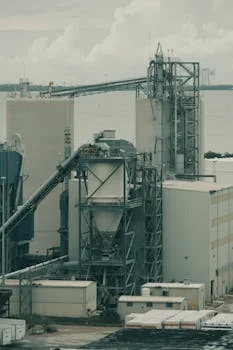
Dissolved oxygen below 3.5% v/v in the sparger zone leaves gypsum with more than 10% unreacted limestone, which hurts sales specs and dewatering. Clogged sparger rings and low oxidation-air pressure are common mechanical causes. Hold slurry density at 1.12–1.15 g/cm³ and residence time above 6 hours so crystals grow to roughly 100–200 microns and release water more readily in the filter press.
Mount the DO probe about 1.5 m above the tank floor, away from the air plume and settled solids, and calibrate on a fixed schedule. Trim oxidation air to real-time SO₂ load to cut blower power, because oxidation blowers are large parasitic loads. Pair stable oxidation with a high-capacity filter press for byproduct handling when wallboard-grade cake is the commercial target. Wallboard buyers typically want purity above 95%, chloride below 100 ppm, moisture below 10%, and a mean crystal size near 100–200 microns.
Who This Is For
This guide fits utility and industrial FGD operators chasing demister ΔP, gypsum quality, or wet-stack corrosion. EPC and procurement teams can use the scale table and material notes when specifying wash systems or alloy upgrades. Plants without wet limestone FGD should look to dry or semi-dry SO₂ controls instead. Next step: trend ME ΔP versus load for two weeks, verify blowdown and wash coverage, then decide on acid wash versus hardware changes.
Frequently Asked Questions
What is a mist eliminator in an FGD scrubber?
A mist eliminator sits in the absorber outlet and removes entrained slurry droplets from cleaned flue gas, typically capturing more than 99% of design-size droplets at design gas velocity. Most units use polypropylene chevron or mesh packs. Rising pressure drop at constant load is the first sign that vanes are fouled or drainage is blocked.
What is the optimal pH for limestone FGD operation?
The usual target for limestone slurry in a wet FGD absorber is pH 5.2–5.6 under normal SO₂ load and gypsum crystallization duty. That band balances SO₂ capture against limestone use and lowers calcium sulfite scale risk on wetted steel and plastics. Sustained values above about 5.8 raise gypsum scaling on spray headers and pumps.
How often should FGD mist eliminators be inspected?
Inspect mist eliminators visually or by borescope each quarter, and trend pressure drop continuously against unit load. A sustained ΔP rise across the absorber is the leading trigger for offline wash or blade replacement. After any acid wash, confirm rinse to neutral pH before returning the module to service.
What causes high chloride in FGD slurry?
Chloride rises from chlorine in the fuel, cooling-water leaks, and insufficient blowdown of the recirculation loop. Levels above 20,000 mg/L raise mist-eliminator scaling risk, accelerate stainless pitting, and cut gypsum purity. Verify blowdown flow and close any untreated water ingress before adding more wash water.
Can FGD scaling be controlled without chemical inhibitors?
Stable pH between 5.2 and 5.6, slurry temperature below 65°C, and consistent forced oxidation reduce but do not erase scale. High-hardness makeup water still often needs organic inhibitors such as EDTA at 50–100 ppm. Combine chemistry control with scheduled mist-eliminator washes for the lowest outage rate.