Arsenic Chemical Precipitation: 2026 Engineering Specs, Removal Rates, and Compliance
Arsenic chemical precipitation forms insoluble arsenates such as FeAsO₄ or Ba₃(AsO₄)₂ to strip arsenic from industrial wastewater. Ferric systems reach 99.9% As(V) removal at Fe:As molar ratios of at least 4:1 and pH 4–6, with effluent typically below 10 µg/L against the EPA drinking-water MCL. Barium chloride precipitation targets gold processing effluents at pH 8–10 with effluent below 50 µg/L. Sludge dewatering adds $0.15–$0.40 per kg of dry solids and is the largest operating cost line in most plants we size for this duty.
In 2024 a Pacific Northwest semiconductor fab absorbed a $1.2 million regulatory fine when effluent arsenic spiked to 45 µg/L, traced to influent phosphate out-competing arsenic for ferric binding sites. For environmental engineers at mining, semiconductor and chemical plants, arsenic control hinges on kinetic control, stoichiometric margin, and continuous pH and ORP feedback.
Why Chemical Precipitation Dominates Industrial Arsenic Removal
Chemical precipitation remains the most common technology for industrial arsenic removal because it handles high flows and high influent concentrations at lower OPEX than membrane or ion exchange systems. According to the 2025 EPA Clean Watersheds Needs Survey, chemical precipitation accounts for approximately 78% of industrial arsenic treatment systems globally, well ahead of adsorption at 12% and ion exchange at 7% in flows above 50 m³/h.
The chemistry scales from 1 mg/L up to over 100 mg/L of influent arsenic, the range where RO membranes foul rapidly and IX resins exhaust within hours. Membranes still win on rejection, but scaling risk and brine disposal make them a poor primary stage for mining tailings or acid mine drainage. Most plants we size above 200 m³/h sit on precipitation for that reason, and add polishing only when discharge limits demand it.
| Technology | Removal Efficiency [As(V)] | Influent Range (mg/L) | Scalability (>50 m³/h) | Typical OPEX ($/m³) |
|---|---|---|---|---|
| Chemical Precipitation | 99.9% | 1 – 500+ | Excellent | $0.40 – $1.20 |
| Adsorption (Activated Alumina) | 95 – 98% | 0.1 – 5 | Moderate | $1.50 – $3.00 |
| Ion Exchange (IX) | 90 – 95% | 0.05 – 2 | Low/Moderate | $2.00 – $4.50 |
| Reverse Osmosis (RO) | 99.0% | 0.01 – 1 | Moderate | $3.00 – $6.00 |
A benchmark case study from a copper smelter in Arizona (source: 2024 SME Annual Conference Proceedings) documents the economic advantage: switching from a secondary ion-exchange polish to a single-stage optimized ferric chloride process cut arsenic from 85 mg/L to below 10 µg/L and reduced total treatment cost by 42%, mostly by replacing expensive resin regeneration with a robust high-efficiency sedimentation tank for sludge management. The primary trade-off is sludge generation, typically 0.5–2 kg of dry solids per m³ treated, plus the prerequisite of converting As(III) to As(V) before precipitation.
Precipitation Mechanisms: Solubility, Kinetics, and Reaction Equations
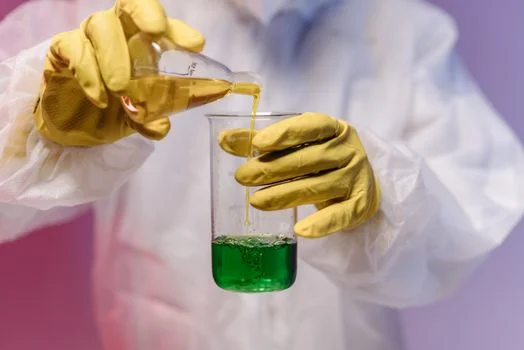
Designing for below 10 µg/L requires controlling solubility products (Ksp) and pH-dependent speciation at the same time. Arsenic arrives mostly as arsenite [As(III)] or arsenate [As(V)]; arsenite species such as H₃AsO₃ are uncharged at neutral pH and react poorly with metal salts, so pre-oxidation to As(V) is the mandatory first step in 2026 engineering protocols.
The core precipitation reactions for As(V) use metal-arsenate complexation. Lime still works, but ferric and barium salts are preferred because their arsenates stay insoluble at practical pH:
- Ferric Arsenate: Fe³⁺ + AsO₄³⁻ → FeAsO₄ (Ksp = 5.7 × 10⁻²¹)
- Barium Arsenate: 3Ba²⁺ + 2AsO₄³⁻ → Ba₃(AsO₄)₂ (Ksp = 7.7 × 10⁻³¹)
- Calcium Arsenate: 3Ca²⁺ + 2AsO₄³⁻ → Ca₃(AsO₄)₂ (Ksp = 6.8 × 10⁻¹⁹)
Speciation moves with pH. As(V) is H₃AsO₄ below pH 2, H₂AsO₄⁻ from pH 2–7, HAsO₄²⁻ from pH 7–12, and AsO₄³⁻ above pH 12. Ferric precipitation runs best at pH 4–6, where Fe(OH)₃ floc also adsorbs residual arsenic onto a high-surface-area matrix. Barium systems prefer pH 8–10; lime needs pH 10–12 to drop arsenic meaningfully.
| Reagent | Optimal pH Range | Required Molar Ratio (Me:As) | Reaction Kinetics (90% completion) |
|---|---|---|---|
| Ferric Chloride (FeCl₃) | 4.0 – 6.0 | ≥ 4:1 | < 5 minutes |
| Barium Chloride (BaCl₂) | 8.0 – 10.0 | ≥ 1.5:1 | 15 – 30 minutes |
| Hydrated Lime (Ca(OH)₂) | 10.5 – 12.0 | ≥ 10:1 | 30 – 60 minutes |
Stoichiometry is the single most common point of failure. The theoretical Fe:As ratio is 1:1, yet real industrial streams need at least 4:1 to consistently hit below 10 µg/L because phosphate (PO₄³⁻) competes for ferric sites and extra Fe(OH)₃ is needed as adsorbent surface. 2026 design standards for PLC-controlled dosing systems for precise ferric and barium chloride injection include real-time ORP and pH feedback loops so reagent ratios track influent swings instead of averaging them.
Ferric Chloride vs. Barium Chloride: Head-to-Head Comparison for Industrial Systems
The ferric-versus-barium decision trades effluent quality, sludge handling, and reagent cost. Ferric chloride is the default for the EPA and WHO drinking-water target of 10 µg/L; barium chloride is often selected in gold processing and similar mining duty where a 50 µg/L target is acceptable and denser sludge cuts disposal cost.
Removal Efficiency and Effluent Quality: Ferric chloride systems deliver 99.9% removal, taking arsenic from 100 mg/L down to below 0.01 mg/L. Barium chloride systems reach about 99% removal, with effluent typically between 20 µg/L and 50 µg/L. Facilities discharging to sensitive surface waters have to use ferric. Upstream of RO membranes, barium can be the better fit because it avoids the iron fouling that ferric residuals leave on polyamide membranes.
Sludge Characteristics and Disposal: This is where the two paths diverge most. Ferric sludge is voluminous and gelatinous at 1.2–1.4 g/cm³ and usually needs polymer conditioning before dewatering to around 30% solids. Barium sludge is denser at 1.8–2.0 g/cm³, settles faster, and dewaters to about 50% solids using high-efficiency filter presses for arsenic sludge dewatering to 50% solids. Barium reagent costs more per kilogram, but the smaller sludge volume often wins on total disposal cost: $0.10–$0.20/kg for barium versus $0.15–$0.30/kg for ferric.
| Parameter | Ferric Chloride (FeCl₃) | Barium Chloride (BaCl₂) |
|---|---|---|
| Effluent Target | < 10 µg/L | < 50 µg/L |
| Reagent Cost | $0.80 – $1.50 / kg | $2.50 – $4.00 / kg |
| Sludge Density | 1.2 – 1.4 g/cm³ | 1.8 – 2.0 g/cm³ |
| Dewatered Cake Solids | 25 – 35% | 45 – 55% |
| Safety Profile | Corrosive (pH 1-2) | Toxic (Requires containment) |
CAPEX is shaped by clarifier sizing. A 100 m³/h ferric system needs larger clarifiers because of slower settling at surface loading rates of 1–2 m/h. A barium system can use lamella clarifiers for compact arsenic sludge separation at 2–4 m/h loading rates, which can cut the equipment footprint by 40%. Safety profiles differ too: ferric chloride is highly corrosive and demands acid-resistant piping; barium chloride is toxic if ingested and needs strict secondary containment and PPE for operators.
Step-by-Step Process Design: From Influent Analysis to Effluent Compliance

A reliable arsenic treatment train starts with influent characterization: the As(III)/As(V) split, plus phosphate, sulfate and any other competing anions. In semiconductor wastewater phosphate can run 10× higher than arsenic, which forces a 20–30% increase in ferric dose to compensate. Multi-metal streams face the same issue as copper precipitation methods for semiconductor and mining effluents, where competing metals dictate stoichiometry as much as the target metal does.
Phase 1: Pre-Oxidation. As(III) does not precipitate efficiently, so it has to be oxidized first. Hydrogen peroxide (H₂O₂) at a 1:1 molar ratio is the 2026 default because it leaves no harmful residuals; sodium hypochlorite (NaClO) at 2:1 is the lower-cost alternative when chlorine residual downstream is acceptable. Best oxidation runs at pH 8–9 with at least 15 minutes of residence.
Phase 2: Reagent Dosing and Rapid Mixing. Reagents enter a rapid-mix tank at G = 800–1000 s⁻¹ for 1–2 minutes. A 100 m³/h system typically doses 5–20 L/h of 40% ferric chloride solution. High-precision PLC-controlled dosing systems prevent the overdosing that bloats sludge volume, especially during influent spikes.
Phase 3: Flocculation and Clarification. After rapid mix, water flows to a slow-mix tank at G = 50–100 s⁻¹ for 10–20 minutes. Anionic polyacrylamide at 0.5–2.0 mg/L bridges micro-flocs into settleable masses, and a downstream lamella clarifier separates the slurry. 2026 clarifier specs for ferric systems target a surface loading rate of 1.5 m/h so effluent turbidity stays below 5 NTU.
| Process Stage | Key Parameter | 2026 Engineering Specification |
|---|---|---|
| Pre-Oxidation | ORP Setpoint | +200 mV to +300 mV |
| Coagulation | G-Value (Rapid Mix) | 850 s⁻¹ |
| Flocculation | Residence Time | 15 – 20 minutes |
| Clarification | Surface Loading Rate | 1.2 – 1.8 m/h (Ferric) |
| Dewatering | Cake Solids Target | > 35% (Ferric), > 50% (Barium) |
Phase 4: Sludge Dewatering. Clarifier underflow at 1–3% solids is pumped to a filter press. To meet 2026 environmental standards, sludge must pass the Toxicity Characteristic Leaching Procedure (TCLP) for landfill disposal. Barium arsenate sludge is generally more stable than ferric arsenate; ferric sludge can be lime-stabilized if leaching is a concern. Modern high-efficiency filter presses cut disposal volume by reaching 40% cake solids even with difficult ferric sludges. For sites with high oil and grease loads, a Dissolved Air Flotation (DAF) System upstream of precipitation removes emulsified oil that otherwise blinds filter cloths and slows press cycles.
Compliance Mapping: Meeting EPA, WHO, and EU Arsenic Limits
Compliance is the only metric that matters at the discharge point. The US EPA drinking-water MCL and the WHO provisional guideline both set arsenic at 10 µg/L; industrial NPDES limits are permit-specific and often use that 10 µg/L benchmark as a design target. The EU IED allows up to 50 µg/L for some surface water discharges, but member-state rules (Germany's AbwV, for example) often push well below that. Designing for the tightest applicable limit keeps the plant inside the envelope if rules shift. China's GB 8978-1996 sets total arsenic at 0.5 mg/L (500 µg/L) as a first-class pollutant; earlier draft wording that listed a Class I value of 50 µg/L was incorrect against that standard.
| Jurisdiction | Industrial Limit (µg/L) | Monitoring Frequency | Compliance Strategy |
|---|---|---|---|
| USA (EPA NPDES) | 10 | Weekly / Monthly | Ferric + Dual-Media Filtration |
| European Union (IED) | 50 (varies) | Continuous (>100 m³/h) | Ferric or Barium + Lamella |
| China (GB 8978-1996) | 500 (Class I: 50) | Daily | Multi-stage Precipitation |
| WHO Guidelines | 10 | N/A | Optimized Ferric (pH 4.5) |
HydropureWater field data (2025) supports a two-stage validation path. Bench-scale jar tests on actual site wastewater fix reagent demand and pH; pilot-scale testing for at least 30 days captures the influent variability a single sample never shows. For multi-metal streams, also reference nickel precipitation engineering specs for multi-metal wastewater streams so the pH setpoint that minimizes arsenic does not push nickel or copper back into solution.
EPA NPDES permits typically require both an effluent concentration record and a sludge disposal manifest. Engineers should keep reagent dosing logs, hourly pH and ORP charts, and quarterly TCLP results in ISO 14001 format so the audit file is complete the first time a regulator asks.
Troubleshooting Arsenic Precipitation Systems: Common Failures and Fixes
Most operational problems in arsenic precipitation are chemical, not mechanical. The patterns below cover what we see on service calls and the engineering fixes that work.
- Symptom: Effluent As > 10 µg/L despite high reagent dosing.
- Cause: Incomplete oxidation of As(III). If ORP reads below +200 mV, the arsenic is still in arsenite form and is essentially invisible to the ferric or barium reagent.
- Solution: Increase H₂O₂ or NaClO dosing. Hold the oxidation tank at pH 8–9 with at least 15 minutes residence before stepping pH down for ferric addition.
- Symptom: Rapid sludge bulking or poor settling in the clarifier.
- Cause: Overdosing of ferric chloride or wrong polymer selection. Excess Fe(OH)₃ produces a low-density floc that refuses to compact.
- Solution: Trim FeCl₃ in 10% steps while watching effluent As. Switch to a higher molecular weight anionic polyacrylamide to tighten floc density.
- Symptom: Reagent costs spike without any change in arsenic influent.
- Cause: Competitive inhibition from phosphate (PO₄³⁻) or silicate.
- Solution: Run a two-stage precipitation. Strip phosphate with lime at pH 10 first, then polish arsenic with ferric chloride at pH 5.
- Symptom: Filter press cycle times are doubling.
- Cause: Filter cloth blinding from fine ferric micro-flocs or oil and grease in the influent.
- Solution: High-pressure wash the cloths with surfactant. Check flocculation for pin-floc and adjust polymer dose so fines are captured in the macro-floc.
Who This Guide Is For and How to Use It
This guide fits environmental and process engineers at mining, metal-finishing, semiconductor and chemical plants that need to size or retrofit an arsenic precipitation train, plus EPC contractors building cost estimates for bids. If your stream is mostly below 0.05 mg/L and you are polishing for drinking water, ferric adsorption or ion exchange is usually a better fit than chemical precipitation. The fastest next step is to send us your influent characterization (As(III)/As(V) split, phosphate, sulfate, flow) so we can run a reagent dose and sludge mass balance against your discharge limit. Request a bench- and pilot-scale test plan with our engineering team here.
Frequently Asked Questions
Can chemical precipitation remove As(III) directly, or is oxidation required?
Direct removal of As(III) is extremely inefficient, typically below 30% removal, because arsenite exists as the neutral molecule H₃AsO₃ at most industrial pH levels and does not react with metal cations. Oxidation to As(V) is mandatory to consistently achieve below 10 µg/L on industrial streams.
What is the optimal pH for ferric chloride precipitation of arsenic?
The engineering sweet spot is pH 4.5 to 5.5. At this range the solubility of ferric arsenate is minimized and the ferric hydroxide surface carries its highest positive charge, which adsorbs any remaining anionic arsenic species before the water leaves the clarifier.
How much sludge does a ferric chloride system generate per kg of arsenic removed?
Because an Fe:As molar ratio of 4:1 or higher is required, the system produces significant sludge. Typically, for every 1 kg of arsenic removed you generate 15–25 kg of dry ferric hydroxide/arsenate sludge, which dewaters to about 30% solids as 50–80 kg of wet filter cake.
What are the disposal options for arsenic-laden sludge?
Most arsenic sludge from industrial precipitation passes TCLP and can go to a non-hazardous Subtitle D landfill. When influent arsenic is very high or co-contaminants are elevated, lime or cement-based stabilization is used to lock the metals in place before landfill disposal.
Can barium arsenate precipitation be used for drinking water treatment?
No. Barium is regulated in drinking water at an EPA limit of 2 mg/L because of its toxicity, so barium arsenate precipitation is restricted to industrial and mining wastewater, while ferric salts and activated alumina remain the standard for municipal drinking water.