Why Tehran’s Wastewater Treatment Costs Are Unique: 5 Local Factors Driving Your Budget
In Tehran, wastewater treatment plant costs vary widely by technology and scale. For a 1,000 m³/day municipal plant, CAPEX ranges from $1.2M (SBR) to $3.5M (MBR), with OPEX of $0.15–$0.45/m³. Industrial plants (e.g., food processing) face higher chemical costs ($0.08–$0.15/m³) due to Tehran’s strict effluent limits (COD ≤ 100 mg/L, per Iran’s Environmental Protection Organization). Land scarcity in urban areas adds 15–20% to CAPEX for underground systems like Clearfox’s SBR case study. For a procurement manager or plant engineer in the Tehran metropolitan area, budgeting is often a process of navigating opaque estimates and fluctuating utility tariffs. Understanding these five localized drivers is essential for accurate financial forecasting.
Land scarcity remains the primary CAPEX inflator in Tehran. In districts like Ahmadabad-e Mostowfi or the southern industrial corridors, the cost of acquiring land for large-footprint conventional systems can exceed the cost of the equipment itself. Consequently, many buyers opt for underground SBR systems for Tehran’s land scarcity, which, despite a 15–20% higher construction cost, reduce total land acquisition expenses by approximately 30% according to 2024 Tehran Municipality benchmarks.
Energy and labor also deviate from national averages. Industrial electricity tariffs in Tehran are currently $0.08/kWh as of 2025, which is roughly 40% higher than the national average for rural industrial zones. This makes energy-intensive technologies like MBR more expensive to operate long-term. Simultaneously, the demand for skilled operators in the capital has pushed monthly salaries for qualified wastewater engineers to the $800–$1,200 range, a 25% premium over cities like Isfahan or Tabriz.
| Cost Driver | Tehran Market Condition (2025) | Impact on CAPEX/OPEX |
|---|---|---|
| Land Acquisition | High scarcity in urban/industrial zones | +15-20% CAPEX for compact/underground systems |
| Energy Tariffs | $0.08/kWh (Industrial) | Increases OPEX for MBR and high-rate aeration |
| Skilled Labor | $800–$1,200/month per operator | Higher OPEX for systems requiring manual oversight |
| Compliance (EPA) | COD ≤ 100 mg/L; BOD ≤ 30 mg/L | +20% CAPEX for tertiary treatment stages |
| Financing | IsDB Istisna'a Program | Covers 60–80% CAPEX for eligible municipal projects |
Wastewater Treatment Plant Costs in Tehran: CAPEX and OPEX by Technology (2025 Data)
Selecting the right technology in Tehran requires a trade-off between initial investment (CAPEX) and long-term operational costs (OPEX). For municipal projects scaled between 1,000 and 10,000 m³/day, Sequencing Batch Reactors (SBR) remain a popular mid-range choice, with CAPEX ranging from $1.2M to $8M. However, for industrial facilities facing stringent discharge limits, MBR systems for Tehran’s strict COD limits (≤100 mg/L) are becoming the standard, despite a higher CAPEX range of $2.5M to $15M for similar capacities.
Operational costs are heavily influenced by chemical consumption and membrane maintenance. In Tehran’s industrial sector, particularly food processing and pharmaceuticals, chemical costs for coagulation and flocculation range from $0.08 to $0.15/m³. Coagulants like Polyaluminum Chloride (PAC) currently trade at $0.03–$0.05/m³ in the local market, while specialized flocculants add another $0.02–$0.04/m³. For MBR users, membrane replacement is a significant OPEX line item, occurring every 5–7 years at a cost of $150–$250/m², which typically adds 10–15% to the annual operational budget.
Energy consumption varies by aeration efficiency. SBR systems in Tehran consume between 0.5 and 0.9 kWh/m³, while MBR systems, which require higher scouring air to prevent membrane fouling, consume 0.8–1.2 kWh/m³. When evaluating these technologies, it is helpful to note how Tehran’s costs compare to other emerging markets, where energy subsidies or lower compliance standards might favor different configurations.
| Technology Type | CAPEX (1,000 m³/day) | OPEX ($/m³) | Energy Use (kWh/m³) |
|---|---|---|---|
| SBR (Sequencing Batch Reactor) | $1.2M – $1.8M | $0.18 – $0.28 | 0.5 – 0.9 |
| MBR (Membrane Bioreactor) | $2.5M – $3.5M | $0.30 – $0.45 | 0.8 – 1.2 |
| DAF (Dissolved Air Flotation) | $0.8M – $1.2M | $0.25 – $0.40* | 0.4 – 0.7 |
| Conventional Activated Sludge | $1.0M – $1.5M | $0.15 – $0.22 | 0.3 – 0.6 |
*DAF OPEX is heavily driven by chemical dosing for fat, oil, and grease (FOG) removal.
Decentralized vs. Centralized Wastewater Treatment: Cost and Compliance Trade-offs for Tehran Buyers
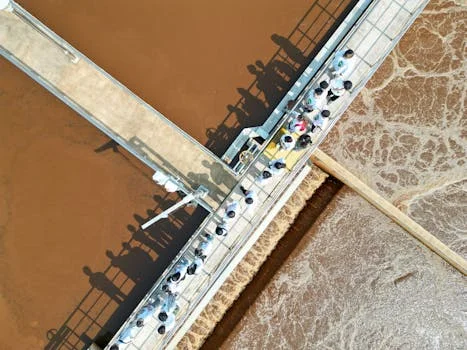
In the "Western Tehran Sanitation Project," centralized treatment has demonstrated significant economies of scale, with CAPEX per cubic meter dropping by nearly 40% for plants exceeding 5,000 m³/day. However, for many industrial buyers and private developers in Tehran, centralized connection is either unavailable or prohibitively expensive due to pipeline infrastructure costs. This has led to a surge in decentralized solutions, such as compact hospital wastewater treatment for Tehran’s urban sites.
Decentralized systems offer the advantage of immediate compliance and the potential for on-site water reuse. A decentralized SBR system for a 10,000 GPD (gallons per day) facility in Tehran currently costs approximately $320,000. While the OPEX of $0.22/m³ is slightly higher than centralized fees (which benefit from massive scale), the ability to reuse treated effluent for landscape irrigation or cooling towers can save $0.50–$1.00/m³ in freshwater costs, given Tehran's 2025 water tariffs.
Compliance remains the "great equalizer." Whether a system is centralized or decentralized, Iran’s EPA mandates the same effluent quality for discharge into surface waters or absorption wells. This means decentralized plants must still invest in tertiary treatment, such as DAF systems for industrial wastewater pretreatment in Tehran, to ensure COD and TSS levels remain within legal limits. Financing also differs; while large municipal projects can access the Islamic Development Bank’s Istisna'a program for 60–80% of CAPEX, decentralized industrial plants typically rely on private equity or vendor financing.
| Feature | Centralized (Municipal) | Decentralized (On-site) |
|---|---|---|
| CAPEX per m³ | Lower (Scale benefits) | Higher (Unit cost) |
| Land Requirement | Very High (Outside city) | Minimal (Underground/Compact) |
| Infrastructure Cost | High (Pumping & Piping) | Low (Direct source treatment) |
| Reuse Potential | Requires secondary network | Direct (Irrigation/Cooling) |
| Financing | IsDB / Government Grants | Private / Vendor Finance |
How to Select the Right Wastewater Treatment Technology for Your Tehran Project: A Step-by-Step Framework
Choosing a system without a structured framework often leads to "technology mismatch," where a plant either fails to meet EPA standards or becomes a financial burden due to excessive OPEX. Use the following steps to align your Tehran project with the correct technical specifications.
- Step 1: Define Influent and Effluent Standards. Analyze your raw wastewater for COD, BOD, and TSS. To meet Iran’s EPA 2025 standards (COD ≤ 100 mg/L), you must determine if secondary treatment is sufficient or if tertiary membranes are required. Consult technical guides on how SMBR systems achieve 99% TSS removal in Tehran’s compliance context.
- Step 2: Assess Land Availability. If your site is in a high-density area like District 6, prioritize footprint-optimized systems. Underground SBR or MBR units can save 30% on land costs, offsetting their higher equipment price.
- Step 3: Calculate Total Cost of Ownership (TCO). Do not just look at CAPEX. Use Tehran’s $0.08/kWh energy rate and $1,000 average labor cost to project a 10-year OPEX. For some industrial applications, MBBR as a cost-effective alternative to SBR in Tehran may offer a better balance of low maintenance and high throughput.
- Step 4: Evaluate Financing Eligibility. Check if your project qualifies for Istisna'a financing. This is particularly relevant for municipal planners in the Western Tehran Sanitation Project or large-scale industrial parks.
- Step 5: Vendor Verification. Select a manufacturer with a local track record. Tehran’s specific climate (hot summers, cold winters) affects biological activity; your vendor must demonstrate experience in temperature-compensated aeration and sludge management in the region.
Tehran-Specific Compliance Costs: What You’ll Pay to Meet Iran’s EPA Standards
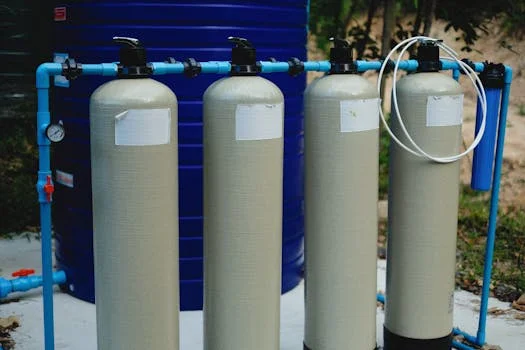
Compliance in Tehran is not just about the biological process; it involves a suite of monitoring and post-treatment technologies that can add significant weight to a budget. To reach the COD ≤ 100 mg/L limit, most plants require tertiary treatment. Adding an MBR stage or a combination of DAF and chlorine dioxide disinfection typically adds 20–25% to the total CAPEX of a standard activated sludge plant.
Monitoring is another mandatory expense. The Tehran Environmental Protection Office now requires continuous monitoring systems for COD, BOD, and TSS for plants over a certain capacity. These sensor arrays cost between $50,000 and $100,000 initially, with annual calibration and maintenance OPEX of $5,000–$10,000. Failure to maintain these systems can result in fines that far exceed the cost of the equipment.
Sludge management is the "hidden" cost of compliance. In Tehran, dewatered sludge disposal costs between $50 and $100 per ton as of 2025. For a plant producing significant solids, this can add $0.02–$0.05/m³ to your OPEX. Investing in high-efficiency dewatering, such as a plate and frame filter press, can reduce sludge volume by 70%, drastically lowering disposal fees. ensuring final disinfection with a chlorine dioxide generator is essential for meeting microbial limits before discharge into municipal aquifers.
| Compliance Item | Estimated CAPEX | Estimated OPEX |
|---|---|---|
| Tertiary Treatment (MBR/DAF) | $200k – $1.5M (Scale dependent) | $0.05 – $0.12/m³ |
| Continuous Monitoring Systems | $50k – $100k | $5k – $10k/year |
| Permitting & Licensing | $10k – $20k (Initial) | $2k – $5k/year (Renewal) |
| Sludge Disposal Fees | N/A | $50 – $100/ton |
ROI Calculator: How to Estimate Your Wastewater Treatment Plant’s Payback Period in Tehran
The return on investment (ROI) for a wastewater plant in Tehran is primarily driven by the avoidance of freshwater purchase costs and the elimination of environmental fines. With water scarcity pushing Tehran's industrial water tariffs higher each year, the "payback period" has shortened significantly. The basic formula used by plant engineers is:
Payback Period (Years) = (Total CAPEX - Financing/Grants) / (Annual Savings - Annual OPEX)
Consider a 5,000 m³/day MBR plant in a Tehran industrial zone. The CAPEX is $7M, and the OPEX is $0.30/m³. If the plant reuses 80% of its effluent for industrial processes, saving $0.75/m³ (the cost of municipal water), the annual savings amount to approximately $1.1M. Even with operational costs of $540,000 per year, the net savings are $560,000. If the project utilizes Istisna'a financing to cover 60% of the CAPEX, the upfront investment drops to $2.8M, resulting in a payback period of roughly 5 years. Without financing, the payback extends to 12.5 years, highlighting why financial planning is as critical as the engineering itself.
Frequently Asked Questions
What is the average cost per m³ for a wastewater treatment plant in Tehran?
As of 2025, OPEX ranges from $0.15–$0.45/m³ for municipal plants and $0.25–$0.60/m³ for industrial facilities. These figures include energy, chemicals, labor, and maintenance, but exclude initial CAPEX amortization.
How much does an SBR system cost for a hospital in Tehran?
Based on regional project data, a 10,000 GPD SBR system for a hospital typically costs $320,000 to $370,000. Underground installation, common in Tehran’s congested urban areas, usually adds 15–20% to the civil works budget.
What are the financing options for wastewater treatment plants in Tehran?
Large municipal projects often qualify for the Islamic Development Bank’s Istisna'a program, covering up to 80% of CAPEX. Industrial buyers generally utilize private bank loans or vendor financing arrangements with 3–5 year repayment terms.
What are Iran’s EPA effluent limits for wastewater treatment plants?
The 2025 standards for discharge into surface water are COD ≤ 100 mg/L, BOD ≤ 30 mg/L, TSS ≤ 30 mg/L, and a pH range of 6.0–9.0. Stricter limits may apply for discharge into sensitive aquifers or for agricultural reuse.
How does land scarcity in Tehran affect wastewater treatment plant costs?
Land scarcity forces the use of compact or underground technologies. While these systems (like MBR or WSZ-series SBRs) have higher equipment costs, they can reduce total project costs by up to 30% by minimizing the required land footprint in expensive industrial zones.