Why Microelectronics Wastewater Requires Specialized Treatment
A microelectronics wastewater treatment solution must handle TMAH, fluoride, arsenic, copper, nickel, silica, and high-COD solvents at low concentrations—often 1 to 500 mg/L total—yet each stream carries a specific toxicity or scaling risk. Plants typically combine chemical precipitation (95%+ TMAH removal), advanced membrane filtration (99.5% fluoride reduction), and Zero Liquid Discharge (ZLD) to satisfy EPA 40 CFR Part 469, the EU Industrial Emissions Directive 2010/75/EU, and China GB 31573-2015 while pushing water reuse above 90%.
Semiconductor fabrication wastewater defeats generic industrial trains. A 2024 Taiwan wafer fab was fined $1.2 million for TMAH exceedances, per a 2023 Veolia case study, and most plants we size for now target >99% removal on every regulated parameter rather than minimum effluent only. Pretreatment selection, RO recovery ratio, and ZLD scope all start from influent characterization, not a template.
| Contaminant | Typical Concentration Range (mg/L) | Primary Source | Environmental/Health Risk | Target Effluent Limit (mg/L) | Required Removal Efficiency |
|---|---|---|---|---|---|
| TMAH | 50–200 | Photoresist developer | Acute toxicity to aquatic life (LC50 = 10–50 mg/L for fish) | < 1.0 (EPA) | >99% |
| Fluoride | 10–100 | Wet etching processes | Skeletal fluorosis (>1.5 mg/L in drinking water) | < 5.0 (WHO/Local) | 90–99.5% |
| Arsenic | 0.1–5 | CMP slurries, plating | Carcinogen, toxic to aquatic life | < 0.1 (EPA) | >95% |
| Copper | 0.5–10 | Plating, etching | Toxic to aquatic life | < 1.3 (EPA) | >90% |
| Nickel | 0.2–8 | Etching, plating | Toxic to aquatic life, potential carcinogen | < 0.2 (EPA) | >90% |
| Silica | 50–300 | Wafer grinding, CMP | RO membrane fouling, scaling | < 10–20 (for RO pretreatment) | >80% (for RO) |
| COD (Organic Solvents) | 500–2,000 | Cleaning, stripping | Oxygen depletion in water bodies | < 100–200 (local limits) | 85–95% |
Contaminant Profile: What's in Microelectronics Wastewater and Why It Matters
Tetramethylammonium hydroxide (TMAH) is the process-defining contaminant. As a photoresist developer, it enters wastewater at 50–200 mg/L and shows LC50 values of 10–50 mg/L for fish. Earlier industry guidance often cites TMAH below 1.0 mg/L before discharge blending; 40 CFR Part 469 Subpart A does not list a standalone TMAH limit and instead caps total toxic organics (TTO) at 1.37 mg/L for any 1 day (EPA eCFR). Fluoride from wet etching runs 10–100 mg/L. Local permits often hold fluoride below 5 mg/L, while Part 469 BAT sets fluoride at 32.0 mg/L maximum for any 1 day and 17.4 mg/L as a 30-day average. Chronic exposure above 1.5 mg/L in drinking water causes skeletal fluorosis in humans.
Heavy metals—arsenic from CMP slurries, copper from plating, nickel from etching baths—are each capped under EPA rules at 0.1 mg/L arsenic, 1.3 mg/L copper, and 0.2 mg/L nickel. Silica from wafer grinding and CMP at 50–300 mg/L is less a discharge issue than an RO membrane killer: scaling kicks in above 50 mg/L, so coagulation and clarification are sized to protect downstream RO. Organic solvents such as isopropyl alcohol (IPA), acetone, and N-methyl-2-pyrrolidone (NMP) push influent COD to 500–2,000 mg/L and decide whether a biological or advanced oxidation stage is required.
For a contaminant-by-contaminant walkthrough with TMAH process design in focus, see our Semiconductor TMAH Wastewater Treatment: 2025 Engineering Specs, Cost Data & Hybrid Process Design guide.
Treatment Process Flow: Step-by-Step Engineering for Microelectronics Wastewater
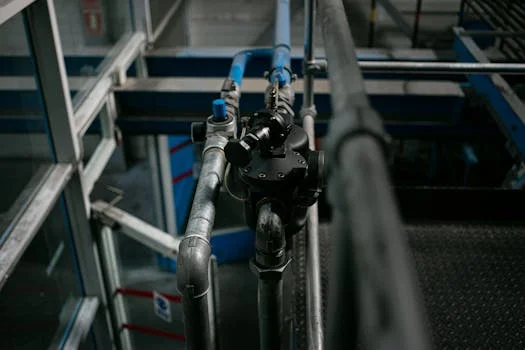
A reliable microelectronics wastewater treatment solution sequences pretreatment, chemical precipitation, sedimentation, optional biological treatment, RO polishing, sludge dewatering, and—where water scarcity or discharge caps demand it—a ZLD train. The first step is mechanical screening: a GX Series Rotary Bar Screen takes out coarse solids and protects downstream pumps, hitting 95% TSS removal at feed TSS above 500 mg/L per HydropureWater's 2024 specifications.
Next comes chemical precipitation. Lime raises pH to 10–11 for 90–95% fluoride removal, and ferric chloride coagulant drops heavy metals while Aries' 2023 data shows typical lime demand of 1.5–2.5 kg/m³. A lamella clarifier then settles the floc at 20–40 m/h surface loading, removing 80–90% of TSS. When influent COD/BOD exceeds 1,000 mg/L, an integrated MBR system with 0.1 μm membranes cuts organics by 85–95% in a footprint most engineers can fit inside a fab utility room.
Polishing is the job of a HydropureWater Industrial RO System, which rejects more than 99% of residual TMAH and silica at 75–85% recovery. Sludge from sedimentation and precipitation is dewatered with a HydropureWater Plate and Frame Filter Press to 30–40% cake solids, cutting volume by roughly 80%. Where water recovery targets demand it, evaporation plus crystallization closes the loop with 95–99% overall water recovery and CAPEX of $3–8 million for a 100 m³/h ZLD train, based on 2025 cost data.
| Stage | Equipment Example | Primary Function | Key Performance Indicators | Target Contaminants |
|---|---|---|---|---|
| Pretreatment | Rotary Bar Screen (HydropureWater GX Series) | Remove coarse solids | 95% TSS removal (for TSS >500 mg/L) | Large debris, rags |
| Chemical Precipitation & Coagulation | Dosing pumps, pH controllers | pH adjustment, heavy metal precipitation, fluoride removal | 90–95% fluoride removal, >90% heavy metal removal | Fluoride, Arsenic, Copper, Nickel |
| Primary Sedimentation | Lamella Clarifier (HydropureWater) | Separate suspended solids | 80–90% TSS removal, 20–40 m/h surface loading | Flocculated solids, precipitated metals |
| Biological Treatment (Optional) | MBR System (HydropureWater DF Series) | Reduce COD/BOD | 85–95% COD/BOD reduction, 0.1 µm membrane pore size | Organic solvents, biodegradable compounds |
| Advanced Filtration | RO System (HydropureWater Industrial RO) | Remove dissolved solids, TMAH, silica | 99%+ TMAH/silica rejection, 75–85% recovery | TMAH, silica, dissolved salts |
| Sludge Dewatering | Plate and Frame Filter Press (HydropureWater) | Reduce sludge volume | 80% volume reduction, 30–40% cake solids | Concentrated solids, metals, precipitated compounds |
| ZLD (Optional) | Evaporator & Crystallizer | 100% water recovery, salt production | 95–99% water recovery | All dissolved solids |
Hybrid Treatment Methods: Comparing Chemical, Biological, and Membrane Technologies
Choosing among chemical precipitation, biological treatment, membrane filtration, and AOPs comes down to OPEX, removal efficiency, and sludge handling. Chemical precipitation at $0.50–1.50/m³ OPEX removes 90–99% of fluoride and heavy metals but generates hazardous sludge that needs specialized disposal. Biological treatment at $0.75–2.00/m³ hits 85–95% COD/BOD reduction in an MBR footprint of 50–100 m² per 100 m³/h, but TMAH usually demands an acclimated biomass that not every site can maintain.
Membrane filtration at $1.00–3.00/m³ OPEX delivers 99%+ rejection of TMAH and silica, yet it is only as stable as the pretreatment feeding it—most RO trains we see fail because the upstream DAF system was undersized for silica variability. Advanced Oxidation Processes (ozonation, UV-peroxide) achieve 80–90% TMAH degradation per a 2023 Veolia report, but at $1.50–3.50/m³ and the risk of byproduct formation they earn a place only when TMAH slips past the front end.
The hybrid stack—chemical precipitation, then MBR, then RO—has been validated in a 2024 wafer fab case study at 99.5% TMAH removal and 90%+ water reuse, with combined OPEX of $1.50–4.00/m³. For a sibling design walkthrough on developer-bearing streams, see Semiconductor Developer Wastewater Treatment: 2025 Engineering Specs, Cost Data & Zero Liquid Discharge Blueprint.
| Technology | Primary Application | Typical Removal Efficiency | Key Advantages | Key Disadvantages | Estimated OPEX ($/m³) | Footprint (Relative) |
|---|---|---|---|---|---|---|
| Chemical Precipitation | Fluoride, Heavy Metals | 90–99% | Cost-effective for high loads, established | Sludge generation, limited organic removal | 0.50–1.50 | Small |
| Biological Treatment (MBR) | COD, BOD | 85–95% | Effective organic removal, compact footprint | Requires acclimated biomass, sensitive to shock loads | 0.75–2.00 | Medium |
| Membrane Filtration (RO/NF) | TMAH, Silica, Dissolved Salts | 99%+ | High purity effluent, high removal rates | Fouling/scaling risk, requires pretreatment, energy-intensive | 1.00–3.00 | Medium |
| Advanced Oxidation (AOP) | Recalcitrant Organics (TMAH) | 80–90% (TMAH degradation) | Breaks down complex molecules | Energy-intensive, potential byproduct formation | 1.50–3.50 | Small to Medium |
| Hybrid (Chem. Precip. + MBR + RO) | Comprehensive (TMAH, F, Metals, Organics) | 99.5%+ (TMAH), 90%+ (Water Reuse) | Addresses diverse contaminants, high reuse | Higher CAPEX, complex operation | 1.50–4.00 | Medium to Large |
Zero-Liquid-Discharge (ZLD) for Microelectronics: Engineering Specs and Cost Breakdown
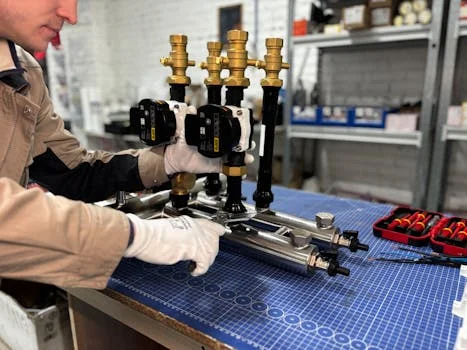
ZLD is the endgame of a microelectronics wastewater treatment solution: pretreatment plus RO concentrate the brine, evaporation vaporizes the water, and a crystallizer turns the remaining salts into a dry solid for disposal or sale. Overall water recovery lands at 95–99%, with 100% water recovery possible when the evaporator is paired with a crystallizer and good condensate polishing.
CAPEX for 50–200 m³/h ZLD systems runs $3–15 million per 2025 cost data, with roughly 40% on evaporators, 30% on RO, 20% on pretreatment, and 10% on crystallization. OPEX sits at $2.50–6.00/m³ because evaporation alone draws 10–15 kWh/m³ per UCC's 2024 reporting. The ROI case rests on three numbers: freshwater savings of $0.50–2.00/m³ reused, fines avoided (up to $1 million/year per non-compliance event), and byproduct revenue from gypsum or reclaimed TMAH. A 2024 Singapore fab referenced in a 2023 Molewater report cut water consumption 92% via ZLD and saved $1.8 million per year.
| ZLD Component | Typical Capacity Range | Estimated CAPEX Range ($M) | Estimated OPEX Range ($/m³) | Key Benefits | Primary Challenges |
|---|---|---|---|---|---|
| Pretreatment & RO | 50–200 m³/h | 2.0–6.0 | 0.50–1.50 | High purity water, contaminant removal | Fouling, scaling, membrane replacement |
| Evaporation | 50–200 m³/h | 1.5–6.0 | 1.00–3.00 (Energy) | Volume reduction, salt concentration | High energy consumption, scaling potential |
| Crystallization | 50–200 m³/h | 0.5–2.0 | 0.25–0.50 | Solid waste production, further water recovery | Solid handling, waste disposal/recycling |
| Total ZLD System | 50–200 m³/h | 3.0–15.0 | 2.50–6.00 | 100% water recovery, zero discharge, resource recovery | High CAPEX/OPEX, complex operation, energy intensive |
How to Select the Right Microelectronics Wastewater Treatment Equipment
The right microelectronics wastewater treatment solution starts with wastewater characterization: lab testing for TMAH, fluoride, heavy metals, silica, and COD, with jar testing to lock down coagulant and flocculant doses per Aries' 2023 guidelines. Without that data, every downstream sizing decision is guesswork.
Define the treatment target—discharge compliance, 90%+ reuse, or full ZLD—then match technology to the dominant contaminant. High fluoride (above 50 mg/L) points to lime precipitation; persistent TMAH and silica point to RO polishing. For a fab at 100 m³/h with 100 mg/L TMAH, expect a multi-stage RO train sized for >99% rejection at 75–85% recovery. CAPEX spans $1–10 million for 50–500 m³/h systems, and OPEX runs $0.50–6.00/m³ depending on whether ZLD is in scope—energy alone is the swing variable.
Vendor selection matters as much as equipment choice. Look for manufacturers with wafer-fab references and the ability to run pilot tests before purchase; proven MBR systems and RO systems for fab duty are non-negotiable. For sites that also need a packaged biological step outside the fab boundary, an Underground Package Sewage Treatment Plant (WSZ Series) can handle sanitary and dilute organic loads in parallel with the process train. The plant engineer who walks the floor with a structured selection checklist—characterization, target, technology match, sizing, vendor—is the one whose system actually performs.
Ready to scope a system for your fab? Send us your influent data and target effluent limits and we'll return a sized equipment list with CAPEX/OPEX ranges.
Frequently Asked Questions
What are the discharge limits for TMAH in microelectronics wastewater?
40 CFR Part 469 Subpart A does not list a standalone TMAH limit. It caps total toxic organics (TTO) at 1.37 mg/L for any 1 day and fluoride at 32.0 mg/L maximum / 17.4 mg/L as a 30-day average (EPA eCFR). Earlier industry guidance often cites TMAH below 1 mg/L. The EU Industrial Emissions Directive 2010/75/EU, per 2024 updates cited in industry practice, requires new fabs to hold TMAH below 0.5 mg/L, and local regulators may impose tighter site-specific limits. A 2024 Taiwan fab was fined $1.2 million for TMAH violations per a 2023 Veolia case study.
How much does a microelectronics wastewater treatment system cost?
CAPEX for a microelectronics wastewater treatment system ranges from $2.5 million for a 50 m³/h chemical-plus-MBR plant up to $15 million for a 200 m³/h ZLD system, based on 2025 cost data. OPEX runs $0.50–6.00/m³. The upper end reflects ZLD energy load, where evaporation alone draws 10–15 kWh/m³ per UCC's 2024 reporting.
Can microelectronics wastewater be reused in the fab?
Yes. RO plus UV disinfection routinely returns 90–95% of treated water to non-process rinsing and cooling loops, with overall plant freshwater draw cut by 50–80% in 2024 wafer fab case studies. Recovery ratios between 75% and 85% per RO stage are realistic when silica pretreatment is correctly sized.
What are the challenges of treating microelectronics sludge?
Sludge concentrates arsenic, copper, nickel, and residual TMAH, so it must be stabilized before landfill disposal. Plate and frame filter presses dewater it to 30–40% cake solids per HydropureWater's 2024 specifications, cutting volume by roughly 80% and making transport economical.
How do I choose between chemical precipitation and membrane filtration for fluoride removal?
For influent fluoride above 50 mg/L, lime precipitation is the lower-cost workhorse at 90–95% removal, with sludge as the trade-off. RO pushes fluoride removal above 99% but costs more and demands strong upstream pretreatment to control silica scaling. In practice, most fabs run precipitation for bulk removal and RO for polishing—hybrid wins on both CAPEX and OPEX.