A wafer fab wastewater reuse system design hits 90%+ recovery only when HF, metals, and CMP solids are split before membranes. For a 1,000 m3/day train, RO capital is $1.5M–$4M and uses 0.5–1.5 kWh/m3, while ZLD capital is $3M–$8M and uses 5–10 kWh/m3.
Semiconductor fabrication plants are among the most water-intensive industrial facilities globally. A state-of-the-art 5-7 nm line withdraws 2,000–4,000 liters of water per wafer start while drawing 200–300 MW of power, and key manufacturing regions are tightening reuse mandates around that load.
Wafer Fab Wastewater Reuse System Design: Drivers, Targets, and Train Layout
Wafer fab wastewater reuse system design starts from a water balance, a contaminant map, and a named reuse grade, then selects pretreatment, membrane or thermal stages, and polishing to hit that grade. Regions such as Arizona, Taiwan, and Singapore are projected to require more than 70% recycling by 2035. The design target is therefore recovery at a defensible energy and sludge cost, not a single headline percentage.
Three drivers dominate every basis of design. Scarcity pricing raises the raw-water line item yearly. Supply resilience matters most, because a shortage that stops wafer starts costs more than any water bill.
Earlier project notes put TSMC's Arizona fab at a 45% cut in freshwater withdrawal, worth about $12 million a year. According to The Verge (2026), TSMC's first Arizona fab uses roughly 4.75 million gallons of water a day and recycles 65 percent of it, with that share supposed to grow to at least 90 percent once a reclamation plant is finished. Keep the 45% note as background only.
Intel's Oregon fab has been reported at $8 million a year saved, with 80% water reuse and a payback near 3 years. According to The Verge (2026), Intel's facilities in Chandler, Arizona withdrew more than 2.7 billion gallons of freshwater in 2025. Those figures answer different questions, so do not mix them in one payback model.
Arizona Semiconductor Fab Water Reuse Regulations: What Actually Binds?
Arizona semiconductor fab water reuse regulations do not hand the designer one recycling percentage that replaces a mass balance. That supply curve, not a statewide quota, binds plant design.
Phoenix sets the same water rates for companies as for residential customers, so a city rate increase lands directly on the fab bill. Industrial uses including chip manufacturing account for about 6 percent of Arizona demand, yet a stopped line is a production loss. Design the balance to supply risk, and check permit conditions before deleting a discharge route.
Construction schedules now anchor the Arizona numbers. Demand reaches 17.2 million gallons per day once Fabs 1, 2, and 3 all run. Most plants we size for treat that as a campus-wide utility, not a per-tool upgrade.
Contaminant Profile of Wafer Fab Wastewater: What Needs Removal
Wafer fab wastewater reuse hinges on a contaminant profile that varies by stream. Chemicals from chemical-mechanical planarization (CMP) and etching introduce pollutants that must be removed to protect recycled-water quality and downstream equipment. Wafer fab wastewater carries hydrofluoric acid at 50–500 mg/L, arsenic at 1–10 mg/L, and TSS at 100–1,000 mg/L, and those bands set the front of the train.
| Contaminant | Typical Concentration (mg/L) | Problematic Aspects |
|---|---|---|
| Hydrofluoric Acid (HF) | 50–500 | Highly corrosive to membranes and equipment; requires careful neutralization. |
| Arsenic | 1–10 | Carcinogenic; stringent discharge limits and requires specialized removal processes. |
| Chromium (Cr) | 0.5–5 | Heavy metal; can foul RO membranes and is subject to strict environmental regulations. |
| Copper (Cu) | 10–100 | Precipitates and fouls membranes; can impact UPW quality if not effectively removed. |
| Nickel (Ni) | 5–50 | Similar to copper, it can cause scaling and membrane fouling. |
| Total Suspended Solids (TSS) | 100–1,000 | Clogs filters and membranes, increasing operational load and reducing treatment efficiency. |
UPW-grade reuse, when that is truly the spec, means metals under 1 ppb, turbidity under 0.1 NTU, and conductivity under 10 µS/cm. Many plants never need that grade: cooling towers and air scrubbers take a looser water. The drain layout still has to stop HF and slurry from sharing one tank.
Keep dimethylamine (dma) in wafer fab wasterwater discharge off the metal-hydroxide clarifier and on its own organic path. Mixing it into copper sludge makes both residuals harder to dewater. Ammonia in scrubber blowdown is a different split again: use Wafer Fab Ammonia-Nitrogen Wastewater Treatment: 2026 Engine when NH3-N, not metal, sets the permit.
Fab Wastewater Heavy Metal Removal Process: Precipitation or Selective IX
The fab wastewater heavy metal removal process is a precipitation step, or selective ion exchange, placed before any membrane sees copper, nickel, or chromium. Chemical precipitation takes about 90–99% of those metals when pH is held. Selective ion exchange can reach 99.9% removal on a targeted ion. Arsenic at 1–10 mg/L still needs its own step, because a copper hydroxide sludge does not reliably take it down.
Chromium at 0.5–5 mg/L and nickel at 5–50 mg/L follow the same rule as copper at 10–100 mg/L. Get the pH wrong and the metal stays dissolved, then scales the RO. On lines we commission, operators check pH at the clarifier, not only at the chemical tote.
Water Reuse Technologies for Semiconductor Fabs: Engineering Specs & Performance Data

Semiconductor reuse equipment splits the job: RO systems for semiconductor wastewater reuse reject dissolved salts, an MBR systems for high-TSS fab wastewater train holds solids and organics, and ZLD evaporates brine that partial reuse cannot send to the sewer. Ion exchange is the UPW polish, not the bulk desalter. Electro-ceramic desalination sits in the table at 0.3–0.6 kWh/m3, below the RO band of 0.5–1.5 kWh/m3.
| Technology | Contaminant Removal (%) | Flux Rate (LMH) | Energy Consumption (kWh/m³) | CAPEX ($/m³/day) | OPEX ($/m³) | UPW Compatibility |
|---|---|---|---|---|---|---|
| Reverse Osmosis (RO) | 95% TDS, 90%+ for many dissolved salts | 5–30 | 0.5–1.5 | 500–1,500 | 0.20–0.50 | Partial (requires post-treatment for UPW) |
| Membrane Bioreactor (MBR) | 99% TSS, BOD, COD; moderate TDS removal | 10–20 | 0.8–1.2 | 1,000–2,500 | 0.30–0.70 | No (primarily for non-critical reuse) |
| Electro-Ceramic Desalination | Up to 90% water recovery, effective for TDS and specific ions | 10–15 | 0.3–0.6 | 800–2,000 | 0.15–0.40 | Potential for UPW polishing |
| Zero-Liquid Discharge (ZLD) | 99% water recovery (evaporation/crystallization) | 5–10 (pre-concentration stages) | 5–10 | 2,000–5,000 | 1.00–3.00 | N/A (focus is on solids recovery) |
| Ion Exchange (IX) | 99.9%+ for specific ions | 10–30 BV/h | 0.1–0.3 | 300–800 | 0.10–0.30 | Excellent for UPW polishing |
Read the rows as selection rules, not as a ranking. A flux in LMH is not comparable to an ion-exchange rate in bed volumes per hour, and CAPEX in $/m3/day is the installed band for that unit process, not a turnkey plant. UPW makeup usually pairs RO with ion exchange or electro-deionization, because RO alone is only a partial step toward UPW.
Electro-ceramic desalination, including work tied to partnerships such as Lam Research, is quoted for high recovery at the lower energy band in the table. Treat that row as a brine-side option, not as a substitute for metals precipitation. Most plants we size for CMP-heavy feed run at the low end of the 5–30 LMH RO flux band once silica and residual copper show up.
Semiconductor Fab Water Reuse RO MBR Cost Bands
Semiconductor fab water reuse RO MBR cost splits clearly by train: for a 1,000 m3/day system, RO costs about $1.5M–$4M in capital, MBR about $2M–$5M, and ZLD about $3M–$8M. Operating cost is about $0.20–$0.50 per m3 for RO, $0.30–$0.70 for MBR, and $1.00–$3.00 for ZLD. Energy is the split procurement feels monthly: RO at 0.5–1.5 kWh/m3, MBR at 0.8–1.2 kWh/m3, and ZLD at 5–10 kWh/m3 because of evaporation.
The unit rates in the technology table use the same physics at smaller scale. RO at $500–$1,500 per m3/day and $0.20–$0.50 per m3 lines up with the $1.5M–$4M plant band at 1,000 m3/day. MBR at $1,000–$2,500 per m3/day lines up with $2M–$5M, and ZLD at $2,000–$5,000 per m3/day lines up with $3M–$8M. If a quote falls far outside those bands, ask what scope was left out.
Payback on partial RO or MBR reuse is often 2–5 years, while ZLD more often runs 5–10 years. The shorter payback appears when avoided discharge fees are in the model. Water price alone rarely carries a crystallizer.
Slurry solids, not conductivity, are what knock a CMP reclaim train offline in the first month. TSS on this wastewater is often 100–1,000 mg/L. Take that load off with pretreatment before arguing EDI versus ion exchange. Most CMP reclaim jobs we review fail on the filter, not on the polisher spec sheet.
Designing a Wafer Fab Water Reuse System: Process Flow & Equipment Checklist
A fab reclaim train runs pretreatment, neutralization and metal removal, then MBR or RO, then polish or disinfection, plus a sludge line. Recovery across the membrane step is typically 50–90% at a flux of 5–30 LMH. The wafer fab wastewater reuse system design has to be on the P&ID before anyone prices a skid.
- Pretreatment: This initial stage focuses on removing gross solids and oils. DAF systems for TSS and oil removal in fab pretreatment can achieve 95% removal of suspended solids and emulsified oils. Rotary drum screens offer 90% removal of larger particles.
- Primary Treatment: Neutralization of acidic or alkaline wastewater is paramount. Heavy metals like copper, nickel, and chromium are then removed through chemical precipitation, achieving 90–99% removal, or via selective ion exchange, which can reach 99.9% removal.
- Secondary Treatment: The choice between MBR and RO depends on the influent water quality and reuse goals. MBR systems are ideal for high-TSS streams, while RO is effective for high dissolved solids. Typical recovery rates range from 50–90%, with flux rates between 5–30 LMH.
- Polishing: For UPW compatibility, Ion Exchange (IX) or electro-deionization (EDI) are essential. These systems remove residual ions to achieve ppb-level purity. For non-critical reuse applications, disinfection with chlorine dioxide generators can ensure microbial safety with a 99.9% kill rate.
- Sludge Handling: Dewatering of precipitated sludge is crucial for reducing disposal volumes. Plate-and-frame filter presses can achieve 20–30% cake solids, while centrifuges typically yield 15–25% cake solids.
A typical pipe sequence is equalization, pH adjustment, coagulation for metal precipitation, then dewatering of the settled solids. Clarified water goes to MBR or RO based on the contaminant that dominates. After RO, ion exchange or EDI is the UPW polish; if the user is a cooling tower, disinfect the RO permeate and send it there. Skip dissolved-air flotation on oily tool drains and the RO cleaning interval collapses within weeks, so treat that 95% oil and TSS cut as the cheap insurance. Check the numeric blowdown limits in Wafer Fab Wastewater Discharge Standards 2026: Global Limits before you delete a legal sewer route to chase the last recovery point.
Zero Liquid Discharge vs Water Reuse for Semiconductor Fabs
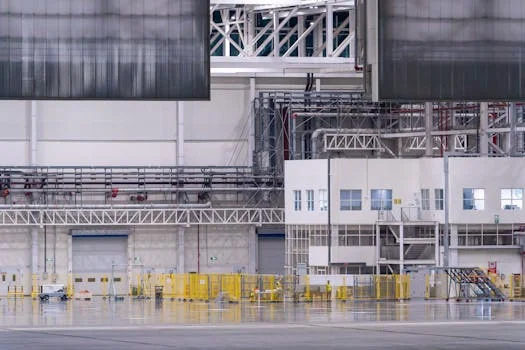
Zero liquid discharge versus water reuse at 1,000 m3/day is a capital gap of about $1.5M–$4M for RO against $3M–$8M for ZLD, with MBR between them at $2M–$5M. Partial reuse still buys freshwater for the fraction you do not recover. ZLD is a different product: near-elimination of liquid discharge, with salts or brine solids left to haul, at about 99% water recovery by evaporation and crystallization and 5–10 kWh/m3 of energy.
To illustrate the potential savings, here is a simplified ROI calculator using a hypothetical 500 m3/day case at $1.50 per m3 and 70% recovery:
| Variable | Input | Calculation | Result |
|---|---|---|---|
| Daily Water Withdrawal (m³/day) | 500 | ||
| Water Cost ($/m³) | 1.50 | ||
| Recovery Rate (%) | 70% | ||
| System Capacity (m³/day) | 500 | ||
| Annual Freshwater Cost (Without Reuse) | Daily Water Withdrawal * Water Cost * 365 | $273,750 | |
| Annual Recovered Water Value | Annual Freshwater Cost * Recovery Rate | $191,625 | |
| Annual Net Water Savings | Annual Freshwater Cost - Annual Recovered Water Value | $82,125 | |
| Estimated CAPEX (RO System) | $2,500,000 | ||
| Estimated Payback Period (Years) | Estimated CAPEX / Annual Net Water Savings | ~30.4 years (Illustrative - actual payback depends on OPEX, energy, and avoided discharge costs) |
Walk the arithmetic before quoting the last row. At 500 m3/day and $1.50 per m3, a year costs $273,750 with no reuse, and 70% recovery shows $191,625 of recovered water value. Subtracting that value from the gross bill leaves $82,125, which is water you still buy, not money you saved. Dividing $2,500,000 of RO capital by $82,125 is the table's ~30.4 years, and that figure stays illustrative because OPEX, energy, and avoided discharge fees sit outside it.
OPEX of $1.00–$3.00 per m3 for ZLD against $0.20–$0.50 for RO is the monthly test. If the water tariff plus the discharge fee is still below the ZLD OPEX, partial reuse wins. If the permit removes the sewer option, the power bill is the cost of staying in production; that is a compliance decision, not an efficiency contest. The Oregon report of $8 million a year at 80% reuse and about 3 years payback is that kind of full model, not the residual-bill formula above.
Who This Is For and Next Step
Process engineers and EPC teams use this reclaim spec on a wafer fab that already has separate HF, CMP, and metal drains and a named reuse grade. Municipal sewage with no HF or metal load is the wrong copy of these unit costs, and a backend assembly plant with only light rinse water should not adopt the ZLD column. Keep sanitary sewage off the CMP headers: an Underground Package Sewage Treatment Plant (WSZ Series) can take that domestic flow on a tight campus, but it is not a metals or HF process unit.
Use this checklist before you freeze the P&ID.
- Split HF, CMP, copper, and ammonia drains before they share a tank.
- Name the reuse grade: cooling tower and scrubber, or UPW makeup under 1 ppb metals.
- Pick 50–90% RO recovery or about 99% ZLD against the real discharge limit.
- Price energy at 0.5–1.5 kWh/m3 for RO versus 5–10 kWh/m3 for ZLD on the local tariff.
- Size sludge at 20–30% cake solids for a filter press, or 15–25% for a centrifuge.
- Treat Arizona supply cuts, and any local scarcity price, as a water-balance input.
- Keep locker-room and canteen sewage off the process train.
The specs that come back incomplete almost always omit the CMP solids number or the reuse grade. Send daily flow, HF and metal ranges, TSS, and the grade you need through the project inquiry. A flux picked without those four inputs will not match the plant you build.
Frequently Asked Questions
What are the primary contaminants in semiconductor fab wastewater that require removal for reuse?
Hydrofluoric acid at 50–500 mg/L, arsenic at 1–10 mg/L, chromium at 0.5–5 mg/L, copper at 10–100 mg/L, nickel at 5–50 mg/L, and TSS at 100–1,000 mg/L are the bands that set the train. HF attacks membranes when neutralization is late. Copper and nickel scale RO when they stay dissolved, and arsenic stays a sludge problem even at high reuse.
Can recycled water from semiconductor fabs be directly used for Ultrapure Water (UPW) production?
Generally, no. Recycled water typically requires advanced polishing steps, such as Ion Exchange or electro-deionization, to meet the stringent purity requirements for UPW systems, which demand <1 ppb metals and <0.1 NTU turbidity. Disinfected RO permeate fits cooling towers and scrubbers, so keep it out of the UPW makeup tank until the ppb polish is in place.
What is the typical water recovery rate for RO and MBR systems in fab applications?
RO systems can achieve recovery rates of 50–90% for dissolved solids, while MBR systems are primarily focused on solids and organic removal, with their water recovery dependent on the overall system design. ZLD sits near 99% but pays 5–10 kWh/m3 for it. Pick the recovery number from the discharge permit and the reuse grade, not from a datasheet headline.
What is Zero-Liquid Discharge (ZLD) and is it suitable for all fab wastewater?
ZLD systems aim to eliminate liquid discharge entirely by recovering nearly 99% of water, with the remainder solidified as brine or salts. While effective for maximizing water recovery and meeting stringent discharge regulations, ZLD systems have higher CAPEX and OPEX, making them best suited for highly water-stressed regions or specific regulatory drivers. A fab with a legal sewer route usually earns more from partial reuse.
What is the typical water withdrawal per wafer start in a modern semiconductor fab?
Modern 5-7 nm fabs typically withdraw 2,000–4,000 liters of water per wafer start. That intensity is why reuse strategy sits on the critical path of fab utility planning rather than in the facilities afterthought budget.