Colombia’s municipal sewage treatment plants must meet CAR and MinAmbiente discharge limits (e.g., BOD < 30 mg/L, TSS < 35 mg/L) while handling influent flows from 1,000 m³/day (rural towns) to 7 m³/s (Bogotá’s El Salitre). Key projects like Medellín’s Bello plant (400 tons/day sludge) and Bogotá’s Canoas PPP ($1.2B investment) use technologies like UASB (Bucaramanga) and MBR (emerging in Medellín). CAPEX ranges from $5M for compact plants to $300M for large-scale PPPs, with OPEX at $0.20–$0.50/m³ treated. This guide provides engineering specs, compliance checklists, and equipment selection criteria for 2025 projects.
Colombia’s Municipal Wastewater Crisis: Why 70% of Sewage Goes Untreated
Only 30% of Colombia’s municipal wastewater is treated according to MinAmbiente 2023 reports, leaving approximately 70% of the nation's sewage to be discharged raw into critical water bodies like the Bogotá, Medellín, and Cauca rivers. This infrastructure deficit creates a significant environmental burden, particularly in the Bogotá savanna. The city of Bogotá generates roughly 12 m³/s of wastewater, yet current infrastructure at the El Salitre plant only processes 7 m³/s, providing only 30% coverage for the metropolitan area (CAR 2024). The remaining 5 m³/s flows directly into the Bogotá River, contributing to its status as one of the most polluted rivers globally.
In Medellín, the Bello plant treats 4.5 m³/s, representing a major leap in capacity for the Aburrá Valley. However, operational complexities persist; for example, 90 tons of sludge generated daily at the San Fernando plant must be trucked to the Bello facility for treatment, highlighting the logistical inefficiencies in regional sludge management. These gaps in treatment capacity have dire public health consequences. Data from the Water and Sanitation Program (WSP) indicates that 7 million people are directly affected by the pollution of the Bogotá River. WHO 2023 statistics suggest that waterborne disease rates are 30% higher in Colombian municipalities lacking secondary or tertiary treatment facilities compared to those with modern infrastructure.
The crisis is compounded by the rapid urbanization of "intermediate cities" like Villavicencio and Ibagué, where existing sewage systems are overwhelmed. Engineering teams are now tasked with designing plants that not only meet current demand but are scalable for 20-year growth projections, necessitating a shift from basic primary treatment to advanced biological processes that can handle varying organic loads.
Colombian Regulatory Framework: CAR, MinAmbiente, and Local Discharge Limits
Resolution 0631 of 2015 serves as the primary national standard for municipal wastewater discharges in Colombia, but local environmental authorities (CARs) often impose stricter basin-specific limits. For engineers and procurement leads, compliance is a multi-tiered process. The Corporación Autónoma Regional de Cundinamarca (CAR), for instance, mandates that discharges into the Bogotá River must achieve BOD < 30 mg/L and TSS < 35 mg/L, which is significantly more stringent than the national baseline for many other regions. Additionally, fecal coliform counts must be maintained below 1,000 MPN/100mL to protect downstream agricultural use.
The permitting timeline for a new municipal sewage treatment plant (PTAR) typically spans 12 to 18 months. This period includes the submission of an Environmental Impact Assessment (EIA), public consultations, and the acquisition of a "Permiso de Vertimientos" (Discharge Permit). Failure to comply with these regulations results in severe financial penalties; under MinAmbiente 2023 guidelines, fines can reach up to 5,000 monthly minimum wages (approximately COP $5.8 billion) and may include total plant shutdowns until remediation is completed.
| Parameter | MinAmbiente 0631 (National) | CAR (Bogotá River Basin) | Typical Removal Target |
|---|---|---|---|
| Biochemical Oxygen Demand (BOD₅) | < 90 mg/L | < 30 mg/L | 90–95% |
| Chemical Oxygen Demand (COD) | < 180 mg/L | < 60 mg/L | 85–90% |
| Total Suspended Solids (TSS) | < 90 mg/L | < 35 mg/L | 95% |
| Fecal Coliforms | N/A (varies) | < 1,000 MPN/100mL | 99.9% |
| Oil and Grease | < 20 mg/L | < 10 mg/L | 80%+ |
In addition to these limits, local operators like EAAB (Bogotá) and EPM (Medellín) require pre-treatment for industrial users discharging into the municipal grid. This includes limits on heavy metals (e.g., Lead < 0.1 mg/L) and pH control between 6.0 and 9.0. For 2025 projects, engineers must also account for emerging regulations regarding Nitrogen and Phosphorus removal in sensitive ecosystems to prevent eutrophication in Andean reservoirs.
Key Municipal Sewage Treatment Plants in Colombia: Engineering Specs and Lessons Learned
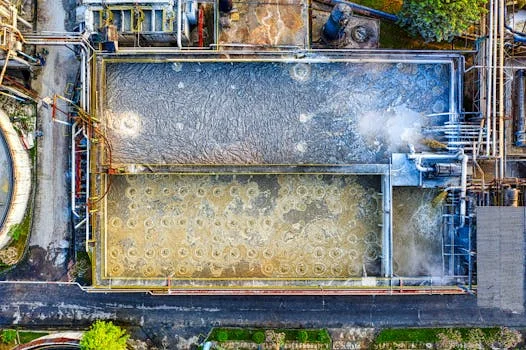
Bogotá’s El Salitre plant represents the largest operational municipal wastewater facility in Colombia, treating 7 m³/s using an activated sludge process enhanced by tertiary filtration. Following its $250 million expansion (World Bank 2022), the plant achieves 92% BOD removal. However, the project highlighted a critical lesson: the importance of early-stage sludge management planning. The facility produces significant volumes of biosolids that require stabilized disposal routes, a challenge currently being addressed through land application and composting pilots.
Medellín’s Bello plant offers a different engineering blueprint, utilizing a hybrid of UASB and activated sludge. With a capacity of 4.5 m³/s, it achieves 95% TSS removal. A standout feature is its sludge utilization plant, which features a HUBER Belt Dryer BT capable of processing 310 tons of sludge on-site daily (HUBER SE 2023). By integrating waste heat recovery, the plant reduces its net energy footprint, a model now being studied for the upcoming Canoas project. Meanwhile, Bucaramanga’s UASB plant demonstrates a low-cost, high-efficiency solution for domestic wastewater. Treating 1.2 m³/s with anaerobic technology, it achieves 70% COD removal with minimal energy input, making it an ideal reference for mid-sized Colombian cities with limited operational budgets.
| Facility Name | Flow Capacity | Primary Technology | CAPEX (Approx.) | Key Performance Metric |
|---|---|---|---|---|
| El Salitre (Phase 2) | 7.0 m³/s | Activated Sludge + Filtration | $250M USD | 92% BOD Removal |
| Bello (Medellín) | 4.5 m³/s | UASB + Activated Sludge | $180M USD | 95% TSS Removal |
| Bucaramanga | 1.2 m³/s | UASB (Anaerobic) | $12M USD | Low Energy (0.1 kWh/m³) |
| Canoas (Proposed) | 14.0 m³/s | Activated Sludge (Secondary) | $1.2B USD | PPP 20-year Concession |
The Canoas PPP project in Bogotá is the most ambitious in Colombia's history, designed to treat 14 m³/s. It utilizes a Public-Private Partnership model to secure the $1.2 billion investment required. The operational challenge for such mega-projects remains the OPEX associated with sludge disposal, which ranges from $50 to $100 per ton in the Colombian market. This has led to a surge in interest for advanced sludge thickeners and dewatering equipment to reduce volume before transport.
Technology Selection Guide: UASB vs. MBR vs. Activated Sludge for Colombian Municipalities
Upflow Anaerobic Sludge Blanket (UASB) technology currently treats domestic wastewater in Bucaramanga with energy consumption as low as 0.1 kWh/m³, making it the preferred choice for warm-climate Colombian municipalities. UASB is highly effective for high-strength domestic sewage (COD 500–2,000 mg/L) but typically requires a post-treatment step—such as a trickling filter or aerobic lagoon—to meet CAR nitrogen and phosphorus limits. Its primary advantage is low sludge production and the potential for biogas recovery.
For space-constrained urban areas in Medellín and Bogotá, MBR systems for space-constrained urban plants are becoming the standard. MBR combines biological treatment with membrane filtration, resulting in a footprint 60% smaller than conventional activated sludge. While CAPEX is higher ($3–$5M per m³/s capacity) and energy use is greater (0.8–1.2 kWh/m³), the effluent quality is superior, often reaching TSS < 1 mg/L. This makes MBR the ideal technology for water reuse projects in industrial corridors. You can learn more about MBR membrane modules and engineering specs to evaluate their fit for urban upgrades.
Activated Sludge remains the most flexible and widely used technology for large-scale plants like El Salitre. It handles variable hydraulic and organic loads better than anaerobic systems but requires significant aeration energy (0.4–0.7 kWh/m³). In Colombia, hybrid systems are gaining traction; the Bello plant uses UASB as a pre-treatment to reduce the organic load before activated sludge, significantly lowering the total energy requirement for aeration.
| Criteria | UASB (Anaerobic) | Activated Sludge | MBR (Membrane) |
|---|---|---|---|
| Energy Use | 0.1 – 0.2 kWh/m³ | 0.4 – 0.7 kWh/m³ | 0.8 – 1.2 kWh/m³ |
| Footprint | Medium | Large | Small (Compact) |
| Effluent Quality | Moderate (Needs post-treat) | High (BOD < 20) | Excellent (TSS < 1) |
| Sludge Yield | Low (0.1-0.2 kg/kg COD) | High (0.5-0.8 kg/kg BOD) | Moderate |
| Best Use Case | Warm climates, low budget | Large cities, variable load | Urban reuse, tight space |
Decision Framework for Colombian Engineers:
- Is land availability < 50% of standard requirements? Select MBR.
- Is the average ambient temperature > 20°C? Consider UASB with aerobic post-treatment.
- Is the project a large-scale ( > 5 m³/s) municipal build? Conventional Activated Sludge with energy recovery is the benchmark.
- Is high-quality water reuse required for industry? MBR + RO is the necessary configuration.
Cost Breakdown: CAPEX, OPEX, and ROI for Municipal Sewage Treatment Plants in Colombia
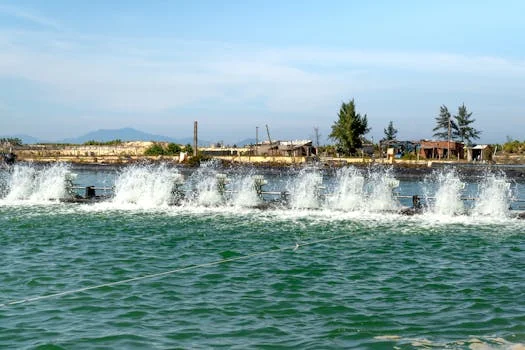
CAPEX for municipal sewage treatment plants in Colombia ranges from $5 million for compact 1,000 m³/day systems to over $1.2 billion for large-scale PPP projects like Canoas. For intermediate cities (10,000–50,000 m³/day), CAPEX typically falls between $50M and $100M, depending on the complexity of the terrain and the required discharge limits. Modular designs are increasingly popular in these scenarios, as they can reduce initial CAPEX by up to 20% by allowing for phased capacity increases. For smaller towns, compact WSZ series plants for small Colombian municipalities offer a cost-effective alternative to site-built concrete infrastructure.
OPEX is dominated by energy costs, which account for 30–40% of the total annual budget for aerobic plants. Labor (20–30%) and chemicals for disinfection and flocculation (15–25%) are the next largest categories. Sludge disposal is a rising cost driver, particularly as environmental regulations restrict landfilling. ROI for public municipal plants is typically calculated over a 10–15 year horizon, often subsidized by national transfers (SGP). However, for PPP projects, ROI is achieved in 7–10 years through a combination of tariff-based revenue and the sale of treated water or energy generated from biogas.
| Plant Scale | Flow (m³/day) | CAPEX Range (USD) | OPEX ($/m³ treated) |
|---|---|---|---|
| Small/Rural | 1,000 – 5,000 | $5M – $12M | $0.40 – $0.60 |
| Medium/Intermediate | 10,000 – 50,000 | $40M – $90M | $0.30 – $0.45 |
| Large/Metropolitan | 100,000+ | $200M – $1.2B | $0.20 – $0.35 |
Cost-saving strategies for 2025 include the implementation of high-efficiency turbo blowers, which can cut aeration energy costs by 15%, and the use of solar arrays for rural plants to offset grid dependence. comparing top Colombian suppliers for municipal sewage treatment equipment can help procurement teams identify high-performance components with lower total cost of ownership (TCO).
Equipment Checklist for Colombian Municipal Sewage Treatment Plants
Effective municipal wastewater treatment in Colombia requires pretreatment systems capable of removing 95% of solids larger than 6mm to protect downstream biological processes. In the tropical climate of Colombia, equipment must be "tropicalized," featuring corrosion-resistant materials (SS304/SS316) and PLC interfaces in Spanish to ensure long-term operational reliability.
- Pretreatment: Rotary mechanical bar screens (GX Series) are essential for removing inorganic debris. These should be paired with vortex grit chambers designed to capture particles as small as 0.2 mm.
- Biological Core: For anaerobic stages, UASB reactors must be equipped with efficient three-phase separators. For aerobic stages, fine-bubble disc diffusers are recommended to maximize oxygen transfer efficiency.
- Sludge Management: To minimize disposal costs, use plate and frame filter presses for 98% solids capture or screw presses for continuous, low-energy operation.
- Disinfection: On-site ClO₂ generators for Colombian municipal disinfection are preferred over traditional chlorine gas due to safety regulations and superior pathogen kill at varying pH levels.
- Tertiary Treatment: Multi-media sand filters or disc filters are required if the goal is to reach TSS < 10 mg/L for agricultural irrigation.
Procurement teams should prioritize equipment with local technical support and readily available spare parts to avoid the 4-6 week lead times common with imported specialized components. Standardizing on common motor and sensor brands (e.g., Siemens, ABB) within the plant’s SCADA system further simplifies maintenance for municipal operators.
Frequently Asked Questions
What are the primary discharge limits for municipal plants in Colombia?
Under Resolution 0631/2015, the national limit is generally BOD < 90 mg/L and TSS < 90 mg/L. However, regional authorities like CAR (Cundinamarca) often require BOD < 30 mg/L and TSS < 35 mg/L for discharges into sensitive basins like the Bogotá River.
Is MBR technology financially viable for smaller Colombian towns?
MBR is typically reserved for larger urban centers or areas with extreme land scarcity due to its higher CAPEX and energy requirements. For smaller towns, integrated systems like the WSZ series or UASB with lagoons are usually more cost-effective.
How are large-scale projects like Canoas financed?
Most large-scale Colombian PTARs use a Public-Private Partnership (PPP) model. The government provides a portion of the CAPEX (often through the World Bank or IDB), while a private concessionaire manages construction and operation for 20-25 years, recouping costs through water tariffs.
What is the typical energy consumption of a municipal PTAR in Colombia?
Energy use varies by technology: UASB plants use 0.1–0.2 kWh/m³, conventional activated sludge uses 0.4–0.7 kWh/m³, and MBR plants can exceed 1.0 kWh/m³.
Related Equipment
- Compact WSZ series for small Colombian municipalities (1–80 m³/h) — view specifications, capacity range, and technical data
Need a customized solution? Request a free quote with your specific flow rate and pollutant parameters.