Dong Nai’s Industrial Wastewater Treatment Landscape: Investment, Capacity & Compliance
Dong Nai Province has invested VND 1.84 trillion in centralized wastewater treatment systems, with all 31 industrial parks operating plants totaling 172,000 m³/day capacity. Industrial facilities must connect to these systems to comply with provincial environmental standards, which require effluent to meet parameters like COD < 150 mg/L and TSS < 50 mg/L. This guide provides 2025 engineering specs, compliance checklists, and cost-effective equipment solutions for industrial users.
The People’s Council and the People’s Committee of Dong Nai have mandated that every industrial park (IP) in operation must possess a functional centralized wastewater treatment plant (WWTP). As of May 2020, the provincial government reported a total investment of VND 1,840 billion dedicated to infrastructure that ensures 100% of the 31 active IPs can treat wastewater to national standards before discharge. This infrastructure is critical for the province's "green" industrial strategy, shifting from low-value manufacturing to high-tech, environmentally compliant production.
For example, the Amata Dong Nai Industrial Park serves as a benchmark for the region, operating a treatment facility certified under ISO 9001 and ISO 14001. This facility utilizes advanced monitoring software to track discharge data in real-time, feeding information directly to the Department of Natural Resources and Environment (DONRE). For facility managers, this means that compliance is not merely a periodic check but a continuous, monitored requirement. Failure to meet the pre-treatment standards set by the IP operator can lead to immediate disconnection from the centralized network.
| Metric | Data Point (Dong Nai Province) |
|---|---|
| Total Centralized Investment | VND 1,840 Billion |
| Active Industrial Parks with WWTPs | 31 / 31 (100%) |
| Total Combined Capacity | 172,000 m³/day |
| Key Regulatory Body | Dong Nai People’s Committee / DONRE |
| Primary Compliance Standard | QCVN 40:2011/BTNMT |
Engineering Specs: Influent and Effluent Standards for Dong Nai Industrial Zones
Industrial facility managers in Dong Nai must design their internal treatment processes based on two distinct sets of criteria: the raw influent generated by their production lines and the effluent standards required for connection to the industrial park’s centralized system. While the IP's centralized plant handles final polishing, individual factories are responsible for "pre-treatment" to ensure their wastewater does not damage the biological processes of the centralized station.
Typical industrial influent in sectors like food processing, textiles, and metalworking in Dong Nai often exhibits high chemical oxygen demand (COD) and total suspended solids (TSS). For instance, food processing facilities may see COD levels ranging from 1,000 to 2,500 mg/L, which must be significantly reduced before the IP will accept the waste. According to QCVN 40:2011/BTNMT (National Technical Regulation on Industrial Wastewater), effluent discharged into receiving bodies must meet Class A or Class B standards, but IP operators usually set more stringent "Input Standards" for their tenants to protect their own biological reactors.
| Parameter | Typical Raw Influent (Range) | Standard Effluent (QCVN 40 - Class B) | Standard Effluent (QCVN 40 - Class A) |
|---|---|---|---|
| pH | 4.0 – 11.0 | 5.5 – 9.0 | 6.0 – 9.0 |
| BOD5 (mg/L) | 300 – 800 | 50 | 30 |
| COD (mg/L) | 500 – 2,500 | 150 | 75 |
| TSS (mg/L) | 200 – 1,000 | 100 | 50 |
| Oil & Grease (mg/L) | 50 – 200 | 10 | 5 |
| Total Nitrogen (mg/L) | 40 – 150 | 40 | 20 |
Specific industries face additional limits on heavy metals. Metal plating and electronic component manufacturing in Dong Nai must ensure Chromium (Cr6+) levels remain below 0.1 mg/L and Lead (Pb) below 0.5 mg/L. These parameters dictate the need for specialized physical-chemical treatment stages, such as precipitation and coagulation, before the water enters any biological treatment phase.
How Centralized Wastewater Treatment Works in Dong Nai: Process Flow & Key Technologies
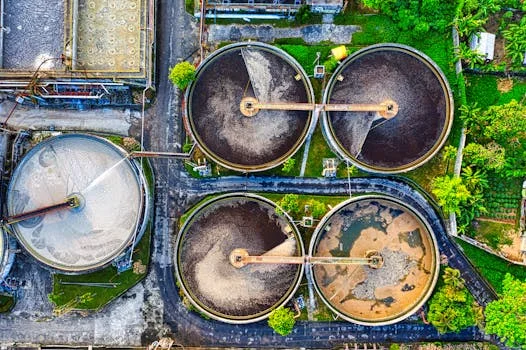
The centralized wastewater treatment model in Dong Nai follows a multi-stage engineering approach designed to handle mixed industrial waste streams. Understanding this flow allows facility managers to identify where their on-site pre-treatment ends and the centralized service begins. The process typically initiates with mechanical screening to remove large debris, followed by primary clarification.
The core of most Dong Nai IP plants involves biological treatment, specifically the Anoxic/Oxic (A/O) process or Membrane Bioreactor (MBR) technology. MBR is increasingly favored in newer zones like Loc An – Binh Son for its ability to produce high-quality effluent with a smaller footprint. Following biological degradation, secondary clarification and tertiary polishing (such as sand filtration or carbon adsorption) are employed. The final stage is disinfection, often utilizing on-site ClO₂ generators for compliant wastewater disinfection to eliminate pathogens without producing harmful trihalomethanes (THMs).
For the industrial user, the role is defined by pre-treatment. Factories producing high concentrations of fats, oils, and grease (FOG) must implement high-efficiency DAF systems for industrial wastewater pre-treatment. Without this, FOG can coat biological membranes in the centralized plant, leading to massive maintenance costs and potential legal liability for the tenant. the integration of real-time monitoring software, as seen in Amata Dong Nai, requires factories to install digital flow meters and sensors that transmit pH, COD, and TSS data to the IP’s central control room. This transparency ensures that any shock loads—sudden spikes in pollutant concentration—are traced back to the source immediately.
Key technologies currently deployed across Dong Nai’s industrial landscape include:
Equipment Solutions for Industrial Wastewater Treatment in Dong Nai
Selecting the right equipment for a facility in Dong Nai depends on the specific industrial sub-sector and the volume of wastewater produced. For most manufacturing plants, the goal is to achieve the "Connection Standard" set by the IP operator at the lowest possible operational cost. This typically involves a combination of solids removal, organic reduction, and sludge management.
Dissolved Air Flotation (DAF) units are the workhorse of pre-treatment in Dong Nai. These systems operate by injecting micro-bubbles into the wastewater, which attach to suspended solids and oils, floating them to the surface for mechanical skimming. Engineering specs for these units typically range from 4 m³/h to 300 m³/h. Data shows that how DAF units remove 92-97% of TSS and FOG in industrial wastewater makes them indispensable for meeting IP entry requirements in the food processing and textile industries.
For facilities looking to reuse water or those located in zones with limited discharge quotas, MBR technology is the standard. MBR combines biological treatment with membrane filtration (typically 0.03 to 0.1 μm pore size), effectively replacing the secondary clarifier and sand filters. This results in a 60% smaller footprint compared to conventional activated sludge systems. For sludge management, sludge dewatering solutions for industrial wastewater treatment like plate and frame filter presses are preferred for their ability to produce high-solids cake (30-45% dryness), significantly reducing the cost of hazardous waste disposal in the province.
| Equipment Type | Primary Function | Key Engineering Spec | Target Industry |
|---|---|---|---|
| DAF System | FOG & TSS Removal | 92-97% Removal Efficiency | Food, Textiles, Paper |
| MBR Integrated System | Biological/Filtration | < 1 μm filtration; 60% smaller | Electronics, Pharma, Reuse |
| Plate & Frame Press | Sludge Dewatering | 1 – 500 m² filtration area | All manufacturing |
| ClO₂ Generator | Disinfection | 0.5 - 20 kg/h ClO₂ output | Centralized WWTPs, Food |
| Auto-Dosing System | Chemical Pre-treatment | PLC-controlled, 0.1% accuracy | Chemical, Plating, Textiles |
automatic coagulant/flocculant dosing ensures that chemical usage is optimized based on real-time flow and turbidity, preventing the over-dosing that often leads to high OPEX and downstream equipment fouling.
Cost Breakdown: CAPEX, OPEX & ROI for Industrial Wastewater Treatment in Dong Nai
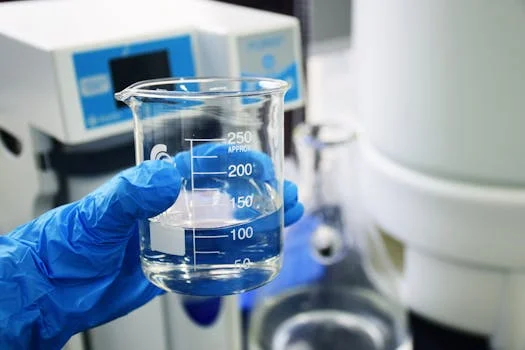
Budgeting for wastewater treatment in Dong Nai requires a dual-focus on initial Capital Expenditure (CAPEX) and ongoing Operational Expenditure (OPEX). For a facility connecting to a centralized system, the initial CAPEX might range from VND 50 million to 200 million for basic piping, flow meters, and monitoring sensors. However, if the influent is high-strength, a pre-treatment system is required, which significantly shifts the investment profile.
A standalone DAF system for a medium-sized food processing plant (treating 200 m³/day) typically requires a CAPEX of VND 1.2 to 2.5 billion. In contrast, a full MBR system for the same capacity might range from VND 4 to 8 billion. While MBR has a higher initial cost, the MBR vs. extended aeration cost comparison for industrial wastewater treatment reveals that MBR often yields a higher ROI through lower sludge disposal costs and the potential for water recycling, which saves on raw water procurement fees.
| Cost Component | Estimated % of Annual OPEX | Cost-Saving Strategy |
|---|---|---|
| Energy Consumption | 35% – 45% | VFDs on blowers/pumps; MBR optimization |
| Chemical Reagents | 20% – 30% | Automated dosing based on real-time sensors |
| Sludge Disposal | 15% – 25% | High-efficiency filter presses for drier cake |
| Maintenance & Parts | 10% – 15% | Preventative maintenance schedules |
| Labor | 5% – 10% | PLC automation and remote monitoring |
The Return on Investment (ROI) for advanced on-site treatment is primarily driven by the "Discharge Fee" charged by IP operators. Most Dong Nai IPs charge a fee based on the volume and the pollutant concentration (COD/BOD) of the wastewater. By investing in an on-site MBR or DAF system to lower these concentrations, a facility can reduce its monthly discharge bills by 40-60%. For high-volume users, the payback period for such equipment is often between 18 and 36 months.
Compliance Checklist for Industrial Facilities in Dong Nai
Ensuring compliance in Dong Nai’s industrial zones is a multi-step process involving technical documentation and physical infrastructure. Facility managers should follow this checklist to avoid the heavy fines—ranging from VND 50 million to 500 million—and potential operational suspensions mandated by the People’s Committee.
- Environmental Impact Assessment (EIA): Conduct a province-approved EIA or Environmental Protection Plan before commencing production.
- Pre-treatment Verification: Ensure on-site systems (pH adjustment, oil separators, DAF) are calibrated to meet the IP’s specific entry standards.
- Connection Permit: Obtain formal approval from the Industrial Zone Management Board (DIZA) for connection to the centralized network.
- Monitoring Installation: Install continuous monitoring equipment for flow, pH, and temperature, with data-logging capabilities compatible with provincial software.
- Periodic Sampling: Schedule quarterly wastewater analysis through a certified third-party laboratory to verify sensor accuracy and compliance with QCVN 40:2011/BTNMT.
- Sludge Management: Maintain a legal contract with a licensed hazardous waste carrier for the transport and disposal of sludge from pre-treatment units.
- Audit Readiness: Maintain ISO 14001 documentation and maintenance logs for all treatment equipment to demonstrate "due diligence" during DONRE inspections.
Implementing industrial RO systems for water reuse in Dong Nai’s industrial zones is also becoming a key compliance strategy, as reducing the total volume of discharge can lower the facility's environmental risk profile and improve its sustainability rating during government audits.
Frequently Asked Questions

What are the specific wastewater discharge standards for Amata Industrial Park?
While Amata follows QCVN 40:2011/BTNMT for final discharge, tenants are typically required to pre-treat wastewater to COD < 400-600 mg/L and TSS < 200-300 mg/L before it enters the centralized system. Always check your specific lease agreement for the "Input Standard" values.
How often does DONRE inspect industrial facilities in Dong Nai?
Routine inspections typically occur once or twice a year. However, if the centralized monitoring software detects a violation in discharge parameters, an unannounced inspection can occur within hours.
Is a DAF system or an MBR system better for pre-treatment?
It depends on the goal. Use a DAF system if your primary challenge is removing oils, fats, or heavy suspended solids. Use an MBR system if you need to significantly reduce dissolved organic matter (COD/BOD) or if you intend to reuse the treated water for cooling towers or landscaping.
What are the penalties for non-compliance in Dong Nai?
Under Decree 155/2016/ND-CP and subsequent amendments, fines range from VND 50 million for minor administrative errors to over VND 500 million for illegal discharge. Serious or repeat violations can result in a 3-to-6-month suspension of the facility’s operating license.
Can I reuse treated wastewater for production in Dong Nai?
Yes, provincial regulations encourage water recycling. However, the recycled water must meet specific technical standards for its intended use (e.g., cooling vs. cleaning), often requiring tertiary treatment like Reverse Osmosis (RO) or Ultrafiltration (UF).