Vietnam’s Sewage Treatment Gap: Capacity vs. Urban Demand
Vietnam’s municipal wastewater treatment still covers only a minority of urban sewage. As of December 2024, the Ministry of Construction reported 83 urban plants with about 2.064 million m³/day design capacity and 1.063 million m³/day actual throughput. Earlier guidance cited roughly 1.2 million m³/day and 15% coverage; the same briefing now puts treatment at 18% of urban wastewater.
Urban population reached 38.6 million people in 2023 (about 39% of the national total). World Bank (2024) projections place the urban population near 46 million by 2030. Large metro plants already in service include Hanoi’s Yen So at 270,000 m³/day and Ho Chi Minh City’s expanded Binh Hung works at 469,000 m³/day (VnExpress, August 2024). The Nhiêu Lộc–Thị Nghè plant (480,000 m³/day design) remains under construction. For engineers sizing new trains, the gap is not only hydraulic capacity—it is collection networks, peak monsoon flows, and nutrient limits that now sit under QCVN 14:2025/BTNMT.
Surface-water stress remains acute. MONRE (2023) reported that about 80% of Vietnam’s monitored surface water bodies were polluted, with E. coli in rivers such as the Nhue and Day often 10–100 times WHO guideline values. The Asian Development Bank (ADB 2022) estimated water-pollution economic losses at about $1.3 billion per year from healthcare and tourism impacts. Most plants we size for secondary cities still run toward the lower end of published CAPEX ranges because land and civil works are cheaper than imported membranes and blowers.
| Metric | 2023 Status | 2025 Projection | 2030 Target |
|---|---|---|---|
| Urban Population (Millions) | 38.6 | 41.2 | 46.0 |
| Treatment Capacity (m³/day) | ~950,000 | ~1,200,000 | ~2,500,000 |
| Coverage Rate (%) | 13% | 15% | 30% |
| Surface Water Pollution Index | High | Critical | Moderate (Targeted) |
Readers comparing national plant counts with drinking-water assets should note a separate brief on how many operating water plants in vietnam 2026; this article stays on sewage trains, effluent permits, and mechanical packages.
How Does Vietnam’s Environmental Law Affect Plant Compliance?
Vietnam’s Law on Environmental Protection (2020) and Decree 08/2022/ND-CP frame permitting, monitoring, and penalties for municipal discharges. Circular 05/2025/TT-BTNMT, issued 28 February 2025, promulgated QCVN 14:2025/BTNMT and took effect on 1 September 2025, superseding QCVN 14:2008/BTNMT for new projects. Existing plants and projects already in the EIA or license pipeline before that date may keep applying QCVN 14:2008/BTNMT until 31 December 2031; from 1 January 2032 they must meet QCVN 14:2025/BTNMT.
Under the older QCVN 14:2008/BTNMT Class A baseline used for many existing permits, BOD₅ stayed below 30 mg/L, COD below 75 mg/L, and TSS below 50 mg/L for typical domestic discharges. Earlier draft revision talk pointed toward BOD₅ < 20 mg/L, COD < 50 mg/L, TSS < 30 mg/L, NH₄⁺-N < 2 mg/L, and Total P < 1 mg/L. The promulgated QCVN 14:2025/BTNMT Table 1 for municipal flows above 20,000 m³/day (Column A) sets BOD₅ ≤ 20 mg/L, COD ≤ 50 mg/L (or TOC ≤ 25 mg/L), TSS ≤ 30 mg/L, NH₄⁺-N ≤ 4.0 mg/L as N, Total Nitrogen ≤ 20 mg/L, and Total Phosphorus ≤ 1.5 mg/L to lakes or ≤ 2.0 mg/L to rivers and coastal waters (Circular 05/2025/TT-BTNMT). Where a discharge zone is not yet mapped, Column B applies by default.
Any plant above 2,000 m³/day still needs a full EIA approved by MONRE or the provincial DONRE. Under QCVN 08:2023/BTNMT surface-water rules, plants must run continuous online monitoring for pH, dissolved oxygen, and turbidity, with weekly lab checks for BOD, COD, and TSS. Decree 45/2022/ND-CP penalties can reach 1 billion VND (~$42,000) or force a shutdown. Engineers designing for reuse should also track Vietnam’s drinking water standards and treatment methods, because downstream intakes sit closer to treated effluent outfalls each year. Nutrient polishing with chemical dosing for nitrogen and phosphorus removal is now a routine line item on large municipal bids.
| Parameter | QCVN 14:2008 (Class A) | 2025 Draft Revision | Monitoring Frequency |
|---|---|---|---|
| BOD₅ (mg/L) | < 30 | < 20 | Weekly |
| COD (mg/L) | < 75 | < 50 | Weekly |
| TSS (mg/L) | < 50 | < 30 | Weekly |
| NH₄⁺-N (mg/L) | < 5 | < 2 | Continuous (Online) |
| Total P (mg/L) | < 6 | < 1 | Monthly |
Keep the table above as the historical draft framing used in many 2024–2025 tender notes; verify final Column A/B/C and flow-band values against the promulgated QCVN 14:2025/BTNMT text before freezing process guarantees.
Municipal Wastewater Treatment Options for Vietnam’s Climate
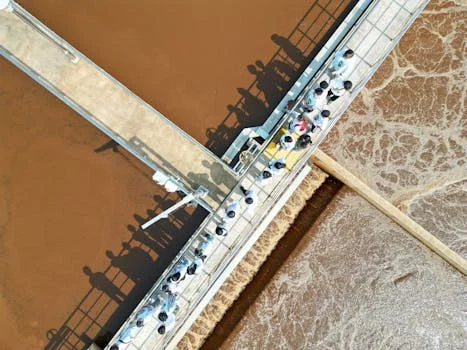
Activated sludge (AS) still equips roughly 70% of Vietnam’s municipal plants because operators know the process and civil packages are cheaper. Conventional AS CAPEX in Vietnam typically lands between $500 and $800 per m³/day of capacity, but the footprint often runs 0.5–1.0 m² per m³/day of treated capacity—hard to find in central Hanoi or Ho Chi Minh City. Without strong internal recycle and tertiary polishing, standard AS struggles on nitrogen.
Membrane bioreactor (MBR) packages are winning urban upgrades where land is scarce. CAPEX rises to $1,200–$2,000/m³/day, yet footprint drops about 50–70% to roughly 0.2–0.4 m²/m³. In southern Vietnam, ambient air often exceeds 35°C, so compact MBR systems for urban Vietnam need fouling allowances, more frequent backwash, and sometimes cooling water for blower rooms. MBR effluent BOD below 5 mg/L supports reuse trains that sell cooling water or irrigation supply.
Sequencing batch reactors (SBR) fit secondary cities such as Da Nang or Can Tho. A single tank can drive Total Nitrogen below 10 mg/L without separate clarifiers, but energy use of 0.5–0.7 kWh/m³ and automation demand are higher than simple AS. Combined sewers still carry grease spikes, so DAF systems for pre-treatment in Vietnam’s plants remain common ahead of biology. For stage-by-stage HRT checks under tropical temperatures, see the detailed breakdown of wastewater treatment stages. Parallel country guides on municipal sewage treatment plants in South Africa and municipal sewage treatment plants in Senegal help procurement teams benchmark CAPEX and climate assumptions outside ASEAN.
| Feature | Activated Sludge (AS) | Membrane Bioreactor (MBR) | Sequencing Batch Reactor (SBR) |
|---|---|---|---|
| Footprint (m²/m³) | 0.5 – 1.0 | 0.2 – 0.4 | 0.4 – 0.6 |
| Effluent Quality (BOD) | < 20 mg/L | < 5 mg/L | < 15 mg/L |
| Sludge Yield (kg TSS/kg BOD) | 0.4 – 0.6 | 0.2 – 0.3 | 0.3 – 0.5 |
| Energy Use (kWh/m³) | 0.3 – 0.45 | 0.6 – 1.0 | 0.5 – 0.7 |
| Nitrogen Removal | Moderate | High | Very High |
Cost Benchmarks: CAPEX, OPEX, and Revenue Offsets
Localized cost structure matters more than global catalogue prices. For an AS plant, civil works often take about 40% of CAPEX, mechanical equipment about 30%, and electrical/automation about 20%. On MBR jobs, membranes alone can absorb about 35% of the budget once import duty and logistics are included. Energy still sits at $0.08–$0.12 per kWh in Vietnam, so specific energy (kWh/m³) drives OPEX as hard as sludge hauling.
Sludge tipping fees of $20–$40 per ton keep climbing as landfill space tightens. Dewatering packages such as screw presses or filter presses, covered in practical detail in the sludge management solutions for Vietnam’s plants guide, can cut wet sludge volume by about 75% and shrink transport cost. Treated effluent sold for industrial cooling or irrigation at $0.20–$0.40/m³ offsets part of OPEX where reuse permits exist. International lenders still underwrite large packages—examples include World Bank support for Hanoi drainage works and ADB ODA lines for provincial collection networks.
| Cost Category | Activated Sludge (AS) | MBR System | SBR System |
|---|---|---|---|
| CAPEX ($/m³/day) | $500 – $800 | $1,200 – $2,000 | $700 – $1,000 |
| Energy OPEX ($/m³) | $0.03 – $0.05 | $0.07 – $0.12 | $0.05 – $0.08 |
| Chemical OPEX ($/m³) | $0.02 – $0.04 | $0.03 – $0.06 | $0.02 – $0.05 |
| Maintenance OPEX ($/m³) | $0.01 – $0.02 | $0.05 – $0.08 | $0.02 – $0.03 |
| Total OPEX ($/m³) | $0.08 – $0.14 | $0.18 – $0.32 | $0.12 – $0.20 |
Equipment Selection Framework for Vietnam’s Municipal Projects
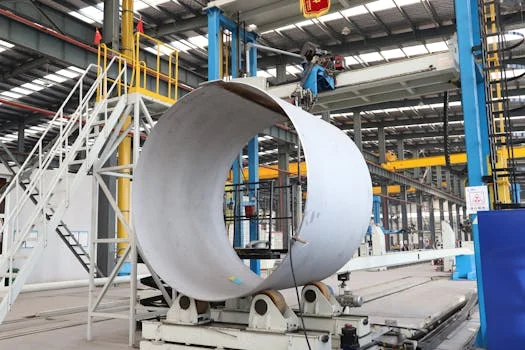
Design work for a municipal sewage plant in Vietnam follows a five-step checklist that puts climate and influent variability first. Step 1 defines influent quality: Ho Chi Minh City sewers often deliver “septic” sewage with BOD near 250 mg/L and TSS near 300 mg/L after long retention. Step 2 picks the train from the discharge point—sensitive basins need MBR or AS plus tertiary filtration. Step 3 sizes biology with tropical HRT; AS HRT of 6–12 hours at local mixed-liquor temperatures is common, with F/M held near 0.1–0.3 kg BOD/kg MLSS/day to limit bulking in heat.
Step 4 designs for monsoon hydraulics. From May to October, combined systems can spike to 2–3 times dry-weather flow. Equalization for about 150% of average flow is the rule most plants we commission actually need. Coastal humidity drives material choices toward Stainless Steel 316L or FRP. Robust mechanical bar screens protect pumps from monsoon debris. Step 5 splits local versus imported packages: local DAF and sedimentation tanks often price at $30,000–$50,000, while MBR membranes and high-speed blowers still come from Europe or Japan on 6-month lead times and longer warranties. Compact lamella clarifiers for compact plant design push surface loading toward 25 m/h and cut civil volume. District-scale or satellite catchments also shortlist the Underground Package Sewage Treatment Plant (WSZ Series) when land is fragmented and buried footprint is required.
How should engineers specify aeration equipment?
Aeration equipment for municipal plants should be specified from oxygen demand, diffuser depth, and blower turndown—not from catalogue kW alone. Most tropical AS basins we size need fine-bubble grids with turndown for night low-load, plus spare capacity for monsoon diluted BOD that still requires mixing energy. Procurement packages should separate diffuser membranes, blowers, DO control, and spare parts lead times, then lock O&M training into the supply contract so energy stays near 0.3–0.45 kWh/m³ on AS trains.
Selection checklist for Vietnamese municipal bids:
- Confirm QCVN 14:2025 Column A/B/C and flow band before fixing guarantees.
- Size equalization for monsoon peak factors of 2.0–2.5 on combined sewers.
- Choose AS, SBR, or MBR from land price, reuse targets, and TN/TP limits.
- Specify corrosion class (316L/FRP) for coastal humidity and H₂S.
- Budget sludge dewatering to 75–80% moisture before haul-off.
- Separate local civil packages from imported membranes and blowers in the schedule.
- Require online pH/DO/turbidity plus weekly BOD/COD/TSS lab data in the O&M plan.
Case Study: Hanoi’s Yen So Plant and Metro Lessons
Hanoi’s Yen So plant, rated 270,000 m³/day and completed in 2022, remains a reference for large municipal nitrogen control. The works serve about 1 million people in the southern drainage basin. Influent ammonia often sat at 40–60 mg/L NH₄⁺ from mixed domestic and suburban agricultural loads. Designers used a Modified Ludzack-Ettinger (MLE) process with internal nitrate recycle. Storm equalization of about 20,000 m³ absorbs monsoon peaks near 400,000 m³/day. Compact solids separation followed lamella clarifier design parameters rather than oversized circular clarifiers.
Reported performance stays below 10 mg/L BOD and under 10 mg/L Total Nitrogen, meeting QCVN 14:2008 permit conditions, with specific energy near 0.35 kWh/m³—about 30% below many regional peers. In Ho Chi Minh City, the Binh Hung expansion to 469,000 m³/day (Phase 2, about VND 11.3 trillion / US$453 million, inaugurated August 2024) shows how interceptor sewers and pumping, not only bioreactors, decide real coverage. Metro lesson: design for peak wet-weather flow and nutrient limits first; nameplate biology capacity alone does not close the 18% national treatment gap.
Who This Is For / Next Step
This guide is for municipal engineers, EPC contractors, and procurement teams specifying plants above roughly 2,000 m³/day under Vietnamese EIA rules. Look elsewhere if you only need industrial effluent under QCVN 40, or if you are counting potable waterworks rather than sewage trains. For a sized equipment list and climate-adjusted process sketch, send influent data and discharge Column through the project inquiry form before tender documents freeze.
Frequently Asked Questions
What is the difference between QCVN 14:2008 and QCVN 40:2011 in Vietnam?
QCVN 14:2008/BTNMT (now being replaced by QCVN 14:2025/BTNMT) regulates domestic and municipal sewage for BOD, TSS, nutrients, and bacteria. QCVN 40:2011/BTNMT is the industrial wastewater standard with tighter heavy-metal and toxic-organic limits. Municipal plants that accept industrial pre-treatment must still meet the domestic/municipal standard at final discharge, while connected industries remain under QCVN 40.
How does the monsoon season affect sewage treatment plant design in Vietnam?
Monsoon rainfall drives hydraulic surges on combined sewers. Engineers should design for peak factors of 2.0–2.5 and include equalization to protect biomass from washout. Screens and grit chambers must handle higher inorganic loads from urban runoff, and blower or mixer power should keep solids suspended even when BOD is diluted.
Is MBR technology cost-effective for municipal projects in Vietnam?
MBR is cost-effective where urban land exceeds about $1,000/m² or reuse revenue is bankable. CAPEX is roughly twice activated sludge, but land savings plus effluent BOD below 5 mg/L often improve 10-year NPV when cooling-water or irrigation sales are contracted. Secondary cities with cheap land usually stay on AS or SBR unless nutrient limits force membranes.
What are the current sludge disposal regulations in Vietnam?
Under Decree 08/2022/ND-CP, sewage sludge should be dewatered to about 75–80% moisture before transport. Sludge classified as hazardous from industrial mixing needs secure landfill or incineration and can raise disposal cost by about 300%. Always confirm local DONRE classification before locking the solids-handling train.
Which effluent standard applies to a new municipal plant permitted after September 2025?
New investment projects submitting EIA or environmental-license files after 1 September 2025 must apply QCVN 14:2025/BTNMT. Existing operating plants and earlier-approved projects may keep QCVN 14:2008/BTNMT until 31 December 2031, then switch on 1 January 2032. If the discharge zone is undefined, Column B of QCVN 14:2025/BTNMT is the default.