Drinking water treatment plant specifications in 2026 still rest on EPA Surface Water Treatment Rule credit, Stage 2 disinfection byproduct limits, Ten State Standards design criteria, and local permits. Core parameters include clarifier surface loading rates of 1.0–2.5 m/h, dual-media filter depth of 0.6–1.2 m, and disinfection CT values such as 450 mg·min/L for Giardia at 10°C with free chlorine. A 10,000 m³/day conventional plant typically needs 120–278 m² of sedimentation area, depending on SLR. Dual-media filters need about 40–42 m² at 10 m/h, while UF trains cut footprint by roughly 50% but raise capital cost about 30–40%.
Why Drinking Water Treatment Plant Specifications Drive Design
Drinking water treatment plant specifications set hydraulic loading, chemical doses, CT credit, and materials to meet turbidity, pathogen log-removal, and DBP limits under seasonal raw-water swings. Clarifier SLR of 1.0–2.5 m/h, filter rates of 5–15 m/h, and CT near 450 mg·min/L for Giardia at 10°C remain the sizing anchors.
According to US EPA Stage 2 DBPR guidance, TTHM and HAA5 MCLs remain 80 µg/L and 60 µg/L as locational running annual averages. Earlier copy sometimes framed a 2024 “lowering,” but those numerical MCLs were not newly reduced in 2024. Missing the limits still triggers public notice and corrective action. According to WHO (2023 fact sheet), at least 1.7 billion people used a faecally contaminated drinking-water source in 2022, and contaminated drinking water is estimated to cause about 505,000 diarrhoeal deaths each year.
One Midwestern U.S. municipal plant in the original project record faced repeated DBP violations from high river TOC. Specifying a 0.02-micron UF barrier ahead of chlorine cut DBP formation about 40% by removing organic precursors before disinfection. Similar upgrades now appear when PFAS, microplastics, or TOC spikes force a multi-barrier redesign.
Climate resilience belongs in the same specification package. Adjustable intake elevations, flood-proof electrical rooms, and low-pressure membranes that hold flux during high-turbidity storms are common requirements. Most plants we size for surface water also write a 15–20% specific-energy cut target (kWh/m³) through VFDs on high-lift pumps and tuned air-scour on filters.
Drinking Water Treatment Process Flow: Step-by-Step Data
The treatment sequence must cut filtered turbidity to <0.3 NTU under EPA conventional filtration credit and deliver at least 4-log virus inactivation while keeping hydraulic balance across units. Detention times and loading rates lock each stage to that effluent envelope. Early chemical control matters: PLC-controlled dosing systems for precise coagulant and pH adjustment keep flocculation and filters inside their design windows.
The standard process flow for a conventional surface-water plant uses the following stages and technical specifications:
| Process Stage | Key Engineering Specifications | Standard Design Parameters |
|---|---|---|
| 1. Screening | Bar spacing: 6–25 mm; Velocity: 0.6–1.0 m/s | Material: 304 or 316 Stainless Steel |
| 2. Rapid Mix | G-value: 700–1000 s⁻¹; Detention: 1–3 min | Coagulants: Alum (10-150 mg/L) or Ferric |
| 3. Flocculation | G-value: 20–70 s⁻¹; Detention: 20–40 min | Tapered mixing to prevent floc shear |
| 4. Sedimentation | SLR: 1.0–2.5 m/h; Sludge Depth: 1.5–2.5 m | Inclined plates use 50–80 mm spacing |
| 5. Filtration | Rate: 5–15 m/h; Media Depth: 0.6–1.2 m | Sand (ES 0.45-0.55mm) / Anthracite (ES 0.8-1.2mm) |
| 6. Disinfection | CT: 450 mg·min/L (Giardia, 10°C, Cl₂) | UV Dose: 40 mJ/cm² (4-log virus) |
When raw water stays above 100 NTU, sedimentation specs should include high-efficiency sedimentation solutions for compact plants, such as lamella clarifiers that raise effective settling area without enlarging the footprint. For low-turbidity groundwater, sedimentation can be skipped for direct filtration when TOC stays below 2.0 mg/L.
Equipment Sizing and Selection Criteria
Clarifier area follows A = Q / SLR, with A in m², Q in m³/h, and SLR in m/h. For 10,000 m³/day (417 m³/h) at 1.5 m/h SLR, required clarifier area is 278 m², usually split across two or three basins so one unit can leave service. Sludge withdrawal typically runs 1–4 times per day based on solids load, which limits septic conditions in the blanket.
Dual-media filters size on filtration rate, commonly 5–15 m/h. At 10 m/h for the same 10,000 m³/day plant, filter area is about 42 m². Media specs should keep uniformity coefficient ≤1.6 for sand and ≤1.7 for anthracite. Backwash needs 30–50 m/h plus air scour to limit mudballs.
Disinfection contact volume uses CT and baffling. On-site ClO₂ generators compliant with EPA and EU standards are sized from residual and T10. For 3-log Giardia credit at 10°C with a 5.0 mg/L free-chlorine residual, designers often hold about 90 minutes theoretical detention. Baffling factors (T10/T) of 0.5–0.7 reduce short-circuiting. UV secondary barriers commonly deliver ≥40 mJ/cm² at end of lamp life with 5–10 cm lamp spacing.
| Equipment Type | Sizing Equation | Example (10,000 m³/day) | Material Spec |
|---|---|---|---|
| Clarifier | Area = Q / SLR | 278 m² (at 1.5 m/h) | Epoxy-coated Carbon Steel / SS |
| Dual-Media Filter | Area = Q / FR | 42 m² (at 10 m/h) | Concrete / 304 SS Underdrains |
| Disinfection Tank | Vol = Q × T / BF | 938 m³ (90 min, 0.6 BF) | Baffled Concrete / PE |
| Chemical Pumps | Dose × Q / Conc. | Adjustable 10–100 L/h | PVDF / PTFE Diaphragms |
Regulatory Standards: EPA, Ten State Standards, and Local Compliance
The EPA Surface Water Treatment Rule requires at least 3-log (99.9%) Giardia lamblia removal or inactivation and 4-log (99.99%) virus credit for public systems. Ten State Standards (“Recommended Standards for Water Works”) add design detail. Conventional clarifier overflow is often capped near 1.0 m/h, while tube or plate settlers may reach about 2.0 m/h under that guidance.
International limits differ. The European Union’s Drinking Water Directive (98/83/EC) lists 48 parameters, including turbidity ≤1 NTU at the tap and 0 E. coli per 100 mL. China’s GB 5749-2022 expands regulated parameters to 97 and sets arsenic at 0.01 mg/L, aligned with WHO guidance. Plants that thicken residuals still need sludge management solutions for water treatment plants to meet backwash and solids discharge permits.
| Parameter | EPA (USA) | Ten State Standards | EU Directive |
|---|---|---|---|
| Turbidity | ≤ 0.3 NTU (95% of samples) | ≤ 1.0 NTU | ≤ 1.0 NTU |
| TTHM | ≤ 80 µg/L | N/A (Refers to EPA) | ≤ 100 µg/L |
| Lead | 0.015 mg/L (Action Level) | N/A | 0.010 mg/L |
| Filter Media | N/A | ES: 0.45-0.55mm; UC ≤ 1.6 | Varies by Member State |
How Do Upstream Discharge Limits Affect Intakes?
Upstream industrial discharge limits shape raw-water turbidity, TOC, metals, and nutrients that a drinking-water intake must treat. River plants downstream of power stations or factories should specify intake depth flexibility, rapid-mix capacity for TOC spikes, and monitoring for oil, ammonia, and thermal plumes. When upstream permits only set end-of-pipe maxima, intake water can still exceed the values a conventional train was sized for during low-flow seasons.
Procurement teams should request seasonal raw-water profiles, not a single dry-season sample. If industrial returns raise TOC above about 4 mg/L, DBP control usually needs GAC, enhanced coagulation, or membrane pretreatment before free chlorine. Intake siting and pretreatment specs are part of the same compliance package as finished-water MCLs.
Why Design Below Minimum Legal Limits?
Designers often target finished-water quality tighter than the legal minimum when reuse, blending, or future rules are likely. Meeting a discharge or MCL number at the plant outlet can look easy on paper. Distribution residence time, seasonal TOC, and chlorine demand still push TTHM and HAA5 upward. Building margin into TOC removal and CT contact volume reduces later CapEx when reuse or stricter DBP monitoring arrives.
That margin raises investment and O&M now. It is justified when the owner already plans industrial reuse, when the source is a shared river with variable upstream loads, or when regulators signal pending PFAS or lead revisions. Write the reuse or redundancy goal into the basis of design so the extra treatment is not read as optional scope creep.
Treatment Train Comparison: Conventional vs. Membrane vs. Advanced Oxidation
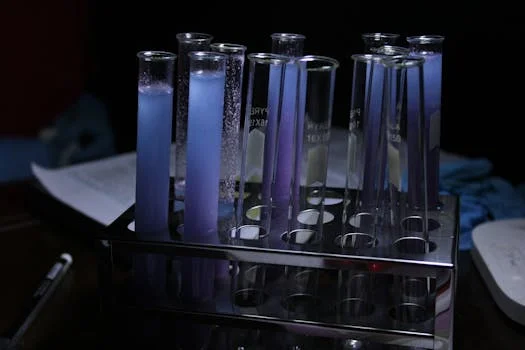
Conventional coagulation–sedimentation–filtration remains the usual choice for large municipal plants when raw turbidity stays stable and below about 50 NTU. Operating cost often lands near $0.10–$0.30 per m³, but land use can reach 1.5–2.5 m² per m³/day of capacity. Where land is tight or chemical use must drop, an Integrated Water Purification System (JY Series) packs clarification and filtration into a modular footprint for municipal and industrial duty.
UF membranes deliver a physical pathogen barrier and turbidity often <0.1 NTU. CapEx runs about 30–50% above conventional, while footprint falls toward 0.5–1.0 m²/m³/day. High-TDS industrial or desalination polishing still needs detailed RO system specifications for advanced treatment.
| Treatment Train | TOC Removal | Energy Use (kWh/m³) | CapEx ($/m³/day) | Best Use Case |
|---|---|---|---|---|
| Conventional | 30–50% | 0.05–0.15 | $1,500–$3,000 | Low-turbidity surface water |
| Membrane (UF) | 40–60% | 0.10–0.30 | $2,500–$4,500 | High-turbidity / Small footprint |
| Advanced Oxidation | 60–80% | 0.30–0.60 | $3,000–$6,000 | PFAS / Pharmaceutical removal |
Advanced oxidation with ozone plus GAC is typically specified as polishing after conventional or membrane filtration for PFAS, 1,4-dioxane, and other trace organics. Energy use of 0.3–0.6 kWh/m³ is higher, but lower chlorine demand can ease DBP formation in the distribution system.
Cost Benchmarks: Capital and O&M Costs by Plant Capacity
Technology choice and local labor dominate CapEx. A 10,000 m³/day conventional plant often sits in the $15–30 million band under U.S. or EU labor rates. A membrane plant of the same capacity commonly runs $25–45 million. Developing-region civil works may run 20–30% lower, while imported mechanical packages can offset that saving.
O&M splits differently by train. Conventional plants often spend about 40% of O&M on alum, polymer, and chlorine. Membrane plants push energy and module replacement toward about 70% of O&M. AOP is usually the costliest to run because of ozone power and GAC replacement or regeneration cycles.
| Plant Capacity (m³/day) | Conventional ($) | Membrane ($) | Advanced Oxidation ($) |
|---|---|---|---|
| 1,000 | 1.5M – 3.0M | 2.5M – 4.5M | 3.0M – 6.0M |
| 5,000 | 7.5M – 15.0M | 12.5M – 22.5M | 15.0M – 30.0M |
| 10,000 | 15.0M – 30.0M | 25.0M – 45.0M | 30.0M – 60.0M |
| 50,000 | 60.0M – 120.0M | 100.0M – 180.0M | 120.0M – 240.0M |
Raw-water swings are the silent cost driver. A TOC or turbidity spike can lift chemical spend by up to 50% within a day. Energy price moves hit membrane plants harder; a $0.05/kWh rise adds thousands per month on a 10,000 m³/day UF train.
Decision Framework: Matching Specs to Raw Water Quality
Use this selection checklist before freezing equipment data sheets:
- Characterize raw water: Run seasonal Turbidity, TOC, Alkalinity, and PFAS panels. If turbidity stays >50 NTU, specify pre-sedimentation.
- Define compliance goals: Confirm EPA SWTR credit, local PFAS limits, lead action levels, and any reuse standards.
- Select the treatment train: For TOC >4 mg/L, prioritize enhanced coagulation, GAC, or AOP for DBP control; for high microbial risk, select UF.
- Size with redundancy: Apply A = Q/SLR and filter FR equations; keep ≥20% spare filter and pump capacity.
- Lock chemical and solids handling: Jar-test alum/ferric doses and specify sludge management solutions for the resulting solids mass.
- Stress-test energy and flood cases: Check kWh/m³ at high turbidity and confirm flood elevations for electrical gear.
- Document reuse or margin goals: If future reuse is likely, write the tighter effluent targets into the basis of design now.
Who this is for: municipal engineers, EPC process leads, and procurement managers sizing surface-water or groundwater plants against EPA, Ten State, or equivalent local codes. Who should look elsewhere: teams buying only packaged residential filters, or projects that need full seawater desalination flowsheets without a municipal pretreatment core.
Next step: match your seasonal raw-water file to clarifier SLR, filter area, and CT volume, then request a specification review and equipment proposal with flow, TOC, and turbidity ranges attached.
Frequently Asked Questions
Which common specifications are prescribed for drinking water?
Key process specs include turbidity ≤0.3 NTU (EPA conventional filtration, 95% of samples), disinfection CT near 450 mg·min/L for Giardia at 10°C with free chlorine, and dual-media filtration rates of 5–15 m/h. Media depth is typically 0.6–1.2 m using sand and anthracite with effective sizes about 0.45–1.2 mm. Ten State Standards further define media uniformity used across many North American designs.
What are the Ten State Standards for water works?
The Recommended Standards for Water Works (Ten State Standards) are design guidelines from the Great Lakes–Upper Mississippi River Board. They cover clarifier overflow rates (often ≤1.0 m/h for conventional basins), chemical storage, filtration media, and safety clearances. Many U.S. states and international lenders treat them as a default engineering benchmark even when local codes differ in detail.
What seven water quality parameters drive plant design?
Most basis-of-design packages start with turbidity, pH, TDS, TOC, microbial indicators, alkalinity, and DBP formation potential (TTHM/HAA5). Turbidity and microbes size clarification and disinfection credit. TOC and alkalinity govern coagulant dose and DBP risk, while TDS flags whether RO polishing is required for industrial users.
How do I size a clarifier for a 5,000 m³/day plant?
Use A = Q / SLR with Q = 208 m³/h (5,000/24). At 1.5 m/h SLR, required area is about 139 m². Designers usually split that into two basins near 70–75 m² each so one unit can leave service without dropping plant capacity below permit flow.
What is the difference between conventional and membrane treatment?
Conventional trains use coagulation, gravity settling, and granular media, with typical O&M near $0.10–$0.30/m³ and a larger civil footprint. Membrane (UF/MF) trains add a physical barrier, often holding turbidity <0.1 NTU in a smaller footprint, at higher CapEx and energy use. Choose membranes when land is limited, microbial risk is high, or turbidity swings exceed conventional settling envelopes.