Sludge dewatering equipment in Angola typically cuts disposal cost by 40-60% when cake replaces wet haulage at $80-$150/m³ untreated versus $30-$50/m³ dewatered (World Bank 2023). Belt presses commonly deliver 90-95% solids capture at 5-30 m³/h. Centrifuges often run 10-50 m³/h with 95-98% capture.
Filter presses cover about 1-500 m² filtration area and 30-40% cake solids. Selection must track Decreto Presidencial 256/18 effluent limits and mining moisture rules under Decreto 38/03.
Sludge Dewatering Equipment in Angola: Buyer Decision Rules
Angola buyers should rank cake dryness, peak throughput, and legal moisture limits before brand preference. Mining slurries at 1,500-3,000 m³/d usually need abrasion-ready centrifuges or filter presses. Municipal plants in Luanda, Lobito, and Huambo favor continuous duty when sludge output rises about 22% per year. Landed budgets must include 10-25% import duty and 30-60 day port delay risk.
Why Angola’s Dewatering Demand Keeps Rising
Angola's dewatering equipment market is projected to expand at a 6.2% Compound Annual Growth Rate (CAGR) through 2031. Growth tracks infrastructure build-out and tighter environmental enforcement rather than brochure marketing claims.
Over $12 billion in infrastructure projects are scheduled for 2023-2027, including 1,200 km of new roads and 500 MW of power plants, as reported by the African Development Bank in 2024. Those works generate construction and industrial wastewater that must be thickened and dewatered before compliant disposal.
Mining operations in diamonds, iron ore, and copper contribute approximately 35% of overall demand for dewatering equipment. Some sites generate sludge volumes ranging from 1,500 to 3,000 m³ per day (Angola Ministry of Mineral Resources 2023). Most plants we size for remote diamond or iron ore camps start at the lower end of continuous throughput until polymer supply and scroll or cloth spares prove reliable.
Municipal wastewater plants in Luanda, Lobito, and Huambo are expanding to serve 60% of the urban population by 2027 (National Water Directorate 2024). That expansion drives an estimated 22% annual increase in municipal sludge output and pushes drying beds past their seasonal window.
Disposal economics remain the strongest buyer trigger on both mine and city projects. Untreated sludge disposal in Angola typically costs $80-$150/m³. Dewatered cake often lands at $30-$50/m³, a 40-60% saving (World Bank 2023).
Limited landfill space in coastal cities intensifies volume reduction needs. Seasonal rainfall can idle drying beds for months at a stretch. High-salinity mining sludge usually needs duplex stainless steel or equivalent corrosion-resistant metallurgy on wetted parts. Without that metallurgy, chloride attack and abrasion shorten bowl, belt, or plate life far below European reference curves.
Logistics compound the process choice. Coastal plants can schedule container deliveries with less demurrage risk than inland mines. Inland sites should hold critical spare kits on site: belts or cloths, bearings, and two to four weeks of polymer.
Power quality also matters on generator-backed mines. Centrifuges on weak grids need soft starters or VFDs so bowl acceleration does not trip generators during wet-season storms. Belt presses and filter presses tolerate voltage dips better but still need stable polymer make-down water.
How Sludge Dewatering Works: Mechanisms and Process Parameters
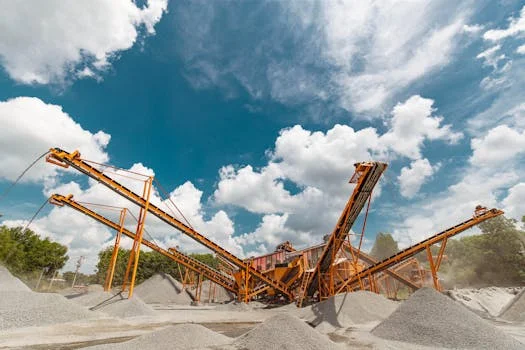
Sludge dewatering is a solid-liquid separation step that reduces moisture from typical feed ranges of 95-99% down to about 60-85%. The cut in haul weight and disposal volume is the reason plants fund the equipment. The step also simplifies handling and prepares solids for landfill, incineration, or further treatment under environmental rules (EPA 2024).
Primary separation mechanisms are gravity drainage, centrifugal force, and pressure filtration. Belt presses combine gravity drainage and mechanical pressure as sludge is squeezed between porous belts. Centrifuges use high-speed rotation to separate solids from liquids by density.
Filter presses force liquid through filter cloths while retaining a compressed cake. Each path trades energy, polymer, labor, and cake dryness differently under Angola heat and salinity.
Key process parameters set both sizing and OPEX. Solids capture typically ranges from 85-98% of feed solids recovered. Throughput is stated in m³/h. US gpd equivalents depend on feed density and should be converted only after lab density checks.
Cake dryness of 15-40% solids controls disposal volume. Polymer dosage of 2-10 kg/ton dry solids drives floc strength and filtrate clarity. Ambient temperatures of 30-35°C in Angola can weaken some polymers, so dosage trials on site matter more than brochure curves. Abrasive mining sludge needs wear-resistant construction to avoid early scroll, belt, or cloth failure.
For small-plant alternatives and compact footprints, see screw press dewatering specifications for small-scale applications. Plants chasing digested sludge dewatering 18% cake should confirm whether continuous or batch pressure machines meet that solids target under local polymer and temperature conditions. Filtrate return loads also matter: a high-capture machine that dumps fine solids back to the headworks can erase aeration savings elsewhere in the plant.
The process flow is consistent across industries:
- Sludge Conditioning: Raw sludge is mixed with chemical flocculants (e.g., polymers) to aggregate fine particles into larger, more easily separable flocs.
- Dewatering: The conditioned sludge enters the dewatering equipment (belt press, centrifuge, or filter press) where solid-liquid separation occurs.
- Cake Disposal: The dewatered solid cake is discharged for transport to landfills, incineration, or beneficial reuse.
- Filtrate Treatment: The separated liquid (filtrate) is typically returned to the main wastewater treatment plant for further processing.
| Mechanism Type | Principle of Separation | Typical Solids Capture Rate | Typical Cake Dryness |
|---|---|---|---|
| Gravity Drainage & Pressure | Mechanical squeezing & gravity filtration | 90-95% | 18-25% solids |
| Centrifugal Force | High-speed rotation, density difference | 95-98% | 20-35% solids |
| Pressure Filtration | Pressure forcing liquid through filter media | 95-99% | 30-40% solids |
Belt Press vs. Centrifuge vs. Filter Press: Technical Specs Compared
Selecting sludge dewatering technology for Angola industrial or municipal duty needs a side-by-side look at belt presses, centrifuges, and filter presses. Remote-site access, sludge variability, and disposal cost pressure change the ranking. Spec sheets alone mislead if polymer logistics and spare-parts lead time are ignored.
| Equipment Type | Throughput (m³/h) | Solids Capture (%) | Cake Dryness (%) | Energy Use (kWh/m³) | Footprint (m²) | Polymer Dosage (kg/ton) | Maintenance Frequency | Capital Cost ($) | Operating Cost ($/ton) |
|---|---|---|---|---|---|---|---|---|---|
| Belt Press | 5-30 | 90-95 | 18-25 | 0.5-1.2 (Xylem 2024) | 10-30 | 3-8 | Weekly belt tracking, monthly calibration | 80,000-250,000 | 15-40 |
| Centrifuge | 10-50 | 95-98 | 20-35 | 1.5-3.0 (Alfa Laval 2024) | 15-40 | 2-6 | Quarterly bearing, annual bowl balancing | 120,000-400,000 | 20-50 |
| Filter Press | 1-20 | 95-99 | 30-40 | 0.3-0.8 (HydropureWater 2024) | 20-80 | 4-10 | Daily cloth cleaning, annual plate replacement | 50,000-300,000 | 10-30 |
Angola-specific trade-offs dominate the shortlist. Belt presses usually need less specialized operator skill, which helps remote mines with limited staff depth. Teams evaluating belt press sludge dewatering against plate presses should weigh continuous duty and simpler supervision versus drier cake from batch filtration. Wash-water demand and belt tracking discipline decide whether a belt press stays online through night shifts.
Centrifuges handle high solids loads and fluctuating municipal feeds with continuous discharge and a compact footprint. Energy use of 1.5-3.0 kWh/m³ (Alfa Laval 2024) is the OPEX penalty for that continuity.
Filter presses, including HydropureWater’s plate and frame filter presses for Angola’s mining and municipal sludge, deliver the highest cake dryness of the three. That matters in land-scarce Luanda where every ton of water left in cake raises haul and tip fees. Batch cycle time is the trade-off. Disposal volume savings often outweigh it when landfill gate fees dominate OPEX.
Best centrifuge for municipal sludge dewatering?
Municipal wastewater centrifuges for Angola urban plants should be sized on peak wet-weather solids load, not average dry-day flow. Bowl materials must match grit and salinity. Throughput bands of 10-50 m³/h and 95-98% solids capture fit many expansion projects serving Luanda, Lobito, and Huambo.
Prefer machines with documented polymer dose of 2-6 kg/ton dry solids at 20-35% cake solids under local temperature. Write quarterly bearing checks and annual bowl balancing into the O&M plan before tender award.
Which centrifuge for secondary sludge?
Secondary sludge centrifuges need higher capture focus because waste activated sludge is finer and more bound-water rich than primary sludge. Target 95-98% solids capture. Verify cake at 20-35% solids after jar tests at 30-35°C ambient conditions common in Angola.
Scroll and bowl wear packages matter when grit carryover is high. If cake dryness above about 30% solids is mandatory for haul distance, shortlist a filter press instead of forcing a centrifuge past its economic polymer dose.
Field commissioning in Angola should include a minimum two-week performance trial at design polymer dose and at ±20% feed solids. Record cake solids, filtrate TSS, and specific energy each shift. Reject machines that only meet brochure cake dryness on dilute day-shift feed. Night-shift thickener pulls are often denser and more abrasive on mining circuits.
Operators should also lock a polymer make-down water temperature and hardness window. Soft, hot dilution water can over-activate some emulsions and waste 1-2 kg/ton dry solids. Hard borehole water can under-activate cationic products. Either failure shows up as cloudy filtrate and wetter cake, not as an obvious mechanical fault.
Angola’s Compliance Requirements for Sludge Dewatering Equipment
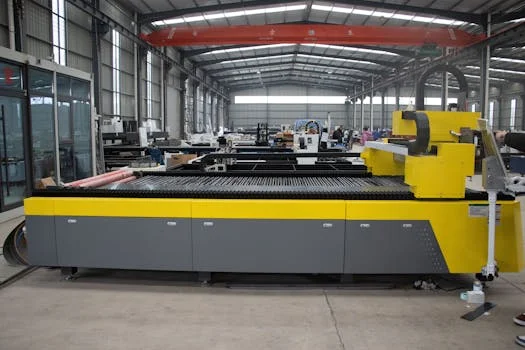
Angola environmental rules set hard limits that dewatering filtrate and cake must support. They are not optional design notes.
Decreto Presidencial 256/18, Angola’s Water Law, frames industrial discharge limits including Total Suspended Solids (TSS) below 30 mg/L, Chemical Oxygen Demand (COD) below 125 mg/L, and lead (Pb) below 0.1 mg/L (Angola Ministry of Environment 2023). Filtrate recycle quality is therefore part of machine selection, not only cake dryness.
Mining sludge disposal under Decreto 38/03 requires dewatered sludge below 60% moisture before placement in properly lined landfills. Penalties for non-compliance can reach $500,000 (Angola Ministry of Mineral Resources 2024). In 2023, a diamond mine in Lunda Norte faced a $250,000 fine after exceeding TSS limits when dewatering capacity and oversight lagged the slurry load. That case shows spare polymer stock and standby capacity are compliance controls, not luxuries.
Municipal sludge reuse follows Decreto 100/15 pathogen rules. Agricultural use typically requires less than 1,000 CFU/g fecal coliforms (National Water Directorate 2024). Dewatering alone rarely meets pathogen kill. It is a prerequisite for composting or digestion that does.
Public tenders often prefer CE marking under EU Directive 2006/42/EC and ISO 14001 environmental management credentials via the Angola Procurement Portal (2024). For city-scale context, see Luanda’s 2025 industrial wastewater treatment requirements.
Procurement documents should also state sampling frequency for cake moisture and filtrate TSS. Weekly grab samples miss campaign peaks on mines that batch thickener underflow. Daily composites during ramp-up, then weekly steady-state checks, are a practical minimum for the first operating quarter.
Cost Benchmarks for Sludge Dewatering in Angola
Capital and operating cost bands for Angola projects still track 2024 landed-equipment ranges once duty, metallurgy, and automation are fixed. Budgets that omit duty, port dwell, and training understate payback and create false comparisons between vendors.
| Cost Category | Belt Press | Centrifuge | Filter Press |
|---|---|---|---|
| Capital Cost Range (USD) | $80,000 - $250,000 | $120,000 - $400,000 | $50,000 - $300,000 |
| Operating Cost Range (USD/ton dry solids) | $15 - $40 | $20 - $50 | $10 - $30 |
Based on 2024 Angola market data including typical import duties and local assembly costs, belt press systems range from $80,000 to $250,000. Centrifuges typically fall between $120,000 and $400,000. Filter presses range from $50,000 to $300,000.
Add pumps, controls, automatic polymer dosing systems for Angola’s sludge dewatering plants, installation, and commissioning on top of skid price. Automation level and duplex metallurgy move quotes toward the top of each band.
Operating cost per ton dry solids averages $15-$40 for belt presses, $20-$50 for centrifuges, and $10-$30 for filter presses. Those bands cover polymer, energy, and labor.
For a municipal plant generating 100 m³/day of sludge and assuming about $100/m³ disposal saving after dewatering, a filter press can show roughly 2.5-year payback. A centrifuge under the same haul assumption often lands near 3.8 years. Run the model with your actual gate fee, not a generic African average.
Hidden Angola cost drivers still surprise first-time importers. Import duties of 10-25% raise landed cost. Port delays of 30-60 days create demurrage and schedule slip. Local labor training and specialized installation can add 15-20% to installation cost on complex packages.
Angola’s Fundo de Desenvolvimento Industrial (FDI) has offered 5-7 year loans at 8-10% interest for water treatment equipment, subject to local-content conditions (FDI 2024). Factor interest and content clauses into NPV, not only sticker CAPEX.
A practical bid table should separate equipment FOB, ocean freight, duty, inland haul, civil works, electrical tie-in, commissioning, and a 12-month spare kit. Collapsing those lines into one “installed” number hides which vendor is actually cheaper once Luanda port dwell is priced. Require each bidder to state lead time in calendar days to ready-for-commissioning, not ex-works ship date alone.
Supplier Decision Framework: Local vs. International Vendors
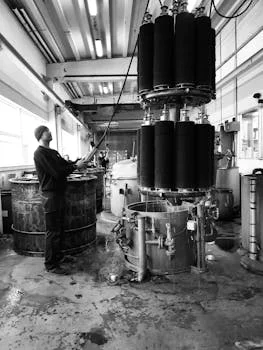
Supplier choice for Angola dewatering packages should be scored on lead time, landed cost, after-sales response, and local-content fit. Brochure horsepower is a weak proxy for uptime in Luanda or Lunda Norte. The matrix below is the decision frame most EPC and plant teams actually use in bid clarification.
| Criterion | Local Suppliers (e.g., TecnoAgua) | International Suppliers (e.g., Alfa Laval, Andritz, HydropureWater) | Hybrid Model (e.g., International with local assembly) |
|---|---|---|---|
| Lead Time | Faster (weeks to months) | Longer (months to 1 year+) | Moderate (months) |
| Cost (Equipment + Logistics) | Potentially lower (no/lower import duties) | Higher (import duties, international shipping) | Balanced (some local content, fewer duties) |
| After-Sales Support | Strong local presence, faster response | Remote support, potentially slower on-site response | Local team for routine, international for complex |
| Compliance Expertise | Strong local regulatory knowledge | Global certifications (CE, ISO), may need local adaptation | Combines global standards with local regulatory insight |
| Local Content Requirements | Meets easily | May struggle to meet without local partner | Designed to meet local content targets |
Local distributors such as TecnoAgua (a Xylem partner) can shorten delivery and service response when stock or regional parts hubs exist. Technology breadth may be narrower, and quality consistency varies by package.
International makers such as Alfa Laval, Andritz, or HydropureWater bring CE/ISO credentials often preferred in public tenders. The cost is longer ocean lead times and higher duty exposure. A European buying pattern built around an industrial equipment supplier copenhagen underweights Angola port dwell and duty unless the commercial model is rewritten for African logistics.
Hybrid models with local assembly or strong local partners balance duty, lead time, and content rules. HydropureWater plate and frame filter presses assembled in Luanda illustrate how local content can cut duty while retaining international design control.
Prefer vendors with Angola or similar-climate references in mining abrasion duty or municipal turnkey work. Cross-checks from sludge dewatering equipment in Nigeria’s mining sector or Mozambique projects help stress-test spare-parts claims before award. Ask for named references, not only regional sales maps.
Who This Is For, Selection Checklist, and Next Step
This guide is for plant engineers, EPC contractors, and procurement managers sizing dewatering for Angola mining or municipal sludge. Look elsewhere if you only need laboratory bench presses or temporary rental units without compliance cake targets. Use the checklist below before issuing an RFQ.
- Define cake solids and moisture targets against Decreto 38/03 (<60% moisture for mining landfill) and haul distance.
- State design throughput in m³/h at peak solids, not average flow only.
- Fix metallurgy for salinity and abrasion (often duplex stainless on mining duty).
- Include polymer dose range (2-10 kg/ton dry solids) and storage for 30-35°C sites.
- Price landed cost with 10-25% duty and 30-60 day port contingency.
- Require CE/ISO evidence where public tender rules demand it.
- Score after-sales response time to Luanda versus remote mine sites.
If your sludge assays and disposal contracts are ready, request a sized package and landed-cost sheet through our Angola sludge dewatering inquiry form. Engineers can then match belt press, centrifuge, or filter press options to your measured duty and compliance limits.
Frequently Asked Questions
What is the best sludge dewatering equipment for Angola’s mining sector?
For Angola mining sludge with high solids, abrasive grit, and often saline water, centrifuges or filter presses are usually preferred over open drying beds. Centrifuges support continuous high throughput while filter presses raise cake dryness to cut haul cost. Specify 2205 duplex stainless when chlorides or abrasive fines are present, and confirm capture above 95% solids on slurry samples.
How much does it cost to install a sludge dewatering system in Angola?
Installed capital cost in Angola typically ranges from about $50,000 for a small filter press to $400,000 for a large centrifuge before site extras. Add roughly 15-25% for import duties, local installation, and operator training on top of equipment price. Operating cost commonly falls between $20-$50 per ton dry solids depending on polymer, energy, and labor intensity of the chosen technology and site power tariff.
What are Angola’s environmental regulations for sludge disposal?
Angola sludge and filtrate rules center on Decreto Presidencial 256/18 for industrial discharges, including TSS below 30 mg/L and lead below 0.1 mg/L. Mining disposal under Decreto 38/03 requires less than 60% moisture before lined landfill placement. Municipal sludge aimed at agriculture must meet pathogen limits under Decreto 100/15, such as fecal coliforms below 1,000 CFU/g when reuse is intended.
Can sludge dewatering equipment be financed in Angola?
Financing is available through Angola’s Fundo de Desenvolvimento Industrial (FDI) for qualifying water treatment equipment packages. Loan tenors are typically 5-7 years with interest often quoted around 8-10%. Local-content conditions, for example about 30% local assembly or component sourcing, frequently apply and should be written into supplier scope before term sheets are signed.
What maintenance is required for sludge dewatering equipment in Angola?
Belt presses need weekly belt tracking and monthly polymer calibration to hold capture and cake dryness. Centrifuges require quarterly bearing inspection and annual bowl balancing to limit vibration and wear. Filter presses need daily cloth cleaning and periodic plate replacement on a duty-dependent cycle, often planned annually for abrasive mining cakes under continuous campaign operation.