Why Germany’s Municipal Plants Face Upgrade Pressure
Germany’s municipal sewage treatment plants operate under Directive 91/271/EEC and the Abwasserverordnung (AbwV). Earlier briefs cited 9,300+ sites; Destatis lists 8,659 public plants (≥50 PE) for 2022 (published 2024). CAPEX typically spans €50–€500/m³/day. Baseline effluent targets remain 25 mg/L BOD5, 125 mg/L COD, and 35 mg/L TSS, with tighter AbwV values in many catchments.
Public sewerage already serves about 96% of the population, according to Statistisches Bundesamt figures cited in earlier planning notes. Many assets are aging, so the backlog sits in tertiary nutrient polishing and future micropollutant stages. Directive 91/271/EEC still governs today; EUR-Lex states it will be repealed and replaced by Directive (EU) 2024/3019 as of 1 August 2027.
Influent at German municipal works typically sits at 200–400 mg/L BOD5 and 400–800 mg/L COD. TSS often ranges 200–500 mg/L. Sensitive-area permits can push Total Nitrogen (TN) toward 10 mg/L and Total Phosphorus (TP) toward 1 mg/L or lower. Berlin’s Ruhleben plant, about 240,000 m³/day, has added membrane upgrades to protect the Spree-Havel system under tightening phosphorus limits.
EU and German Rules Municipal Operators Must Meet
German municipal discharge control sits at the intersection of EU directives and AbwV Annex 1. Directive 91/271/EEC still requires secondary treatment for significant agglomerations. AbwV often sets stricter national limits than the EU floor, especially for Baltic and Rhine sensitive waters.
Day-to-day compliance still needs continuous pH, dissolved oxygen, and turbidity sensors. Weekly lab checks for BOD5, COD, TN, and TP remain standard practice on plants we support. Repeat breaches can trigger fines up to €100,000 per violation plus court-ordered upgrades.
Sludge rules tightened further after 2023. Land application of untreated sewage sludge is effectively blocked for most medium-to-large municipalities under Directive 86/278/EEC and German soil-protection law. Incineration or high-grade composting is now the default path, so dewatering cake dryness drives transport and fuel cost.
| Parameter | EU Directive 91/271/EEC | German AbwV (Annex 1) | Sensitive Area Limits |
|---|---|---|---|
| BOD5 | 25 mg/L | 20 mg/L | <15 mg/L |
| COD | 125 mg/L | 90 mg/L | <75 mg/L |
| TSS | 35 mg/L | 30 mg/L | <20 mg/L |
| Total Nitrogen (TN) | 15 mg/L (>10k PE) | 13 mg/L | <10 mg/L |
| Total Phosphorus (TP) | 2 mg/L (>10k PE) | 1 mg/L | <0.5 mg/L |
Engineering Specs for Municipal Sewage Treatment Plants: MBR, DAF, and CAS
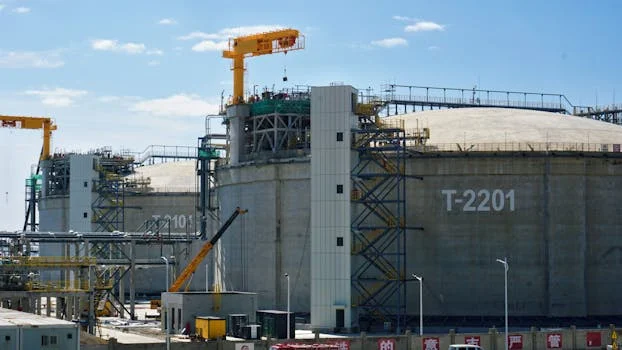
Municipal sewage treatment plants in Germany usually choose among conventional activated sludge (CAS), membrane bioreactors (MBR), and dissolved air flotation (DAF) pre-treatment. CAS still fits rural sites with land. Typical CAPEX is €50–€150/m³/day and OPEX about €0.10–€0.20/m³. Footprint runs 0.5–1.0 m²/m³/day, and effluent TSS rarely falls below 20 mg/L without tertiary sand filters.
Compact urban sites lean on MBR systems for German municipal sewage treatment. A 0.1 μm membrane train can hold effluent TSS below 1 mg/L. CAPEX rises to €200–€500/m³/day, but footprint shrinks to 0.1–0.3 m²/m³/day. Energy is higher at 0.5–0.8 kWh/m³ because of membrane scouring, yet secondary clarifiers disappear from the flow sheet.
Where food-industry FOG enters the sewer, DAF systems for pre-treatment in German municipal plants remove 90–95% of TSS and 95–99% of FOG before biology. That protects aeration grids and membranes. Engineers comparing long-term ROI should review MBR vs conventional activated sludge systems for German municipalities before locking civil layouts.
For satellite catchments under about 2,000–5,000 PE, an Underground Package Sewage Treatment Plant (WSZ Series) can cover buried secondary treatment where open tanks are hard to site. Most plants we size for FOG spikes still keep DAF upstream of any package or MBR train.
| Feature | CAS (Conventional) | MBR (Membrane) | DAF (Pre-treatment) |
|---|---|---|---|
| Effluent TSS | 20–30 mg/L | <1 mg/L | Removal: 90–95% |
| Footprint | 0.5–1.0 m²/m³/d | 0.1–0.3 m²/m³/d | 0.05–0.1 m²/m³/d |
| Energy Use | 0.3–0.6 kWh/m³ | 0.5–0.8 kWh/m³ | 0.1–0.3 kWh/m³ |
| Sludge Yield | 0.3–0.5 kg DS/m³ | 0.2–0.4 kg DS/m³ | High FOG Sludge |
| Automation | Moderate | High (PLC/SCADA) | Moderate |
Cost Benchmarks: CAPEX and OPEX for German Municipal Plants
German municipal project budgets split roughly into civil works (30–40%), mechanical and electrical gear (40–50%), and automation/SCADA (10–15%). Labor and civil rates still differ between Bavaria and Berlin. For a 10,000 m³/day works, MBR mechanical packages can reach about €2.5 million, while a comparable CAS train may need about €1 million (HydropureWater field data, 2025).
Energy and sludge disposal dominate OPEX. Volatile municipal power prices make efficient aeration and automatic chemical dosing systems first-order controls. Incineration fees of €150–€300 per ton DS are common, so sludge dewatering equipment for German municipal plants that lifts cake dryness from 20% to 35% can cut disposal cost by over 40%.
| Cost Category | Estimated Unit Cost (2025) | % of Total Budget |
|---|---|---|
| Civil Works | €20–€50 / m³/day | 35% |
| MBR Mechanicals | €150–€300 / m³/day | 45% |
| Automation (PLC) | €10–€30 / m³/day | 10% |
| Energy (OPEX) | €0.08–€0.25 / m³ | Variable |
| Sludge Disposal | €0.15–€0.30 / kg DS | Variable |
How Should Municipalities Specify Aeration Equipment?
Municipal aeration packages should be sized on peak oxygen demand, not average dry-weather flow alone. Fine-bubble diffusers with VFD blowers usually keep CAS energy in the 0.3–0.6 kWh/m³ band when DO setpoints stay near 1.5–2.0 mg/L. Procurement specs need turndown ratio, alpha-factor assumptions, spare diffuser modules, and SCADA hooks for online DO and ammonia.
Maintenance clauses matter as much as nameplate efficiency. Ask for diffuser cleaning intervals, blower acoustic data, and spare parts lead times inside Germany. Plants that skip turndown often over-aerate at night and burn the OPEX budget before year two.
Equipment Selection Checklist for German Municipalities
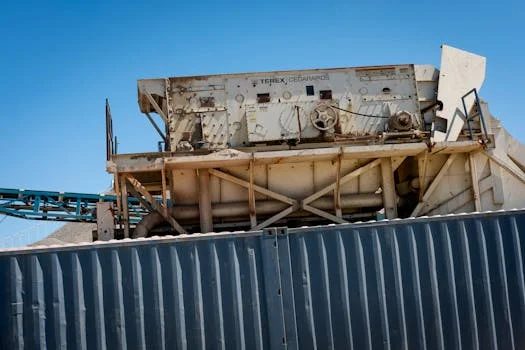
Procurement teams should lock AbwV limits into every datasheet before bid comparison. Primary treatment starts with rotary mechanical bar screens at 3–6 mm spacing to protect pumps and membranes. Grit chambers need 2–5 minutes detention for inorganic solids.
Reuse goals change the tertiary train. Irrigation or process-water reuse usually needs multi-media filters or MBR permeate quality. For disinfection, chlorine dioxide generators can deliver a 99.9% pathogen kill rate without classic chlorination byproducts.
- Primary: Mechanical bar screens (GX series), grit collectors, DAF for FOG removal.
- Secondary: MBR modules (0.1 μm PVDF) or fine-bubble diffusers for CAS aeration.
- Sludge: Plate-frame filter presses (90%+ DS) or decanter centrifuges.
- Tertiary: Multi-media filtration, UV disinfection, or chlorine dioxide.
- Automation: SCADA integration, online TN/TP analyzers, and VFD-controlled blowers.
- Compact sites: Buried package biology where open tanks fail planning review.
- Vendor proof: CE marking plus German commissioning support.
When shortlisting vendors, engineers should compare top sewage treatment equipment suppliers in Germany on CE documentation, spare-parts stock, and local start-up crews—not brochure claims alone.
What do disinfection upgrades typically cost?
Disinfection CAPEX for German municipal plants is driven by peak flow, contact time, and byproduct limits rather than a single unit price. Chlorine dioxide skids, UV channels, and hypochlorite systems diverge mainly on power, chemical logistics, and residual control. Plants targeting reuse often pair MBR or multi-media filtrate with UV or ClO2; street-cleaning reuse rarely needs the same dose as unrestricted irrigation.
Budget the OPEX line items early: power for UV lamps, precursor chemicals for ClO2, and analyzer calibration. Most plants we commission spend more over ten years on reagents and lamp replacement than on the skid itself.
Decision Framework: Choosing the Right German Municipal System
German municipal process selection starts with influent chemistry. If FOG exceeds 100 mg/L, add DAF before biology. Next, fix the permit: Baltic-sensitive discharges aiming for TP below 0.5 mg/L usually favor MBR plus chemical phosphorus trim.
Footprint is the third gate. Urban sites without expansion land typically need MBR’s roughly 70% footprint cut versus CAS. Then run CAPEX against OPEX: higher MBR spend can pay back where sludge fees and reuse credits are high. Finally, keep modules expandable so PE growth does not force a full rebuild.
Smaller agglomerations or constrained plots can also evaluate a buried Underground Package Sewage Treatment Plant (WSZ Series) as the secondary core, with DAF or screens upstream as needed.
| Criteria | CAS | MBR | DAF + CAS |
|---|---|---|---|
| Land Availability | High Required | Minimal | Moderate |
| Effluent Quality | Standard | Ultra-High | Standard+ |
| Operational Complexity | Low | High | Moderate |
| Industrial Load | Poor Tolerance | Moderate | High Tolerance |
| Scalability | Difficult | Modular/Easy | Moderate |
Who this is for: municipal utilities, EPC contractors, and procurement teams sizing German upgrades under AbwV and the forthcoming Directive (EU) 2024/3019 timeline. Who should look elsewhere: buyers needing only industrial pretreatment without municipal permit constraints. Next step: send influent data, PE load, and discharge limits via our request a municipal treatment quote form so engineers can return a process shortlist with footprint and cost bands.
Frequently Asked Questions
What is the average cost of a municipal sewage treatment plant in Germany?
CAPEX ranges from €50–€500/m³/day depending on technology. For a 10,000 m³/day plant, municipalities should budget €500,000 to €5,000,000 for mechanical equipment, excluding land and civil works. CAS sits toward the low end; MBR packages fill the upper band when footprint or reuse quality forces membranes.
What are the effluent limits for German municipal plants?
Under the Abwasserverordnung (AbwV), limits are generally 20 mg/L BOD5, 90 mg/L COD, and 1 mg/L Total Phosphorus for many sensitive-area plants. Larger works above 10,000 PE often face nitrogen limits near 13 mg/L. Local water-authority permits can tighten further below those national figures.
How much energy does an MBR system use in Germany?
MBR systems typically consume 0.5–0.8 kWh/m³ under municipal loading. That exceeds CAS at 0.3–0.6 kWh/m³ because of membrane scour air. Biogas from anaerobic digestion of waste sludge can offset part of the power bill when digesters are already on site.
What sludge disposal options are available in Germany?
Since 2023, land application is restricted for most medium-to-large municipalities. Primary options include incineration at €150–€300/ton DS, composting, or co-processing dewatered sludge in cement kilns. Raising cake dryness with a plate-frame press remains the fastest way to cut those disposal invoices on a €/ton basis.
Can German municipalities reuse treated wastewater?
Yes. MBR permeate followed by UV or chlorine dioxide supports reuse for municipal irrigation, street cleaning, or industrial cooling. Utilities should match disinfection dose and online monitoring to the reuse class required by the receiving authority before the tender is issued.