WWTP cost in Munich for municipal systems typically runs from about €5M at 5,000 PE to €500M+ for large industrial plants with advanced nutrient removal. Capital costs average €1,200–€2,500 per PE for municipal plants, while OPEX adds €0.20–€0.45/m³ treated under Munich discharge rules. Bavarian Isar River limits and disinfection requirements raise CAPEX about 15–25% versus typical German averages.
WWTP cost in Munich: ranges buyers use for budgeting
Municipal WWTP cost in Munich sits near €1,200–€2,500 per PE CAPEX and €0.20–€0.45/m³ OPEX for plants sized about 5,000–500,000 PE. Industrial plants often reach €2,500–€6,000 per PE and €0.50–€1.20/m³ because pretreatment and tighter pollutant limits apply. Isar River discharge usually needs disinfection plus phosphorus control, which adds roughly 15–25% CAPEX versus federal minimum builds.
Most plants we size for Munich industrial sites run at the lower end of the industrial CAPEX band when FOG and solids loads are moderate and land allows conventional tanks. Compact MBR or underground layouts enter when plot prices push civil works beyond equipment premiums.
Why Munich’s WWTP Costs Differ from Germany’s National Averages
Bavarian state rules add about 8–12% CAPEX for wastewater plants versus federal minimums, mainly from tighter discharge standards. Discharges to the Isar River inside Munich’s jurisdiction need mandatory disinfection and stricter phosphorus limits than many other German states (HydropureWater field data, 2025). That stack pushes owners toward tertiary steps earlier in design.
Skilled WWTP operators in Munich often command €55–€70/hour against a national band near €45–€55/hour, which can lift OPEX by 10–15% per year on larger facilities. Industrial land in zones such as Perlach and Riem commonly costs €800–€1,200/m², so about 60% of new projects weigh compact Membrane Bioreactors (MBR) or underground systems. Those layouts can add 20–30% to equipment cost while cutting land take.
Permitting in Munich averages 18–24 months, longer than the 12–15 months often seen in rural Bavaria. Industrial delays can cost €50K–€200K per month in lost production or penalties. Water Protection Zones also raise civil cost through leak detection and redundant containment for groundwater protection.
| Cost Driver | Munich Specifics (2025) | Impact on WWTP Costs |
|---|---|---|
| Bavarian Regulations | Stricter P-limits, mandatory disinfection for Isar discharge | +8–12% CAPEX vs. federal minimums |
| Skilled Labor Costs | €55–€70/hour for operators | +10–15% OPEX vs. national average |
| Land Acquisition | €800–€1,200/m² (industrial zones) | Drives 60% of projects to compact designs (+20–30% equipment CAPEX) |
| Permitting Timelines | 18–24 months average | Delays cost €50K–€200K/month (industrial) |
| Water Protection Zones | Mandatory leak detection, redundant containment | Increased civil engineering costs |
Municipal vs. Industrial WWTP Costs in Munich: A Side-by-Side Comparison
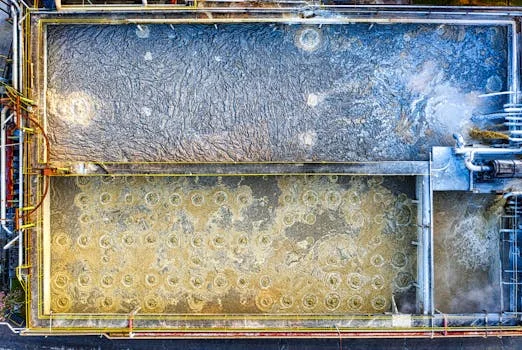
Municipal wastewater treatment plant costs in Munich for 5,000–500,000 Population Equivalents (PE) typically show CAPEX of €1,200–€2,500 per PE and OPEX near €0.20–€0.45 per cubic meter treated. Those ranges align with a TUM study’s €5.85 billion 30-year upgrade estimate and cover primary and secondary treatment, disinfection, and sludge handling. Industrial WWTPs for breweries, pharmaceutical sites, or food plants often need €2,500–€6,000 per PE CAPEX and €0.50–€1.20/m³ OPEX for specialized pretreatment.
Industrial pretreatment with DAF systems for FOG removal or chemical dosing for metals can add 30–50% to capital cost. Disinfection packages such as on-site ClO₂ generators or UV units often add €150K–€500K. Phosphorus removal by chemical dosing or biological P commonly needs €200K–€800K. Microplastic filtration as a tertiary add-on can add another €100K–€300K.
Municipal plants often offset 20–40% of OPEX through biogas cogeneration after an initial €1.2M–€3M investment. Many industrial plants lack enough organic load for energy neutrality. Where land is scarce, compact underground WWTP systems remain a practical plot option.
| Cost Category | 10,000-PE Municipal WWTP (Munich) | 5,000-PE Industrial WWTP (Munich) |
|---|---|---|
| CAPEX (Total) | €12M – €25M | €12.5M – €30M |
| Civil Works | €4M – €8M | €5M – €12M |
| Mechanical Equipment | €6M – €12M | €6M – €15M |
| Electrical & Automation | €1.5M – €3M | €1.2M – €2.5M |
| Permitting & Engineering | €0.5M – €1M | €0.3M – €0.5M |
| Disinfection System (ClO₂ or UV) | €150K – €500K | €150K – €500K |
| Phosphorus Removal | €200K – €800K | €200K – €800K |
| Microplastic Filtration | €100K – €300K | €100K – €300K |
| Industrial Pretreatment (e.g., DAF) | N/A | €100K – €500K |
| OPEX (per m³ treated) | €0.20 – €0.45 | €0.50 – €1.20 |
What is a water treatment plant cost breakdown?
A water treatment plant cost breakdown splits total CAPEX into civil works, mechanical equipment, electrical and automation, soft costs, and compliance add-ons, then layers OPEX per cubic meter treated. In Munich, basic primary plus secondary treatment typically costs €800–€1,500 per PE CAPEX and €0.15–€0.30/m³ OPEX. That level may meet EU Directive 91/271/EEC minima yet still miss Isar River local limits.
Advanced tertiary filtration and disinfection for Isar discharge usually needs €1,500–€2,500 per PE CAPEX and €0.30–€0.55/m³ OPEX. Target discharge values often include TSS below 10 mg/L, BOD below 5 mg/L, and phosphorus below 0.5 mg/L. To place Munich against another EU market, compare how Italy’s WWTP costs compare to Munich’s regulatory environment.
Industrial pretreatment raises CAPEX another 30–50% versus municipal baselines. Typical packages include DAF systems at €100K–€500K, chemical dosing at €50K–€200K, and equalization tanks at €80K–€300K. Sludge dewatering with filter presses or centrifuges costs about €200–€500 per ton, while disposal adds €150–€300 per ton under Bavarian waste rules.
Munich’s emerging fourth treatment stage for microplastics, seen in upgrade work such as Gut Marienhof WWTP, adds about 5–10% CAPEX on new plants. Upstream solids control with high-efficiency sedimentation tanks often reduces tertiary load before polishing steps.
| Treatment Level | CAPEX per PE (Range) | OPEX per m³ (Range) | Key Compliance Achieved |
|---|---|---|---|
| Basic (Primary + Secondary) | €800–€1,500 | €0.15–€0.30 | EU Directive 91/271/EEC minimums |
| Advanced (Tertiary + Disinfection) | €1,500–€2,500 | €0.30–€0.55 | Munich Isar River discharge limits (TSS <10 mg/L, BOD <5 mg/L, P <0.5 mg/L) |
| Industrial Pretreatment (Add-on) | +30–50% to CAPEX | Varies (chemical/energy) | Municipal sewer standards, specific industrial pollutants (e.g., FOG, heavy metals) |
| 4th Treatment Stage (Microplastics) | +5–10% to CAPEX | Minimal additional OPEX | Emerging pollutant removal, future-proofing |
What does an IPA Level 0 cost breakdown cover?
An IPA Level 0 cost breakdown is an order-of-magnitude estimate used before detailed design, usually with wide accuracy bands and percentage splits of total CAPEX. For Munich budgeting, Level 0 work maps the same buckets shown above: civil, mechanical, electrical, permitting, disinfection, phosphorus removal, and pretreatment. Owners use it to test plot strategy and compliance scope before locking equipment lists.
On a 10,000-PE municipal case, Level 0 often starts from the €12M–€25M total CAPEX band, then allocates roughly €4M–€8M civil and €6M–€12M mechanical before soft costs. Industrial 5,000-PE cases commonly open at €12.5M–€30M total, with civil €5M–€12M and mechanical €6M–€15M when pretreatment is heavy. The estimate should flag Munich multipliers early: Bavarian P-limits, Isar disinfection, land premiums, and 18–24 month permitting.
Treat Level 0 as a gate, not a bid. Once flows, loads, and discharge points firm up, move to Class 3/2 estimates with vendor quotes. Skipping that step is how compact-technology premiums of 20–30% get missed until land contracts are already signed.
Munich-Specific Cost Drivers: Land, Labor, and Permitting
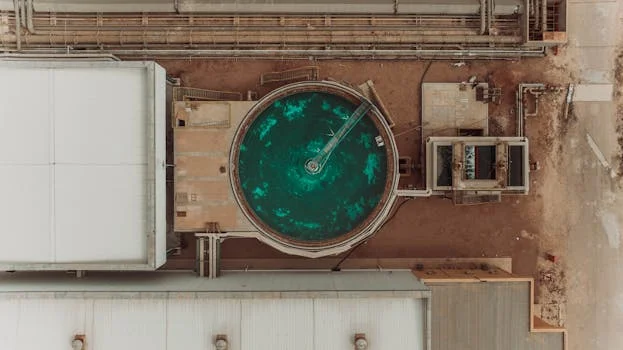
Land prices remain a first-order budget driver for WWTP projects in Munich. Industrial zones such as Perlach or Riem often sit at €800–€1,200/m², while mixed-use areas like Schwabing can reach €1,500–€2,500/m². Compact options such as underground package sewage treatment plants (WSZ series) can cut footprint by 40–60% while raising CAPEX about 20–30% through specialized construction.
Labor pressure shows up in OPEX. Skilled operators at €55–€70/hour in Munich versus €45–€55 nationally can add €300K–€800K per year for plants above 10,000 PE that need 24/7 staffing. Permitting packages for environmental impact work, hearings, and LfU discharge permits commonly run €100K–€500K. Industrial cases with PFAS or metals face heavier testing and mitigation scopes.
Utility tie-ins also matter: sewer connections €50–€150/m, water supply €200–€400/m, and power upgrades €100–€300/m. Plants above 50,000 PE often need redundant electrical feeds. Green City incentives for biogas and solar can improve life-cycle cost, but they raise upfront renewable integration spend.
Selection checklist before freezing CAPEX
- Confirm receiving water and whether Isar disinfection plus P <0.5 mg/L apply.
- Size PE and peak wet-weather flow with Munich storm factors included.
- Price land versus compact or underground layouts at 20–30% equipment premium.
- Separate industrial pretreatment (DAF, metals, FOG) from municipal biological trains.
- Budget 18–24 months for permits and €50K–€200K/month delay exposure if production depends on discharge.
- Include sludge dewatering at €200–€500/t and disposal at €150–€300/t.
- Model energy recovery only where organic load supports biogas investment of €1.2M–€3M.
ROI Calculator: How to Justify Your WWTP Investment in Munich
Municipal WWTP investments in Munich typically show CAPEX payback of 8–12 years through sewer fees. Industrial plants often recover in 5–8 years via avoided discharge fees and water reuse. For unit-cost context outside Europe, see Wastewater Treatment Cost Per Gallon.
Energy-efficient trains such as MBR membrane bioreactor systems can cut electricity use 25–40% versus conventional activated sludge at Munich power rates of €0.08–€0.12/kWh. Industrial reuse of 30–70% of treated effluent for cooling or process water can save €1.50–€3.00/m³ against local freshwater tariffs. Biogas cogeneration can yield €0.15–€0.30/kWh, with excess power valued near €0.12/kWh under Germany’s EEG feed-in framework.
Financial models should compare municipal bonds, EU cohesion support for plants above 50,000 PE, and PPP structures for industrial assets. Advanced polishing with reverse osmosis (RO) for water purification belongs in the reuse case only when conductivity or solids limits justify the OPEX. A Munich-multiplier spreadsheet for CAPEX, OPEX, payback, and NPV remains the practical way to stress-test those cases before board review.
| ROI Metric | Municipal WWTP (Typical) | Industrial WWTP (Typical) | Key Drivers |
|---|---|---|---|
| CAPEX Payback Period | 8–12 years | 5–8 years | Sewer fees, avoided discharge fees, water reuse |
| OPEX Savings (Energy) | 20–40% reduction | 25–40% reduction | Energy-efficient systems (e.g., MBR), Munich electricity rates (€0.08–€0.12/kWh) |
| Water Reuse ROI | Limited | €1.50–€3.00/m³ freshwater cost savings | Reduction in freshwater consumption, Munich industrial water rates |
| Sludge Valorization (Biogas) | €0.15–€0.30/kWh generated | Limited (due to lower organic load) | EEG feed-in tariff (€0.12/kWh for excess electricity) |
| Downloadable Tool | Excel template with Munich-specific multipliers for CAPEX, OPEX, payback, NPV. | Streamlined budget justification and financial modeling. | |
Who this is for and next step
This guide fits municipal planners, EPC cost leads, and industrial EHS teams budgeting Munich or greater Bavaria plants that must meet Isar-class discharge limits. Teams seeking only low-compliance rural builds with federal minimum treatment should look at lower-cost German regions instead. If you need a scoped equipment list against the CAPEX bands above, send your flow, load, and discharge data through our WWTP project inquiry form.
Frequently Asked Questions
What is the average cost per PE for a municipal WWTP in Munich?
A municipal WWTP in Munich typically costs €1,200–€2,500 per PE in CAPEX and €0.20–€0.45/m³ in OPEX for plants covering primary, secondary, disinfection, and sludge handling. Those bands match the planning ranges used with TUM’s long-horizon upgrade estimate and Munich sewer-fee recovery models. Industrial units usually sit higher once pretreatment for FOG or metals enters the design.
How do Munich’s WWTP costs compare to Berlin or Hamburg?
Munich WWTP costs are generally 10–15% higher than Berlin, largely because Munich land is dearer than many capital-area industrial plots. Costs are often 5–10% lower than Hamburg, where marine discharge rules can force extra polishing. Cross-market unit costs still need local PE, land, and permit adjustments, as shown when comparing how Mexico’s industrial WWTP costs differ from Munich’s high-compliance environment.
What are the penalties for non-compliance with Munich’s WWTP regulations?
Non-compliance can trigger fines up to €100K per violation plus mandatory facility upgrades under the Bavarian Water Act §45 framework cited for Munich projects. Beyond cash penalties, industrial sites risk production holds while corrective works proceed. Early permit scoping for disinfection, phosphorus, and protection-zone containment usually costs less than late redesign.
Can industrial plants in Munich discharge directly to the Isar River?
No. Industrial plants in Munich cannot discharge untreated or partially treated effluent directly to the Isar River. Effluent must first meet municipal sewer acceptance standards before release to the public sewer, consistent with Munich’s industrial discharge rules. Direct river discharge pathways remain a municipal WWTP function after full treatment and disinfection.
What financing options are available for WWTP projects in Munich?
Common options include municipal bonds at about 1.5–2.5% interest, EU cohesion funds for plants exceeding 50,000 PE, and public-private partnerships for industrial assets. Pair financing choice with ROI drivers such as 8–12 year municipal payback or 5–8 year industrial recovery through reuse and avoided fees. Energy incentives for biogas or solar change NPV more than they change the base civil estimate.