Start with the discharge route and treatment objective
For a hotel in Lithuania, select among a municipal sewer connection, a buried A/O package plant and an MBR system by confirming where the wastewater can legally go and the required effluent quality. A verified sewer connection with available capacity generally makes on-site treatment unnecessary; otherwise, compare the biological and solids-removal scope of a buried A/O unit with the tighter solids separation and reuse potential of an MBR. Capacity alone is not discharge approval.
The decision should not be based on a nominal “litres per day” figure. Obtain the sewer connection confirmation, receiving-water or reuse requirements, and the hotel’s average and peak flow before selecting equipment. A comparable decision sequence for sewer, A/O and MBR options for a hotel illustrates why the discharge route comes first.
Three routes are normally feasible:
- Municipal sewer: the wastewater is conveyed to the public network for treatment. This is the preferred route only after the relevant Lithuanian operator confirms connection availability, capacity and applicable conditions.
- Buried A/O package plant: a decentralised biological route combining anoxic and aerobic biological contact oxidation, sedimentation and disinfection in an installed unit.
- MBR: a decentralised biological route with submerged membrane filtration, relevant where the process objective requires tighter solids separation or a defined effluent-reuse application.
Neither an equipment quotation nor a treatment-capacity calculation establishes permission to discharge. The approving authority, receiving route and site-specific conditions must be established separately.
Match the hotel wastewater profile to the process
Room, laundry and kitchen wastewater loads and treatment implications differ, so measure these streams separately where practical. Request average and peak daily flow, full-occupancy flow, COD, BOD5, suspended solids, fats and oils, and the proportions of room, laundry and kitchen wastewater.
The ClearFox hotel case identifies increased COD and BOD5 in the hotel sewage and suspended fats and oils in kitchen wastewater. It also reports seasonal fluctuations, particularly higher summer wastewater production caused by higher guest numbers. That precedent supports quoting both average and peak duty rather than applying an annual average to every part of the system.
| Discharge route or influent problem | Governing rule or process option | What data settles it |
|---|---|---|
| Municipal sewer connection | Use the public network only when connection, capacity and applicable conditions are verified. | Written confirmation from the sewer operator; location, connection point, capacity and any commercial or technical conditions. |
| Buried A/O package plant | Compare an anoxic and aerobic biological contact-oxidation route with sedimentation and disinfection for the required effluent objective. | Average and peak flow, COD, BOD5, suspended solids, treatment stages, receiving route and required effluent quality. |
| MBR system | Use membrane filtration where the selected route requires tighter solids separation or effluent reuse. | Permitted reuse application, filtrate-quality requirement, membrane cleaning method, operating controls and residual-sludge route. |
| Kitchen wastewater | Provide kitchen grease interception and assess pretreatment where grease could impair biological treatment or downstream solids separation. | Separate kitchen-flow estimate, fats and oils analysis, grease load, cleaning frequency and equipment discharge destination. |
| Seasonal wastewater loading | Size hydraulic and biological capacity from full-occupancy conditions, not annual averages alone. | Occupancy schedule, monitored flow series, peak-period load data and the required treatment response during high occupancy. |
A buried A/O package sewage treatment plant may suit an installation where a self-contained biological route is appropriate. An integrated MBR wastewater treatment system should be selected only where membrane filtration is justified by the discharge or reuse requirement.
Compare the three treatment routes
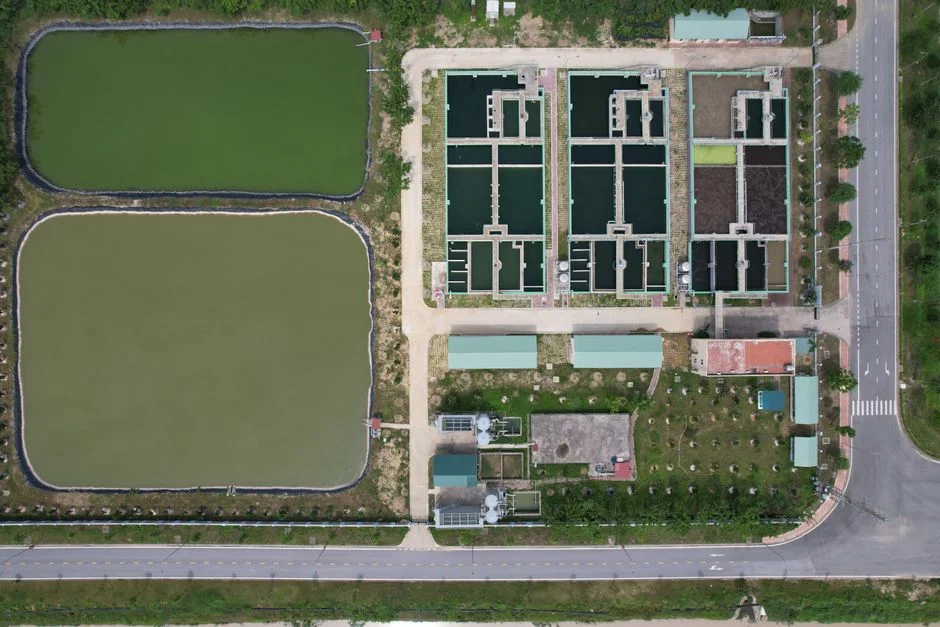
The sewer route is the priority when a usable public connection is confirmed; the on-site route should be compared only after that option has been closed out. The decisive evidence for decentralized wastewater treatment is the flow and load profile, the required solids separation and the legally available discharge or reuse route.
- Confirm the sewer route. Request written evidence of connection availability, network capacity at the connection point and applicable discharge conditions. The supplied information does not establish connection availability at any particular Lithuanian hotel.
- Screen the incoming wastewater. Assess kitchen fats and oils separately. Where the kitchen stream could overload biological treatment, include grease interception and determine whether additional clarification is required.
- Select biological treatment. Use the mechanical bar-screen option where wastewater screening is needed at the inlet, but do not assume that screening removes dissolved organic load or grease.
- Select solids separation. Evaluate a DAF machine as a project-specific pretreatment or solids-separation addition when the wastewater analysis and process route justify it.
- Match MBR only to a defined need. Membrane filtration adds process specificity, but the buyer still needs membrane-integrity and cleaning criteria, filtrate-quality acceptance tests and a maintenance plan.
If the hotel is uncertain about reuse or direct discharge, obtain the receiving-water conditions and the intended reuse application before issuing a technical RFQ.
Plan sludge, disinfection and maintenance obligations
Sludge and disinfection must be included in the procurement scope because neither disappears with the treated effluent. Require the bidder to identify biological-sludge production, storage, inspection, removal, dewatering and authorised disposal, together with the disinfection method and monitoring duties.
The ClearFox hotel precedent describes regular inspections, emptying of secondary sludge and connection checks as operating requirements. A Vilnius Gediminas Technical University study also identifies treatment and recycling of sludge waste as an active Lithuanian research focus, which supports treating sludge as a managed residual rather than an incidental by-product.
Specify the disinfection method, dose or dose-control arrangement, monitoring points and applicable receiving-water conditions before comparing package alternatives. Where additional clarification is required, evaluate the sedimentation tank as a project-specific addition. Include sludge-dewatering equipment, such as a plate-and-frame filter press, only where the sludge quantity, moisture target and removal schedule justify it.
Chemical dosing should be defined rather than implied. Request the automatic chemical dosing arrangement as a quotation line where disinfection or other chemical treatment requires it, including chemical type, storage, duty, controls and operator responsibilities.
Build an RFQ and pre-signature acceptance checklist
A quote becomes comparable only when every bidder defines the same design basis, process scope and acceptance evidence. Require each bidder to state design flow, average daily load, peak factor, process route, treatment stages, sludge handling, power demand, controls, installation boundaries, commissioning tests and exclusions.
| Quote line item | Technical scope to specify | Red flags to check before signing |
|---|---|---|
| Design basis | Average and peak daily flow, occupancy condition, peak factor, influent COD, BOD5, suspended solids, fats and oils, and separate kitchen, laundry and room flows. | Quotation based only on room count, annual occupancy or a single daily average; no sampling basis or excluded loads. |
| Process route | State biological stages, solids separation, filtration, disinfection and every project-specific pretreatment item. | Equipment named without a process-flow description, or advanced separation offered without a stated effluent or reuse requirement. |
| Installation boundary | Define excavation, foundations, piping, connections, electrical supply, controls, access, noise control and commissioning responsibilities. | Civil works, electrical works, consumables or specialist installation are left as undefined exclusions. |
| Sludge handling | Identify sludge generation, storage, inspection, removal, dewatering, transport and authorised disposal. | No recurring removal service, storage provision or responsibility for disposal. |
| Commissioning and acceptance | Define influent sampling, effluent tests, odour and visible-emissions checks, sludge removal, equipment startup, automatic controls and alarms. | Unspecified “performance guarantee” with no test method, operating condition, sample point or acceptance criterion. |
| MBR-specific acceptance | Where MBR is selected, define membrane integrity, filtrate quality, cleaning cycles, replacement provisions and operating documentation. | No membrane maintenance schedule, no integrity test, or performance demonstrated only without the membrane system operating. |
Ask the bidder how the proposed system handles mixed room, laundry and kitchen inflows, summer occupancy peaks and secondary-sludge separation after installation and commissioning. The comparison of packaged A/O and MBR systems for hotels provides a useful technical reference, but acceptance terms must still be written for the Lithuanian site.
Before signature, attach the design-flow calculation, wastewater analyses, sewer confirmation or discharge documentation, process-flow diagram, electrical and control scope, commissioning protocol, sludge plan, maintenance schedule, training scope, spare-parts list and documented acceptance procedure to the contract.
Further Reading
Frequently Asked Questions
How much does a hotel sewage treatment plant in Lithuania cost?
There is no defensible price from the information available for this project. Request itemised quotations on the same basis: design flow, average and peak loads, process route, treatment stages, civil and electrical works, installation, controls, sludge removal, commissioning, maintenance and disposal. Compare the recurring operating and sludge-handling obligations separately from the initial capital price.
How should the plant be sized?
Do not size it from occupancy alone. Provide average daily flow, peak flow at full occupancy, the seasonal load pattern, COD, BOD5, suspended solids, fats and oils, and separate room, laundry and kitchen wastewater estimates. Ask the bidder to show which input drives hydraulic capacity, biological loading, solids separation and disinfection.
What should be included in the package quotation?
Require a complete scope covering the treatment process, inlet works, biological treatment, solids separation, disinfection, controls, electrical supply, installation boundaries, civil works, sludge storage and removal, commissioning, testing, training and maintenance. Every additional unit, such as screening, DAF, clarification or chemical dosing, should be identified as either included or excluded.
How should a supplier be selected for an A/O or MBR system?
Select on demonstrated route fit and verifiable acceptance evidence, not on the largest nominal capacity. Check the supplier’s wastewater design inputs, control description, sludge-management method, membrane testing and cleaning provisions where applicable, commissioning records, and local installation support. The comparison in hotel A/O package and MBR case examples can support process review, but the awarded supplier must still meet the site-specific RFQ and acceptance schedule.