Choose the discharge route before choosing equipment
For a Croatian hotel, wastewater strategy normally comes down to municipal sewer disposal or an on-site treatment plant. A Croatian hotel precedent used modular PE sewage tanks and six submersible aerators when no municipal sewer connection existed, while the Makarska Romana example illustrates the limitations of relying on a septic or biorotor arrangement for a property with 105 apartments, more than 110 toilets and 17 pools. Buried A/O package treatment is a practical starting option; MBR should be considered where tighter solids separation, compact equipment or reuse requirements justify added complexity.
Can the hotel obtain a sewer connection that is ready for opening?
Request written confirmation from the local waterworks on four points: physical availability of a connection, legal approval to connect, whether the network can accept the hotel’s peak flows, and whether the connection will be operational by the hotel’s opening date. In the cited Croatian precedent, the absence of a municipal sewer connection made a bespoke on-site plant the only realistic option; the installed modular PE tanks and six Tsurumi submersible aerators also met local noise-level requirements, according to World Pumps.
Do not accept “a sewer exists nearby” as sufficient evidence. The buyer needs the connection location, construction responsibility, approval status, expected delivery date and operating responsibility. Ask the waterworks whether the connection fee, works, metering and operating arrangements are included in the hotel’s development programme.
The Romana case shows why a provisional arrangement needs documentary review. The property had 105 apartments, more than 110 toilets, 17 pools and capacity for about 400 guests; it was connected to a biorotor and also to the sewage system, according to local waterworks director Šimun Borić as reported by total-croatia-news.com. The source says the biorotor arrangement was treated as the only possible solution at the time and that the reclaimed water was used for watering flowers. That does not establish what another site may use without its own permit and reuse approval.
Does the national sewerage position determine this project?
Croatia has committed, under the EU Urban Wastewater Treatment Directive, to treating municipal wastewater in agglomerations with more than 500 population equivalents before discharge into receiving waters, according to the MDPI study. That is a national commitment concerning municipal wastewater; it does not confirm a particular connection, set a hotel’s treatment specification or replace the site’s permit.
Further context is available in the supplier’s comparison of sewer, A/O and MBR discharge routes. Use it to frame the site question, then obtain project-specific confirmation from the authority and reuse recipient.
Compare sewer discharge, buried A/O and MBR
Choose sewer disposal only after confirming access, approval, peak-flow capacity and the responsibilities for operating the public network. If on-site treatment is required, the next decision is whether a buried A/O biological treatment system fits the site or whether an MBR wastewater treatment system is justified by the discharge or reuse criteria.
| Discharge route or influent problem | Governing rule or process option | What data settles it |
|---|---|---|
| No connectable municipal sewer | Evaluate on-site biological treatment; the Croatian precedent used modular PE tanks with six submersible aerators where no municipal sewer connection existed. | Waterworks confirmation of access and approval; installation footprint; noise boundary; average and peak flows |
| Sewer physically present but connection timing or capacity unresolved | Keep sewer disposal in the comparison only until access, approval, capacity and opening-date commitments are documented. | Connection approval, construction programme, ownership boundary and peak-flow confirmation |
| Buried A/O candidate | Use A/O biological treatment as the starting point for a standard on-site route, then verify solids separation, disinfection and reuse requirements. | Permit limits, reuse specification, burial depth, soil and groundwater conditions, maintenance access |
| Compact installation or stricter effluent or reuse criteria | Compare MBR with A/O using the confirmed treatment duty and site constraints; catalogue capacity alone is not proof of compliance. | Required effluent characteristics, footprint, process-control requirements, sludge handling and O&M capability |
| Blackwater, kitchen, laundry, pool backwash or greywater separation | Define the treatment train and equalisation requirements from the actual influent streams. | Separate flow data, seasonal schedules, separation strategy and receiving-water or reuse requirements |
Buried A/O treatment can be considered where the hotel needs a conventional biological route, the footprint and burial conditions are suitable, and the confirmed effluent criteria can be met. The buried A/O package treatment plant should be evaluated as a complete process, not simply by nominal capacity.
MBR is the alternative to examine when the confirmed requirements place weight on compact equipment, solids separation or reuse. The supplier must show how the proposed process handles seasonal peak loading and the agreed effluent characteristics. See the hotel A/O versus MBR comparison and the package plant and MBR selection guide for hotels.
Do not compare hotel equipment with Croatia’s public-system discharge volumes. The MDPI study describes public sewerage discharge data, not individual hotel treatment capacity. Plant capacity and discharge compliance are separate acceptance questions: the first concerns hydraulic and process duty; the second concerns agreed performance against the applicable permit or reuse specification.
Build the site-data request before asking for a price

Ask the hotel, civil contractor and waterworks for one coordinated data pack. Do not size the system from room or guest count alone; the quotation basis should be average and peak hotel wastewater flow rate, supported by an occupancy schedule.
- Demand and occupancy: request average and peak sewage flows, guest occupancy, seasonal usage patterns, and the number of guest rooms, apartments, toilets and kitchens.
- Influent streams: provide separate flows or defensible estimates for blackwater, kitchen wastewater, laundry wastewater and pool backwash, together with the proposed greywater and blackwater separation arrangement.
- Physical constraints: provide the available footprint, required burial depth, soil and groundwater information, access route, noise boundary, electrical supply and control-system requirements.
- Permit and destination: state the proposed discharge point or effluent reuse destination, the authority contact, the permit application status and any confirmed permit conditions, receiving-water requirements and irrigation or reuse specification.
- Operations: assign responsibility for flow monitoring, sludge removal, routine maintenance, laboratory testing, remote alarms and emergency response.
Where measurements do not exist, say so in the request. A supplier may then need to collect site data, but the resulting basis should be identified and accepted before equipment selection. Do not allow an assumed seasonal factor or guest-room allowance to become an invisible commercial assumption.
Set the technical scope and acceptance criteria
Require every bidder to state the design basis and exclusions in the same structure. The quotation must identify the project-specific criteria and the agreed test method.
| Quote line item | Technical scope to specify | Red flags to check before signing |
|---|---|---|
| Design basis and process | Average and peak design flows, duty cycle, process stages, hydraulic retention approach, solids handling, disinfection and control philosophy | Capacity based only on rooms or guests; no peak-flow basis; omitted sludge or disinfection stage |
| Effluent performance | Required characteristics against the confirmed permit or reuse criteria, including the proposed sampling point and test protocol | Generic “compliant” wording; no confirmed destination; catalogue performance used as project acceptance evidence |
| Equipment and civil works | Tank or plant arrangement, installation method, access, lifting, utilities, controls, noise provisions and civil interfaces | Burial depth, soil, groundwater, lifting route, electrical supply or local noise requirements excluded |
| Commissioning and handover | Pre-start checks, filling, training, performance testing, as-built information, O&M manual, alarm logic and test records | Commissioning by unnamed party; no agreed test protocol; no training records or final documentation |
| Long-term O&M | Preventive maintenance, remote monitoring, response times, laboratory testing, sludge removal, spares and warranty support | Remote alarms offered without an escalation plan; sludge disposal or laboratory testing excluded |
Define acceptance as successful completion of the agreed test protocol against the project-specific effluent criteria. The process should not pass merely because the equipment starts, reaches its duty flow or demonstrates nominal capacity. Include operator training, spares, maintenance schedules, remote monitoring, sludge removal and warranty support as separately priced items.
Assign civil works, utility connections, lifting, noise barriers, hazardous-area requirements and permit support to named parties. The sewer pretreatment versus on-site treatment decision provides a useful scope-allocation pattern, adapted here to the hotel’s actual documents and interfaces.
Plan delivery, commissioning and long-term operation
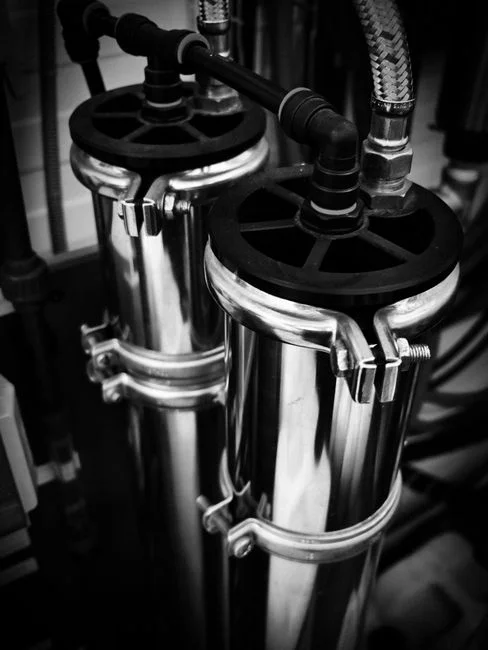
Confirm delivery and installation responsibilities before comparing supplier prices. The quotation should state delivery conditions, underground or above-ground arrangement, installation method, lifting access, utility connection dates and who performs commissioning.
Require a handover package containing process drawings, the O&M manual, alarm logic, spare-parts list, operator-training records and test results. The maintenance scope should identify preventive visits, remote monitoring, response times, analytical testing and sludge-disposal support rather than relying on a generic service description.
Plan operation around peak hotel occupancy. The operating procedure should address pump and aerator redundancy, alarm escalation, peak-flow management, sludge accumulation and seasonal checks. A hotel’s occupancy profile can change operating conditions even when the building’s annual flow estimate appears stable.
Croatia’s sewerage context affects route availability, not equipment performance. The MDPI study reports that combined sewerage systems predominate inland, while separate systems are more widespread in the Adriatic Basin. Ask the local waterworks which arrangement serves the site rather than inferring it from coastal or inland location. Further route context is available in the supplier’s assessment of commercial greywater recycling and route selection.
Frequently Asked Questions
Should the project connect to sewer or install an on-site hotel sewage treatment plant?
Choose the municipal sewer route only when the local waterworks confirms physical access, connection approval, adequate peak-flow capacity and responsibility for network operation in writing. If a connection is unavailable, delayed or conditional, proceed with on-site treatment design while keeping the sewer option under review. The decision should also record who pays for connection works and whether the sewer can be operational before opening.
When is MBR preferred over a buried A/O package plant for a hotel?
Compare MBR when the confirmed reuse or effluent specification gives priority to solids separation, or when the available footprint supports compact equipment. The buyer should request a process comparison against the actual peak-flow basis, footprint, noise constraints, controls and O&M resources. Do not choose MBR solely because it appears more advanced or because nominal plant capacity is higher.
What site data should be included in an A/O or MBR hotel treatment quotation?
Request average and peak flows, occupancy schedules, seasonal patterns, separate blackwater, kitchen, laundry and pool-backwash streams, greywater separation plans, footprint, burial depth, soil and groundwater information, access, noise boundary, utilities, controls, discharge destination, permit status and reuse requirements. If these are missing, require the bidder to identify how they will be obtained and which design assumptions remain provisional.
Which commissioning, acceptance and O&M items should be fixed in the supplier quotation?
Fix the parties, dates and deliverables for pre-start inspection, filling, operator training and performance testing. Attach the agreed sampling point, test protocol and project-specific effluent criteria to the acceptance schedule. Also price preventive maintenance, remote monitoring, alarm response, laboratory testing, sludge removal, spare parts and warranty support so none of these obligations is left as an unpriced assumption.