Choose the blowdown objective before selecting equipment
The appropriate cooling tower blowdown treatment route for a Namibian data center depends on the disposal objective, available reuse point, water chemistry, required recovery, and site constraints. Controlled discharge is the simplest route where an authorised receiving system can accept the blowdown. If reuse is required, softening may support recirculation, while RO can remove dissolved salts; academic work compares NF and RO for power-plant cooling-tower blowdown recycling. No supplied source establishes a Namibia-specific permit limit or cost, so those items must be verified locally before equipment selection.
Decide whether the project must achieve compliant discharge, return treated blowdown to the cooling system, provide alternative makeup water, or prepare the stream for zero liquid discharge. These are different objectives with different process, energy, footprint, and waste-management consequences.
Assess power usage effectiveness and water usage effectiveness together. Ramboll notes that improving one metric can trade against the other: water-based cooling may increase water consumption, while reducing water consumption can increase energy use. Recycled wastewater, harvested rainwater, and reclaimed municipal wastewater may form part of the water strategy, but each requires site-specific quality and infrastructure review. A related example of data-center water-treatment planning shows why the route must be tied to site conditions rather than selected from technology labels alone.
Collect the site data that controls the treatment route
A route cannot be sized or accepted until the flow, chemistry, reuse requirement, and disposal context are defined. Request the daily cooling-tower blowdown volume and peak hourly flow from operating records. Obtain the cooling-tower cycles of concentration and the allowable cooling-water chemistry from the system designer or owner.
Request laboratory analyses of raw water and blowdown, including hardness, conductivity, suspended solids, silica, and chlorides. Also identify the intended reuse point and the required quality of the recovered water. These inputs determine whether softening alone is relevant, whether membrane pretreatment is needed, and which contaminants must be managed in the concentrate or residual discharge.
Complete the physical and operational inputs: available footprint, electrical supply, access routes, pretreatment requirements, and maintenance capability. For discharge, obtain the proposed receiving route, receiving-water sensitivity, and applicable Namibian permit conditions from the site owner, environmental adviser, and relevant authority. None of those local conditions is established by the available research.
Use the cooling tower blowdown treatment route comparison as a structured prompt for the data request, then replace generic assumptions with measurements, design documents, and written site constraints.
Compare discharge, softening, membrane and high-recovery routes
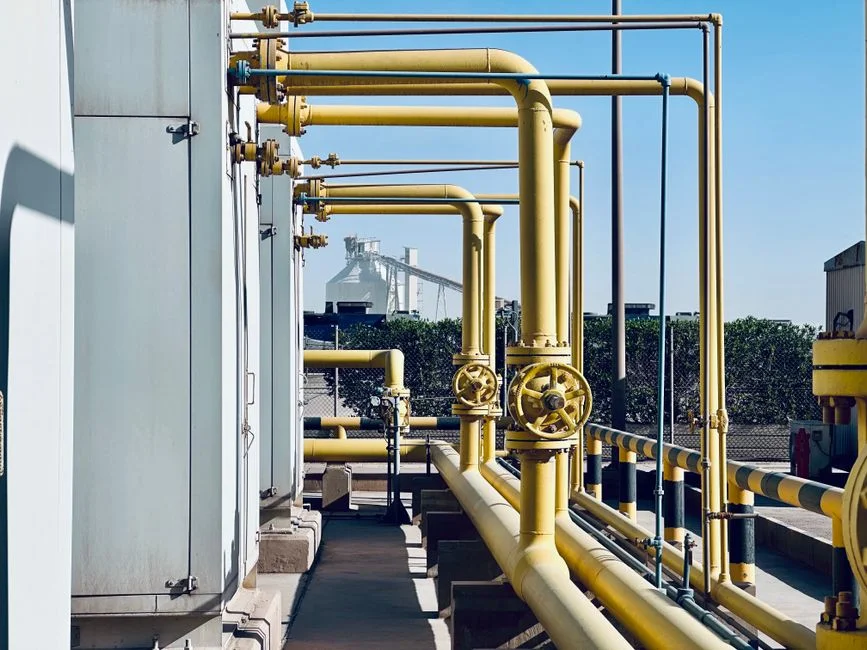
Controlled discharge is the least treatment-intensive option, but it remains conditional on authorisation, receiving capacity, and acceptable chemistry. Softening is relevant where hardness limits cooling-system reuse; the official OSTI source specifically addresses softening cooling-tower blowdown for reuse. Membrane routes add separation capability, while high-recovery treatment demands a defined waste-management route.
| Discharge route or influent problem | Governing rule or process option | What data settles it |
|---|---|---|
| Controlled discharge | Consider where an authorised receiving system can accept the blowdown without relying on treatment for reuse. | Proposed receiving route, permit conditions, receiving-water sensitivity and blowdown flow and chemistry. |
| Cooling-system reuse limited by hardness | Consider blowdown softening where it addresses the relevant hardness-related scaling constraint. | Hardness, cycles of concentration, allowable cooling-water chemistry and required reuse quality. |
| Dissolved salts require separation | Compare NF and RO for industrial blowdown recycling; the Chulalongkorn study compares both for power-plant cooling-tower blowdown. | Conductivity, chlorides, silica, feed analysis, intended reuse point and agreed recovery target. |
| Waste reduction or zero-liquid-discharge preparation | Assess a high-recovery train and its concentrate or residual stream rather than assuming reuse removes the discharge obligation. | Recovery objective, residual-stream route, utility demand, footprint and site infrastructure. |
Following this comparison, ensure the chosen technology aligns with site-specific chemistry rather than generic industry assumptions. The membrane comparison from Chulalongkorn University was conducted for cooling-tower blowdown recycling at a cogeneration power plant in Thailand; it does not establish a Namibian data-center limit. For data centers, Ramboll identifies blowdown reuse and zero-liquid-discharge treatment as ways to reduce water waste, while requiring assessment of operational trade-offs. Use the data-center RO versus UF decision and the four data-center blowdown treatment routes to frame technology questions, but let site chemistry determine the shortlist.
Match the preferred route to suitable equipment
No single product resolves every blowdown objective. Build the selected route as a treatment train and assign each unit a defined duty. Softeners address hardness; membrane systems require suitable feed conditions and a defined concentrate route; chemical dosing is required only where the selected process calls for pH control, coagulation, or flocculation.
The twin-tank industrial water softener is offered with capacities from 1 to 45 T/h and is intended for cooling systems and RO pretreatment. This supplier specification supports equipment positioning, but it does not replace site-specific sizing or confirm suitability for the Namibian project.
Where dissolved-salt removal is selected, request an industrial RO water treatment system proposal with the feed basis, pretreatment, recovery, and product-water requirements stated. Use automatic chemical dosing only after identifying the process control need and the chemical involved. The broader cooling tower blowdown treatment route comparison provides a useful check that membrane, biological, and chemical stages are not being treated as interchangeable.
Set technical and commercial acceptance criteria

Convert the selected route into an RFQ before requesting prices. Define design flow, treatment objective, feed-water basis, product-water quality, recovery target, operating mode, utilities, and waste route. Ask the supplier to return a process flow diagram, P&ID, equipment list, membrane or media schedule, control philosophy, utilities estimate, and O&M manual with the quotation.
| Quote line item | Technical scope to specify | Red flags to check before signing |
|---|---|---|
| Design basis and treatment route | Daily and peak flow, feed analysis, treatment objective, reuse point, product-water criteria, recovery target and operating mode. | No feed-water analysis, undefined recovery target, or no agreed discharge or reuse basis. |
| Equipment and pretreatment | Equipment list, membrane or media schedule, control philosophy, utilities estimate and identified pretreatment responsibilities. | Omitted pretreatment, unqualified materials, or equipment listed without a defined duty. |
| Waste and discharge route | Concentrate, reject or residual-stream destination, monitoring requirements and interface with the authorised discharge route. | Waste stream omitted or described only as “dischargeable”. |
| Installation and handover | Site power, footprint, access, operator training, commissioning, spare parts and local service responsibilities. | No site-specific responsibility matrix or undefined installation and handover boundaries. |
| Performance and compliance | Agreed test methods, acceptance values, documentation, training, commissioning records and compliance responsibility matrix. | Acceptance test lacks an agreed feed basis, method or responsible party. |
Establish clear project boundaries by requesting comprehensive documentation from bidders. Ask suppliers to separate equipment supply, civil works, electrical work, utilities, commissioning, operator training, spares, waste-line interfaces, and local service support. Since no verified Namibian cost baseline is available, require the quotation to state exclusions, assumptions, currency, validity period, and the basis for each commercial item rather than comparing headline prices.
Frequently Asked Questions
When is controlled discharge preferable to treating blowdown for reuse?
Controlled discharge is preferable when an authorised receiving route can accept the blowdown and the site has no requirement to recover the water. The buyer should request the proposed receiving route, applicable permit conditions, receiving-water sensitivity, flow, and chemistry. If reuse is mandatory, compare softening, membrane, and high-recovery options against the required product-water quality.
How do flow, chemistry and recovery determine equipment sizing?
Sizing starts with daily blowdown volume, peak hourly flow, and the design operating basis. Feed and blowdown analyses determine pretreatment and separation requirements, while the recovery target affects membrane area, concentrate production, and waste handling. Do not issue a final equipment order until the supplier states which measured or documented inputs it used and how each sizing parameter responds to them.
What performance evidence should a supplier provide?
Request a process flow diagram, P&ID, equipment and membrane or media schedules, control philosophy, utilities estimate, and O&M manual. Also require proposed commissioning tests with the feed basis, test methods, and acceptance values stated. A generic claim that the equipment is suitable for cooling systems is not evidence that the proposed train will meet the site’s reuse or discharge objective.
What should be included in an installation and lifecycle-cost quotation?
Require separate pricing for equipment, pretreatment, chemical dosing, installation, electrical and civil interfaces, utilities, commissioning, training, spare parts, and local service support. Include a waste-stream scope and a maintenance plan covering media or membrane replacement, consumables, and labour. Because no verified Namibian price baseline is available, ask for the quotation assumptions, exclusions, currency, validity period, and cost basis for every line.