Google's Port Dickson water project: the direct answer
Google is funding US$160 million, about RM651 million, of shared water infrastructure in Negeri Sembilan, Malaysia, and has appointed Gamuda Berhad to build an off-river storage reservoir on the Linggi River and a water treatment plant able to supply 65 million litres of potable water a day, the company announced on November 2, 2026. The plant will serve Google's planned data centre campus at Springhill Industrial Park in Port Dickson and add to public supply, with the assets owned by Menteri Besar Negeri Sembilan (Incorporated). For suppliers, the project means three separate duties: a conventional surface-water treatment line, polishing for data-centre cooling and an on-site route for wastewater.
This guide sets out what was announced, why an off-river reservoir changes the raw water the plant must treat, which treatment stages a 65 million litre per day facility needs, what a data centre adds to the water balance, and how a contractor should build a budget for each part.
What Google and Gamuda announced in November 2026
Google's press release, issued from Negeri Sembilan on November 2, 2026, describes the funding as support for community needs as well as the company's data centre operations. Gamuda Berhad will build the reservoir and the treatment plant in coordination with the State Government of Negeri Sembilan and the state water utility Syarikat Air Negeri Sembilan (SAINS). On completion the facilities will be owned by Menteri Besar Negeri Sembilan (Incorporated), or MBINS, a statutory body that manages state assets. Google is also paying for all of the electricity its campus consumes and the direct cost of connecting it to the grid.
The reservoir is designed to capture excess river flow and rainfall during high-yield periods, which also helps mitigate flooding in surrounding areas. In low-yield periods the plant draws on stored reserves without disrupting the river's natural flow. Bernama's report in The Star adds that stored raw water is channelled to the plant for purification and then supplied for domestic and commercial use.
Drew Byrnes, Google's Director and Head of Global Infrastructure and Energy for Asia Pacific, said the funding reflects the company's ambition to replenish 120 per cent of the freshwater it consumes, and that Google's water risk assessment found local sources were not at high risk of scarcity or depletion. SAINS chief executive Dato' Ir. Haji Mohd Yazid bin Ahmad said the added capacity will strengthen supply for residents and commercial users alike. Justin Chin, Managing Director of Gamuda Engineering, described the work as extending an integrated partnership into Negeri Sembilan.
The water project sits inside a larger programme. Google plans to invest US$15 billion in Malaysian digital infrastructure over 2027 and 2028, with new campuses in Selangor and Negeri Sembilan, and its first Malaysian data centre at Elmina Business Park in Selangor is now operational, trade press reported in early November 2026. The same coverage notes that a Google affiliate bought a 389-acre site in Port Dickson from Gamuda.
One point remains open. Google did not state how the 65 million litres will be divided between the public and the campus. The420.in reported that a January 2025 memorandum between Gamuda and MBINS reserved 25 per cent of a 65 million litre plant for domestic users and 75 per cent for data-centre operations, and that the November announcement does not confirm whether that split still applies.
Why an off-river reservoir changes the raw water
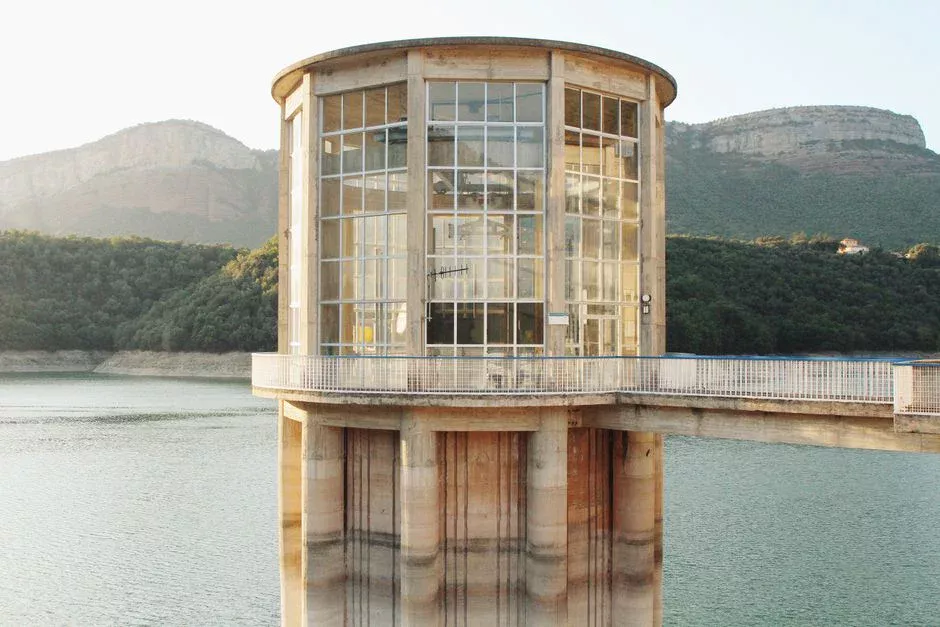
A plant that draws straight from a river treats whatever the river carries that day. A plant fed from a storage reservoir treats water that has sat in the sun for weeks or months, and that storage produces two distinct regimes which the design must handle in turn.
In the wet season, the reservoir takes in high flows loaded with silt, colour and natural organic matter washed from the catchment. Coagulant demand rises with turbidity and colour, and organic matter that survives treatment can react with disinfectant to form disinfection by-products. Long storage helps by letting silt settle, but the first flush after a storm still arrives as a sharp change in feed quality.
In dry periods the problem reverses. Warm, still, nutrient-rich water grows algae. Algal cells clog filters, and compounds such as geosmin and 2-methylisoborneol cause taste and odour at very low concentrations that coagulation alone does not remove. Where the reservoir stratifies, the bottom layer can turn anoxic and release dissolved iron and manganese from the sediment. At the same time turbidity falls so low that particles are scarce and floc forms poorly.
Reservoir water in this part of Malaysia therefore needs pre-oxidation for iron, manganese and algae, pH correction so that coagulation works on low-turbidity water, and a clarification stage that copes with light algal floc as well as with silt. A supplier who designs for average river quality and ignores both extremes will underdose coagulant in the wet season and over-backwash filters in the dry one.
The treatment train for a 65 million litre per day plant
At 65 million litres a day, or 2,708 m³/h if run around the clock, the plant sits in the upper range of conventional surface-water works. Each stage has a duty that the next stage depends on.
- Intake and screening. Low-lift pumps and mechanical bar screens protect the downstream pumps from debris carried in from the reservoir.
- Pre-oxidation and pH correction. Ozone, chlorine dioxide or potassium permanganate oxidises dissolved iron and manganese and weakens algal cells, while acid or alkali dosing brings the water to the pH at which the chosen coagulant works best.
- Coagulation and flocculation. Alum or polyaluminium chloride, with a polymer when needed, gathers the oxidised metals, colour and cells into floc.
- Clarification. A lamella clarifier or a dissolved air flotation unit separates the floc and leaves water clear enough to filter.
- Filtration. Multi-media filters polish the clarified water to the turbidity required of potable supply.
- Disinfection and stabilisation. Chlorine, chlorine dioxide or ultraviolet disinfection protects the distribution system, and a final pH adjustment limits corrosion in pipes.
- Residuals. Clarifier sludge and filter backwash are equalised, thickened and dewatered rather than returned untreated to the river.
For clarification, a high-efficiency sedimentation tank with inclined plates handles a surface loading rate of 20–40 m/h and uses sludge recirculation that cuts coagulant use by 10–30 per cent. Each unit covers 50–50,000 m³ a day, so a 65 million litre plant needs at least two, or three to keep one in reserve. Dissolved air flotation is the alternative when algae dominate the feed, because bubbles lift light algal floc that settles slowly; it becomes the preferred stage where taste and odour episodes are frequent.
For filtration, a multi-media filter bed of anthracite, quartz sand and garnet runs at a design rate of 8–12 m/h. Dividing 2,708 m³/h by that rate gives 226–339 m² of filter area. Vessels of 3 m diameter hold about 7 m² each, which would mean 32–48 vessels, so plants of this size normally build concrete gravity filter beds and use vessel-type filters for smaller works or for polishing duty.
What the data centre adds: polishing, blowdown and sewage
Google's announcement covers the shared supply but does not describe the campus's cooling system or its water demand, so suppliers should treat the following as duties to confirm rather than as facts about the site. A data centre that rejects heat through water consumes make-up and produces two waste streams, cooling blowdown and sanitary sewage. A campus cooled mainly by air uses far less water, and its effluent problem is smaller.
Where water-based heat rejection is used, make-up water must meet limits on hardness, silica, alkalinity and dissolved salts so that the system can run at the intended cycles of concentration. An industrial reverse osmosis system rated from 0.25 to 200 m³/h per skid, with 50–95 per cent recovery and at least 97 per cent salt rejection in a single pass, is the usual polishing step when the potable supply is too hard or too saline for that duty. The concentrate from that step joins the cooling blowdown.
Cooling blowdown carries the salts, silica and treatment chemicals left behind by evaporation. Its route depends on local acceptance: discharge to a sewer or water course under the Environmental Quality Act 1974 and the regulations made under it, administered by the Department of Environment, or further recovery by high-recovery membranes that leave a smaller concentrate to dispose of. Sanitary sewage from staff areas is best kept as a separate stream, treated biologically on site where no sewer connection exists, and reused for landscaping and flushing. The guide to data centre wastewater treatment in Malacca explains why blowdown and sewage need separate trains.
Budget logic for a reservoir-fed supply scheme
A project of this shape divides into a supply side and a campus side, and the two behave differently when conditions change.
On the supply side, the largest capital items are civil. The reservoir, the intake and the raw water main cost more as storage volume, pipeline length and pumping head increase, and none of them shrink when the treatment process is chosen well. The process line comes next: clarification, filtration, disinfection and chemical preparation, followed by a clear water tank and high-lift pumps that set the energy bill for decades. Sludge and backwash handling, often underfunded at the start, determines whether the plant can stay within its discharge conditions in the wet season.
Operating cost on the supply side follows the raw water more than the flow. Coagulant, pH correction and pre-oxidant doses all rise with turbidity, colour and algae, so a wet month costs more than a dry one even at the same output. Backwash frequency rises when algae are present. Power for low-lift and high-lift pumping is the steadiest line.
On the campus side, capital goes to polishing, storage and reuse, while operating cost goes to membrane cleaning and replacement and to concentrate disposal. The decisive variable is the split between public supply and campus demand, because that split sets the size of every campus train. Until Google and the state confirm it, a contractor should quote the polishing and reuse packages as modules sized to a stated demand.
| Plant size | Clarification | Filtration | Residuals |
|---|---|---|---|
| Below 10 million litres a day | One packaged lamella or DAF unit | Pressure vessels | Drying beds or a small filter press |
| 10–50 million litres a day | Two or three lamella or DAF units | Pressure vessels or small gravity beds | Thickening and mechanical dewatering |
| Above 50 million litres a day | Multiple cells with one in reserve | Concrete gravity filter beds | Dedicated sludge and backwash treatment |
To price any of these packages, a supplier needs raw water analyses from both seasons, covering turbidity, colour, pH, alkalinity, iron, manganese and algal counts, together with the demand profile and the land and power available at the site. Send that information and request a quotation through /request-quote.html, stating which package you need: clarification, filtration, polishing or sludge handling. Projects from across the country are listed on our Malaysia location page.
Frequently Asked Questions
What size clarifier and filter does a 65 million litre per day plant need?
The flow is about 2,708 m³/h if the plant runs continuously. At 8–12 m/h, filtration needs 226–339 m² of bed area, which suits concrete gravity filters rather than pressure vessels. Clarification needs at least two lamella units rated to 50,000 m³ a day each, or three if one is held in reserve. A plant that runs fewer hours to allow backwash needs proportionally more capacity.
Does Google's Port Dickson data centre use water-based cooling?
Google's November 2026 announcement does not say. It confirms a shared 65 million litre supply, a reservoir on the Linggi River and payment of the campus's electricity and grid connection costs, but it gives neither the cooling design nor the campus demand. Suppliers should ask for the campus water balance before sizing any polishing or reuse equipment.
What happens to sludge, backwash water and cooling blowdown in Malaysia?
Each stream needs its own route. Water treatment sludge and backwash are usually equalised, thickened and dewatered, with recovered water returned to the plant head. Cooling blowdown goes to a sewer or water course only if it meets the discharge conditions enforced by the Department of Environment under the Environmental Quality Act 1974, or it is treated further for recovery. Confirm the applicable conditions with the department and the local water operator before design.
What should a contractor include in a quotation for this kind of project?
Separate the supply side from the campus side and quote each as a module. State the design flow, the raw water quality envelope and the treated water target assumed for each item, then list civil, mechanical, chemical, electrical and commissioning scopes with their boundaries. Where a duty is still unknown, such as the share of water allocated to the data centre, quote a capacity range instead of a single figure.