Separate the streams before selecting equipment
Choose treatment for a Cambodian cooling-tower or data-center project by separating each water stream and its discharge route. Blowdown is concentrated water: salts and treatment chemicals remain as water evaporates, so reuse requires analysis, scaling and corrosion control, and possibly pretreatment followed by RO. Data-center wastewater needs separate assessment because its contaminants and reuse role differ. UF can protect downstream membranes, RO can concentrate dissolved solids for reuse, and MBR can treat wastewater for water-reuse applications. No source establishes Cambodian site limits or permits, so confirm the receiving route before ordering equipment.
Map cooling makeup, cooling blowdown, data-center process wastewater and general sanitary wastewater as distinct streams. Do not combine them into one design flow merely because they originate on the same site. Cooling blowdown and data-center process water can have different contaminant profiles, reuse destinations and acceptable discharge routes.
Request the site water balance and stream diagrams from the facility engineer or operator. Include operating hours, flow-meter records, current purge rate, evaporation rate, cooling-system configuration and cycles of concentration. Obtain representative laboratory analyses for each stream rather than relying only on the raw makeup-water result.
Confirm whether reclaimed water will return to a cooling loop, enter another process, discharge to a municipal system or pass to an on-site receiving treatment train. That decision determines the required water quality and which unit processes need to be included.
For a data-center-specific water-balance approach, see the data-center water-treatment context for separating process requirements.
Match each stream to its discharge route
Select the receiving route before selecting equipment. A stream intended for cooling-loop reuse normally needs membrane recovery after suitable pretreatment, while data-center wastewater intended for a defined process-water role may justify biological treatment followed by membrane filtration. A direct or indirect discharge must be assessed against the actual receiving route and confirmed requirements; neither permits nor a sewer connection can be assumed from the available information.
| Discharge route or influent problem | Governing rule or process option | What data settles it |
|---|---|---|
| Cooling-tower blowdown returned to a cooling loop | Evaluate filtration and other pretreatment followed by membrane recovery. Academic work from Chulalongkorn University directly compares nanofiltration and reverse osmosis for cooling-tower blowdown recycling; this is transferable engineering evidence, not a Cambodian requirement or a universal selection rule. | Representative blowdown analysis, cycles of concentration, chemical-treatment program, design and peak flows, target cooling-water quality and scaling assessment. |
| Data-center process wastewater reused in a defined process role | Evaluate an MBR system for data-center wastewater reuse when biological treatment and membrane filtration are required. The data-center water treatment after MBR route remains dependent on the contaminant load and final use. | Stream-by-stream water balance, process wastewater characterization, target reuse specification, operating pattern and downstream water-quality requirements. |
| Cooling-tower blowdown sent to an on-site treatment train or municipal system | Define required pretreatment, treatment capacity and discharge quality only after identifying the receiving system and applicable requirements. A shared receiving system also requires consideration of cumulative load. | Confirmed discharge point, receiving-system owner’s requirements, discharge flow and chemistry, downstream treatment capacity and current load. |
| Direct or indirect discharge considered | Do not select pretreatment-only, reuse or zero-liquid-discharge concepts from the generic label. Establish the legal receiving route and performance criteria first. | Local authority confirmation, applicable permit conditions, receiving agreement, sampling requirements and any cumulative-discharge assessment. |
| Cooling-system efficiency under evaluation | Use PUE and water usage effectiveness, expressed in litres per kilowatt-hour, to compare cooling and conservation strategies. WUE is not a treatment acceptance metric. | Annual facility energy and water-use records, cooling-system configuration, operating profile and agreed WUE calculation boundary. |
For membrane recovery sizing, use the cooling-tower blowdown RO sizing and concentrate guide as a technical reference rather than as a substitute for site data.
Use water chemistry to settle the process choice
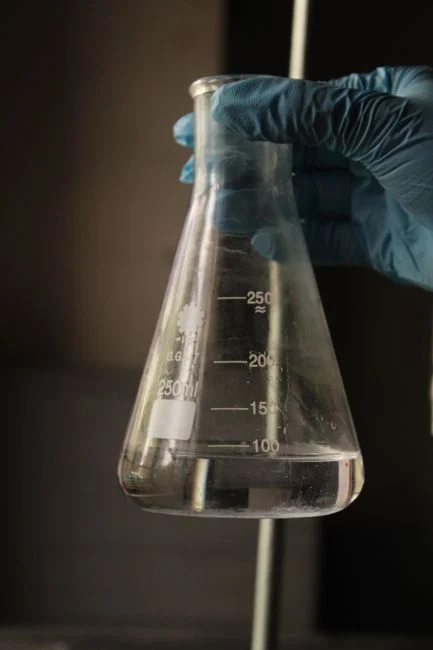
Laboratory results determine which unit processes are justified. Request pH, conductivity or total dissolved solids, hardness, alkalinity, silica, chloride, sulfate, metals, residual biocides, corrosion-inhibitor residuals and suspended solids for each relevant stream. Include variability across operating conditions rather than one result without context.
- If suspended solids or colloids could foul downstream membranes, evaluate multi-media filtration as pretreatment.
- If the design requires membrane protection before RO, evaluate an UF membrane pretreatment system against the measured feed condition.
- If dissolved-salt removal is required for cooling-water recovery, evaluate an industrial RO system for cooling-water recovery.
- If data-center wastewater requires biological treatment plus membrane separation for its defined reuse role, evaluate MBR.
Decide whether softening, chemical control or further treatment is needed from the chemistry and receiving-system constraints. Blowdown can contain elevated salts, heavy metals, biocides, corrosion inhibitors and changed pH, depending on the source water and treatment program. Those constituents can influence both membrane protection and the suitability of reclaimed water for reuse.
Do not choose between nanofiltration and RO solely from the academic comparison. Confirm local water chemistry, equipment scale and project economics before making that decision.
Test recovery, concentrate and operating risks
Require every recovery option to include a concentrate route. High permeate recovery does not remove the need to dispose of or further treat the rejected stream. Concentrate volume, composition, transport method and receiving point should appear in the RFQ rather than appear later as a cost exclusion.
Evaluate scaling and corrosion using the actual cycles of concentration, source-water analysis and chemical-treatment program. Recycled water can differ chemically from potable water, so its entry into a cooling loop may require additional pretreatment, corrosion control, scaling control or monitoring.
Plan the operating obligations before acceptance: membrane cleaning, UF backwash, cartridge replacement, chemical storage and access for operators. Request the applicable maintenance tasks, frequency assumptions, spare-parts list and recommended monitoring from each bidder.
Ask each supplier to state feed conditions, assumed recovery and any exclusions. A recovery figure is meaningful only when the feed chemistry, operating hours and concentrate route are attached to it.
Supplier quotations often separate treatment parts, valves and media from the complete operating package. Review those exclusions in the treatment-parts scope before comparing bids.
Prepare a scope-complete equipment RFQ
Compare quotations on the same complete scope. Ask suppliers to price source-water analysis, pretreatment, membranes, pumps, controls, chemical dosing, concentrate handling, commissioning and operator training as separate lines, with exclusions stated explicitly.
| Quote line item | Technical scope to specify | Red flags to check before signing |
|---|---|---|
| Source-water analysis and feed definition | Require representative analyses for each separated stream, including variability, cycles of concentration and chemical-treatment residuals. Name the operator or laboratory responsible for providing the data. | A unit process quoted without feed chemistry, or one sample treated as representative of all streams and operating periods. |
| Pretreatment and membranes | Specify filtration, UF or other pretreatment, membrane type, pumps, controls and chemical dosing according to the confirmed stream chemistry and selected reuse route. | Headline capacity is provided without feed conditions, duty hours, recovery basis or confirmation that pretreatment protects the membrane. |
| Reuse and discharge performance | State the destination, target water quality, sampling locations, test methods, acceptance procedure and remedy for failure. | A generic permeate-quality promise with no feed conditions, sampling protocol or acceptance remedy. |
| Concentrate handling | Price collection, storage, transport, further treatment or disposal according to a confirmed receiving route. Identify responsible parties. | Recovery is promised but concentrate disposal is excluded, described only as “by others,” or has no receiving point. |
| Installation and utilities | Define civil works, foundations, connections, electrical supply, drains, access, chemical storage, backwash waste and operator interfaces. | Utility availability, footprint, installation scope or electrical works are left unpriced and assumed. |
| Commissioning, training and maintenance | Include performance testing, operator training, membrane cleaning, cartridge replacement, backwash, spare parts and monitoring obligations. | Commissioning ends before performance acceptance, with training and consumables excluded. |
| Permit and receiving-system interface | Identify the authority, permit application or approval, receiving-system owner and required discharge documentation. | The supplier assumes Cambodian site limits or sewer acceptance without documentary confirmation. |
Include each stream’s design flow, peak factor, operating hours, source-water analysis, target water quality and discharge or reuse destination in the enquiry. Use the data-center water-treatment RFQ checklist to complete the comparison, then require the bidder to identify every document or site input still missing.
Before signature, flag absent site analyses, undefined concentrate disposal, missing utility data, unverified Cambodian permit assumptions and omitted installation work. A lower headline price is not comparable unless every bidder is pricing the same duty, destination, feed basis and acceptance obligation.
Frequently Asked Questions
Should a Cambodian data-center project select RO or MBR?
Select MBR when the data-center wastewater requires biological treatment followed by membrane filtration for its defined reuse role; evaluate RO when the objective is dissolved-salt rejection through membrane recovery and the source chemistry supports it. Ask the supplier to base the recommendation on representative wastewater analysis, the required final-water quality and the receiving route, rather than on the technology name alone.
Which site measurements are required to size cooling-tower blowdown recovery?
Obtain daily and peak blowdown flows, operating hours, current purge rate, evaporation rate, cooling-system configuration, cycles of concentration, chemical-treatment program and representative blowdown analysis. Request the water balance and flow-meter records from the facility operator. These inputs determine the recovery duty and whether pretreatment is needed.
What should an equipment quotation include beyond the treatment unit?
Require separate pricing for source-water analysis, pretreatment, membranes, pumps, controls, chemical dosing, concentrate handling, installation utilities, commissioning, operator training and maintenance obligations. When no site-specific price is available, ask each bidder to state its quotation basis, exclusions and required buyer inputs rather than comparing headline capacity or recovery figures alone.
Which Cambodian discharge and reuse requirements must be verified before ordering?
Verify the receiving point, applicable permit or approval conditions, reuse destination, required sampling and discharge documentation with the relevant Cambodian authority and receiving-system operator. Do not infer permission from a sewer connection, an academic study from another jurisdiction or a general recycled-water practice. Record the responsible official, document and applicable stream before approving the equipment order.