What a Nauru Hotel Must Decide Before Choosing a Package Plant
For a hotel in Nauru, a WSZ A/O package plant is the leading option when seasonal peaks, limited land and underground installation drive the decision. It combines biological contact oxidation, sedimentation and disinfection in one automated unit rated from 1–80 m³/h, according to the HydropureWater verified product catalog. Choose an MBR instead when the project prioritizes high-quality reuse, very compact treatment or a larger design capacity of 10–2,000 m³/day. Final sizing must use peak hotel wastewater flow, land, reuse objectives and the required effluent quality. Confirm Nauru’s permit and receiving-water requirements before selecting equipment because the supplied country guide is still being prepared.
The procurement decision starts with a site-specific duty, not a product catalogue. A packaged sewage treatment plant for hotels in Nauru must be evaluated against the hotel’s actual wastewater profile, including occupancy variation, peak hourly flow, future development, available land and the intended fate of the treated water.
| Worksheet input | Information to obtain | Why it affects selection |
|---|---|---|
| Average daily flow | Current estimate from operator and design consultant | Establishes the baseline hydraulic duty |
| Peak hourly flow | Occupancy-driven peak and seasonal variation | Prevents undersizing during short high-demand periods |
| Future demand | Planned room additions, amenities and occupancy changes | Defines whether modular expansion is required |
| Land and installation | Available footprint, burial constraints, access and landscaping above the unit | Separates WSZ underground installation from surface or trailer-mounted options |
| Effluent destination | Discharge, irrigation or another non-potable reuse | Sets the treatment and testing requirements |
| Site constraints | Soil, groundwater, power, odour and maintenance access | Identifies civil and operating risks |
Ask the operator to provide current and future wastewater-generation estimates, not only guest-room count. Seven Seas Water, in its hotel wastewater guidance, identifies fluctuating demand caused by seasonal tourism and recommends designing on-site systems for peaks, using added capacity or modular expansion where necessary (Seven Seas Water, undated).
Submit the flow, influent data and proposed discharge target for a country-specific compliance check through the Nauru wastewater information request. The HydropureWater country page states that Nauru-specific discharge standards and cost guides are still being prepared (HydropureWater, undated), so a quote should not be treated as regulatory approval.
WSZ or MBR: Match the Process to the Hotel
The WSZ Series handles 1–80 m³/h, while the MBR system is rated for 10–2,000 m³/day; these ranges must be converted to the same flow basis before comparing quotations. The choice then turns on process arrangement, installation method, land constraints and the quality of effluent required for reuse.
Use the WSZ underground package sewage treatment plant when an integrated A/O biological treatment, sedimentation and disinfection package is the priority. The HydropureWater verified product catalog describes this as a fully automated buried unit that handles 1–80 m³/h and can be installed below grade with landscaping above, or mounted on a trailer for mobile deployment (HydropureWater verified product catalog, undated).
Use the MBR membrane bioreactor system when activated sludge treatment, submerged membrane filtration, a smaller physical footprint or a higher-grade reuse route is the priority. Seven Seas Water explains that MBR systems combine conventional biological treatment with membrane filtration and do not require a clarifying tank, reducing their space requirement compared with conventional activated-sludge plants (Seven Seas Water, undated).
| Decision point | WSZ A/O package | MBR system |
|---|---|---|
| Published capacity range | 1–80 m³/h | 10–2,000 m³/day |
| Treatment arrangement | Integrated A/O biological contact oxidation, sedimentation and disinfection | Activated sludge with submerged membrane filtration |
| Installation | Below grade with landscaping above, or trailer-mounted | Surface or modular installation, subject to the supplier’s design |
| Land priority | Underground installation can preserve usable area above the unit | Compact arrangement suits constrained sites |
| Reuse priority | Define the required effluent quality before final selection | Stronger fit where high-quality reuse is required |
| Key comparison control | Do not infer compliance from process name alone | Do not infer compliance from capacity or footprint claims alone |
Footprint alone does not settle the selection. The supplier states that the MBR system occupies 60% less space than conventional systems. That claim must be checked against the Nauru hotel’s actual plot, tankage, access routes, utilities and installation method.
Neither route should be selected from capacity or process name alone. Send the same peak-flow basis, land information, reuse objective and discharge target to both suppliers, then compare the proposed treatment train, demonstrated performance and operating scope.
Handle Hotel Peaks, Land Constraints and Future Expansion
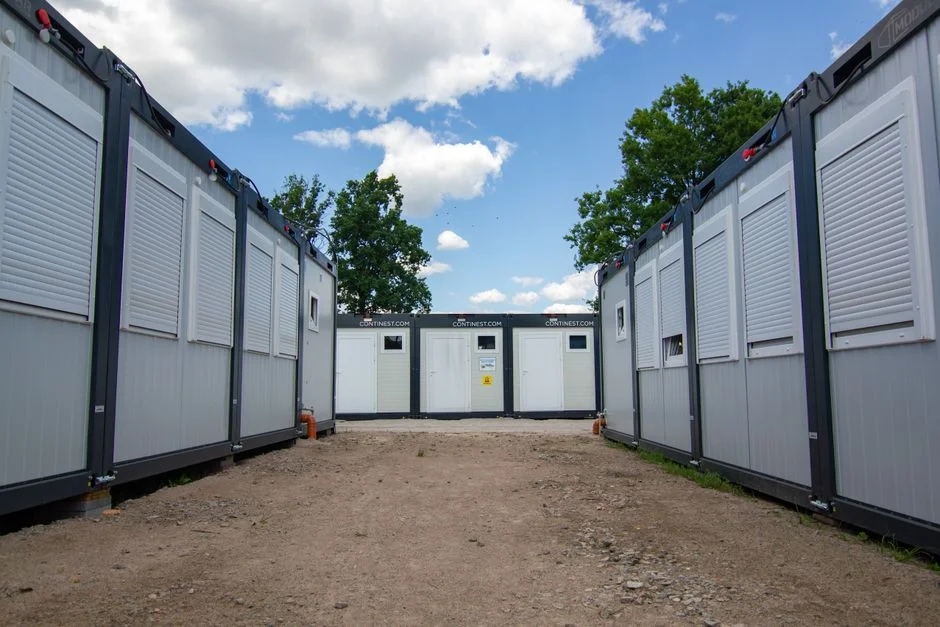
Hotels can generate wastewater-production spikes during peak tourist seasons, so treatment capacity should be based on peak demand rather than average flow alone. Seven Seas Water identifies fluctuating demand as a common hotel problem and recommends that on-site systems be designed for peaks by adding capacity or using modular systems that can be expanded (Seven Seas Water, undated).
For the WSZ route, confirm whether the buried configuration can preserve landscaping above the unit and whether a trailer-mounted version is relevant to the site. These are materially different installation propositions: one places the treatment process below grade, while the other changes access, foundations and mobility. The product catalogue confirms both configurations are available; it does not establish which is suitable for a particular Nauru plot (HydropureWater verified product catalog, undated).
Ask each supplier to describe its WSZ versus MBR for hotel wastewater expansion approach in writing:
- How would additional treatment capacity be added?
- Would expansion change the required footprint?
- Can modules be added without replacing the complete plant?
- What flow range would the original and expanded configurations each handle?
- Which civil, electrical and control modifications would be required?
Do not treat grey-water recycling as permission to omit sewage treatment. Seven Seas Water identifies showers, sinks and laundry as grey-water sources that can be recycled to reduce wastewater volume, but this is a separate water-reduction measure and does not establish the full treatment duty of the remaining sewage (Seven Seas Water, undated).
Verify the Nauru Effluent Route Before Ordering
The applicable Nauru effluent route cannot be inferred from the available evidence, so the buyer must define whether the proposal involves a permitted discharge point, land application area or reuse system. Equipment selection should follow that confirmation, not precede it.
Ask the supplier to identify the supporting test evidence for the specified treatment train and the wastewater characteristics used to demonstrate performance. A credible submission should connect the proposed process, influent basis and effluent target to commissioning or performance evidence. A generic statement that a package is suitable for hotels is not enough.
Use the Nauru compliance-check intake by providing the flow, influent data and discharge target. The HydropureWater Nauru page says country-specific standards and cost guides are being prepared and invites those project inputs for a country-specific compliance check (HydropureWater, undated).
Do not import limits from another jurisdiction. ClearFox states that its Mauritius hotel project was designed to remain below European limit values for direct discharge into water bodies, but that statement belongs to a project in Mauritius and does not establish Nauru’s legal limits (ClearFox, undated). The Nauru buyer needs confirmation from the relevant local authority of:
- The legal discharge route and receiving point;
- The required effluent parameters and sampling method;
- Permit, land-application or reuse approvals;
- Public-health and non-potable reuse conditions;
- Monitoring, reporting and operating-record requirements.
Issue a Supplier Request with Acceptance Criteria
A comparable quotation should contain the same project inputs and define the same delivery boundaries. Use the hotel wastewater equipment selection worksheet as the starting point, then require each bidder to complete the same fields for its proposed WSZ or MBR solution.
Provide average flow, peak hourly flow, occupancy range, land area, soil or groundwater constraints, reuse goals and the intended discharge point. Do not release a final equipment order against generic room counts or daily-consumption assumptions. The quotation should demonstrate how the proposed unit handles the stated peak condition and future demand.
| Quotation section | Required response | Acceptance check |
|---|---|---|
| Process and duty | Process stages, rated flow and applicable peak condition | Matches the submitted site data |
| Physical arrangement | Dimensions, footprint and installation method | Fits the surveyed plot and access constraints |
| Utilities and controls | Power, water, drainage, control and monitoring scope | Site infrastructure and operator capability can support it |
| Performance | Effluent target, test evidence and operating assumptions | Matches the confirmed Nauru route |
| Commissioning | Tests, acceptance criteria and training | Responsibility and pass/fail conditions are explicit |
| Maintenance | Routine tasks, consumables, spares and service access | Owner can operate and maintain the plant |
| Expansion | Method, added footprint and future capacity | Matches the hotel’s development plan |
| Commercial | Delivered scope, exclusions, price basis and schedule | No material scope is left undefined |
Require process stages, rated flow, dimensions, installation method, utilities, control scope, commissioning tests, maintenance items and expansion provisions in every quotation. Require clear ownership boundaries for civil works, power, commissioning, operator training, remote monitoring, spare parts and future capacity expansion.
Request a project-specific delivery and commissioning schedule. ClearFox states that many systems can be planned, delivered and put into operation within a few months, while also stating that the exact schedule depends on the project (ClearFox, undated). Treat that as context, not a guaranteed Nauru lead time; require the supplier to state the schedule, dependencies and commissioning milestones for this order.
Frequently Asked Questions
How should a sewage treatment system for a hotel in Nauru be sized?
Size it from peak wastewater flow, not guest-room count or average daily consumption alone. Request average daily flow, peak hourly flow, occupancy-driven variation and future wastewater-generation estimates, then require the supplier to show how its selected configuration handles the stated peak.
Should a Nauru hotel choose a WSZ A/O plant or an MBR system?
Choose WSZ when integrated A/O treatment, sedimentation, disinfection and below-grade installation fit the site and duty. Choose MBR when compactness, submerged membrane filtration and a higher-grade reuse route justify the additional scope. Compare both proposals using the same flow, land, reuse, expansion and compliance inputs.
What should a buyer request when comparing WSZ and MBR prices?
Request a delivered-scope quotation covering process equipment, dimensions, installation method, utilities, controls, commissioning, operator training, monitoring, maintenance, spares and expansion. State the required effluent route and site constraints before asking for pricing, and identify all exclusions so bids can be compared on the same scope.
How should a buyer assess supplier delivery, expansion and compliance risk?
Require a project-specific schedule with manufacturing, shipping, civil works, installation and commissioning milestones. Ask how capacity will be added without replacing the complete plant, and require written confirmation of the Nauru discharge or reuse route. The supplied evidence does not establish local discharge limits, so regulatory confirmation remains an acceptance condition.
Related Equipment
- WSZ underground package sewage treatment plant — specifications, capacity range, and technical data