Choose by effluent requirement, not just plant size
For a Micronesian hotel, select an underground WSZ package plant when conventional decentralized treatment and the specified disposal route are adequate; select an MBR when the required effluent quality, reuse application or solids separation justifies membrane filtration. WSZ integrates A/O biological contact oxidation, sedimentation and disinfection in a buried package, while MBR combines biological treatment with membrane filtration. The decision should be documented against verified local discharge and reuse conditions rather than inferred from occupancy or nominal plant capacity.
The WSZ underground package sewage treatment plant combines anoxic/aerobic biological contact oxidation with sedimentation and disinfection in one automated buried unit. The integrated MBR wastewater treatment system adds membrane separation to biological treatment. This additional separation becomes relevant when the proposed reuse route demands greater effluent control, or when the client needs the membrane process associated with an MBR configuration rather than clarification-based treatment.
The supplied HydropureWater product catalog specifies sub-1 μm filtration and a footprint 60% smaller than conventional systems for MBR. These specifications are selection criteria, not proof that an MBR is the appropriate choice for every coastal hotel. The buyer must obtain the applicable Micronesia discharge criteria, confirm the intended reuse route and compare each proposed train against those requirements.
Seven Seas’ hotel-sector review, published by Seven Seas Water, identifies irrigation, dust control and other non-potable applications as reuse examples. It also explains that MBR systems avoid a separate clarifier and take less space than conventional activated-sludge plants. The WSZ versus MBR for hotel wastewater comparison provides the broader process context.
| Decision input | WSZ package plant | MBR system |
|---|---|---|
| Treatment configuration | A/O biological contact oxidation, sedimentation and disinfection | Biological treatment with membrane filtration |
| Best initial fit | Conventional decentralized treatment with an approved disposal route | A stricter effluent or reuse requirement that justifies membrane separation |
| Site arrangement | Can be installed below grade with landscaping above | Compact arrangement suitable where footprint is constrained |
| Evidence to verify | Proposed effluent against local discharge or reuse criteria | Proposed effluent, membrane performance and reuse conditions |
| Outstanding local information | Applicable permit, discharge route, reuse conditions, corrosion exposure and flood level | |
Match seasonal hotel demand to verified peak flow
Size either system from verified wastewater flow, not hotel occupancy alone. Seven Seas Water identifies seasonal tourism as a cause of load spikes and recommends capacity additions or modular systems for fluctuating demand. The procurement team must define an occupancy scenario, defensible wastewater-generation basis, average flow, peak flow and operating duration before finalizing any supplier selection.
For WSZ, compare the design peak against the catalog range of 1–80 m³/h stated in the HydropureWater verified product catalog. A nominal capacity that exceeds the average flow but does not accommodate the verified peak is not an adequate selection. The supplier should identify how the selected package handles wet-weather entry, fixture surges, laundry loads and other peak contributions material to the hotel.
For MBR, compare the design peak with the stated 10–2,000 m³/day range in the HydropureWater verified product catalog. Confirm the basis of that comparison, including the duration represented by the daily flow and the proposed number and arrangement of stages. If future occupancy growth is credible, ask whether additional stages or parallel units can be installed without redesigning the complete treatment works.
- Establish the wastewater-generation basis from operating records, metering, occupancy assumptions and other project-specific inputs.
- Define the current average and design peak, including seasonal occupancy and any separately identified wastewater streams.
- Ask each bidder to state the capacity selected, its duration basis and the treatment train proposed.
- Record whether future expansion is included in the design or offered as a defined future option.
No Micronesia hotel flow, occupancy profile or seasonal-growth figure appears in the supplied research. These values must be supplied by the property or developed by the project team; they should not be replaced with assumed occupancy multipliers or generic resort ranges.
| Sizing field | Buyer input or supplier response | Decision use |
|---|---|---|
| Wastewater-generation basis | Fill in metering, operating records or other defensible project basis | Prevents occupancy from being used directly as flow |
| Average flow | Fill in verified value and unit | Establishes the normal loading condition |
| Design peak flow | Fill in verified value, duration and contributing loads | Tests whether the proposed capacity is credible |
| Seasonal scenario | Fill in occupancy and operating periods | Exposes seasonal capacity gaps |
| WSZ capacity check | Supplier response against the stated 1–80 m³/h range | Confirms package selection |
| MBR capacity check | Supplier response against the stated 10–2,000 m³/day range | Confirms train or stage arrangement |
| Future demand | Fill in expansion scenario and supplier option | Tests modularity and staged investment |
Test the decision against land, reuse and coastal exposure
The proposed system must fit the available footprint, excavation access, burial depth and site constraints. HydropureWater’s verified product catalog states that the WSZ can be installed below grade with landscaping above. This arrangement may preserve usable land, but the project still requires surveyed dimensions, access routes, soil information, foundation requirements and confirmation that installation and maintenance access will not compromise the finished site.
Define the reuse target before finalizing the treatment train. The hotel-sector evidence from Seven Seas Water identifies landscape irrigation, dust control and other non-potable applications. A toilet-flushing, cooling or irrigation proposal requires a separate check: obtain the applicable local reuse conditions, identify the intended end use and ask the supplier which treatment performance parameters and monitoring provisions support that use. Do not treat generic reuse examples as permission to reuse treated wastewater.
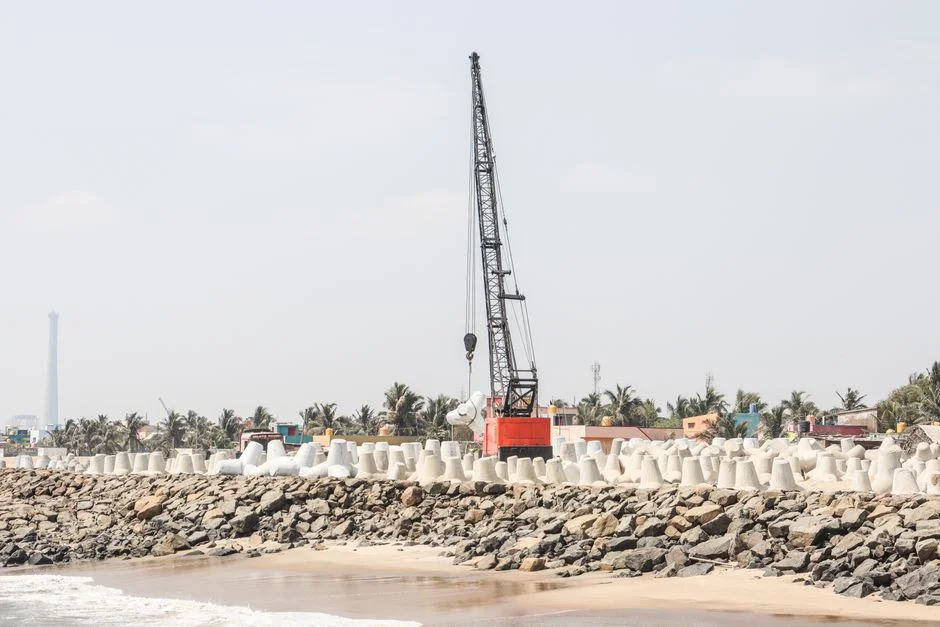
For a coastal or island property, obtain separate information on saline exposure, corrosion protection, flooding, storm conditions, drainage and maintenance access. The supplied research does not establish Micronesia-specific corrosion classes, flood design levels, setbacks or environmental limits. These conditions must come from the site survey and competent local authority; they cannot be inferred from a general hotel or rural package-plant comparison. The package plant versus sewer connection discussion is useful for the broader infrastructure decision, but it does not resolve local coastal requirements.
Expansion should be tested as an operating assumption. Seven Seas Water reports that on-site systems may be expanded by adding capacity or using modular arrangements as hotel demand rises, while the BIOROCK commercial source describes up to nine units installed in parallel. This precedent demonstrates one modular configuration; it does not establish configuration limits for a WSZ or MBR project in Micronesia. The supplier must demonstrate how the proposed arrangement would expand and who would perform that work. The related hotel wastewater system sizing comparison also illustrates why the route to discharge or reuse must be defined before equipment is selected.
Build the procurement brief before requesting a proposal
A comparable proposal requires the same site, wastewater and compliance inputs from every bidder. The request should state average and design peak flow, occupancy scenarios, wastewater characteristics, disposal route, reuse volume and application, available land, soil conditions, flood information, power availability and applicable permit criteria. Unknowns should be labelled “to be confirmed” and assigned an owner rather than silently left out.
Ask each supplier to separate the design flow, treatment train, proposed effluent parameters, commissioning scope, operator training, routine maintenance, spare-parts supply and warranty. Then define the commercial boundary for manufacturing, shipping, island freight, customs, foundations, piping, electrical connections, start-up and ongoing service. A capital price without these inclusions is not comparable with a price that includes delivery and commissioning.
Use the supplied modular precedent carefully. BIOROCK states that up to nine units can be installed in parallel to increase capacity, while Seven Seas Water notes that modular systems can support expansion as hotel demand increases. These are relevant procurement precedents, not a WSZ configuration limit. Require each bidder to state whether its proposal is a single package, multiple packages, staged capacity or an expandable arrangement, and identify the future scope separately.
| Supplier response item | Information required | Acceptance check |
|---|---|---|
| Design basis | Average flow, design peak, occupancy scenario and operating duration | Capacity matches the stated project inputs |
| Treatment train | Process stages, treatment objectives and proposed effluent parameters | Can be checked against local discharge and reuse conditions |
| Site works | Foundations, excavation, piping, electrical connections and access | Responsibility and inclusion are explicit |
| Commissioning | Testing, start-up, operator training and performance demonstration | Scope and acceptance method are defined |
| Maintenance | Routine tasks, consumables, service access and spare parts | Long-term operating burden is visible |
| Delivery | Manufacturing, shipping, island freight, customs and destination responsibilities | No logistics gap sits between supplier and hotel |
| Warranty and expansion | Coverage, exclusions, future modules and installation responsibility | Future growth and risk allocation are documented |
| Compliance | Permit references and supporting performance documentation | Applicable local requirements are identified |
The underground WSZ package specifications should be requested alongside the bid form, while the package plant and sewer selection precedent can help identify questions about infrastructure scope. Neither should substitute for a project-specific procurement brief.
Frequently Asked Questions
Is WSZ or MBR better for a hotel in Micronesia?
WSZ is generally the simpler starting candidate for conventional decentralized treatment with a compliant disposal route, provided its verified peak capacity and buried arrangement suit the site. MBR is the stronger candidate when the required effluent quality or reuse application justifies membrane separation. The final choice must follow the local discharge and reuse criteria, which are not established by the supplied research.
What determines the cost of a packaged sewage treatment plant for hotels in Micronesia?
Price cannot be responsibly quoted without the wastewater flow, design peak, land and burial requirements, reuse target, site conditions, treatment scope and island-delivery inclusions. Request an itemized quotation separating equipment, foundations, piping, electrical work, shipping, island freight, customs, commissioning, training, maintenance, spare parts and warranty. This check makes bids comparable without inventing a price or treating a remote-site budget as a standard equipment cost.
How should a supplier be selected for a remote or coastal hotel?
Check the supplier’s process-design basis, proposed capacity calculation, applicable compliance documentation, installation scope, automation, operator training, maintenance support, spare-parts plan and island logistics. Ask for evidence tied to the stated wastewater and site inputs rather than generic project references. The bidder should also identify who remains responsible after shipment, during commissioning and throughout operation.
How long will delivery and installation take?
Delivery and lead time require a confirmed project scope and destination; the supplied research contains no Micronesia-specific lead time. Obtain a written schedule that separately identifies manufacturing, shipping, island freight, customs clearance, civil works, installation, commissioning and acceptance. Treat any proposed duration as conditional until those dependencies and the buyer’s site-readiness responsibilities are documented.
Related Equipment
- <