Choose source separation or combined treatment
Commercial greywater is wastewater excluding toilet waste, but project boundaries require precise definition. Showers, washbasins and laundry may qualify for source separation; toilet discharge and kitchen wastewater require separate assessment because their organic and solids loads differ. In an existing building with shared drainage, treating the combined flow may avoid new pipework, while source separation can reduce the volume entering biological treatment and support a fit-for-purpose reuse stream. The decision should follow measured flows, contaminant data, drainage layout and the intended reuse—not a generic equipment category.
A 2023 review by Van de Walle and colleagues in Environmental Science and Ecotechnology reports that greywater represents 50–80% of daily household wastewater generation. This figure serves as background evidence rather than a commercial design-flow assumption: it neither establishes a hotel or office peak rate nor accounts for occupancy, fixtures, laundry discharge, kitchen flows or seasonal demand. The project must obtain site-specific flow and contaminant measurements before drainage or equipment is committed.
| Decision point | Source-separated greywater | Combined wastewater |
|---|---|---|
| Wastewater boundary | Showers, washbasins and laundry, subject to project definition; exclude toilet and kitchen discharge unless separately assessed | All building wastewater enters one treatment route |
| Existing-building practicality | May require new drainage, isolation and pumping arrangements | Greywater Action reports that combined treatment can be easier and more cost-effective when wastewater is already combined |
| Equipment consequence | Treatment can be matched to a source-specific contaminant profile | Equipment must handle toilet and kitchen loads as well as greywater |
| Procurement consequence | Need a verified stream map, flow profile and boundary definition | Need combined peak flows, loading data and the same site constraints |
Map the drainage first for an existing hotel, office, school or apartment development. If retrofitting separate greywater pipes would materially increase civil work, compare that burden with the operating and reuse benefits of a combined system. For a new development, separate drainage may provide more control over the treated stream, but only if the source water, reuse demand and approval route justify it.
Match the treatment train to the reuse target
The required water quality at the point of use determines the treatment train, while membrane selection follows. Define whether the reclaimed water will serve toilet flushing, irrigation, washing, cooling or another non-potable demand, and state the applicable acceptance criteria in the brief. “Non-potable” alone is too broad to guide a supplier’s scope.
The 2023 review by Van de Walle and colleagues identifies biological treatment, membrane filtration and ultraviolet disinfection as a technical menu for producing water within applicable reuse parameters. An ultrafiltration system may fit solids removal, bacteria reduction or polishing, but it should not be assumed to deliver every reuse standard on its own. An integrated MBR membrane bioreactor combines biological treatment with membrane separation and may suit flows requiring an integrated treatment train.
For the catalogue UF route, the stated range is 2,000–40,000 L/h, with 0.03 micron PVDF membranes and input turbidity up to 300 ppm. These are equipment specifications reported in the 2023 research source, not universal site limits. Compare them with measured source-water conditions and the required removal duty. For the catalogue MBR route, the stated capacity range is 10–2,000 m³/day with filtration below 1 micron. Confirm whether daily hydraulic capacity is adequate, then test the footprint, pretreatment, controls, disinfection and maintenance requirements against the available plant room.
| Reuse target | Treatment question to resolve | Relevant route to evaluate |
|---|---|---|
| Toilet flushing | What constituent removal, disinfection and distribution controls are required? | Combined biological treatment with MBR, or a package train with validated reuse performance |
| Washdown or washing | What solids, turbidity, microbiological and residual-treatment requirements apply? | UF for polishing when its specification matches the analysis; biological treatment first where organic removal is needed |
| Irrigation | What salinity, nutrients, pathogens, public-exposure and irrigation controls apply? | Treatment and disinfection matched to the reuse specification and authority discussion |
| Cooling | What water-quality limits protect the equipment and process? | UF or MBR, subject to reuse-quality, scaling and pretreatment requirements |
Establish the destination, analytical acceptance criteria and flow demand first. Then select the biological, membrane and disinfection stages that collectively meet those criteria. The WSZ package plant versus MBR for hotel wastewater comparison illustrates why the application and source stream must be resolved before comparing equipment.
Build a project brief suppliers can quote
A comparable site brief serves as the practical procurement mechanism for a reuse and sewer-treatment route comparison. Digital Water’s Estonia guidance states that price depends on water quality, required capacity and installation scope, and that an exact quote follows a water analysis or site details. The commercial greywater recycling system in Estonia should be quoted against measured inputs, not a generic capacity and unit price.
Provide hourly and daily peak flows, catchment areas, fixture counts and intended reuse demand. The supplied sources identify these as necessary project inputs but provide no Estonia-wide commercial flow rule, so the brief should not substitute a generic “per fixture” assumption. Include hourly and daily demand profiles, operating occupancy, laundry production, kitchen exclusion or inclusion, storage requirements and any future expansion assumptions.
| Brief field | Information to supply | Acceptance basis |
|---|---|---|
| Source boundary | Building use; fixture and catchment map; greywater, toilet and kitchen streams included or excluded | Stream map and photographs or drawings reconcile with measured flow |
| Flow and demand | Hourly and daily peak flows; occupancy basis; fixture counts; reuse demand by destination | Capacity covers documented peaks and intended operating scenario |
| Water analysis | Source and treated-water parameters required by the selected reuse route | Analysis performed by the named party and linked to acceptance criteria |
| Site and installation | Footprint, access, utilities, drainage interfaces, storage, noise and building constraints | Offer states civil work, connections, commissioning and exclusions |
| Controls and maintenance | Automation, remote monitoring, operator access, membrane and disinfection service scope | Named operator and maintenance responsibilities are documented |
| Approval ownership | Authority liaison, water-company contact, permit or approval actions and target programme | One accountable approval owner and dated action register |
Before requesting quotations, assign four responsibilities: who commissions the water analysis, who owns regulatory approval, who operates the plant and who maintains membranes and disinfection equipment. Ask suppliers to state validation data, guaranteed treatment performance, supplied equipment, installation scope, commissioning tests, training, spare parts and service arrangements. A generic price excluding civil works, tanks, pumping, electrical work or authority submissions is not comparable.
Verify the Estonian approval and reuse route
Technical feasibility does not establish permission to reuse water in Estonia. Accelerate Estonia’s localised wastewater-reuse project notes that regulatory interpretation creates uncertainty for decentralized recycling and that incomplete interpretation or awareness among local governments and water companies can obstruct novel systems. Confirm the applicable environmental, water and building requirements with the competent local authority and water company for the specific site and reuse destination.
Do not assume that equipment described as “water reuse” is approved for every use. Check applicable building standards and definitions against the intended installation. Discuss whether the project is classified as greywater, technical water or utility water only with the relevant authorities; Accelerate Estonia reports that work involving the Ministry of Climate examined whether more direct legislative definitions were needed, while the existing approach in building standards was considered sufficient at the time of that project.
Provide the authority and water company with the reuse destination, source streams, treatment process, anticipated flow and water-quality basis. Include public exposure, storage, disinfection, monitoring, operating controls, sampling and fail-safe arrangements. Greywater Action notes that greater public exposure can require a more complex system, particularly where water is collected, filtered, disinfected, stored and distributed for toilet flushing or irrigation.
These observations are a screening record, not a permit decision or legal opinion. The project should obtain written confirmation of the applicable route and responsible approvals. Resolve interfaces involving contact with people, the public, food preparation areas or sensitive building services before placing an order.
Compare package, MBR and UF project routes
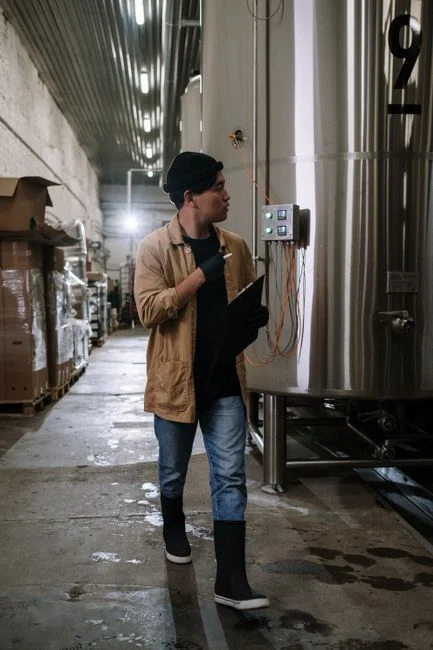
The commercial package, MBR and UF routes differ by source stream, treatment duty and scale; none is a universal answer. The WSZ package plant is specified for 1–80 m³/day and integrates biological treatment, sedimentation and disinfection. Its product information states that no operator is required. It can be considered for a smaller combined-wastewater application, subject to actual analysis, reuse criteria, site footprint and local approval.
The MBR route combines activated-sludge treatment with membrane separation in an integrated train. The stated catalogue range is 10–2,000 m³/day with filtration below 1 micron. Evaluate it where biological removal, compact installation and water-reuse applications are priorities, but request validation against the project’s source water and acceptance criteria. The reuse and sewer-treatment route comparison provides a useful structure for testing reuse value against the remaining sewer route.
The UF route is more appropriate when the primary duty is solids removal, bacteria reduction, polishing or pretreatment for reverse osmosis. The stated catalogue range is 2,000–40,000 L/h, with 0.03 micron PVDF membranes and input turbidity up to 300 ppm. It should not be treated as a substitute for biological treatment where the wastewater requires substantial organic or dissolved-contaminant removal.
| Route | Best fit to assess | Key checks before quotation |
|---|---|---|
| WSZ package plant | Smaller combined-wastewater applications within the stated 1–80 m³/day range | Integrated biological, sedimentation and disinfection performance; reuse specification; footprint; operating controls; approval |
| MBR | Integrated biological treatment and membrane separation for reuse applications | 10–2,000 m³/day catalogue range; sub-1-micron filtration; source-water loading; pretreatment; maintenance |
| UF | Solids removal, bacteria reduction, polishing or RO pretreatment | 2,000–40,000 L/h catalogue range; 0.03 micron PVDF; input turbidity up to 300 ppm; required reuse quality |
Use the commercial cost principle rather than a generic price: final cost depends on water quality, required capacity, treatment train and installation scope, according to Digital Water. For lifecycle budgeting, also request membrane replacement, energy, chemical use, sludge or residuals handling, operator attendance and service coverage. The wastewater treatment maintenance cost planning guide can structure those supplier questions.
Frequently Asked Questions
How does the intended reuse and measured water quality determine the process train?
Define the reuse destination and its acceptance criteria first. Use biological treatment where the load requires organic removal, membrane separation where solids retention or reuse quality requires it, and disinfection where the application requires pathogen control. The measured analysis then determines pretreatment and operating limits; equipment capacity alone cannot establish suitability.
Why does a site-specific quote require flow, analysis and installation-scope information?
Digital Water states that price depends on water quality, required capacity and installation scope. Request a quotation that separates equipment, civil works, drainage changes, pumps, electrical connections, storage, controls, commissioning, training and maintenance. Without those inputs, quotations may omit material costs and cannot be compared reliably.
How should a buyer shortlist suppliers for an Estonian commercial installation?
Ask each supplier to demonstrate treatment fit, applicable validation data, confirmed capacity envelope, complete installation scope, automation, maintenance support and experience with the relevant Estonian approval route. Also request references for comparable source streams and reuse destinations. A local authority and water-company contact is helpful, but it does not replace technical evidence.
Can decentralized greywater reuse proceed without a project-specific Estonian approval decision?
No. Accelerate Estonia reports legal uncertainty caused by interpretation of the applicable rules, including issues involving local governments and water companies. Confirm the environmental, water and building requirements, reuse destination, monitoring and operating controls with the competent authorities before procurement. The supplied observations are not a substitute for a project-specific permit determination or legal opinion.