Choose the treatment route from the hotel's operating requirements
For a hotel in Kiribati, a packaged sewage treatment plant is practical when wastewater must be treated on-site, the site has limited space or access constraints, and the hotel needs a compact system that can be installed and operated reliably. HydropureWater's WSZ A/O package combines biological contact oxidation, sedimentation and disinfection in one buried unit handling 1–80 m³/h. MBR may be preferable when tighter effluent quality or water reuse is essential, but it requires more process-control and maintenance capability. Final selection depends on verified flow, land, reuse, discharge and O&M inputs; HydropureWater's Kiribati standards and cost guide are still being prepared.
The first decision is not the equipment catalogue; it is the required outcome. Record average wastewater flow, the peak period, occupancy, event use, and the kitchen and laundry contributions. If the objective is only compliant discharge to a receiving location, the required treatment specification may differ substantially from a reuse scheme involving irrigation, toilet flushing or other reclaimed-water applications.
Hotel wastewater flow and load are not captured reliably by occupancy alone. Biocell Water states that hotel wastewater flows and loadings can vary substantially during conferences, weddings and other large events, while on-site catering and laundries can introduce concentrated wastewater containing phosphates, surfactants and fats, oils and grease (FOG). These are design inputs, not reasons to add a generic safety factor without checking the actual site.
For a Kiribati property, the applicable discharge or reuse target must be confirmed in writing before selecting a treatment route. HydropureWater's Kiribati country guide states that country-specific discharge standards and cost guides are still being prepared, and asks for flow, influent data and discharge target for a country-specific compliance check. That is an open verification item, not a completed regulatory specification. A general package description cannot establish compliance at the site.
| Decision input | Information to establish | Why it affects selection |
|---|---|---|
| Wastewater flow | Measured or reliably estimated average flow, daily pattern and event peak | Sets hydraulic treatment capacity and storage or equalisation needs |
| Wastewater quality | Kitchen, laundry and guest-room contributions, including FOG, surfactants and phosphates | Determines pretreatment, biological loading and process suitability |
| Treated-water destination | Specified discharge point or intended reuse application | Defines the effluent or reuse performance the supplier must demonstrate |
| Local compliance | Applicable Kiribati authority requirements and project-specific permit conditions | Prevents a general specification being treated as local approval |
| Operating model | Available skills, attendance frequency and remote-support arrangements | Tests whether the selected package can be maintained reliably |
Compare WSZ A/O and MBR across the decision criteria
System selection requires mapping specific process capabilities to the verified flow and treatment objectives of the hotel.
HydropureWater specifies the WSZ underground A/O package plant at 1–80 m³/h. It combines anoxic/aerobic biological contact oxidation, sedimentation and disinfection in one buried unit, is fully automated and requires no operator, according to HydropureWater's verified product catalogue. The same catalogue entry identifies hotels among its intended applications.
HydropureWater specifies the integrated MBR wastewater treatment system at 10–2,000 m³/day and reports a footprint 60% smaller than conventional systems. These are supplier-stated specifications, not a site-specific comparison. The bidder must show how the proposed configuration handles the hotel's verified flow, event peaks and reuse requirement.
| Criterion | WSZ A/O package | MBR system | Procurement test |
|---|---|---|---|
| Published capacity | 1–80 m³/h | 10–2,000 m³/day | Does the proposal cover the verified flow and peak basis? |
| Treatment arrangement | Integrated anoxic/aerobic contact oxidation, sedimentation and disinfection | Membrane bioreactor package; supplier to define the complete process scope | List every stage, tank, transfer and pretreatment item |
| Installation | Single buried package; landscaping can cover it | Site arrangement depends on the proposed configuration | Provide dimensions, arrangement and civil-work assumptions |
| Automation and staffing | Fully automated; supplier states no operator is required | Require the bidder to define routine attendance, control tasks and specialist support | Assign clear operating and maintenance responsibilities |
| Reuse case | Select where the required outcome is met by the integrated A/O route | Select where the verified reuse objective benefits from membrane separation | Ask for the target, test parameters and performance demonstration |
| Compliance | Not established by the product page alone | Not established by the product page alone | Confirm the project-specific requirement with the relevant authority |
Use the hotel wastewater WSZ versus MBR comparison only as a process reference. For Kiribati, require each bidder to map the proposed process to the supplied flow, influent data and discharge target. HydropureWater's Kiribati page expressly conditions a country-specific compliance check on those inputs.
Test the selection against site and operating constraints
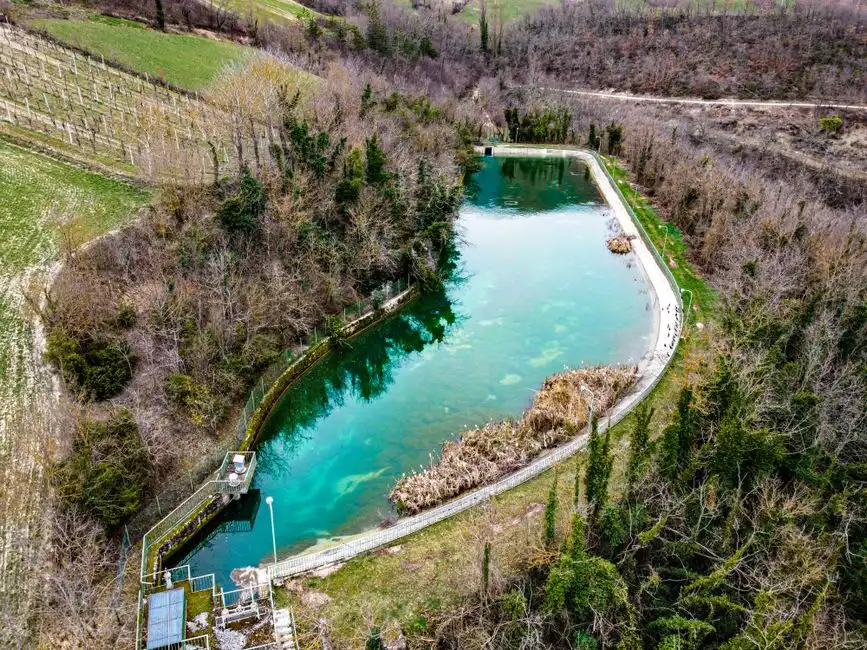
Technical feasibility depends on the ability to deliver, install, protect and maintain the equipment at the specific property.
Confirm the available footprint, excavation access, underground services and flood exposure. Record the delivery route and lifting constraints for arriving equipment. Also establish power availability, backup arrangements and the space required for sludge handling. A buried package may reduce above-ground congestion, but excavation, disposal, access covers and restoration still belong in the installation scope.
Corrosion protection must match the exposure. Fluence reports that its containerized extended-aeration plants use high-strength reinforced carbon steel, factory-applied epoxy coating and sacrificial anodes for corrosion protection (Fluence, Packaged Extended Aeration Wastewater Treatment Plants, 2026). This does not establish the coating or anode life for another supplier's plant; it shows why material, coating and site-exposure requirements belong in the RFQ.
Modular logistics also need project-specific planning. Fluence's Guantanamo Bay case involved 12 prefabricated steel tanks shipped on one barge, and the supplier also handled start-up and personnel training (Fluence, Packaged Extended Aeration Wastewater Treatment Plants, 2026). That case demonstrates modular delivery, but it does not replace island-specific freight, unloading, cranage and installation planning.
Finally, assign ownership of inspection, preventive maintenance, call-outs, spare parts and remote support. If full-time wastewater operators are unavailable, the selected system still needs a defined service plan. For a package sold as requiring no operator, the contract should explain what routine tasks remain and who performs them. The hotel-specific WSZ and MBR selection method offers a useful structure, but the Kiribati site and operating inputs still require local verification.
Build an RFQ that produces comparable technical and commercial offers
A comparable RFQ must specify the service basis first and the commercial boundary second to ensure bidders quote equivalent scopes of work.
Use HydropureWater's request for flow, influent data and discharge target as the minimum starting brief, not as a final local specification. Attach source information for wastewater flow, seasonal occupancy, event use, kitchen and laundry loads, the receiving point and the intended reuse. Ask every bidder to state its design-flow basis, average flow, peak factor, treated-effluent target, reuse requirement, required process stages and treatment capacity.
| RFQ data field | Required response from each bidder | Buyer check before comparison |
|---|---|---|
| Design basis | Average flow, peak flow, peak-factor basis, influent assumptions and duty basis | Does the bid use the same verified wastewater data? |
| Treatment objective | Discharge or reuse target, applicable parameters and compliance documentation | Is each claimed capability tied to a defined requirement? |
| Process and equipment | Stages, capacity, pretreatment, equalisation, disinfection, sludge handling and reuse equipment | Are exclusions visible and technically justified? |
| Physical arrangement | Unit dimensions, above- or below-grade installation, civil works, access and landscaping requirements | Does the arrangement fit the surveyed site? |
| Utilities and controls | Power demand, backup requirements, control and automation scope, alarms and communications | Are utility assumptions tied to supplied site data? |
| Operations | Commissioning, training, inspections, preventive maintenance, call-outs and local service support | Are responsibilities and response arrangements explicit? |
| Commercial boundary | Equipment CAPEX, installation, shipping, commissioning, training, spares, consumables, sludge handling, annual power and maintenance | Are recurring and one-off costs separated? |
| Assumptions and compliance | Every missing datum, stated assumption, exclusion and authority requirement the bidder can verify | Does the bidder distinguish general evidence from project-specific confirmation? |
Request CAPEX items separately from installation, shipping, commissioning, training, spares, consumables, sludge handling, annual power and maintenance. This prevents a lower equipment price from obscuring the total ownership requirement. No local price should be assumed from the supplied research: HydropureWater says its Kiribati cost guide is being prepared, so require a site-specific quotation and identify who bears freight, taxes, civil works and commissioning.
For an additional benchmark, read the hotel and resort wastewater treatment selection guide. Its function is to expose omissions in the bid, not to substitute Accra requirements for Kiribati requirements.
Frequently Asked Questions
How should a packaged sewage treatment plant for hotels in Kiribati be sized?
Size it from verified average and peak hotel wastewater flow, event demand, kitchen and laundry contributions, the discharge or reuse target, and site constraints. Hotel star rating alone is not a design basis. Require each bidder to show the design-flow and peak-factor assumptions behind its offered capacity.
When is WSZ A/O more suitable than MBR for a hotel?
WSZ is the candidate when an integrated A/O package, buried installation and relatively low process complexity dominate the brief. MBR is the candidate when the verified treatment and reuse objective benefits from membrane separation. That recommendation remains conditional on flow, influent data, effluent requirements and operating capability.
What should a buyer request when comparing supplier costs?
Ask for equipment CAPEX, installation, shipping, commissioning, training, spares, consumables, sludge handling, annual power and maintenance as separate entries. Also require every assumption, exclusion and missing site datum to be listed. Because no final Kiribati cost guide is published in the supplied evidence, do not use an unverified generic country cost as the budget.
How should a supplier be selected for installation and long-term support?
Check the proposed delivery, unloading and installation method, local civil-work requirements, corrosion-protection specification, commissioning plan, training, spare-parts availability, maintenance responsibilities and remote or local support. Ask for the delivery schedule and service scope in the offer. For the Kiribati wastewater permit and reuse requirements, obtain project-specific confirmation from the relevant authority; neither product page establishes local compliance.
Related Equipment
- WSZ underground A/O package plant — specifications, capacity range, and technical data