Choose the Effluent Route Before the Equipment
For an industrial wastewater ETP in Denmark, the correct treatment route depends on the wastewater stream, permit destination and reuse objective. A municipal sewer connection may require pretreatment to protect the public system; direct discharge must be assessed against site-specific permit conditions; and internal reuse may need additional polishing. The Danish Environmental Protection Agency states that wastewater discharge requires a permit covering permissible quantities and pollutant concentrations. Start by defining the destination and authority, then use verified wastewater data to compare treatment options.
The discharge route changes the compliance boundary, required evidence and process duty. This decision must be fixed before comparing equipment catalogues or requesting prices. Use the following route-selection worksheet with the site owner and environmental consultant.
| Decision field | Complete before quotation | Evidence required |
|---|---|---|
| Intended destination | Municipal sewer, permitted direct discharge or internal reuse | Site plan, connection details or reuse process requirement |
| Responsible authority | Name the municipality, permit holder or authority administering the receiving system | Written confirmation and applicable pretreatment requirements |
| Legal discharge point | Identify any sewer connection, outfall or reuse point | Permit application, permit reference and correspondence |
| Compliance basis | Define concentration, quantity, monitoring and reporting obligations | Current permit and written authority comments |
| Project responsibility | Allocate design, application, operation and compliance duties | Responsibility matrix signed by project parties |
| Initial equipment scope | Define pretreatment, treatment, polishing, storage and sludge handling | Route decision, wastewater analysis and reuse objective |
Municipal treatment plants receive wastewater from households, enterprises and institutions, while permits set conditions for discharge quantities and pollutant concentrations. The municipality generally supervises the public sewer network, while consumers remain responsible for maintaining the public system up to the property line. Ask the site owner or consultant to confirm which requirements apply to the specific trade effluent and connection.
For a broader procurement workflow, the effluent treatment plant buyer’s guide provides a useful sequence, but the Danish permit and receiving-system evidence must remain the governing project inputs.
Map the Wastewater to the Treatment Train
Wastewater analysis determines which unit operations belong in the industrial wastewater ETP; equipment selection without representative influent data leaves the treatment duty undefined. Request flow variability, organic loading, solids, oil and grease, pH, nutrients, salinity, metals and sector-specific contaminants, then confirm the required analytes against the permit and receiving authority.
Use a sampling plan that captures normal production, batch discharges, clean-in-place activity, peak flow and known excursions. For each parameter, record the analytical method, sampling location, detection limit and period covered. A single spot sample is not a substitute for a defensible design basis.
Effluent characteristics can differ materially between facilities and even between operating conditions. In a textile-industry study in Kaduru, Nigeria, seven measured parameters exceeded applicable limits, including COD, TSS, ammonia, BOD5 and sulfide; colour intensity exceeded the limit in all five samples, while COD, TSS, NH3, BOD5 and sulfide exceeded it by reported average factors of 24, 13, 8, 7 and 3, respectively (Global NEST Journal, “Characterization of Textile Industries’ Effluents in Kaduru, Nigeria and Pollution Implications,” publication date not stated). This provides evidence of parameter variability, rather than a Danish limit or a design basis for another site.
| Wastewater finding | Candidate treatment step | Selection question |
|---|---|---|
| Rags, plastics, fibrous debris or other coarse suspended material | Rotary mechanical screening | Will removal protect pumps, flow control and downstream biological processes? |
| Suspended solids, oil and grease, FOG or colloidal matter | DAF pretreatment | Is removal needed before biological treatment, equalisation or membrane separation? |
| Biodegradable organic load requiring biological treatment | Biological treatment | Does the influent support the proposed biological process under expected load and temperature conditions? |
| Need for biological treatment combined with membrane solids separation | Integrated MBR | Does the required footprint, membrane duty and solids-handling route match the site? |
| Defined reuse requirement requiring further solids, colloid or microbial separation | UF or another polishing step | Which parameters define acceptance, and what pretreatment protects the membrane? |
If the analysis indicates suspended solids, oil and grease, FOG or colloidal material that should be removed before biological treatment, consider an industrial DAF pretreatment system. The supplied product information covers DAF models from 4 to 300 m³/h in 13 configurations; these are catalogue ranges, not a recommendation for a specific Danish project.
Consider an integrated MBR wastewater treatment system where biological treatment, compact installation and membrane solids separation are required. The supplied catalogue covers 10 to 2,000 m³/day and states filtration below 1 μm. Neither range establishes project suitability: the selected configuration must be matched to flow, load, reuse criteria, footprint and operating constraints.
Use coarse screening where rags, plastics, fibrous debris or other suspended material could overload pumps or downstream biological processes. This is a protection step, not a substitute for solids removal, biological treatment or polishing where those are required by the permit and reuse target.
Set the Reuse and Effluent-Quality Target
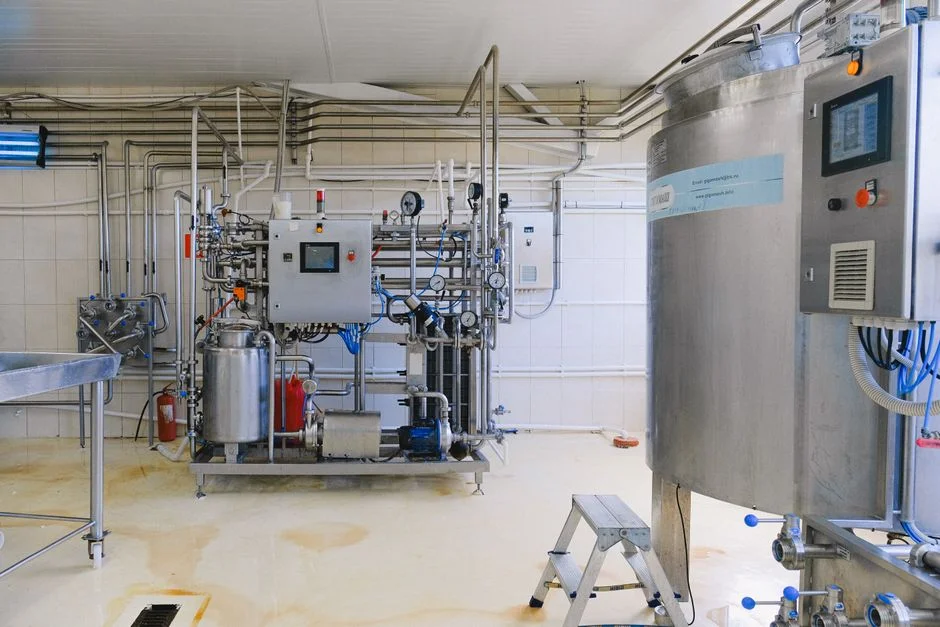
A reuse objective must be written as an application, flow, parameter schedule and acceptance method before polishing equipment is selected. “Reuse water” alone does not define the required process or prove that an effluent is fit for production, cooling, irrigation or another purpose.
Complete four fields for each reuse stream:
- Application: identify the receiving process or activity and any process-specific water-quality constraint.
- Required flow: distinguish continuous demand from batch demand and identify whether storage is needed.
- Monitoring parameters: list the analytes that determine fitness for use, including any site-specific process contaminant.
- Acceptance method: define sampling points, test methods, frequency, acceptance criteria and who releases the water.
The research supports application-specific design rather than a universal reuse claim. A University of Twente thesis investigated direct nanofiltration as a method for polishing wastewater treatment plant effluent, evaluating its potential to meet EU Water Framework Directive standards and support agricultural or indirect potable-use objectives (University of Twente, “Direct nanofiltration of wastewater treatment plant effluent,” publication date not stated). That work establishes a research basis for the approach; it does not demonstrate performance on an unidentified industrial stream in Denmark.
Where the reuse train includes reverse-osmosis pretreatment, the supplied UF water-treatment system information states that the option accepts up to 300 ppm turbidity and removes bacteria, colloids and suspended solids without chemicals using 0.03 μm PVDF membranes. The supplier must still demonstrate that the actual feedwater, including its contaminants and fouling tendency, remains within the stated operating basis.
Verify site-specific fouling, energy demand, cleaning requirements, recovery, chemical use and regulatory acceptance. Where the route is still unresolved, a data-centre wastewater route-selection example can help structure the decision questions, but it does not replace analysis of the Danish industrial wastewater stream or the applicable permit.
Build a Supplier-Ready Specification
A comparable wastewater supplier specification must give every bidder the same design basis, wastewater analysis, permit limits, reuse target and acceptance conditions. Without these inputs, prices describe different scopes and cannot be ranked on equipment cost or treatment performance alone.
Include the following in the request for quotation:
- Design flow, peak flow, operating profile and wastewater analysis.
- Permit limits, receiving authority and municipal pretreatment requirements.
- Intended discharge or reuse route and final-water acceptance criteria.
- Proposed process train, duty basis, excluded flows and design margins.
- Installation footprint, civil works, utilities and tie-ins.
- Sludge or concentrate handling, chemicals, media and waste routes.
- Automation, alarms, sampling, controls and operator training.
- Commissioning tests, performance guarantees, spares and local service support.
- Delivery schedule, installation sequence, approval dates and contractual remedies.
Market directories can help identify candidates but should not determine suitability. Ensun’s 2026 Denmark search reported 57 manufacturers, 46 manufacturer company types, 25 service providers and one distributor, while also listing category filters covering environment and disposal, manufacturing, machinery, oil and gas, and construction (Ensun, “Top 57 Effluent Treatment Plant Manufacturers in Denmark,” 2026). These are search-result counts, not evidence that any listed supplier can meet a project’s process or permit requirements.
| Bid comparison field | Supplier response required | Buyer check |
|---|---|---|
| Process route | Stage-by-stage purpose and treatment duty | Does every stage address an identified pollutant or operating need? |
| Duty basis | Design flow, peak flow and contaminant load used | Does it match the submitted wastewater analysis? |
| Performance | Guaranteed outputs and test conditions | Are guarantees tied to the permit or reuse acceptance criteria? |
| Exclusions | Civil works, permits, installation, commissioning, utilities and waste disposal | Are gaps assigned and priced explicitly? |
| Operating resources | Energy, chemicals, sludge, media and replacement items | Are consumption assumptions stated? |
| Controls and support | Automation, training, spares, response time and local service | Can the supplier support operation through the agreed period? |
| Delivery | Manufacture, shipment, installation and commissioning dates | Do dates align with permit and construction milestones? |
Require each bidder to state which permit, analysis and reuse assumptions its price excludes. Reconcile those exclusions before commercial comparison. The wastewater remote-monitoring supplier guide can support control-system questions, but controls must remain part of the same integrated equipment specification.
Verify Delivery, Compliance and Lifecycle Risk
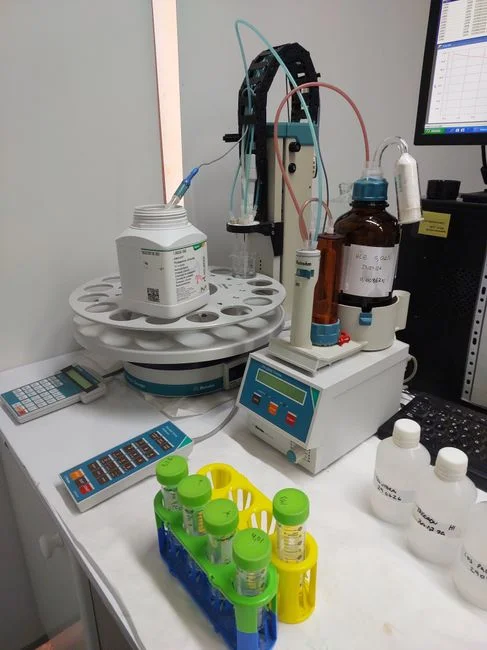
Compliance verification must cover the selected route before equipment acceptance, because a compliant analytical result does not correct an incorrect discharge point or missing authorisation. Confirm that the route, receiving authority and permit conditions have been reviewed by the responsible Danish project parties. The Danish Environmental Protection Agency states that discharge permits set permissible wastewater quantities and requirements for pollutant concentrations and quantities, and that the agency supervises permits and compliance with permitted discharge amounts.
Make plant acceptance conditional on an agreed test protocol. Define representative influent conditions, test methods, sampling points, guaranteed output parameters, test duration and the consequences of non-compliance. Do not accept a performance statement without stating which parameters are guaranteed, under what flow and load, and by which analytical method.
Review the operating commitment before comparing lifecycle costs. Examine membrane or media replacement, routine cleaning, sludge removal, chemical consumption, energy demand, controls, operator training and local service support. A plate-and-frame filter press may be relevant to a dewatering duty, but it does not remove the need to define the sludge stream, moisture target, operating hours and residue-disposal route.
Assign responsibilities in writing. The owner should confirm the operating objective and permit basis; the environmental consultant should support interpretation and permit coordination; the receiving authority should provide or confirm applicable connection and pretreatment requirements; and the equipment supplier should remain accountable for the contracted process scope and guarantees. The Effluent Treatment Plant classification in Ensun’s 2026 directory is market-discovery information; it is not independent verification of technical compliance, installation quality or supplier performance.
Frequently Asked Questions
How should the budget for an effluent treatment plant in Denmark be established?
Request all quotations against one wastewater-analysis package, selected discharge route, permit limits, reuse target and installation boundary. Ask each supplier for equipment, civil works, utilities, chemicals, sludge handling, commissioning, training, spares and disposal costs as separate line items. A defensible budget requires current supplier quotations rather than assumed unit prices.
Which supplier-selection checks matter more than directory visibility?
Evaluate proposed process suitability, duty basis, guarantees, exclusions, acceptance tests, delivery schedule and local service support. Ensun’s 2026 directory can generate a market list, but its company counts do not demonstrate that a bidder can comply with the permit or meet the reuse objective. Require evidence against the project specification.