How to Choose an Effluent Treatment Plant in Johor Bahru
An industrial ETP in Johor Bahru should be selected from the wastewater duty, not from a generic package size. Factories with oil, grease or suspended solids generally need DAF pretreatment; sites requiring compact biological treatment and high-quality reuse can evaluate MBR; UF is more commonly a solids-removal or membrane-pretreatment stage. HydropureWater’s DAF systems span 4–300 m³/h, while its MBR systems span 10–2,000 m³/day. A defensible proposal must also account for flow, pollutant analyses, discharge or reuse requirements, sludge handling, available footprint and local operating costs.
Begin with the required outcome. Direct discharge, sewer connection, controlled reuse, process-water recovery and potable-related reuse impose different treatment and documentation requirements. The University of Twente thesis on direct nanofiltration, published as PhD research output, distinguishes effluent intended for agricultural or direct and indirect potable use; that technology context does not establish the applicable standard for a Johor Bahru site.
Document the hourly and daily wastewater flow, operating shifts, batching pattern, peak demand, retained-flow requirements and expected production changes. Then identify the contaminants that will drive process selection: FOG and oil, suspended solids, biodegradable organics, pH, nutrients, metals, colour, salinity and any regulated priority pollutants.
The current permit, sewer discharge conditions or end-user specification should form the compliance basis. The supplied research does not contain a Johor Bahru statutory effluent-limit table, so buyers must confirm current site-specific limits with the relevant authority and the facility operator before comparing quotations.
- Characterise the wastewater through representative sampling.
- Select primary treatment and biological stages according to contaminant load.
- Define solids separation, sludge handling and disinfection.
- Determine whether advanced polishing is required for reuse or micropollutant control.
This staged method is more defensible than beginning with a package catalogue. For broader regulatory and equipment context, the 2026 ETP buyer’s guide for Kuala Lumpur and Malaysia wastewater equipment guide provide useful reading, but the Johor Bahru site data must remain the controlling basis.
Match the Treatment Train to the Wastewater
DAF, MBR and UF perform different functions and should not be treated as interchangeable equipment in an industrial wastewater treatment system.
Use dissolved air flotation where wastewater contains FOG, oil, colloids or suspended solids. HydropureWater states that its DAF equipment covers food processing, pulp and paper, textile, metalworking, petrochemical and municipal pretreatment applications. The DAF system for industrial wastewater pretreatment therefore fits a primary-removal duty, not the full biological treatment obligation by itself.
Use biological treatment for biodegradable organic loads. HydropureWater’s Johor Bahru engineering guide identifies conventional activated sludge as an established, robust option for general industrial wastewater, including sectors such as textiles and paper mills. The MBR versus conventional activated sludge comparison provides a more detailed framework for the biological-stage decision.
Use MBR where biological treatment and membrane solids separation need to be combined in a compact installation. HydropureWater reports an integrated MBR wastewater treatment system with a footprint 60% smaller than conventional systems and filtration below 1 μm. Use UF for fine solids, colloids and bacteria removal or as pretreatment for reverse osmosis; the supplied product data specifies 0.03 μm PVDF membranes, 2,000–40,000 L/h capacity and turbidity acceptance up to 300 ppm.
| Wastewater or reuse condition | Treatment role to evaluate | Decision point |
|---|---|---|
| FOG, oil, colloids or suspended solids | DAF primary treatment | Confirm contaminant load and flotation capture duty |
| Biodegradable organics with a conventional treatment footprint | Biological treatment with sedimentation | Check land, aeration and sludge requirements |
| Biodegradable organics with compact installation and separated solids | MBR | Compare reuse quality, footprint and membrane maintenance |
| Fine solids, colloids, bacteria or membrane pretreatment | UF | Check feed turbidity, flux and backwash requirements |
| Advanced reuse or micropollutant control | Additional polishing | Define the required end use and contaminant target first |
Palm-oil and food-processing projects require their waste streams characterised before equipment selection. The Environmental Reviews article on palm-oil liquid waste identifies POME components including fibre, wastewater and residual oils. Where advanced reuse is involved, the University of Twente research supports nanofiltration as an effluent-polishing technology, while Wageningen University’s 2022 thesis documents constructed wetlands for micropollutant removal. These are technology references, not evidence of local regulatory acceptance. Further context is available in the suspended-solids removal process guide and slaughterhouse ultrafiltration engineering guide.
Compare DAF, MBR and UF Before Specifying Equipment
DAF, MBR and UF should be compared by treatment function and position in the complete train, not by nominal capacity alone.
| Parameter | DAF | MBR | UF |
|---|---|---|---|
| Primary function | Flotation and skimming | Biological degradation with membrane separation | Fine solids and colloid separation |
| Supplied capacity | 4–300 m³/h across 13 standard models | 10–2,000 m³/day | 2,000–40,000 L/h |
| Membrane specification | Not stated in the supplied research | Submerged PVDF; filtration below 1 μm | 0.03 μm PVDF |
| Reported features | Micro-bubble generation and automatic skimming | Integrated activated-sludge treatment and 60% smaller reported footprint | Automatic backwash and air scour; no chemical use for membrane separation |
| Typical decision driver | FOG, oil, grease, suspended solids and colloidal matter | Compact biological treatment and separated solids | Fine solids, colloids, bacteria or reverse-osmosis pretreatment |
| Checks before purchase | Peak flow, contaminant load and skimming/solids duty | Aeration, flux, cleaning, redundancy and expansion | Feed turbidity, flux, recovery, backwash and pretreatment |
The capacity and performance figures above are supplied HydropureWater product scopes, not universal guarantees or Johor Bahru discharge limits. A supplier should demonstrate that peak flow, hydraulic loading, membrane flux, recovery, cleaning strategy and upstream pretreatment fit the proposed duty. Operator requirements also matter: MBR needs aeration and membrane maintenance, UF needs disciplined backwash and feed control, and DAF requires attention to recycle, skimming and recovered-solids handling.
The decision is sequential. If the wastewater contains separable oil and solids, evaluate DAF first. If biodegradable organics remain and solids separation must be integrated, compare MBR against conventional biological treatment. If the required reuse application includes a membrane barrier, evaluate UF or another polishing stage. This avoids buying a primary unit for a biological duty or an MBR where the wastewater has not been characterised sufficiently for membrane operation.
Size the Plant from Verified Project Inputs
An ETP should be sized from peak and batch flows plus verified pollutant loads, not from average daily discharge alone.
Request representative influent and effluent samples across normal production, peak production, cleaning cycles and variable discharge conditions. The sampling plan should identify where flow originates and whether unequal concentrations arrive during tank emptying, washdown or slug loads. A supplier needs the operating schedule, future expansion assumptions and site constraints to establish hydraulic and contaminant loading.
| Input to obtain | Why the supplier needs it | Equipment check |
|---|---|---|
| Design flow and peak/batch flow | Establishes hydraulic capacity and equalisation needs | DAF: 4–300 m³/h; MBR: 10–2,000 m³/day; UF: 2,000–40,000 L/h |
| Representative wastewater analysis | Establishes contaminant loading and pretreatment requirements | Match oil, grease, solids and colloid duty or biological and membrane feed quality |
| Operating schedule and retained flow | Shows sustained demand and operating duration | Check aeration, membrane flux, recovery and backwash assumptions |
| Site drawings and plot dimensions | Tests equipment arrangement, access and foundations | Include sludge removal, maintenance and delivery clearances |
| Sludge generation and handling route | Prevents the liquid treatment scope from hiding a solids problem | Plan thickening, dewatering, containerisation and disposal |
For DAF, verify flow against the 4–300 m³/h model range and test the oil, grease, solids and colloid load against the selected unit. For MBR, express the required flow in m³/day, check it against the 10–2,000 m³/day range, and examine aeration, membrane maintenance, cleaning and redundancy. For UF, convert the duty to L/h, confirm it lies within 2,000–40,000 L/h and check feed turbidity against the stated 300 ppm ceiling.
Downstream solids handling remains part of ETP sizing. Biological treatment and DAF generate sludge that still requires dewatering, storage, containerisation and disposal planning. Supplier quotations should identify this boundary rather than treating sludge disposal as an undefined operating cost.
Account for Johor Bahru Site and Operating Constraints
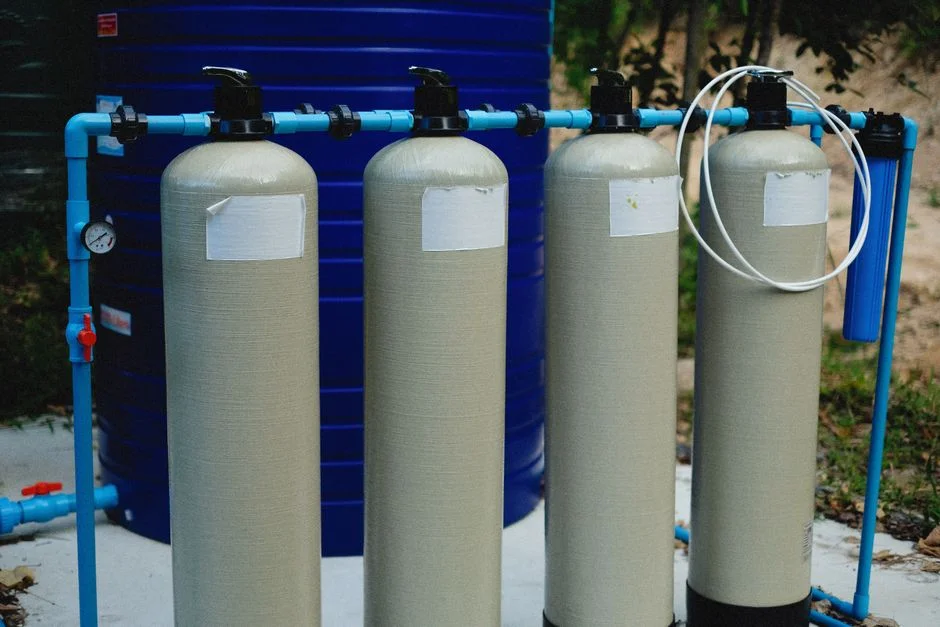
Land availability, drainage, maintenance access and operating labour can determine whether a technically suitable industrial ETP is practical at a Johor Bahru address.
HydropureWater’s Johor Bahru guide identifies land scarcity in Pasir Gudang and Iskandar Malaysia and gives a land-cost range of MYR 150–300/m². This is a commercial planning input from that guide, not a universal valuation for every Johor Bahru location. Obtain site-specific land availability and cost confirmation before accepting a layout that depends on purchasing additional land.
Compare packaged or skid-mounted systems with civil, buried and more space-intensive arrangements. The layout must permit access for sludge removal, routine maintenance, deliveries and tanker or lorry loading. Include foundations, drainage, odour control, noise limits, electrical supply and sludge storage in the site assessment.
HydropureWater reports MBR electricity consumption of 0.8–1.2 kWh/m³ for aeration and membranes. The same guide reports skilled-operator costs of MYR 4K–6K/month in Iskandar Malaysia. These figures should be treated as the source’s stated planning inputs; request the operating profile, tariff assumptions and attendance model used in each supplier’s lifecycle estimate. A plant may require full-time attendance, remote supervision or periodic specialist support, and those arrangements should be priced separately from the equipment.
Monsoon conditions also require a site-specific response. Review drainage paths, flood exposure, access during wet weather and whether stored sludge or chemicals could remain above flood levels. The supplied research does not establish current Johor Bahru discharge limits or land availability at a specific address; both require verification during project development. The industrial sulfide removal guide can help identify additional pretreatment issues where odour and reduced compounds are relevant.
Build a Supplier-Ready Technical Request
A defensible ETP enquiry should force each supplier to expose its process assumptions, guarantees, scope boundaries and commercial exclusions.
State the treatment objective, design flow, full wastewater analysis, applicable permit or reuse specification, site drawings and required operating mode. Explain whether the intended result is direct discharge, sewer acceptance, controlled reuse or process-water recovery. Without these inputs, different suppliers will interpret “treatment” differently and their prices will not be comparable.
Request a process flow diagram, equipment schedule, duty calculations, utility requirements, control philosophy, footprint, foundation loads, access arrangements and future-expansion provisions. The supplier should identify equalisation, primary treatment, biological treatment, solids separation, disinfection, sludge handling and any polishing stage in the submitted flow diagram.
| Technical item to request | Evidence needed in the proposal | Commercial boundary to identify |
|---|---|---|
| Process basis and sizing | Duty calculations linked to measured flow and pollutant data | Excluded flows, future loads and assumed operating mode |
| UF or MBR membrane data | Material, pore size, design flux, cleaning method and frequency, and replacement provisions | Scope and responsibility for membrane fouling |
| Energy and operating assumptions | DAF and MBR energy assumptions used for operating-cost estimates | Excluded electricity, chemicals, consumables and labour |
| Delivery and implementation | Civil requirements, installation method, controls and commissioning plan | Training, laboratory equipment, spares and site services |
| Sludge and maintenance | Expected sludge stream, removal route and maintenance access | Sludge removal, disposal, routine service and membrane replacement |
Ask each supplier how site-specific values were verified against current permits, influent testing and the final equipment proposal. That verification basis is consistent with HydropureWater’s Johor Bahru engineering guidance, but it remains a document to inspect rather than a statement to accept. The 2026 ETP buyer’s guide for Kuala Lumpur and Malaysia wastewater equipment guide can support internal review of tender submissions.
Frequently Asked Questions
What is the difference between DAF, MBR and UF in an industrial ETP?
DAF is primarily a primary-treatment stage for FOG, oil, suspended solids and colloidal matter. MBR combines biological treatment with membrane solids separation. UF provides fine solids and colloid removal, bacteria removal or pretreatment for reverse osmosis. Their positions in the treatment train are different, so one should not be substituted for another without reviewing the wastewater duty and final effluent target.
How much should an effluent treatment plant in Johor Bahru cost?
The supplied research provides selected local planning inputs—MYR 150–300/m² for land in Pasir Gudang/Iskandar Malaysia and MYR 4K–6K/month for skilled operators—but no universal turnkey ETP price. Request a quotation based on design flow, full wastewater analysis, treatment objective, site conditions, civil scope, utilities and sludge handling. Ask for capital and operating costs separately, including exclusions.
Which wastewater data should I provide before asking suppliers to size an ETP?
Provide design and peak flow, production and discharge schedules, representative influent and effluent analyses, the applicable permit or reuse specification, site drawings and future-expansion plans. Add operating modes, retained-flow requirements and information about batch discharges so suppliers can test equipment capacity rather than size from average daily flow.
Is MBR or conventional activated sludge better for a Johor Bahru industrial plant?
MBR offers compact treatment and filtration below 1 μm, with HydropureWater reporting electricity consumption of 0.8–1.2 kWh/m³ for aeration and membranes. Conventional activated sludge is identified as an established, robust option for general organic loads. The decision depends on contaminant profile, footprint, reuse requirements, aeration, membrane maintenance and lifecycle economics.
How do I compare ETP suppliers in Johor Bahru?
Check the submitted process basis, sizing calculations, equipment scope, compliance approach, energy assumptions, commissioning plan, delivery scope and after-sales support. Confirm that the proposal uses verified site data and current permit conditions rather than generic production figures. Then compare omissions explicitly: civil works, installation, training, chemicals, sludge removal, disposal, maintenance and spare parts should not be left ambiguous.