
Select the Eswatini discharge route before choosing equipment
The practical choice for a hospital in Eswatini is between connection to an EWSC sewer, an on-site WSZ package plant, or a dedicated hospital treatment system. EWSC operates 10 treatment plants and states that it complies with the EEA Water Pollution Control Regulations (2010), but connection is possible only where a sewer main exists and a survey confirms a connection point. Hospitals with larger flows, specialised effluent or reuse requirements should compare package and dedicated systems against verified wastewater data. A 2025 West African review reported high pooled resistance prevalence in hospital wastewater, though this evidence is regional rather than Eswatini-specific.
Start with the discharge route, not the equipment catalogue. If an EWSC sewer main serves the hospital site, request a connection survey and obtain the receiving-system requirements in writing. That may remove the need for an on-site treatment train, but it does not remove the need to verify capacity, pretreatment requirements, local approval and discharge conditions.
Where the public sewer is unavailable, the next decision is whether a packaged biological system is adequate or whether the hospital needs a more specialised train. The WSZ underground package sewage treatment plant serves hospital applications where an on-site package unit is preferred, with a capacity of 1–80 m³/h. It integrates biological treatment, sedimentation and disinfection in a buried unit.
For a hospital with a higher treated-water objective or a specific reuse requirement, compare the MBR membrane bioreactor wastewater system. Its published range is 10–2,000 m³/day, with filtration below 1 μm. These are catalogue selection inputs, not site approvals: confirm average and peak flow, wastewater character, available land, power supply, maintenance access and permit conditions before selecting either route.
| Decision input | EWSC sewer connection | WSZ package plant | MBR system |
|---|---|---|---|
| Route condition | Sewer main must exist; EWSC survey confirms availability and connection point | On-site treatment required or preferred | On-site treatment selected for membrane filtration or treated-water objectives |
| Published capacity | Not established by the supplied EWSC information | 1–80 m³/h | 10–2,000 m³/day; filtration below 1 μm |
| Principal checks | Coverage, connection survey, charge, receiving-system requirements, discharge conditions | Peak flow, effluent character, footprint, buried-unit access, power and maintenance | Peak flow, reuse target, footprint, power, membrane maintenance, monitoring and sludge handling |
| Procurement status | Route depends on EWSC confirmation | Supplier quotation after site verification | Supplier quotation after site and permit verification |
Check EWSC coverage, connection cost and local approval
EWSC’s published service information provides a sequence for checking whether a sewer connection is feasible: establish that the site is within a gazetted service area, confirm that a sewer main exists, and obtain EWSC’s survey of the available main and connection point. The Eswatini Water Services Corporation states that an application can be made through its Revenue Offices in its four geographic regions, and that connection is made only after the survey.
Ask EWSC to record the response in writing. The confirmation should identify the surveyed connection point, whether the hospital can connect directly, and what local works or approvals are required. A general statement that sewerage exists in the town is not enough to establish that the hospital can connect at the required point.
EWSC publishes a connection charge equal to 90% of water consumption after the property is connected to the public sewerage system, according to its wastewater-management information. Use that figure only as an initial commercial input. Request EWSC’s applicable charge, billing basis and any site-specific local works costs for the proposed connection before comparing it with on-site alternatives.
For environmental due diligence, record EWSC’s statement that it complies with the Eswatini Environmental Authority’s Water Pollution Control Regulations (2010), but obtain the current permit and discharge conditions that apply to the receiving system. The EEA permit applicable to an on-site hospital system must be checked separately; sewer connection does not automatically transfer responsibility for the hospital’s internal wastewater and any residual discharge.
EWSC also reports monitoring and sampling upstream and downstream of receiving streams. Use that monitoring practice as a benchmark when defining sampling points for an on-site treatment system. The review must identify where untreated influent is sampled, where treatment-stage performance is assessed, and where final effluent is sampled before discharge or reuse.
| Verification item | Evidence or request | Procurement consequence |
|---|---|---|
| Sewer coverage | Written EWSC confirmation and completed main/connection-point survey | Defines whether the sewer route remains feasible |
| Connection cost | Published initial input: 90% of water consumption; request applicable confirmation | Include in the sewer-route lifecycle comparison |
| Receiving-system requirements | Current EWSC conditions for connection, pretreatment and discharge | May add treatment, monitoring or local works |
| Environmental authority | Current EEA permit and applicable discharge or reuse conditions | Sets the compliance basis for on-site or sewer routes |
| Monitoring plan | Upstream, process and final-discharge sampling locations | Provides measurable acceptance criteria |
Match the treatment process to hospital wastewater risk
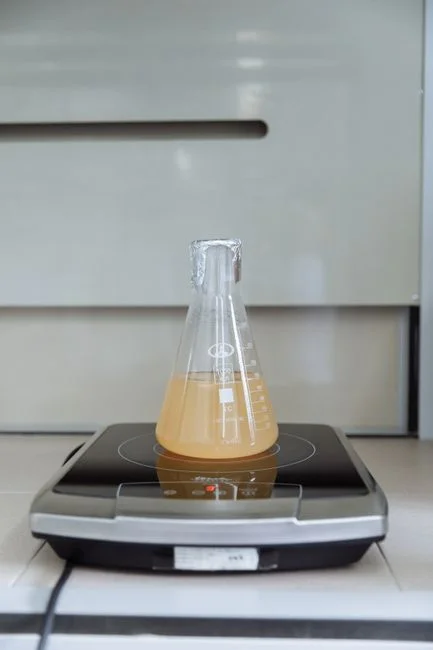
Hospital wastewater treatment must be selected around the wastewater and the reuse objective, not around a generic “hospital” label. The WSZ package plant combines anoxic and aerobic biological contact oxidation, sedimentation and disinfection in a single buried unit. It is relevant where a compact, integrated treatment train is needed and the verified site flow can be assigned to its stated 1–80 m³/h capacity.
The MBR system combines activated-sludge treatment with submerged PVDF membrane filtration. Its published capacity is 10–2,000 m³/day, filtration is below 1 μm, and the footprint is 60% smaller than conventional systems. These figures describe the offered configuration; the buyer must still confirm hydraulic loading, membrane arrangement, power demand, controls, sludge handling and maintenance access.
For smaller medical facilities, the Medical & Hospital Wastewater Treatment System combines multi-stage filtration with ozone disinfection. The HydropureWater verified product catalog states a 99%+ kill rate and a footprint as small as 0.5 m². These are product claims, not a guaranteed performance result for a hospital. A purchase specification should define the organisms, test method, operating conditions and wastewater on which acceptance is based.
Antibiotic-resistance evidence justifies deeper assessment and monitoring, but it must be kept within its geographical scope. The 2025 West African systematic review in BMC Public Health analysed 23 studies and reported pooled prevalence of 42.6% for resistant E. coli and 32.1% for resistant K. pneumoniae. These are regional results from West African hospital wastewater, not measurements for Eswatini hospitals. The review also notes that evidence on the treatment of resistant bacteria, resistance genes and antibiotic residues remains limited.
Request site wastewater characterisation before final process selection. The sampling programme should cover flow and the unit-by-unit discharge profile, together with COD, BOD, suspended solids, pH, nutrients, antibiotics, disinfectants and pathogens. The results should then be tested against the receiving-system requirements, the planned reuse standard and the supplier’s proposed process duty.
| Configuration | Published treatment approach | Key selection question |
|---|---|---|
| WSZ underground package plant | Anoxic/aerobic biological contact oxidation, sedimentation and disinfection in one buried unit; 1–80 m³/h | Does the verified flow and wastewater load fit the package, and can the buried unit be maintained? |
| MBR membrane bioreactor | Activated sludge with submerged PVDF membranes; 10–2,000 m³/day; filtration below 1 μm | Does the treated-water objective justify membrane operation and associated controls? |
| Medical and hospital wastewater system | Multi-stage filtration and ozone disinfection; catalogue reports 99%+ kill rate and footprint as small as 0.5 m² | What site-specific test protocol will verify the claimed disinfection outcome? |
Build a fillable equipment-selection and acceptance matrix
A procurement-ready matrix should force the buyer to complete the same inputs for all three routes before comparing prices. Complete the site and route fields first, then ask each supplier to respond against the same guaranteed duty and acceptance requirements. This prevents a package price from hiding site works, pretreatment, power, sludge removal, monitoring or permit-related costs.
- Enter average flow, peak flow and the discharge profile for each hospital unit.
- Record the wastewater characterisation and any unit requiring segregation or pretreatment.
- Map available footprint, access for maintenance, power and the intended reuse or discharge point.
- Record sewer-main availability, the EWSC survey result, applicable charge, receiving-system conditions and current environmental permit.
- Issue the same process, commercial and acceptance schedule to shortlisted suppliers.
Supplier scope should include guaranteed process duty, pretreatment requirements, disinfection stage, automation, power demand, retention time, sludge handling, maintenance, spare parts and commissioning tests. Acceptance should identify contractual performance parameters, test methods, sampling points, correction periods, training, documentation and warranty handover. Do not convert the 2025 West African resistance review into a guaranteed removal claim: require evidence that the proposed process meets the agreed performance criteria for the hospital’s tested wastewater.
| Matrix field | Buyer entry or supplier response | Required evidence |
|---|---|---|
| Site flow | Average: ____; peak: ____; unit profile: ____ | Water balance and measured discharge records |
| Wastewater character | COD ____; BOD ____; suspended solids ____; pH ____; nutrients ____; antibiotics ____; disinfectants ____; pathogens ____ | Site sampling report and laboratory methods |
| Land and access | Available footprint ____; maintenance access ____; power ____ | Site plan, utility confirmation and access assessment |
| Reuse objective | Intended use: ____; receiving or reuse conditions: ____ | Current permit and receiving-system or reuse requirements |
| EWSC route | Main confirmed: ____; survey result: ____; applicable charge ____ | Written EWSC confirmation |
| Supplier process scope | Pretreatment ____; treatment duty ____; disinfection ____; automation ____; sludge ____ | Process description, drawings and equipment schedule |
| Operating scope | Power ____; retention time ____; maintenance ____; spares ____ | Consumption estimates and maintenance schedule |
| Acceptance | Parameters ____; methods ____; sampling points ____; correction period ____ | Contract test schedule and handover documents |
| Performance evidence | Wastewater tested: ____; test method: ____; achieved result: ____ | Witness test and laboratory report |
Where disinfection is included in a proposed system, the chlorine dioxide generator may be evaluated as part of the disinfection scope rather than accepted as a substitute for site-specific process validation. Define the intended application, operating conditions, monitoring method and downstream safety requirements before including it in the package.
Frequently Asked Questions
How should a hospital choose between EWSC sewerage, a WSZ package plant and an MBR system?
Choose EWSC sewerage first if EWSC confirms a sewer main and a suitable connection point, then compare the applicable charge and receiving-system conditions with on-site lifecycle costs. Use the WSZ route when the verified wastewater can fit its published 1–80 m³/h range and an integrated buried package is suitable. Use MBR when the treated-water objective requires membrane filtration and the site can support the associated power, controls, maintenance and sludge arrangements.
What should a buyer request before comparing supplier prices?
Request one scope for every route covering site flow, wastewater characterisation, land, reuse, pretreatment, disinfection, automation, power, retention time, sludge handling, maintenance, spares, monitoring, commissioning and training. Also request itemised site works and commercial exclusions. Equipment price alone will not show the cost of compliance-critical pretreatment, routine servicing, sludge removal or performance testing.
Should site wastewater testing and regulatory confirmation precede final supplier selection?
Yes. Obtain a site wastewater characterisation and written EWSC or EEA confirmation before accepting a final process selection. Testing establishes the actual flow and contaminant profile; regulatory confirmation establishes the connection, discharge and reuse conditions. These inputs let suppliers demonstrate duty against the same site requirements and reduce the risk of buying equipment that cannot meet the intended route.
Does the West African antibiotic-resistance review prove that an Eswatini hospital needs a specific treatment system or removal rate?
No. The 2025 BMC Public Health review analysed 23 West