
Define the treatment duty before selecting equipment
Equipment selection for a hospital in Equatorial Guinea begins with the facility’s wastewater flow and composition, the receiving environment, and whether the treated water will be discharged, reused, or irrigated. Compact medical systems suit smaller facilities, while WSZ package plants serve broader hospital flows and MBR systems are appropriate where high-quality reuse is required. The HydropureWater compact system combines multi-stage filtration with ozone disinfection, a stated 99%+ kill rate, and a footprint as small as 0.5 m². Equatorial Guinea-specific discharge standards and costs are not yet published by HydropureWater, so the responsible authority, discharge point, and project-specific influent data must be confirmed before procurement.
A supplier cannot size a hospital wastewater treatment system from occupancy alone. The design basis should distinguish average flow from peak flow, include operating hours and future expansion, and state whether kitchen, laboratory, laundry, dialysis, and other non-domestic streams enter the same collection system. These distinctions affect equalization, biological loading, pretreatment, and peak disinfection performance.
The wastewater characterization should cover COD, BOD, suspended solids, pH, oil and grease, temperature, salinity, nutrients, and relevant pharmaceutical residues. The laboratory sampling plan should specify sampling points, timing, and flow conditions. If reuse is intended, identify whether the destination is irrigation, cooling, washing, or another process, because the receiving use changes the treatment and verification protocol.
The receiving route must be fixed in writing. For a municipal sewer, surface-water discharge, groundwater infiltration, land application, or onsite reuse, identify the responsible authority, applicable permit conditions, sampling point, and any restrictions on the discharge environment. The HydropureWater Equatorial Guinea country guide, accessed in 2026, states that country-specific discharge standards and cost guides are still being prepared; this is not evidence of a local discharge limit.
A Cameroon study in the Journal of Environment Pollution and Human Health assessed antimicrobial-resistant Pseudomonas aeruginosa in groundwater near hospital effluent in Douala and Yaoundé. It supports treating groundwater contamination as regional risk evidence, not as Equatorial Guinea law or a substitute for a project-specific hydrogeological assessment.
| Selection input | Information to document | Why it affects the quotation |
|---|---|---|
| Flow | Average and peak flow, occupancy, operating hours and expansion plan | Sets hydraulic capacity, equalization and peak treatment requirements |
| Wastewater profile | COD, BOD, suspended solids, pH, oil and grease, temperature, salinity, nutrients and relevant pharmaceutical residues | Determines biological, filtration and pretreatment design |
| Non-domestic streams | Kitchens, laboratories, laundry and other healthcare wastewater sources | May require segregation or dedicated pretreatment |
| Discharge route | Municipal sewer, surface water, infiltration, land application or onsite reuse | Defines the receiving authority and sampling point |
| Permit basis | Applicable conditions, approval process and monitoring requirements | Prevents equipment selection against an unverified standard |
| Reuse objective | Intended water use and required quality verification | Influences membrane, disinfection and monitoring requirements |
Compare compact, package and MBR treatment routes
The compact medical route is the appropriate starting point for a small facility with a constrained footprint and simple treatment objectives. The HydropureWater verified product catalog identifies the Medical & Hospital Wastewater Treatment System for clinics, dental offices, veterinary hospitals, and small medical facilities. It combines multi-stage filtration with ozone disinfection, reports a 99%+ kill rate, occupies as little as 0.5 m², and requires no chemical dosing.
The package route serves hospitals needing a combined biological, settling, and disinfection process in a buried installation. The WSZ underground package plant combines anoxic/aerobic biological contact oxidation, sedimentation, and disinfection in one unit. Its stated capacity is 1–80 m³/h, and it is identified for hospitals and other decentralized applications.
The MBR route is the stronger candidate when reuse quality, footprint, or process control drives the decision. The HydropureWater MBR system combines activated sludge with submerged PVDF membrane filtration and is described as providing near-reuse-quality effluent below 1 μm filtration, with a stated capacity range of 10–2,000 m³/day. For a hospital with a defined reuse objective, review the MBR system for hospital wastewater reuse against the required effluent use and site constraints.
Use nominal capacity as a screening test, not the final selection. A compact unit may fit a small clinic but leave no reserve for future expansion. A package plant may suit a municipal connection or constrained above-ground space, while its buried installation introduces excavation, drainage, and access issues. An MBR may provide a higher level of solids separation and reuse potential, but its procurement scope must include the membrane system, controls, cleaning provisions, replacement strategy, and acceptance testing.
| Route | Verified scope | Selection advantage | Key question to resolve |
|---|---|---|---|
| Compact medical system | Multi-stage filtration with ozone disinfection; stated 99%+ kill rate; footprint as small as 0.5 m²; no chemical dosing | Small footprint and simple physical procurement | Does the design flow, influent basis and treated-water requirement fit the intended discharge or reuse route? |
| WSZ underground package plant | Anoxic/aerobic biological contact oxidation, sedimentation and disinfection in one buried unit; stated capacity 1–80 m³/h | Combined treatment for decentralized hospital applications | Can the site accommodate excavation, lifting, drainage, access and odor control? |
| MBR system | Activated sludge with submerged PVDF membrane filtration; stated near-reuse-quality effluent below 1 μm filtration; stated capacity 10–2,000 m³/day | Higher separation performance for reuse-led projects | Which reuse standard, monitoring protocol and membrane maintenance commitment will be included? |
For a small clinic, begin with the compact hospital wastewater treatment system, then test it against measured flows, permit conditions, and reuse needs. For a broader hospital or buried decentralized installation, compare the WSZ package route. If the water must support a defined reuse activity, compare that route with an MBR and require the supplier to demonstrate the proposed destination-specific result.
Size disinfection around the discharge and reuse risk

Disinfection sizing relies on the treatment objective and receiving route rather than standalone component selection. The compact medical system’s ozone stage is reported with a 99%+ kill rate in the HydropureWater verified product catalog. That claim does not by itself establish compliance at a particular site: the project must verify applicable residual requirements, contact conditions, monitoring method, and sampling point with the responsible Equatorial Guinea authority or environmental adviser.
Where a chlorine dioxide generator is considered, the HydropureWater range is identified for hospital effluent and spans manual configurations from 50 g/h to fully automated systems at 20,000 g/h. Those figures describe equipment output, not the required dose for a hospital. The supplier must calculate the operating output from the design flow, wastewater characteristics, target residual, contact arrangement, and any downstream demand. If demand varies, the control strategy and storage or generation arrangement also need to be documented.
For reuse, define the endpoint before accepting a disinfectant claim. Irrigation, cooling, washing, and other process uses impose different health, operational, and verification requirements. The quotation should state the design flow, feed-water quality basis, disinfectant dose or output, residual strategy, monitoring method, and included validation test. If ozone is used, ask how off-gas handling, power interruption, and verification of microbial reduction are addressed.
Hospital effluent pathogen reduction should be assessed at the agreed sampling point under representative operating conditions. The Cameroonian groundwater research supports discussion of environmental isolation and monitoring, but it does not establish an Equatorial Guinea legal threshold or a universal sampling protocol.
Build a procurement and acceptance checklist
A comparable quotation is only possible when every bidder prices the same project inputs and delivery scope. The hospital owner should provide current and design flows, occupancy, operating schedule, expansion plan, wastewater characterization, discharge point, intended reuse, and utility information. Missing information should remain explicitly identified rather than replaced by an assumed design value.
The local authority or environmental adviser should confirm applicable permit conditions, discharge standards, approval process, sampling requirements, and restrictions for the selected receiving environment. The responsible authority should also confirm whether any applicable requirement applies to the hospital as a healthcare facility, the installation method, the discharge point, or the intended reuse activity.
Each supplier should return the process basis, sizing calculations, general arrangement drawings, materials, controls, utilities, installation requirements, commissioning protocol, operating and maintenance scope, spare parts, warranty, and training plan. Acceptance criteria should then be written as verifiable obligations rather than broad statements of compliance.
| Checklist field | Supplier response to complete | Acceptance evidence |
|---|---|---|
| Design basis | Flow, wastewater profile, discharge route and reuse objective | Approved project inputs and dated calculation |
| Process and sizing | Treatment stages, equipment dimensions and capacity basis | Sizing calculation and general arrangement drawing |
| Disinfection | Output, dose basis, residual strategy and monitoring method | Commissioning record and validation test |
| Utilities | Power, water, drainage, compressed air and chemical requirements | Confirmed utility schedule and site interface |
| Controls | Automatic sequence, alarms, interlocks and failure response | Factory and site functional tests |
| Installation | Foundations, underground works, connections and electrical scope | Inspection and completion certificates |
| Commissioning | Testing method, media preparation, stabilization and sampling plan | Agreed protocol and signed results |
| O&M and warranty | Tasks, frequencies, personnel, spares, response time and warranty | Contract documents, training record and warranty certificate |
Set acceptance around the documented design flow, treated-water compliance at the agreed sampling point, stable automatic operation, maintenance access, and demonstrated disinfection performance. A supplier should identify which conditions are tested at commissioning and which require ongoing monitoring. Unverified foreign standards must not be inserted as local obligations; state the applicable authority basis instead.
Confirm delivery, installation and operating constraints
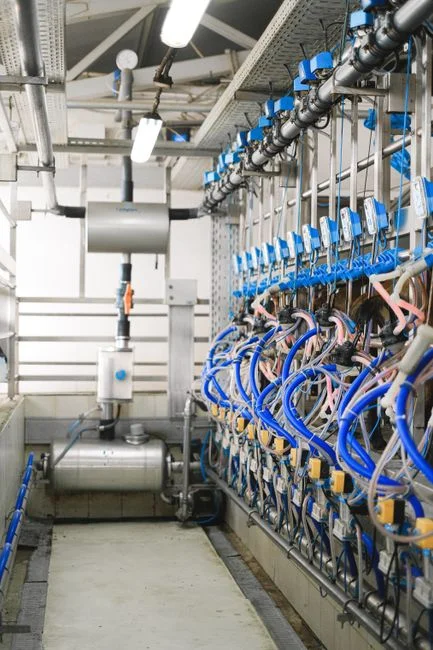
Site feasibility can eliminate an otherwise suitable treatment route. At facilities in Malabo, Bata, Ciudad de la Paz, Ebebiyin, and other project locations, confirm site access, excavation constraints, underground installation requirements, power availability, drainage, odor controls, and access for maintenance. A buried package plant requires a verifiable excavation and lifting plan; a compact unit requires confirmation that its service envelope remains accessible; an MBR requires space and provisions for membrane maintenance and cleaning.
Request a clear scope boundary covering freight, customs, foundations, electrical works, connections, commissioning, training, spare parts, and post-commissioning support. Local taxes, import procedures, electrical standards, and installation labor should be stated as assumptions where they are not included. Ask each bidder to show how its delivery assumptions affect the commissioning programme and which activities remain the contractor’s responsibility.
The supplied research does not provide Equatorial Guinea-specific lead times or costs, so neither should be assumed. A country-specific quotation must be requested after the flow, influent data, and discharge target are confirmed, consistent with the HydropureWater Equatorial Guinea guide accessed in 2026. The regional hospital wastewater engineering guide for Dakar can support technical question development, but it is not an Equatorial Guinea legal or cost reference.
The 30 m³/day West Africa dialysis-centre MBR case study is a comparable reference point for framing questions about design basis, controls, commissioning, and reuse claims. It is not an Equatorial Guinea price, installation quotation, or performance guarantee. Use it to test whether the supplier has documented an operating case with comparable flow and healthcare wastewater duties.
Frequently Asked Questions
How much will a hospital wastewater treatment system in Equatorial Guinea cost?
Request a site-specific quotation rather than applying a country price guide that is not yet published. The HydropureWater Equatorial Guinea guide accessed in 2026 states that country-specific cost guides are still being prepared. The quotation request should include design and peak flow, wastewater characterization, discharge route, reuse objective, utilities, installation conditions, and the required scope for freight, customs, foundations, commissioning, training, spares, and warranty.
How should the system be sized?
Use measured average and peak flow, future expansion, and the reuse requirement together. Screen the compact medical system for smaller facilities, the WSZ route within its stated 1–80 m³/h capacity, and the MBR route within its stated 10–2,000 m³/day capacity. Final sizing should be documented by the supplier against the project wastewater profile and operating schedule.
Which supplier documentation should be requested before ordering?
Require the wastewater data and permit assumptions used for design, sizing calculations, drawings, equipment and materials, controls, utility demands, commissioning tests, operating and maintenance scope, spares, warranty, and training. Ask for demonstrated disinfection performance under the quoted operating conditions, with a defined sampling point and acceptance