Define the Treatment Objective Before Selecting Equipment
Industrial effluent treatment and reverse osmosis in Timor-Leste should be selected as a treatment train, not as a stand-alone RO purchase. First establish the flow, wastewater constituents and required effluent or reuse quality. Use biological treatment, DAF or another suitable pretreatment step for organic matter, suspended solids, oil and grease, then use UF where finer particle control is needed before RO. Industrial RO typically rejects 95–99% of dissolved solids, but this depends on system design and feed water; pretreatment and concentrate management remain essential. The supplied research does not establish Timor-Leste-specific industrial wastewater limits, so site sampling and regulatory verification must precede final equipment selection.
Separate the destination of the treated water from the treatment technology to ensure design accuracy. A direct-discharge project is judged against the applicable receiving-water and discharge requirements. A reuse project is judged against the process specification, such as boiler feed, cooling, washing or another process-water requirement. Higher-purity reuse may justify UF and RO together, while a discharge project may not require RO if the required contaminants can be addressed by conventional treatment. The comparison of UF/RO reuse and discharge-compliance routes provides a useful decision structure.
Request the daily average flow, peak flow, operating schedule, required treatment hours and any future expansion basis from the owner. Also request the receiving-water constraints or the reuse-water specification before quotations are compared. The supplied research does not provide Timor-Leste-specific industrial discharge limits, so the permit conditions must be confirmed with the relevant authority rather than assumed from another jurisdiction.
| Decision input | Information to obtain | Effect on treatment selection |
|---|---|---|
| Flow basis | Average flow, peak flow, operating hours, batching and future expansion | Sets hydraulic capacity and whether storage or equalisation is required |
| Discharge objective | Receiving-water constraints and verified discharge conditions | Determines whether conventional treatment, RO or additional polishing is justified |
| Reuse objective | Required quality for the intended process or user | Defines the permeate target and whether UF/RO is required |
| Site constraints | Available footprint, utilities, drainage routes and access | Influences pretreatment, pumping, controls and installation arrangement |
Characterize the Wastewater and Select Pretreatment
Wastewater characterization determines which pretreatment step can protect the RO system. Request representative analysis covering pH, suspended solids, oil and grease, COD, hardness, salinity, chloride, metals and any process-specific contaminants. Sampling should cover the relevant operating conditions rather than relying on a single grab sample. The supplied research does not provide Timor-Leste industrial averages, so the site analysis should be used as the design basis and its sampling scope should be stated in the procurement package.
Aligning the pretreatment technology with the specific contaminant profile ensures system longevity. Use DAF where suspended solids, oil and grease, FOG or colloidal material must be removed. The DAF wastewater pretreatment range listed in the supplied product material covers 4–300 m³/h across 13 standard models. That range identifies available equipment, not the required capacity for a Timor-Leste site. The final selection still depends on flow, contaminant loading and the required removal result.
Use UF as a finer pretreatment barrier before RO when particle control is required beyond the performance of the preceding process. The supplied UF product information specifies capacities from 2,000 to 40,000 L/h, uses 0.03 micron PVDF membranes, and includes automatic backwash and air scour. Those specifications describe the referenced system family; they do not establish the appropriate flux, configuration or capacity for an unspecified industrial effluent.
Treat organic and biological fouling as a design constraint rather than an operating surprise. The supplied article from Water Technology Online, published in 2025, states that wastewater RO systems frequently encounter organic and biological fouling, which can increase operating costs. Systems treating high-fouling wastewater may require frequent chemical cleaning, accelerating membrane degradation and reducing membrane life. The pretreatment decision should therefore address the mechanism expected to reach the membrane, not only the visible solids load. For a wastewater-specific comparison, use the supplied guidance on selecting pretreatment from wastewater characterization and comparing DAF and MBR treatment routes.
| Observed or suspected contaminant | Pretreatment question | Relevant equipment reference |
|---|---|---|
| Suspended solids, oil and grease, FOG, colloids | Will removal before RO reduce particle loading and fouling risk? | DAF wastewater pretreatment; product information lists 4–300 m³/h across 13 standard models |
| Fine suspended material before RO | Is an additional membrane barrier required? | UF system; supplied information lists 2,000–40,000 L/h, 0.03 micron PVDF membranes, automatic backwash and air scour |
| High organic content or biological growth potential | What process removes or stabilizes organics before membrane entry? | Compare DAF and MBR routes; organic and biological fouling requires an explicit RO fouling-control basis |
| Dissolved salts, hardness and process-specific contaminants | Which contaminants require RO, polishing or another dedicated process? | Use RO for dissolved contaminants where the reuse or discharge objective supports it |
Set RO Performance, Recovery and Concentrate Requirements
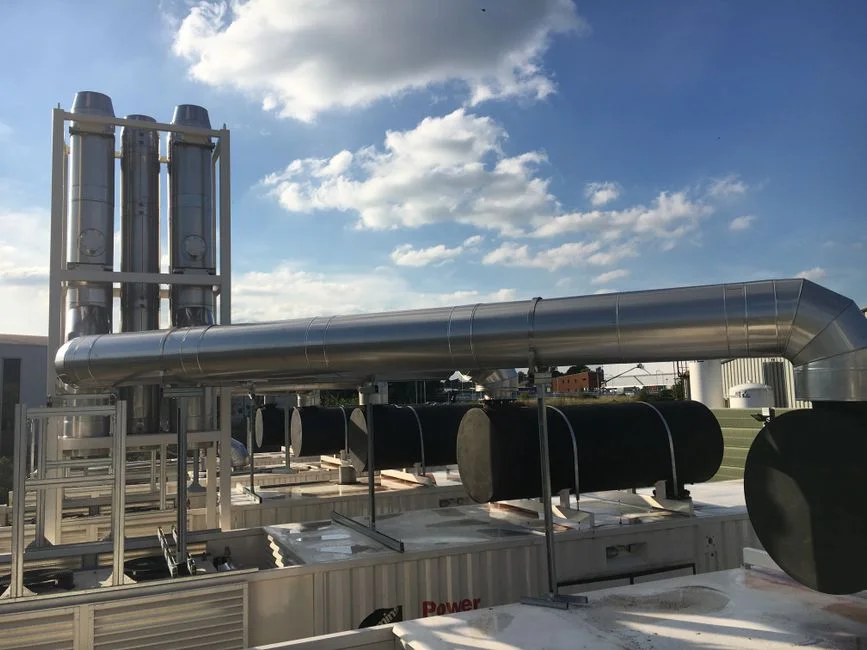
RO performance should be written as a feed-water-specific guarantee, not as a generic rejection percentage. The supplied Kurita America article, published in 2025, states that industrial RO membranes typically reject 95–99% of dissolved solids depending on system design and water source. Require each proposal to state permeate flow, recovery rate, feed-water range, permeate-quality basis and test conditions. Without these conditions, the percentage cannot be compared fairly between suppliers or transferred to the project site.
The supplied HydropureWater catalogue information lists recovery rates up to 95% for its industrial RO systems. Treat that as a catalogue capability, not a universal design value. The final recovery must be established from the feed-water analysis, membrane configuration, operating pressure, temperature, scaling potential and the required permeate flow. The proposed industrial RO treatment system should therefore be assessed on its complete performance case rather than on the headline recovery figure alone.
Specify antiscalant, softener or other scale-control measures only after reviewing hardness, alkalinity, sulfate and other feed-water data. The same pretreatment review should address suspended solids, organic matter, biological fouling and any process-specific constituents that could damage the membrane. Pretreatment is not an accessory: the supplied Kurita article identifies inadequate pretreatment as a common cause of membrane fouling and shortened membrane life.
Require a concentrate balance covering expected flow, salinity, collection, disposal or reuse options and discharge constraints. Kurita America states that RO produces a reject stream that must be managed or discharged appropriately. A proposal that presents only permeate flow has not demonstrated that the treatment train has a complete site solution. Energy use associated with operating under pressure must also be included in the operating comparison, because higher pressure and additional cleaning affect total cost.
| Acceptance item | Information required in each proposal | Why it matters |
|---|---|---|
| Permeate flow | Net product flow at the stated feed-water and operating conditions | Prevents a nominal flow from being confused with usable output |
| Recovery | Design recovery and the basis for its calculation | Links product water to concentrate generation |
| Feed-water range | Quality and variability limits covered by the guarantee | Shows whether the proposed equipment matches site conditions |
| Permeate quality | Target parameters, test method and sampling conditions | Creates a measurable acceptance basis for discharge or reuse |
| Concentrate | Flow, composition basis, collection route and disposal or reuse assessment | Closes the water balance and identifies compliance exposure |
Build a Proposal-Ready Design Brief
A proposal-ready design brief should let bidders calculate, select and test the same treatment objective. Issue one package containing the wastewater analysis, flow series, source-water analysis, discharge or reuse targets, site constraints, available utilities, installation concept and required commissioning tests. If data is missing, mark it explicitly and assign responsibility rather than allowing each bidder to assume a different design basis.
Clearly defined roles ensure the owner and supplier provide the necessary technical inputs for a successful installation. The owner should supply site data and the required output. The treatment supplier should supply process calculations, equipment selection, performance guarantees and O&M documentation. Ask each bidder to identify pretreatment, RO, post-treatment, controls, sludge or concentrate handling and spare parts separately. This separation makes it possible to identify omissions and compare proposals on the same scope.
Request operating support covering membrane cleaning, consumables, monitoring and operator training. The supplied Water Technology Online article, published in 2025, explains that chemical cleaning accelerates membrane degradation, while membrane replacement adds material cost and downtime. The article also reports that cleaning costs include labor, downtime, make-up water, wastewater treatment, energy and chemicals; it gives a median North American analysis of $43.08 per 8040 element, per clean. This is a cited North American operating observation, not a Timor-Leste price or budget estimate, so obtain a site-specific cost basis from suppliers.
- Define the destination and required quality.
- Establish the flow series and representative wastewater analysis.
- Select pretreatment from the contaminants and fouling mechanism.
- Set RO feed limits, recovery, permeate guarantees and concentrate criteria.
- Include site utilities, controls, commissioning tests, O&M and spares in the commercial offer.
| Package item | Owner input | Supplier deliverable |
|---|---|---|
| Design basis | Wastewater analysis, flow series, source-water data, discharge or reuse targets | Process calculations, treatment-train selection and design assumptions |
| Equipment | Site constraints, utilities and installation limitations | Separate identification of pretreatment, RO, post-treatment, controls and handling equipment |
| Performance | Required output and acceptance tests | Feed-water-specific permeate flow, recovery, permeate quality and test conditions |
| Operations | Operating schedule and staffing expectations | O&M manual, cleaning procedures, monitoring plan, training and spare parts list |
| Residuals | Available collection and disposal routes | Concentrate and sludge balance, with management assumptions stated |
Frequently Asked Questions
Can a defensible capacity or RO recovery rate be quoted before wastewater sampling?
No. A defensible capacity requires the flow basis, operating schedule and representative wastewater analysis, while recovery requires the source-water composition and the proposed RO configuration. Request average and peak flow, sampling coverage, feed-water ranges and the required permeate flow. If those inputs are unavailable, ask the supplier to present the missing-data assumptions and confirm which design values remain provisional.
What should determine whether the project uses discharge treatment, UF/RO reuse or both?
Start with the required output. Use discharge treatment when the verified requirement is compliance with the receiving-water or discharge conditions and the contaminants can be addressed without dissolved-solids removal. Use UF/RO when process reuse or higher-purity reuse requires dissolved-contaminant control. Combine both only when the treatment train must satisfy a defined reuse demand while also managing a discharge route. Compare UF/RO reuse and discharge-compliance routes using the project’s actual receiving-water and process-water constraints.
How should a buyer compare supplier scope, sizing and operating support?
Require each bidder to submit the same design basis and identify equipment, performance guarantees, pretreatment, post-treatment, controls, concentrate handling, commissioning tests, O&M documentation, training and spare parts separately. Check that guarantees state feed-water conditions, recovery, permeate flow and permeate quality, rather than relying on a generic rejection percentage. Ask for the membrane-cleaning and consumables strategy, monitoring requirements and the basis for concentrate disposal or reuse. These checks make sizing and lifecycle obligations comparable across offers.
How much will the industrial effluent treatment and reverse osmosis plant in East Timor cost?
The supplied research does not provide a defensible project price, so request a quotation after the wastewater analysis, flow series, treatment objective, site utilities and concentrate route are defined. Ask each supplier to separate equipment, pretreatment and RO, post-treatment, controls, installation, commissioning, training, spares and operating costs. Include membrane cleaning, chemical consumption, energy and replacement allowances in the request for lifecycle cost information. Do not use the cited North American cleaning-cost observation as a Timor-Leste budget.