Define the treatment objective before choosing equipment
Compare a WSZ underground A/O package sewage treatment plant with an integrated MBR membrane bioreactor for Comoros hotels that lack dependable sewer access. WSZ combines anoxic/aerobic contact oxidation, sedimentation and disinfection in one unit, handles 1–80 m³/h, and can be buried below grade. MBR occupies 10–2,000 m³/day and offers near-reuse-quality effluent below 1 μm filtration. A sewer remains preferable where a reliable compliant connection exists. The final choice depends on verified daily and peak flow, available land, effluent limits, reuse targets, local approval requirements and available operating support.
The first procurement decision is not which equipment has the smallest footprint. It is whether the hotel needs a permitted discharge, irrigation or another reuse route, or an interim sanitary solution that is not intended for direct environmental discharge. The supplied research does not establish which route the competent Comoros authority will approve for a particular hotel. It also does not provide a Comoros-specific discharge limit, groundwater rule, permit procedure or installer requirement.
Record the intended receiving environment, the proposed reuse activity and the required level of reliability. Do not let a supplier treat “compliance” as a property of the equipment. Ask the bidder to match the proposed treatment train to the applicable discharge or reuse specification, identify the authority that will review it and state what evidence supports the claim. The WSZ versus MBR for hotel wastewater comparison is useful as a route-selection reference, not as evidence of approval in Comoros.
Ecological protection and legal verification are separate workstreams. A 2021 academic paper in Sustainability, “Land-Sourced Pollution with an Emphasis on Domestic Sewage,” discusses nutrient pollution from domestic sewage around Indian Ocean and Pacific coral reefs, but it does not specify a Comoros permit limit. That supports minimizing untreated nutrient input; it does not establish the applicable legal standard. The project file should contain both an environmental rationale and a separately verified permit route.
Screen sewer, WSZ and MBR against site requirements
Confirm the reliability of service, an authorized connection point and acceptable discharge terms before selecting a sewer route. A nearby network on a drawing is not proof of capacity, connection availability or permission to connect. Obtain those points in writing before developing an onsite treatment budget. If any one remains unresolved, retain WSZ and MBR as alternatives rather than presenting the sewer as available.
Use the WSZ route when the hotel needs a compact, automated onsite package with limited surface-space impact. The HydropureWater product catalog states that the WSZ series combines anoxic/aerobic biological contact oxidation, sedimentation and disinfection in a single buried package; it handles 1–80 m³/h, requires no operator and can be installed below grade or mounted on a trailer for mobile deployment. Those are catalog capabilities, not a Comoros-specific performance guarantee. The bidder must show how the selected configuration handles the measured site flow and local operating conditions.
Consider MBR when the project requires the stated near-reuse-quality output or a smaller installation footprint. The HydropureWater catalog gives a capacity range of 10–2,000 m³/day, filtration below 1 μm and a footprint 60% smaller than conventional systems. Require the bidder to define the intended reuse, test method and receiving conditions behind the “near-reuse-quality” description. Otherwise, the phrase cannot serve as an acceptance criterion.
| Decision point | Sewer connection | WSZ A/O package | MBR |
|---|---|---|---|
| Selection condition | Confirm service reliability, authorized connection point and discharge terms | Select for compact, automated onsite treatment where the treatment objective is established | Select for the specified near-reuse-quality requirement or a smaller footprint |
| Published equipment scope | Not supplied | 1–80 m³/h; A/O contact oxidation, sedimentation and disinfection | 10–2,000 m³/day; filtration below 1 μm |
| Space and installation | Depends on connection route and third-party works | Buried installation or trailer mounting | Catalog states footprint is 60% smaller than conventional systems |
| Key evidence to request | Capacity confirmation, connection agreement and discharge terms | Duty calculation, controls, commissioning scope and effluent test basis | Reuse definition, membrane maintenance plan, test basis and lifecycle scope |
Hotel precedents can test whether suppliers understand modular deployment; they do not prove performance in Comoros. ClearFox describes a containerized hotel plant with solids separation, biological treatment and a lamella separator, and reports that many projects can be planned, delivered and commissioned within a few months after consultation, subject to project conditions (ClearFox, 2024). BIOROCK describes parallel scaling from modules serving 60–300 people (BIOROCK, 2026). Use those examples to ask how the bidder will split, expand and balance flow at this hotel.
Build a defensible flow and capacity basis
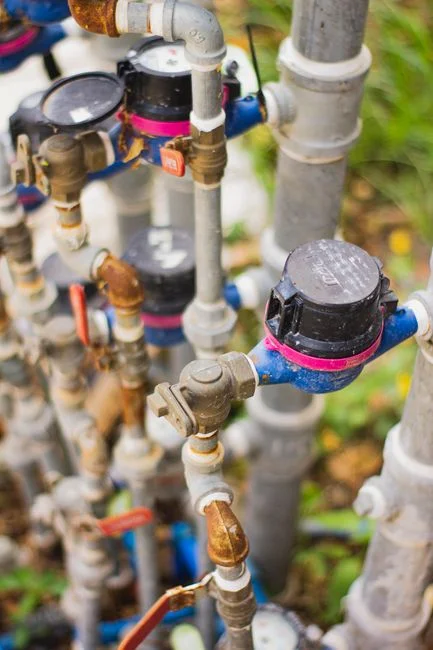
Calculate capacity from the hotel’s actual wastewater generation, rather than occupancy labels alone. Request wastewater flow associated with guest occupancy, laundry, kitchen operations, staff facilities and seasonal changes. Anua identifies variable loading and peak-season operation as relevant hotel conditions (Anua International, 2026), but the supplied research provides no universal flow-per-guest value. A measured operating profile or a supplier’s documented calculation method is therefore required.
- Separate average daily flow from peak-hour flow, surge events and standby conditions.
- Identify the water source and whether wastewater streams are combined or segregated.
- Record incoming characteristics, required pretreatment and kitchen grease or solids loading.
- Compare the resulting design basis with the published equipment ranges.
- Require the selected supplier to document the conversion from measured demand to unit count and duty allocation.
The WSZ catalog range of 1–80 m³/h and the MBR catalog range of 10–2,000 m³/day are equipment-selection boundaries, not automatically suitable capacities for a hotel. The units are also not directly interchangeable without identifying the operating profile and design conditions. The hotel wastewater system selection using WSZ or MBR is a useful check on selection logic, but the Khartoum case should not be used as a Comoros flow assumption.
Do not assume standard domestic-sewage conditions without verification. Kitchen discharge, laundry flows, cleaning chemicals, grease and solids can affect pretreatment, biological loading, membrane operation and odor control. Ask each bidder to state its design wastewater assumptions and identify where its proposed train departs from those assumptions. For MBR, also request membrane replacement and cleaning provisions. For WSZ, ask how the unit handles the measured peak and surge conditions without making the stated catalog capacity the sole basis of selection.
Test installation, operation and supplier risk
The main project risk is a technically suitable package that cannot be installed, commissioned or maintained reliably at the site. Give bidders the available footprint, excavation access, groundwater and flood information, power availability, drainage route and landscaping constraints. No Comoros-specific values for these conditions were supplied, so they remain project inputs rather than assumed design assumptions. Provide site information and require each bidder to return a marked-up installation concept and list of exclusions.
| Risk item | Evidence required from bidder | Buyer check |
|---|---|---|
| Installation interface | Civil works, delivery route, excavation, anchoring, connections and landscaping reinstatement | Scope matches a surveyed site and identified construction constraints |
| Controls and power | Control philosophy, alarm list, power demand and standby provisions | Requirements agree with verified site utilities |
| Commissioning | Pre-start checks, testing, training, acceptance method and responsible personnel | Named responsibility is allocated in the contract |
| Maintenance and support | Service scope, response arrangements, spare-parts availability and consumables | Support is demonstrably available for the hotel’s operating conditions |
| Delivery schedule | Confirmed manufacturing, shipping, installation and commissioning dates | Dependencies and delay responsibility are stated |
Ask who performs installation, electrical work, commissioning, operator training and continuing maintenance. Require the schedule, responsibilities and handover criteria in the offer. A general lead-time claim is insufficient: ClearFox states that many projects can be planned, delivered and put into operation within a few months, while also stating that the exact schedule depends on the initial consultation (ClearFox, 2024). The package plant versus sewer decision reinforces the need to assess local logistics and service conditions rather than transferring an overseas case study directly.
Require evidence for treatment performance, automated controls, spare parts, local service capability and performance with the site’s wastewater characteristics. The research does not establish a single Comoros certification requirement, so do not accept an unsupported certification statement. Ask the bidder to identify the standard or approval it intends to demonstrate and explain its relevance to the actual approval route.
Issue a fillable selection and procurement worksheet
Issue the same worksheet to every bidder so quotations can be compared on technical fit, lifecycle responsibilities and documented performance rather than package price alone. Use the following fields in the tender document. Unknown entries should remain marked “to be verified” rather than being filled with generic assumptions.
| Fillable field | Project entry or bidder response |
|---|---|
| Treatment objective | Permitted discharge / irrigation / other reuse / interim sanitary solution |
| Demand basis | Average daily flow; peak-hour flow; surge event; occupancy; seasonal condition |
| Site and utilities | Land area; access; groundwater and flood information; power; drainage route; landscaping constraints |
| Proposed system | Process train; unit count; duty basis; pretreatment; controls; effluent guarantee and test method |
| Delivery and ownership | Manufacturing date; shipping date; installation scope; commissioning plan; training; warranty; maintenance support |
| Compliance verification | Named Comoros authority or permit route; applicable requirement; evidence; responsible party; unresolved items |
| Commercial comparison | Package price; exclusions; lifecycle services; consumables; spares; payment milestones; delivery schedule |
Each bidder should state its proposed process, unit count, duty basis, effluent guarantee, controls, installation scope, commissioning plan and delivery schedule. Because the supplied sources do not identify the applicable Comoros rule, include a compliance-verification field naming the authority or permit route. The bidder must substantiate that requirement; copying a generic standard into the tender is not acceptable.
Attach acceptance criteria to the completed worksheet: agreed flow basis, documented duty allocation, testable effluent requirements, defined installation interfaces, named commissioning responsibilities and an evidence-based compliance path. The sewer and package-plant procurement comparison can support the worksheet structure, while every Comoros-specific entry must remain subject to local verification.
Frequently Asked Questions
How do I choose between WSZ and MBR for a hotel in Comoros?
Choose WSZ when the verified objective can be met by an automated A/O contact-oxidation package and its 1–80 m³/h catalog range fits the measured duty. Consider MBR when the project requires the catalog’s stated near-reuse-quality output, filtration below 1 μm or the claimed 60% footprint reduction versus conventional systems. Retain a sewer option only after service, connection and discharge terms are confirmed.
What information should I request from a sewage treatment supplier?
Request average and peak flow, wastewater characteristics, land and installation constraints, the proposed treatment train, unit count, duty basis, controls, effluent test method, installation scope, commissioning plan, delivery schedule, warranty, maintenance responsibilities and spare-parts support. Ask for the evidence behind each performance and compliance claim.
How is the capacity of a packaged sewage treatment plant determined?
Start with measured or documented hotel wastewater generation, then separate average flow, peak-hour flow and surge conditions. Compare that design basis with the published WSZ and MBR ranges, and require the supplier to show the calculation and operating margin. Occupancy alone is not sufficient sizing evidence.
What should I ask about cost, pricing and supplier selection?
Ask each bidder for a priced scope covering equipment,