
Define the eligible source streams
A commercial greywater recycling system in Belarus should be selected from the source streams and approved non-potable end use—not from a generic treatment template. Bathroom sinks, showers, baths and clothes washers generally form light greywater, while kitchen, dishwasher and non-laundry utility-sink streams carry more fats, chemicals and microbial load. Academic evidence indicates greywater can represent 50–80% of household wastewater, but each commercial stream must be measured. MBR is the stronger candidate when biological treatment and a compact, high-quality reuse train are required; UF is faster to specify and removes bacteria, colloids and suspended solids, but its upstream load limits and disinfection route need confirmation. Belarus permits, reuse destinations and sewer fallback requirements must be confirmed locally before procurement.
Begin with the fixture boundary rather than the equipment catalogue. The Washington State Department of Health categorises lavatory basins, showers, tubs and clothes-washing machines as light greywater because they generally have lower pathogen, chemical and fat, oil and grease levels. It treats kitchen sinks, dishwashers and non-laundry utility sinks as dark greywater because they typically contain more of those contaminants (Washington State Department of Health, “Greywater Reuse,” 2011 rule as reproduced on the current agency page). This is comparative risk evidence, not a Belarusian classification.
Kitchen wastewater should not be added to the train by assumption. Greywater Action states that kitchen sinks carry high organic loads from food and grease and can clog systems; the 2026 screening source also warns that these streams may be excluded because of grease, food solids and microbial loading (Energy Solutions, “Greywater Reuse in 2026: Water Savings, Energy Trade-offs,” reviewed 2026-10-24). If a commercial kitchen is important to the water balance, price a separately assessed branch rather than blending it into light-greywater equipment.
Require a metered fixture schedule and a documented occupancy model. It should identify average flow, peak simultaneity, operating hours, seasonal demand, plumbing elevations and whether each branch can be diverted. This is the screening basis in the 2026 source, which says to use metered sub-flows, fixture schedules or a documented occupancy model, then model peaks, storage turnover and sewer diversion for final design. Do not convert the academic household figure of 50–80% into a commercial reuse assumption (Van de Walle et al., Environmental Science and Technology review, October 2023).
| Fixture screening | Provisional classification | Procurement action |
|---|---|---|
| Bathroom sinks, showers and baths | Light greywater | Measure each branch; assess cleaning products, fixtures and sewer-connection points. |
| Clothes washers | Light greywater, subject to local approval | Record detergent chemistry, lint, contaminated garments and operating profile. |
| Kitchen sinks and dishwashers | Dark greywater or excluded stream | Keep separate pending regulatory and technical acceptance. |
| Non-laundry utility sinks | Dark greywater | Identify cleaning chemicals and contamination sources before inclusion. |
| Toilets and urinals | Excluded from the greywater concept | Maintain a separate sanitary sewer route and verify any local reuse rules. |
For preliminary supplier discussions, an integrated MBR membrane bioreactor can be evaluated as the biological route, while an ultrafiltration system should be presented as a downstream barrier or polishing option pending influent testing. Neither route resolves the source boundary by itself.
Match treatment to the reuse destination
Washington guidance allows untreated light greywater for qualifying subsurface irrigation systems, but requires treatment for dark greywater, public uses and longer storage; this is a United States comparison, not a Belarusian rule. The same agency states that irrigation systems are not substitutes for approved sewer connections and require diversion valves to the permanent sewage system (Washington State Department of Health, current agency guidance). Therefore, decide the reuse destination before defining treatment targets.
Use the shortest defensible route. A gravity irrigation concept may suit light greywater where terrain, planting and climate make the application viable. Greywater Action notes that gravity branched drains are suitable where the landscape lies below the source and recommends irrigation designs that avoid clogging; it also warns that pumps add cost, consume electricity and can fail. A gravity route still needs source control, reliable distribution, overflow management and local approval.
For toilet flushing or another engineered non-potable demand, the exposure pathway is different, and “non-potable” is not itself a treatment specification. The 2026 source says microbial targets must be linked to source water and end use, while reuse depends on barriers, controls, maintenance and exposure management. It also identifies NSF/ANSI 350 as a certification route for residential and commercial onsite water-reuse treatment systems, but says the locally adopted code and authority determine the required class, application and listing (Energy Solutions, 2026-10-24).
The October 2023 academic review identifies nature-based systems, biofilm processes and membrane bioreactors as biological options, and membrane filtration, sorption, ion exchange and UV disinfection as complementary barriers. It concludes that these technologies may produce water within reuse parameters, while identifying legal frameworks, monitoring and control as recurring challenges (Van de Walle et al., October 2023). For a defined application, ask the supplier to state the exact source streams, prohibited discharges, treatment train, monitoring points and end-use claim.
| Reuse destination | Indicative treatment issue | Buyer decision |
|---|---|---|
| Seasonal landscape or subsurface irrigation | Solids, lint, nutrients, chemicals, storage time and application method | Check whether light-greywater gravity distribution is realistic; exclude dark streams unless specifically designed and approved. |
| Toilet flushing | Continuous availability, solids control, hygienic distribution and failure diversion | Require a reuse-specific validated treatment train, monitoring and potable backup. |
| Laundry | Residual detergents, lint, appearance and temperature requirements | Resolve chemistry through source controls and treat the laundry branch separately where necessary. |
| Building washdown or other non-potable demand | Public exposure, chemical compatibility and treatment reliability | Define contamination limits, access protection and the approved discharge or reuse route. |
If disinfection is part of the proposed train, require the supplier to justify its placement and performance basis. A treatment-parts and valve package should be evaluated as part of a complete system, not as a substitute for an approved reuse train. Where UV is proposed, define its role after the required physical and biological barriers rather than treating lamp capacity as proof of safe reuse.
Compare MBR and UF for commercial duty
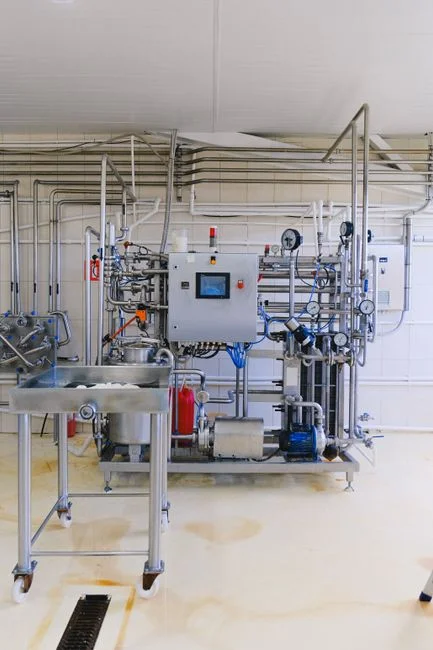
The catalogue specifications support a preliminary MBR-versus-UF comparison, but they do not establish Belarusian suitability or site performance. An integrated MBR combines activated-sludge treatment with submerged PVDF membrane filtration and is listed for 10–2,000 m³/day, with near-reuse-quality effluent described as below 1 μm. The catalogue ultrafiltration system is listed at 2,000–40,000 L/h, uses 0.03 μm hollow-fiber PVDF membranes, removes bacteria, colloids and suspended solids without chemicals, and accepts influent turbidity up to 300 ppm (HydropureWater product catalogues, 2026).
These figures represent catalogue scope, not guaranteed site output. MBR is the more complete biological route when the source contains degradable organics and the reuse application requires both biological treatment and membrane separation in one package. Its feasibility depends on waste characterization, aeration, sludge handling, membrane maintenance, odour control and standby arrangements. The 2026 screening source lists treatment, pumping, aeration, filtration, controls and disinfection as electrical loads that must be included in project economics.
UF is primarily a physical-removal barrier. It does not demonstrate that upstream organic loading, dissolved contaminants or detergent chemistry have been managed. The catalogue conditions therefore need to be checked against actual influent, with equalization and biological pretreatment added where required. Specify automatic backwash, air scour, membrane cleaning, filtrate quality monitoring and a defined recovery or reject route. The catalogue’s chemical-free removal claim applies to the listed physical contaminants; it should not be presented as general pathogen, chemical or reuse approval.
| Procurement issue | MBR route | UF route |
|---|---|---|
| Primary function | Integrated biological treatment and membrane separation | Physical removal of bacteria, colloids and suspended solids |
| Catalogue capacity | 10–2,000 m³/day | 2,000–40,000 L/h |
| Membrane description | Submerged PVDF; catalogue states effluent below 1 μm | Hollow-fiber PVDF; catalogue pore size 0.03 μm |
| Key precondition | Biodegradable load, aeration and sludge route | Influent turbidity within catalogue conditions and defined upstream treatment |
| Main operating interfaces | Aeration, sludge removal, membrane cleaning, odour and standby power | Equalization, backwash, air scour, cleaning and reject handling |
| Decision | Select when biological treatment and a compact combined train are required | Select as the treatment route only after organic loading and disinfection requirements are resolved |
Compare total installed scope rather than membrane specifications alone. Include equalization, pumps, controls, primary treatment where needed, disinfection, odour control, sludge and residual routes, building services, spares, commissioning and the permanent sewer fallback. The 2026 source emphasizes that annual water savings do not establish peak capacity and that storage can create stagnation and overflow risk; final design needs time-series flow data. It also notes that its screening model excludes renewal capital expenditure and O&M, so those costs must be quoted separately rather than inferred from catalogue capacity.
Where the decision remains open, request a measured influent sample, an equalization and biological-treatment assessment and a failure-mode proposal from both routes. This is more defensible than selecting the smallest unit that matches an average daily volume.
Build the Belarus approval and backup route
The supplied sources do not establish the competent Belarusian authority, permit route, plumbing rules, environmental requirements, approved reuse destinations, sewer-discharge conditions or inspection regime; every such item must therefore be verified locally in 2026 before final equipment selection. Treat the international material as design benchmarking rather than Belarus law. The October 2023 academic review identifies the lack of a legal framework, monitoring and control as recurring reuse challenges, while Washington demonstrates a risk-based and locally approved approach that cannot be transferred directly to Belarus (Van de Walle et al., October 2023; Washington State Department of Health, current agency guidance).
Engage the authority early enough to influence the system boundary. Obtain written confirmation of the permitted fixtures, reuse destinations, treatment basis, monitoring records, inspection access, discharge route and conditions for approval. Also establish whether the proposed equipment needs a listing or certification acceptable to that authority; the 2026 source notes that NSF/ANSI 350 is a certification route, but the adopted requirement must come from the local authority.
Build a permanent fallback into the functional requirements. Washington requires diversion valves to the permanent sewage system and states that reuse does not replace an approved sewer connection (Washington State Department of Health). For the Belarus project, specify an automatic diversion on treatment failure, high-level tank condition, power loss or prohibited influent, plus cross-connection control, physical separation of potable and non-potable services, clear non-potable labelling and potable backup. The 2026 source lists bypass logic, plumbing drawings, labels, backflow and cross-connection protection, critical limits, sensors, alarms and automatic diversion among the evidence a buyer should request.
| Approval or safeguard | Status in supplied evidence | Required buyer action |
|---|---|---|
| Competent Belarusian authority and permit route | Not established | Identify the authority and obtain a written permit pathway before award. |
| Approved fixtures, reuse destinations and effluent requirements | Not established | Request a source-to-end-use approval matrix from the authority or local designer. |
| Applicable plumbing and environmental rules | Not established | Obtain the adopted codes, amendments and discharge conditions. |
| Permanent sewer fallback | Established as a design benchmark, not a Belarus rule | Include physical connection, automatic diversion and an owner-approved operating response. |
| Cross-connection control | Established as a design benchmark | Specify separation, labelling, backflow protection and potable makeup. |
| Commissioning and records | Required in the 2026 procurement framework | Define sampling, failure demonstration, inspections, training and maintenance records. |
Do not award a permanent installation based on generic “reuse-quality” wording. Require commissioning tests, a failure-mode demonstration, sampling, alarms, automatic diversion, potable backup, inspection records, operator training and a documented maintenance plan. Confirm whether the supplier can provide local service and whether critical parts will remain available; otherwise the fallback becomes the practical operating strategy, not merely an emergency feature.
Issue a supplier-ready RFQ
A comparable quotation starts with measured source data, not a request for a generic catalogue package. Give each supplier metered fixture flows, peak demand, intended reuse quantities, source chemistry, floor space, utility availability, treatment targets and the verified Belarus approval route. Where an input is missing, require the supplier to identify it rather than silently select a default. The 2026 source recommends metered sub-flows or a documented occupancy model for screening and time-series modelling for final design (Energy Solutions, 2026-10-24).
Request guaranteed hourly and daily treatment duty, usable reuse output, recovery assumptions, automatic controls, diversion logic, monitoring, redundancy expectations, installation boundaries and acceptance-test methods. Define what happens when equalization reaches its limit, a membrane becomes blocked, disinfection is unavailable, power fails or the sewer route cannot accept diverted flow. These are contractual performance questions, not optional controls.
Price the complete scope. Obtain the O&M schedule, membrane or consumable life, sludge and residual handling, spare-parts list, local service capability and lifecycle-cost assumptions. The 2026 screening model excludes replacement capital expenditure and O&M, so it cannot support a complete business-case comparison without separate quotations. Also request details of pumps, controls, equalization, odour control and any disinfection from both the MBR membrane bioreactor and ultrafiltration system scopes.
| RFQ schedule | Supplier response required | Acceptance evidence |
|---|---|---|
| Source and demand | Fixture-level flows, peaks, operating hours, seasonal demand and reuse target | Metered data or a documented occupancy model with stated uncertainties. |
| Treatment | Exact included and excluded streams, treatment train and prohibited discharges | Process description, drawings and influent/effluent criteria for the proposed end use. |
| Capacity | Guaranteed hourly and daily duty and usable output | Performance test under agreed loading conditions. |
| Controls and safety | Monitoring, alarms, automatic diversion, cross-connection control and potable backup | Cause-and-effect matrix and witnessed failure-mode demonstration. |
| Operations | Cleaning, backwash, aeration, sludge/residual route, consumables, spares and service support | Draft O&M plan, maintenance calendar and local service commitment. |
| Commercial | Installed price, exclusions, replacement items, utility demand and lifecycle assumptions | Itemised quotation with an exclusions list and warranty responsibilities. |
| Approval | Permit drawings and interfaces for Belarusian review | Issued-for-approval documents and documented authority comments. |
Make the award conditional on approved drawings, verified performance criteria, commissioning evidence and the documented fallback arrangement. Catalogue capacity can be used for commercial screening, but it cannot substitute for site data, treatment validation or local approval. A useful secondary check is the broader wastewater strategy and permit due diligence approach, while recognising that its jurisdiction does not determine Belarusian obligations.
Frequently Asked Questions
How much does a commercial greywater recycling system cost in Belarus?
There is no defensible Belarusian price in the supplied evidence. Request an itemised quotation covering the selected source streams, treatment route, equalization, pumps, controls, disinfection, building connections, commissioning, sewer fallback, O&M, replacement items and local approval support. Compare lifecycle cost and payment terms separately; do not convert a catalogue capacity into a price.
Should a Belarusian hotel choose MBR or UF?
Choose MBR when biological treatment and membrane separation are required for the approved end use. Choose UF only after verifying that its influent conditions are met and that upstream organic loading, filtration and any required disinfection have been defined. Both routes still require local approval, monitoring, automatic diversion and a permanent sewer fallback.
What flow data must a supplier receive before quoting?
Provide metered sub-flows for every proposed fixture, peak simultaneity, operating hours, seasonal demand, intended reuse volume and the timing mismatch between supply and demand. Where measurements do not exist, require a documented occupancy model and identify it as provisional rather than presenting it as measured performance.
What permits and safety controls are needed before installation?
The supplied evidence does not identify the Belarusian authority or applicable permit requirements. Before ordering, obtain written confirmation of permitted sources, reuse destinations, treatment and monitoring requirements, discharge route, inspection needs and any listing or certification. Include non-potable labelling, potable backup, cross-connection protection, automatic diversion and permanent sewer connection in the functional requirements.
How should a buyer compare supplier warranties and maintenance support?
Compare the covered equipment, exclusions, response arrangements, local service capability, critical spare parts, membrane or consumable life and the transfer of obligations if a supplier changes. Tie acceptance to witnessed commissioning, performance evidence and documented operating procedures rather than a general catalogue warranty. Request the O&M schedule and replacement-cost assumptions as separate commercial items.