Define the greywater streams and reuse destination
Greywater generally excludes toilet wastewater, but showers, baths, washing machines, dishwashers and sinks can differ substantially in contamination and organic load. A 2023 review reports that greywater can represent 75–90% of total domestic wastewater flow and 60–200 L per capita per day in developed countries. Biological treatment may support irrigation reuse; MBR can provide near-reuse-quality effluent; UF is a polishing or pretreatment barrier rather than a complete biological treatment process. No supplied source establishes current Albanian reuse permissions or limits, so those must be verified locally.
The first procurement decision is the greywater source separation boundary. Greywater Action identifies bathroom sinks, showers, tubs and washing machines as greywater sources, while excluding water that has contacted toilet waste or dirty diapers. Dishwashers and kitchen sinks require separate assessment because food, grease and other organics can clog systems. In a cited study summarized by the 2023 PMC review, kitchen sinks contributed 42% of COD and 58% of volatile suspended solids, so they should not be included merely because the building has a kitchen.
Use the following fillable matrix before selecting equipment. Blank cells should remain blank until measured or verified data are available.
| Source inlet | Expected flow | Treatment objective | Reuse destination | Include, exclude or treat separately? |
|---|---|---|---|---|
| Showers and baths | Enter measured m³/day and peak profile | Define required pathogen and solids control | Select from irrigation, toilet flushing, process water, cooling or another verified endpoint | Confirm source and contamination risks |
| Bathroom sinks | Enter measured flow | Define polishing and disinfection requirements | Select the intended endpoint | Confirm compatibility with other streams |
| Washing machines | Enter measured flow and operating schedule | Define solids, detergent and microbial objectives | Select the intended endpoint | Assess detergents, fibres and operating variability |
| Dishwashers | Enter measured flow | Assess temperature, fats, oils and greases | Select the intended endpoint | Usually assess separately before inclusion |
| Kitchen sinks | Enter measured flow | Address organics, grease and pathogens | Select the intended endpoint | Exclude or treat separately unless the design proves otherwise |
| Toilet wastewater | Not part of the greywater train | Not applicable | Not applicable | Route to the relevant sewage or separate treatment system |
Irrigation, toilet flushing, process water, cooling and potable applications are different endpoints. The 2023 Elsevier review describes source separation as a way to support fit-for-purpose reuse, but it does not establish that one treatment train satisfies every destination. For a site-specific comparison of membrane and reuse routes, see how to compare UF/RO reuse and discharge routes.
Match treatment objectives to the selected sources
UF does not replace biological treatment when the objective is organic removal from greywater. The 2023 Elsevier review separates biological routes—nature-based systems, biofilm systems and membrane bioreactors—from physicochemical components such as membrane filtration, sorption, ion exchange and UV disinfection. That distinction should drive the selection: define the contaminant and pathogen barriers first, then assign each treatment stage a duty.
Biological greywater treatment is the logical starting point for irrigation where organic load, solids and microbiological risks must be reduced. A multistage moving-bed biofilm reactor in a German installation treated 8–11 m³/day and achieved 94% overall COD removal, with effluent COD of 22 mg/L, according to the 2023 PMC review. This is study-specific evidence, not a universal design guarantee. A solar-powered biological system studied in the Iraqi climate treated about 1.4 m³/day and reported BOD5 and COD removal above 90% and TOC removal of about 80%, under the study conditions (Baghdad Science Journal, 2022). Neither result establishes compliance or performance in Albania.
MBR combines a biological reactor with membrane separation and is appropriate when a compact, controlled treatment train is needed for a higher-quality reuse endpoint or a package-style installation. The integrated MBR membrane bioreactor should be assessed as a complete biological and solids-separation route, not simply as a UF unit with an attached tank.
UF is primarily a physical barrier for bacteria, colloids and suspended solids. The supplied catalogue lists 0.03 micron PVDF UF systems from 2,000 to 40,000 L/h, but that catalogue range is screening information rather than an Albania design flow. An ultrafiltration system is more defensible as UF polishing after biological treatment or as pretreatment ahead of another barrier, depending on the supplier’s process definition and the required reuse quality.
For mixed domestic sewage, compare the WSZ package route with MBR rather than presenting UF as a stand-alone biological recycler. The review and equipment descriptions should be assessed on the same inputs: source composition, treatment objective, footprint, controls, maintenance and discharge or reuse route.
| Treatment route | Primary role | Strongest fit in the screening stage | Key procurement question |
|---|---|---|---|
| Biological treatment | Organic load reduction and biological treatment | Source-separated greywater where a defined irrigation or other fit-for-purpose endpoint is acceptable | What treated-water parameters can the supplier guarantee for the actual source mix? |
| MBR | Combined biological treatment and membrane solids separation | Compact, controlled trains for defined reuse or discharge objectives | Which membrane and biological performance criteria are included, and how are they tested? |
| UF | Bacteria, colloid and suspended-solids barrier | Polishing or a defined pretreatment barrier | Is biological treatment included upstream, and what feed-water specification applies? |
| Package treatment | Integrated treatment train | Sites needing a defined, bounded process package, including mixed domestic sewage where applicable | What process steps, controls, pretreatment and acceptance tests are inside the package? |
Resolve site constraints before selecting equipment
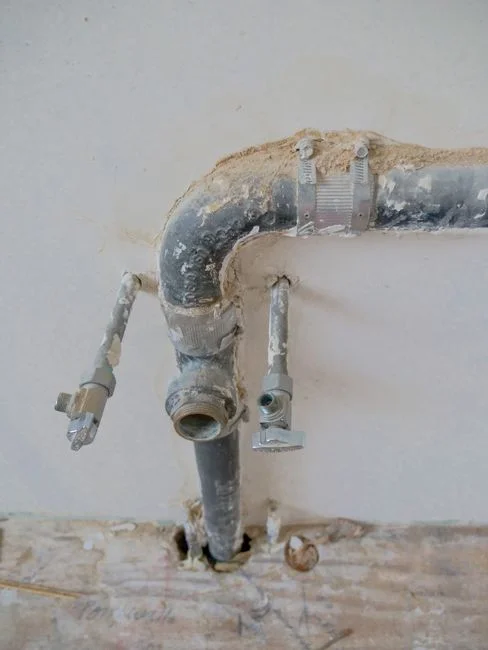
Gravity routing can reduce pumping, electricity use and maintenance, so the physical relationship between the collection point and reuse destination should be checked before comparing equipment footprints. Greywater Action recommends gravity where possible and notes that pumps add cost, consume electricity and require maintenance. This is particularly important when the reuse point is below the collection point; when it is above, storage and pumping become an additional process stage.
A pumped residential example described by Greywater Action uses a 50-gallon barrel before an effluent pump. That is an illustration, not an Albanian sizing standard. For a hotel, apartment development, municipal building or industrial facility, the buyer needs the actual hydraulic profile, storage duty and pumping arrangement instead.
- Map every inlet, the collection header, treatment location, storage vessel and final reuse point.
- Record available footprint, access routes for maintenance, electrical supply and backup-power requirements.
- Identify odour, noise, visual and drainage constraints that could rule out open or poorly contained processes.
- Confirm how excess treated water will be routed when reuse demand is lower than treatment flow.
- Check whether future expansion requires duplicated modules or reserved space for additional tanks and pumps.
Request daily flow, peak flow, hourly profile and seasonal demand from the client or measured operating data. The supplied research does not provide an Albania-specific flow factor, so occupancy estimates should not be converted directly into equipment size without an agreed design basis. A medical-wastewater equipment reference can help structure questions about access, utilities and maintainability, but it is not evidence for sizing a greywater system: use the medical wastewater treatment page only as a maintainability reference.
Package and skid-mounted systems should be compared on the same site basis: installed footprint, tank access, control-panel location, odour containment, power demand, effluent routing, maintenance frequency and expansion provisions. If those constraints are undefined, the equipment comparison is premature.
Build a pretreatment and disinfection plan
Kitchen-derived flow can determine whether a proposed train is technically viable, because food, grease and other organics can clog systems. Greywater Action recommends excluding kitchen-sink water or treating it separately. The 2023 PMC review reinforces this point by reporting that kitchen sinks contributed 42% of COD and 58% of VSS in one cited study. The result is not an Albanian design value, but it demonstrates why source composition must be resolved before equipment sizing.
Build the pretreatment sequence around the selected source mix and the downstream biological and membrane stages. Screening or equivalent solids removal can protect pumps, biological treatment and membranes from rags, plastics and fibrous debris. The rotary mechanical bar screen for suspended solids and fibrous debris provides one equipment reference; the supplier must still demonstrate that its selected unit fits the actual flow and debris load.
Where the process requires chemical precipitation or pH control, specify automatic dosing only after defining the design duty: chemical type, dose-control basis, mixing, storage, residual handling and operator interface. Adding a chemical stage without a defined treatment objective creates an operating and compliance burden.
Disinfection is a separate barrier that should be matched to the reuse endpoint. Greywater Action identifies UV-C and chlorine dioxide as available disinfection options, while the 2023 Elsevier review identifies UV disinfection among reuse treatment methods. The presence of a UV unit does not establish that the final water is suitable for the proposed reuse; specify the required dose or performance basis, upstream turbidity limits, contact conditions, controls and monitoring obligations.
| Process stage | Design question | Required information or evidence | Procurement acceptance item |
|---|---|---|---|
| Source control | Which inlets are admitted? | Source-by-source flow and contamination assessment | Approved process and control narrative identifying excluded streams |
| Screening or solids removal | What debris reaches the biological and membrane stages? | Flow, solids loading and fibrous-debris observations | Duty statement, installed capacity and blockage-handling arrangement |
| Grease or separate kitchen treatment | Will kitchen-derived flow be excluded or treated separately? | Measured flow and organics/grease characterization | Defined routing, equalization and discharge or reuse responsibility |
| Chemical or pH control | Is a defined chemical duty necessary? | Influent chemistry and treatment-objective calculations | Dosing equipment, controls, chemical supply and residual-management plan |
| Disinfection | Which pathogen barrier does the endpoint require? | Verified reuse requirement and upstream water-quality limits | Barrier specification, monitoring and commissioning test |
Turn the selection into a procurement package
A comparable quotation requires the same design inputs and response format from every bidder. The owner should provide source-by-source flow data, design horizon, required reuse quality, available footprint, utilities, installation boundary, odour constraints and maintenance access. Bidders should then state design flow, process sequence, pretreatment, treated-water quality targets, redundancy, controls, power demand, consumables, maintenance tasks and commissioning acceptance criteria.
Use catalogue capacities only to screen whether a supplier has proposed a relevant scale. The supplied catalogue lists WSZ at 1–80 m³/h, MBR at 10–2,000 m³/day and UF at 2,000–40,000 L/h. These ranges are not Albania-specific design criteria and should not be presented as expected project flows. Every bidder must reconcile its offered capacity with the project flow profile and operating mode.
Ask each supplier to identify missing design inputs and state who is responsible for supplying them. This is particularly important where source separation, equalization, reuse storage, pumping, disinfection, controls, utilities and commissioning are divided between parties. The compare sewer, package plant and MBR routes framework is useful for checking whether the proposed boundary is coherent.
| Information package | Owner to provide | Supplier to state | Owner or adviser to verify |
|---|---|---|---|
| Source and flow basis | Measured or agreed flows, source map, design horizon and seasonal profile | Design flow, peak treatment method and equalization strategy | Whether flow data and peak assumptions are suitable for sizing |
| Reuse quality | Named endpoint and verified applicable requirements | Treated-water targets, test methods and performance guarantees | Whether the claimed quality matches the intended use |
| Process and pretreatment | Source exclusions, debris history and available utilities | Complete sequence, equipment duty, controls and consumables | Compatibility with the selected source and downstream route |
| Installation | Footprint, access, power, drainage and effluent routing | Arrangement, foundations, utilities, access and installation boundary | Physical fit, maintainability and future expansion |
| Commissioning | Acceptance responsibility and operating personnel | Testing protocol, samples, instruments, training and handover | Evidence that performance was demonstrated under defined conditions |
| Compliance responsibility | Applicable Albanian permissions and owner policies | Equipment obligations, certificates, manuals and support | Owner duties for sewer connection, discharge permission, reuse authorization and public-health controls |
The supplied evidence establishes no Albania-specific prices, lead times or regulatory limits. A compliant quotation therefore cannot be requested as a price-only comparison. Add a responsibility matrix identifying who applies for reuse or discharge permission, who handles sewer connection, who owns public-health controls, who validates reuse quality and who maintains monitoring equipment. A general wastewater treatment and permit decision framework can structure those assignments, but Albanian requirements must be checked against current local sources.
Frequently Asked Questions
What is the cheapest practical greywater recycling system for a small Albanian site?
There is no supportable Albanian price in the supplied research. Request a quotation using a defined source list, measured or agreed flow profile, reuse endpoint, available footprint and pretreatment requirement. Greywater Action describes simple gravity-based residential routes for suitable sites, but those are not quotations for an Albanian installation and cannot be compared with a package treatment budget without project inputs.
Should I choose MBR, UF or a packaged sewage treatment plant?
Choose MBR when the project needs a compact combined biological and membrane train for a defined higher-quality endpoint. Use UF where it serves as a specified bacteria, colloid and suspended-solids barrier, with any required upstream biological process clearly defined. Compare package treatment when the site needs an integrated train or where mixed domestic sewage is included. The integrated MBR membrane bioreactor is therefore one procurement option, not a default answer.
How do I size a greywater recycling system when only an occupancy estimate is available?
Do not convert occupancy directly into a guaranteed design flow. Obtain a conservative occupancy range, fixture and activity assumptions, operating hours, seasonal demand and any measured data. The 2023 PMC review reports 60–200 L per capita per day in developed countries and 75–90% of domestic wastewater flow, but these are study figures, not Albania-specific design factors. Require the supplier to state every flow assumption and identify which remain unverified.
Which supplier information is needed before requesting a compliant quotation?
Send the same information request to every bidder: source separation, flow profile, reuse endpoint, footprint, utilities, pretreatment, installation boundary, controls, maintenance and acceptance testing. Require each bidder to identify missing inputs and the responsible party. Since the supplied research establishes no current Albanian reuse or discharge limits, compliance cannot be demonstrated until the owner or local adviser verifies the applicable requirements.
What compliance risks should be checked before installing a greywater reuse system?
Verify current Albanian rules for the specific reuse endpoint, discharge route, public-health controls, sewer connection and any permission or notification requirements. Also check the risks identified in the 2023 Elsevier review: pathogen exposure, chemical and salinity impacts, monitoring and control systems, and gaps in legal frameworks. Equipment selection should not be treated as regulatory approval.