Map the Wastewater Before Choosing Equipment
The practical choice for oily wastewater at UAE stations is a treatment train based on the oil condition and final water use. Use equalisation and suitable primary separation for variable flows and free oil, then DAF for emulsified oil, fats, oils, grease and suspended solids. Add MBBR or MBR where residual organic removal is needed, and use UF followed by RO when the target is non-potable reuse such as equipment washing or cooling. DAF systems offered by HydropureWater cover 4–300 m³/h, while UF systems handle 2,000–40,000 L/h. The final route and permit acceptance criteria must be confirmed against the station’s wastewater analysis and UAE discharge or reuse requirements.
Identify the origin of the wastewater to determine the process requirements. GEA identifies refinery operations, tank terminals, tank cleaning, product storage, petrochemical facilities and utility processes as sources where oil and water come into contact during processing, cleaning or storage. The source determines the likely production schedule, contaminants and route for recovered oil; it does not, by itself, establish the required equipment.
Separate the oil condition into two practical categories. Free oil can be separated as a distinct hydrocarbon phase and may be recovered continuously by centrifugal separation. Emulsified oil is dispersed as droplets and requires a different removal approach: Emvees, in its UAE edible-oil treatment article, identifies DAF as effective for emulsified and free fats, oils and grease because fine bubbles carry droplets and suspended solids to the surface. The tertiary treatment selection guide provides context on where polishing fits after primary and biological treatment.
Record average and peak flow, operating shifts, pH range, oil and grease concentration, suspended solids, COD, temperature, emulsification status, production changes and the intended discharge or reuse endpoint for station sizing. The figures below are product-selection ranges, not verified station capacities. MBR capacity is stated as 10–2,000 m³/day; actual project sizing must be demonstrated by each supplier.
| Station input | What the buyer must establish | Routing consequence |
|---|---|---|
| Wastewater origin | Refinery, tank cleaning, product storage, utilities, edible-oil processing or another industrial source | Defines likely contaminants, operating pattern and oil-recovery route |
| Oil form | Free oil, emulsified oil, or both; include recoverable hydrocarbon fraction | Free oil may justify centrifugal separation; emulsified oil and FOG route to DAF |
| Flow and loading | Hourly and daily minimum, average and peak; shifts; production changes; pH, oil and grease, suspended solids and COD | Determines equalisation, peak treatment and biological loading |
| Water destination | Discharge route or non-potable reuse application | Sets the required polishing route and acceptance basis |
| Available product ranges | DAF: 4–300 m³/h; MBR: 10–2,000 m³/day; UF: 2,000–40,000 L/h | Use only to identify candidate configurations; require project sizing from suppliers |
Build the Front-End Oil Removal Train
Equalisation is the first control point for a wastewater stream whose flow or contaminant load changes between production stages or shifts. Emvees describes equalisation as a buffer that protects downstream biological treatment from shock loads. Where variable oily wastewater reaches treatment directly, shock loading can compromise oil separation, biological treatment and downstream polishing.
Decide whether free-oil recovery is required after establishing the flow baseline. GEA states that centrifugal separators continuously remove free oil and suspended solids from oily wastewater; the recovered hydrocarbon phase can often return to the process or be used elsewhere. This makes the separator a candidate for refinery, tank-terminal, storage and utility applications where a distinct hydrocarbon phase and a controlled destination for recovered material exist. GEA also notes that centrifugal separation offers faster separation, a smaller footprint and continuous operation with minimal operator intervention than conventional settling systems.
DAF is the more relevant front-end unit for emulsified oil, FOG and suspended solids. Emvees explains that fine bubbles attach to oil droplets and suspended solids, allowing them to float for removal. HydropureWater DAF systems span 4–300 m³/h across 13 standard models and use micro-bubble technology with automatic skimming. Review the ZLD and high-recovery RO comparison when deciding how far membrane treatment should extend beyond reuse requirements.
Chemical and pH control belong in the base scope where the wastewater requires them. Emvees identifies neutralisation before chemical and biological treatment for acidic edible-oil effluent, with pH control affecting subsequent stages. The bid should specify automatic chemical dosing, the operating envelope, control interlocks and the sequence connecting level, pH, flow and equipment status. A supplier that prices DAF without confirming the feed condition leaves an unresolved performance risk.
| Front-end condition | Recommended station | Supplier evidence required |
|---|---|---|
| Variable flow or loading | Equalisation before treatment | Working-volume basis, level-control sequence and downstream shock-load allowance |
| Recoverable free oil | Centrifugal separator or other primary oil-and-solids separation | Continuous duty basis, phase-separation performance, recovered-oil handling and solids route |
| Emulsified oil, FOG and suspended solids | DAF with automatic skimming | Candidate flow within 4–300 m³/h range, feed envelope, oil and solids removal basis and skimming arrangement |
| pH correction or coagulant required | Automatic chemical dosing and control | Chemical type, dosing range, storage requirement, interlocks and operating sequence |
Choose Biological Treatment or Membrane Polishing
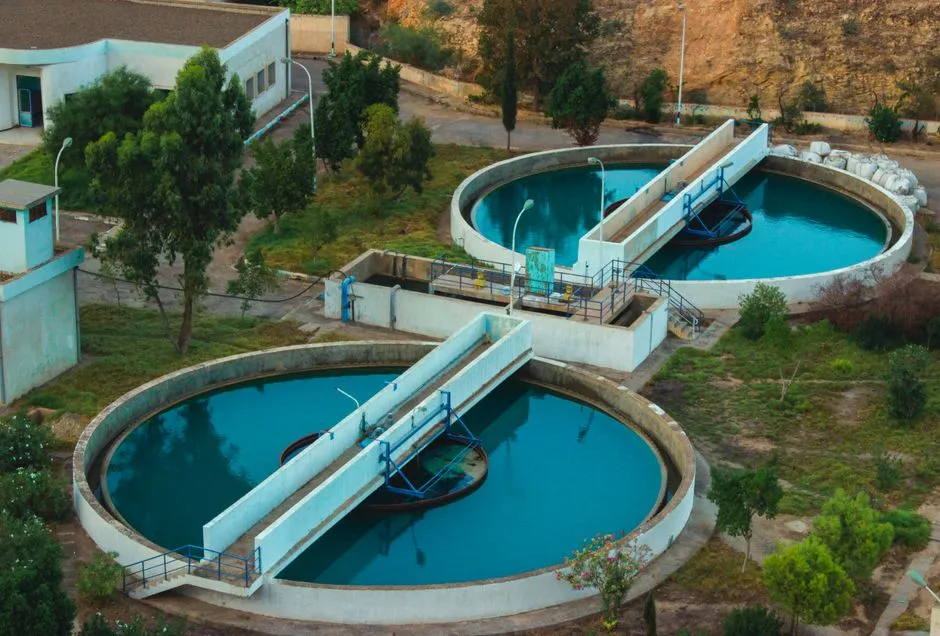
DAF, biological treatment and membranes perform different functions and should not be substituted without a feed and product-water basis. After DAF, MBBR or MBR can degrade residual organic content. Emvees states that MBBR is well suited to higher-organic streams, while MBR is selected when higher-quality effluent or reuse is required. The choice depends on the treated-water objective and available footprint, not simply on the presence of oil downstream of DAF.
HydropureWater MBR systems combine activated sludge with submerged PVDF membrane filtration, provide filtration below 1 μm and are offered from 10–2,000 m³/day. The MBR versus activated-sludge comparison is useful when the decision is between biological separation approaches. For an oily wastewater ETP, the supplier must show how the selected biological stage handles the actual DAF effluent, residual COD and required solids separation.
For membrane-based non-potable reuse, the route identified by Emvees is biological treatment followed by UF and RO. UF is pretreatment for RO rather than an interchangeable substitute for it. The MBR system for biological oily wastewater treatment should be evaluated as an integrated biological and filtration stage, with feed acceptance limits and reuse performance stated separately.
HydropureWater UF systems operate at 2,000–40,000 L/h, use 0.03 μm PVDF membranes and include automatic backwash and air scour. Their stated feed acceptance includes turbidity up to 300 ppm. HydropureWater industrial RO systems offer recovery rates up to 95%, but that figure must not be presented as a guaranteed project recovery until feed analysis, pretreatment and membrane design are complete.
| Treatment objective | Route to evaluate | Design or acceptance evidence |
|---|---|---|
| Reduce residual organic load | DAF followed by MBBR | Influent loading basis, reactor configuration, organic removal target and operational controls |
| Higher-quality biological effluent | DAF followed by MBR | Activated-sludge and submerged PVDF configuration, filtration below 1 μm, and project flow within the stated 10–2,000 m³/day range |
| Non-potable reuse through membranes | DAF, biological treatment, UF and RO | UF feed acceptance, 0.03 μm membrane basis, backwash and air scour, RO feed design and project-specific recovery |
| Equipment-fit check | DAF, MBR or UF candidate selection | DAF 4–300 m³/h; MBR 10–2,000 m³/day; UF 2,000–40,000 L/h—ranges are not project sizing |
Turn the Selection into a Supplier Brief
A defensible bid starts with verified site data, not a catalogue flow. The site team should provide hourly and daily flow ranges, oil origin, the split between free and emulsified oil, oil and grease loading, pH range, suspended solids, COD, temperature, production changes, chemicals used and the discharge or reuse destination. Unverified assumptions should be marked as assumptions and converted into supplier design allowances or clarifications.
Assign responsibilities by package after defining the site requirements. The DAF or separation supplier should define its duty basis, peak-flow treatment, performance criteria, control philosophy, skid dimensions, utilities and maintainable components. The biological and membrane suppliers should define feed-water acceptance limits, pretreatment requirements, guarantees, membrane replacement strategy, cleaning method and expected availability. These are different scopes: a guarantee that depends on undefined feed conditions is not useful to the buyer.
Use the chemical dosing system engineering guide to check whether automatic dosing, storage, control and safety functions are properly scoped. Emvees states that sludge from DAF and biological treatment is dewatered using a filter press or belt press. The brief should close the residual route with the selected dewatering method, analyser requirements, sludge handling and disposal assumptions rather than treating them as optional accessories.
Compliance requires a separate workstream. The permit or compliance party should identify the applicable UAE authority, permit route, discharge destination, reuse standard and sampling requirements. The supplied research does not establish a universal oily-water discharge limit, so the permit requirement must be confirmed for the station rather than inferred from generic treatment descriptions. The UAE wastewater permit application guide provides a starting point for that verification.
| Supplier package | Fillable technical-data request | Required response |
|---|---|---|
| Site and process data | Hourly/daily flow; oil origin; free/emulsified split; oil and grease; pH; suspended solids; COD; temperature; shifts; chemicals; destination | List measured values, sampling dates, missing data and design assumptions |
| DAF or separation | Duty basis; peak treatment; performance criteria; controls; dimensions; utilities; maintainable components | Show sizing calculation, feed envelope, guarantees and exclusions |
| Biological treatment | DAF effluent basis; residual organic loading; required effluent quality; footprint and utilities | Confirm process selection, loading basis, guarantees and control sequence |
| UF and RO | Feed-water acceptance limits; pretreatment; membrane replacement; cleaning; availability | State design recovery separately from maximum product capability and define operating conditions |
| Chemicals, sludge and compliance | Dosing requirements; analyser requirements; dewatering route; authority; permit; sampling | Price complete scope and identify residual-handling and compliance responsibilities |
Frequently Asked Questions
Can oily wastewater treatment equipment be sized from flow alone?
No. Flow is one input, not a sufficient duty basis. The buyer should also provide the oil origin, free and emulsified fractions, oil and grease loading, suspended solids, COD, pH range, temperature, operating shifts, peak production conditions and final water requirement. Each selected supplier must show how those inputs determine the treatment route and equipment sizing.
How should a buyer compare the cost of DAF, MBR, UF and RO?
Request separate prices for equipment, installation, commissioning, controls, automatic chemical dosing, sludge handling, power, membranes, chemicals, maintenance, cleaning and replacement obligations. Do not compare the equipment purchase price alone, because the residual and operating-work packages can materially change the whole-project cost. The research provides no station-specific quotation, so request a priced bill of quantities and operating-cost basis from each bidder.
Does non-potable reuse always require UF and RO?
No. Emvees identifies UF followed by RO as the tertiary route where membrane-based non-potable reuse is required, including equipment washing and cooling. It also