Define the coffee wastewater dewatering objective
A belt filter press can be evaluated for coffee-processing wastewater when the project defines the sludge feed, required capacity, target cake dryness, filtrate limits and disposal route. The equipment uses filtration cloths and belts guided by rollers, with water removed as pressure rises and clarified filtrate and press cake produced. Flocculant pretreatment is commonly used to improve separation. HydropureWater does not currently list a belt filter press, so the closest catalog option is its plate-and-frame sludge dewatering press, which requires a direct technical and commercial comparison. Project performance and cost must be established from site data and supplier guarantees, not generic ranges.
There is no single, universal composition for coffee processing wastewater solids. The solids stream may originate from bean washing, wet processing, equipment cleanup, pulp storage, or another unit operation, and each source can produce a different solids concentration and particle distribution. Begin by identifying where the sludge enters the dewatering system and which upstream flows are included.
Convert the project objective into measurable requirements. Record the hourly feed flow, operating hours per day and week, solids concentration, required solids capture, acceptable press cake moisture, filtrate solids or turbidity limits, and the permitted route for cake disposal or reuse. Do not use “high-dry-solids” as an acceptance criterion without a test method.
Representative samples are more useful than an average influent value. Include solids content, particle characteristics, oil and grease if present, pH, and temperature. For each proposed sample, record the process origin and whether it represents normal production, peak cleanup, or an accumulated waste stream.
| Requirement | Define before quotation | Evidence required |
|---|---|---|
| Feed basis | Origin, flow, solids concentration, operating hours and variability | Representative samples and operating log |
| Press cake | Required moisture and disposal or reuse route | Site requirement and applicable local acceptance condition |
| Clarified filtrate | Suspended solids, turbidity or other discharge limits | Permit, reuse specification or downstream treatment requirement |
| Supplier guarantee | Feed definition, test method, duration and acceptance condition | Written guarantee tied to the agreed design feed |
The supplier should identify any feed characteristic that lies outside its verified operating scope. If it cannot provide that review, the project should not treat the proposed belt press as a demonstrated fit.
Screen the wastewater against belt-press operating conditions
Alfa Laval describes belt presses as filtration cloths and belts that guide sludge through rollers; increasing pressure along the roller sequence removes water and produces clarified filtrate and press cake. The supplied Alfa Laval page does not provide coffee-specific capacity, cake-moisture or filtrate-quality values, so those outputs must be established through project-specific testing rather than inferred from general equipment descriptions.
Screen the two outputs independently. Press cake moisture governs handling, transport and disposal or reuse. Clarified filtrate quality governs whether the filtrate can be recycled, returned to an upstream process, or requires further treatment. A press can meet one output target and still fail the other, so each should have a separate acceptance method.
The ASCE paper Belt Filter Press Dewatering of Wastewater Sludge provides foundational academic context for belt-press sludge dewatering. Its title does not establish applicability to coffee sludge, and no performance data from that paper were available in the supplied excerpt. It should therefore inform the technical review, not substitute for a coffee-specific trial or supplier guarantee.
Use a clear decision sequence:
- Confirm that the feed is a sludge, slurry or effluent that can be pumped and conditioned consistently.
- Compare representative particle characteristics with the proposed cloth and the supplier’s documented applications.
- Check oil and grease, pH, temperature and any process additives against the verified material compatibility of the press and controls.
- Define the required cake moisture and clarified filtrate quality before evaluating capacity.
- Require a written compatibility and performance review for any characteristic not clearly covered by the supplier.
If the feed contains fibrous material, abrasive particles, unusual oils, chemicals or a temperature outside the supplier’s stated scope, request evidence before ordering. Equipment sizing from wastewater characteristics provides a broader selection method if belt filtration is not supported by the feed.
Set pretreatment and operating-control requirements
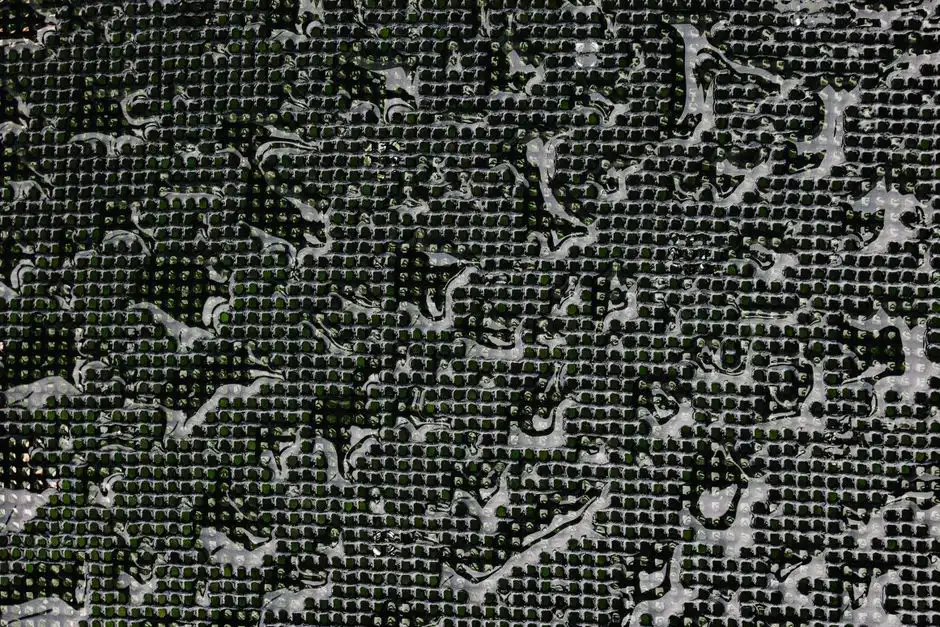
Alfa Laval states that belt-press feed is often pretreated with flocculant to enhance separation performance. Conditioning must be specified as an engineered part of the system, tailored to representative coffee-process sludge.
Define how conditioned sludge is mixed, how the flocculant dose is adjusted, and how feed flow and wash-water use are measured, controlled and recorded. The supplier should identify the required mixing method, chemical contact arrangement, dosing equipment, control points and operator settings. A PLC-controlled automatic flocculant dosing system can provide upstream chemical injection, but it does not establish the correct dose or separation performance for coffee wastewater.
Request a troubleshooting procedure covering cloth blinding, belt tracking deviations, excessive filtrate turbidity and changes in press cake moisture. The procedure should define the observation, normal inspection frequency, response action and event log. If the installed controls cannot capture these conditions, ask the supplier to add them to the control scope.
| Control item | Supplier requirement | Buyer acceptance evidence |
|---|---|---|
| Conditioning | Recommend chemical and mixing method from representative feed; state dose-control method | Trial record and operating procedure |
| Flow and wash water | Identify meters, control logic, limits and operating set points | Functional check during commissioning |
| Belt alignment | Define tracking inspection, adjustment and alarm response | Access to all tension and tracking points |
| Cloth condition | Define blinding detection, inspection and replacement criteria | Cloth condition included in routine records |
| Output monitoring | Explain how changes in filtrate turbidity and cake moisture are detected | Written sampling and response procedure |
| Chemical records | Record product, dose, batch or operating period, and operator adjustments | Traceable chemical-use log |
Conditioning must be optimized against the actual wastewater. Excessive or insufficient flocculant can create handling, filtrate or chemical-consumption problems. Make the selected dose and resulting cake moisture part of commissioning optimization.
Compare belt presses with plate-and-frame equipment
HydropureWater’s plate-and-frame sludge dewatering press is designed for municipal and industrial sludge dewatering, with filtration areas from 1 m² to 500 m² and manual, hydraulic, or automatic PLC-controlled operation. Those configurations provide a catalog alternative for evaluating batch operation, labor requirements and control scope, but they do not establish suitability for coffee-processing wastewater.
Compare the alternatives on the same feed and outputs. A belt press is continuous, while a plate-and-frame press is batch-operated. The comparison must also address feed fit, footprint, operator intervention, filter media or cloth consumption, wash-down requirements, maintenance access, installed utilities, and guaranteed cake moisture and filtrate quality. If filtration-area selection matters, use the industrial sludge dewatering equipment comparison as a broader technical reference.
| Procurement item | Belt filter press | Plate-and-frame press | Evidence required |
|---|---|---|---|
| Feed compatibility | Verify the representative coffee sludge with the supplier | Verify the same representative feed and conditioning basis | Signed technical review and trial data |
| Operating mode | Continuous sequence through rollers and belts | Manual, hydraulic, or automatic PLC-controlled batch operation | Duty schedule and operating philosophy |
| Separation outputs | Guaranteed cake moisture and clarified filtrate quality | Guaranteed cake moisture and filtrate quality on the same feed | Defined test methods and acceptance conditions |
| Operating resources | Cloth inspection, tracking, tensioning, wash-down and controls | Plate opening, media handling, wash-down and controls | Labor and utility basis stated by supplier |
| Footprint and service access | State installed dimensions and maintenance clearances | State installed dimensions and plate-removal access | GA drawings and site layout |
| Commercial basis | Defined feed, duty, outputs, utilities, exclusions and warranty | Defined feed, duty, outputs, utilities, exclusions and warranty | Like-for-like supplier quotations |
Do not assume either route is automatically more energy-efficient or economical. The supplied OpenAlex record describes frame presses, belt presses, and centrifuges as energy intensive, noting that dewatering can require up to 50% of wastewater-treatment cost. A coffee-project budget needs a site-specific energy, chemical, labor, media, maintenance, and disposal-cost basis.
Build supplier-ready sizing and acceptance criteria

A supplier cannot size a coffee wastewater belt press from a generic feed rate because solids loading, operating hours, feed variability, cake moisture, and filtrate limits determine the duty. Require the mandatory inputs below to be completed before comparing capacity, footprint, price, or guaranteed performance.
| Fillable field | Project entry | Supplier response |
|---|---|---|
| Feed flow and operating hours | Normal, peak, and design basis: __________ | Rated feed capacity and solids-handling basis: __________ |
| Feed solids and variability | Concentration, sample origin, particle and oil characteristics: __________ | Compatible feed scope and limitations: __________ |
| Target cake moisture | Limit and test method: __________ | Guaranteed result on agreed feed: __________ |
| Clarified filtrate | Solids, turbidity, reuse or discharge limit: __________ | Guaranteed result and sampling point: __________ |
| Conditioning | Chemical and permitted process: __________ | Mixing, dose control, consumption basis: __________ |
| Utilities and area | Power, water, drainage, floor area: __________ | Installed demand, dimensions, connections: __________ |
| Equipment configuration | Automation and documentation requirements: __________ | Units, dimensions, drives, cloth, controls and utilities: __________ |
| Commercial exclusions | Freight, installation, commissioning, taxes, waste: __________ | Included and excluded items: __________ |
| Local documentation | Required permits, codes and electrical documents: __________ | Document list and responsible party: __________ |
Ask each bidder to state rated feed capacity, the solids-handling basis, number and size of filter units, drive arrangement, filter cloth specification, control scope, installed utilities, and available wear parts. The bid should identify every missing input and the party responsible for supplying it. No coffee-specific capacity or cost estimate should be accepted without that design basis.
Require a written guarantee tied to a representative feed and defined test method. The guarantee should cover cake moisture, filtrate solids or turbidity where specified, sustained duty, and the conditions under which the result is claimed. Also schedule a performance test, operator training, commissioning support, service access, spare-parts availability, and controls documentation.
If the supplier cannot guarantee a result on the agreed coffee sludge, require disclosure rather than substituting a generic wastewater claim. The comparison is complete only when the buyer can trace every offered capacity, output, utility, and price to the same feed and duty.
Frequently Asked Questions
Why are feed flow, solids loading, operating hours, and sample data needed before a supplier can size a belt press?
Feed flow alone does not define the separation duty. Solids loading, operating hours, feed variability, conditioning, and sample characteristics affect the required equipment and the expected cake and filtrate outputs. Ask each supplier to state its rated feed capacity and solids-handling basis on the same project data, and identify any missing input or limiting assumption.
What should a coffee-wastewater performance guarantee include, and why is generic capacity insufficient?
The guarantee should identify the representative feed, feed flow and solids basis, operating duration, target press cake moisture, applicable clarified-filtrate limit, sampling locations, test methods, and acceptance conditions. Generic capacity or dryness claims cannot be checked against the proposed coffee sludge. Request the test protocol and a remedy for failure to meet the stated acceptance condition.
How should flocculant conditioning be specified for belt press sludge dewatering?
Alfa Laval states that belt-press feed is often pretreated with flocculant to enhance separation performance. Require the supplier to recommend the chemical, mixing arrangement, and dose-control method from representative feed data, then optimize the setting during commissioning while recording cake moisture, filtrate quality, and chemical use.
How should a buyer select between a belt press and a plate-and-frame press?
Require both suppliers to quote the same feed, operating duty, target cake moisture, filtrate requirement, utilities, footprint, and exclusions. Compare continuous belt operation with plate-and-frame batch operation, operator intervention, wash-