Define the mineral wastewater separation duty
A decanter centrifuge can be appropriate for mineral-processing wastewater where continuous thickening, dewatering, classification or degritting is required, but suitability cannot be established from flow rate alone. Define the separation duty first: average and peak flow, total and suspended-solids concentrations, target solids capture, clarified-water quality and required cake dryness. Record particle-size distribution, mineralogy, abrasiveness, shear sensitivity, chemical treatment and feed variability. The Minerals study, published in 2020, identifies scale-up as a major challenge and states that predicting decanter-centrifuge behavior from laboratory tests is difficult; an accurate process model is necessary. The resulting duty definition determines whether the clarified liquid will be recycled, discharged or sent to another treatment step, and whether the separated solids will be stockpiled, filtered or returned to the process.
Use the mining wastewater pretreatment comparison to determine whether clarification or solids removal is the immediate process objective before selecting a centrifuge.
| Input or output | Define before model selection | Why it changes the decision |
|---|---|---|
| Hydraulic duty | Average flow, peak flow and operating schedule | Determines throughput, feed-control requirements and operating margin. |
| Solids loading | Total solids, suspended solids and solids concentration | Sets the solids duty; feed concentration cannot be represented by flow rate alone. |
| Separation target | Solids-capture target, clarified-solids limit and required cake dry solids | Defines whether the outcome is thickening, dewatering or clarification. |
| Feed characteristics | Particle-size distribution, mineralogy, abrasiveness, shear sensitivity and variability | Influences capture, cake quality, wear and scale-up risk. |
| Conditioning | Flocculant, coagulant, pH adjustment and dosing method | Changes effective particle capture and may affect downstream handling. |
| Destinations | Recycle, discharge or further treatment for liquid; stockpile, filtration or return for solids | Establishes the final quality and operating priorities. |
Choose the separator configuration from the required outcomes
The correct centrifuge architecture follows from the required liquid and solids outlets, not nominal throughput. A two-phase centrifuge separates a concentrated solids stream from clarified liquid. A three-phase arrangement adds a separate liquid phase, which may be appropriate where the process requires an independently managed liquid stream. Neither configuration should be selected until the outlet destinations and quality limits are defined.
For thickening and dewatering, compare expected solids capture, filter cake dry solids, clarified-water quality and downstream dewatering demand. For classification or degritting, specify the required cut size and performance across the overflow and underflow; bulk dewatering results do not demonstrate classification performance. These duties are identified as established mining applications in the Minerals study, published in 2020.
CDE reports that its commercial mining system can produce filter cake at up to 65% dry solids. This is a supplier-specific figure for a particular system, not a general performance guarantee. Require confirmation under representative feed, throughput and operating conditions. If the cake remains too wet for stockpiling or another disposal route, compare the centrifuge with a plate and frame filter press as a possible downstream dewatering step.
| Required outcome | Configuration to evaluate | Acceptance evidence required |
|---|---|---|
| Thickening | Two-phase or three-phase, according to outlet requirements | Underflow solids concentration, clarified solids, throughput and product consistency. |
| Dewatering | Two-phase or three-phase, according to liquid handling | Representative cake dry solids, solids capture, clarified-water quality and downstream handling results. |
| Classification | Classification duty; do not infer performance from thickening data | Specified cut size, overflow and underflow distributions and product consistency. |
| Degritting | Degritting duty with defined coarse-solids outlet | Removal of the target coarse fraction, grit capture and downstream abrasion or handling limits. |
| Final dewatering plus disposal | Centrifuge, optionally followed by a filter press | Combined process mass balance, final dry-solids result and combined maintenance burden. |
Build a representative pilot and scale-up plan
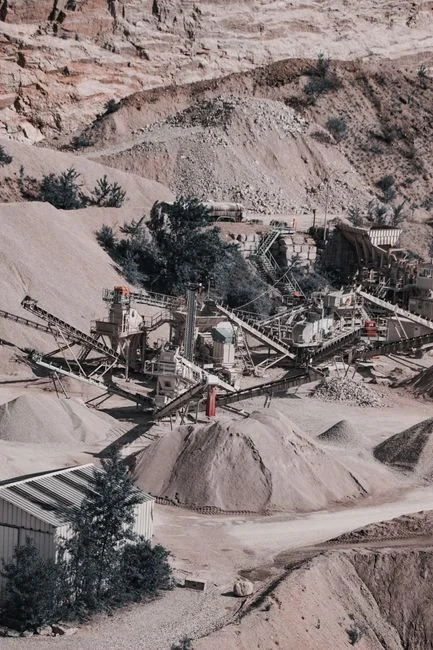
A representative pilot is the control point between feed characterization and equipment selection. The Minerals study, published in 2020, identifies pilot-scale experimentation as a major challenge because decanter behavior is difficult to predict from laboratory tests. The pilot should establish both separation performance and the relationship between operating settings, feed variability and product quality.
Test normal and worst-case feeds, including differences in flow, solids concentration, particle-size distribution and abrasiveness. Record conditioning chemicals, operating differentials, feed and product sampling points, throughput, and downstream operations. Where available, compare the analytical and numerical process-model approaches described in the Minerals study; the model should explain how pilot observations are translated to the proposed machine.
Set acceptance criteria before testing: throughput, solids capture, filter cake dry solids, clarified solids, product consistency, energy use and operability. Define how samples will be taken and how composite or variable feeds will be represented. The decanter centrifuge sizing and selection method provides a structure for connecting feed data, separation targets and supplier evidence.
| Pilot worksheet field | Required entry or test result | Procurement use |
|---|---|---|
| Feed condition | Normal and worst-case flow, solids concentration and particle-size distribution | Defines the design envelope and qualification samples. |
| Conditioning | Chemical type, dose, mixing method and application point | Defines reproducible operating conditions. |
| Machine settings | Differential, feed rate, solids-flow setting and control configuration | Allows results to be reproduced and scaled. |
| Separation results | Solids capture, clarified solids, cake dry solids and product consistency | Tests whether the proposed architecture meets the duty. |
| Operating results | Energy consumption, operability, wear observations and maintenance actions | Supports operating-cost and resilience assessment. |
| Scale-up basis | Model method, assumptions, geometric relationships and limits | Shows how pilot evidence supports the commercial machine. |
Review energy, controls and operating resilience
Energy and controls must be evaluated under the project’s actual feed, throughput and operating differential. The 2024 Energy Conversion and Management X study reports that recent decanters often use variable-frequency drives for both the bowl motor and screw back-drive, with the back-drive able to recover energy during braking. Its energy model covered specific machines at 15, 20 and 25 m³/h and various differentials; those values apply only to that modeled equipment and must not be transferred to another machine without supporting data.
Ask whether the proposed system includes braking-energy recovery and request test results under defined project conditions. Separate the energy value of the recovery function from the complete system consumption. Also identify motor sizing, drive arrangement, operating-differential control, instrumentation and any dependence on upstream or downstream equipment.
Evaluate guarding, isolation and maintenance access with the same rigor as separation performance. CDE describes isolators, guards and accessible walkways on its decanter system. For mineral duties, include abrasive-solids exposure, expected wear locations, maintenance intervals, spare-parts strategy and clean-in-place requirements. A supplier should explain which tasks require shutdown, how wear is detected and what operating conditions invalidate a performance claim. The alternative decanter centrifuge selection guide offers a frame for comparing control and maintenance arrangements.
Issue a complete equipment-selection brief
Procurement comparisons become unreliable when suppliers receive different feed assumptions. Issue the same scoped data package to every bidder, including average and peak flow, solids loading, particle characteristics, abrasiveness, operating schedule, recovery targets, product destinations and site constraints. Include the pilot feed characterization, chemical-conditioning plan, proposed instrumentation and any agreed acceptance criteria.
Request throughput, solids-capture, filter-cake dry-solids, clarified-water and energy figures with the test basis stated. Ask each supplier to identify its pilot evidence, operating assumptions, differential settings, VFD arrangement, braking-energy recovery scope and scale-up method. Where a figure depends on feed condition, conditioning or throughput, require it to be written as a conditional performance claim. Commercial claims remain verification inputs until reproduced or substantiated on representative feed.
| Brief section | Information to request | Decision enabled |
|---|---|---|
| Feed and duty | Flow, solids loading, particle data, abrasiveness, schedule and product destinations | Confirms that all offers address the same separation problem. |
| Proposed configuration | Two-phase, three-phase, classification or degritting duty; outlets and downstream requirements | Prevents architecture selection based on nominal capacity alone. |
| Pilot basis | Representative feed, test method, operating settings, measured results and scale-up method | Tests whether performance is transferable to the full plant. |
| Performance claims | Throughput, capture, cake dry solids, clarified-water quality and energy basis | Creates a consistent comparison and identifies conditional claims. |
| Operability | Controls, guards, isolation, maintenance, wear management and clean-in-place requirements | Assesses long-term operating resilience. |
Frequently Asked Questions
Can one dry-solids percentage size a decanter centrifuge for every mineral-processing wastewater stream?
No. The required result depends on feed solids concentration, particle characteristics, conditioning, throughput and operating settings. Use the pilot results and downstream product specification to define filter cake dry solids; CDE’s reported figure of up to 65% dry solids is a supplier-specific claim that must be verified under representative conditions.
What should a buyer request before comparing centrifuge suppliers?
Issue a common feed-and-duty package covering flow, solids loading, particle-size distribution, abrasiveness, chemical conditioning, operating schedule, product destinations and recovery targets. Require every supplier to state its pilot feed, operating assumptions and test method against the same acceptance criteria.
Is a two-phase or three-phase centrifuge the better choice?
Choose according to the required outlets. A two-phase duty separates solids from liquid; a three-phase duty provides separate liquid and solids phases. Verify the arrangement against recycle, discharge, classification, degritting and disposal requirements.
How should energy-recovery claims be evaluated during procurement?
Ask whether braking-energy recovery is included and request complete-system consumption under the proposed feed, throughput and differential. The 2024 energy study modeled decanters at 15, 20 and 25 m³/h and various differentials, but those values must not be used as guarantees for another machine or duty.